The United States Navy has long been at the forefront of maritime defense, employing a variety of sophisticated tracking methods to monitor and counter potential threats, particularly during the Cold War era. As tensions escalated between the United States and the Soviet Union, the Navy recognized the critical need for effective submarine tracking capabilities. The underwater domain presented unique challenges, as submarines could operate stealthily, often evading traditional detection methods.
Consequently, the Navy invested heavily in developing advanced technologies and strategies to ensure that it could maintain situational awareness in the vast and complex underwater environment. The evolution of tracking methods has been marked by significant technological advancements and strategic innovations. From the early days of sonar technology to the integration of satellite surveillance, the Navy’s approach has continuously adapted to meet emerging threats.
This article explores the various methods employed by the US Navy to track Soviet submarines, highlighting the importance of these techniques in maintaining national security and maritime dominance.
Key Takeaways
- The US Navy employed advanced sonar and hydrophone technologies to track Soviet submarines during the Cold War.
- Passive and active sonar systems, combined with underwater acoustic arrays, enhanced detection capabilities.
- Satellite and aerial surveillance complemented underwater tracking efforts for comprehensive monitoring.
- Collaboration with allied nations improved intelligence sharing and tracking effectiveness.
- Modern advancements include unmanned underwater vehicles and sophisticated signal processing for future submarine tracking.
Sonar technology and its role in tracking Soviet subs
Sonar technology emerged as a cornerstone of the US Navy’s submarine tracking efforts during the Cold War. By utilizing sound waves to detect objects underwater, sonar systems provided a means to locate submarines that would otherwise remain hidden from view. The technology operates on the principle of echolocation, where sound waves are emitted and their reflections are analyzed to determine the distance and size of submerged objects.
This capability was particularly crucial in the context of Soviet submarine operations, which sought to exploit stealth and concealment. The development of both active and passive sonar systems allowed the Navy to enhance its tracking capabilities significantly. Active sonar involves sending out sound pulses and listening for their echoes, while passive sonar relies on detecting sounds emitted by submarines themselves, such as engine noise or propeller cavitation.
Each method has its advantages and limitations; active sonar can provide precise location data but risks revealing the user’s position, while passive sonar offers stealthy monitoring but may require more time to identify targets accurately. Together, these systems formed a comprehensive approach to submarine detection.
Use of hydrophones and underwater listening devices

Hydrophones have played a pivotal role in the US Navy’s efforts to track Soviet submarines. These underwater listening devices are designed to capture sound waves traveling through water, allowing for the detection of various underwater activities. The Navy deployed extensive networks of hydrophones across strategic locations, creating a vast acoustic surveillance system that could monitor submarine movements over large areas.
The use of hydrophones also facilitated the development of sophisticated underwater listening stations, which could analyze sounds in real-time. These stations were equipped with advanced signal processing capabilities that enabled analysts to distinguish between different types of noise, such as marine life or environmental sounds, and those generated by submarines.
Development of passive and active sonar systems
The development of passive and active sonar systems marked a significant milestone in the US Navy’s tracking capabilities. Passive sonar systems were particularly advantageous for covert operations, as they allowed for continuous monitoring without revealing the listener’s position. These systems relied on sophisticated algorithms to filter out background noise and identify specific sounds associated with submarine operations.
The ability to detect even faint noises made passive sonar an invaluable tool for tracking Soviet submarines, which often employed quiet propulsion systems to minimize their acoustic signature. On the other hand, active sonar systems provided a more direct approach to submarine detection. By emitting sound waves and analyzing their echoes, active sonar could deliver precise information about a submarine’s location and depth.
However, this method came with inherent risks; the act of pinging could alert enemy submarines to the presence of US naval forces. As a result, the Navy had to carefully balance the use of both systems, employing active sonar in situations where stealth was less critical while relying on passive systems for covert surveillance missions.
Utilization of satellite and aerial surveillance
| Metric | Description | Value/Example |
|---|---|---|
| Detection Range | Average distance at which US Navy sonar could detect Soviet submarines | Up to 20 nautical miles |
| Sonar Types Used | Primary sonar systems employed for submarine detection | SQS-26, SQS-53, SURTASS |
| Number of SOSUS Arrays | Underwater hydrophone arrays deployed to track Soviet subs | Over 25 arrays globally |
| Average Detection Time | Time taken from initial contact to confirmed identification | Approximately 30 minutes to 1 hour |
| Submarine Classes Tracked | Types of Soviet submarines commonly detected | Victor, Alfa, Typhoon, Delta classes |
| Use of Magnetic Anomaly Detection (MAD) | Technology used to detect magnetic fields of submarines | Deployed on P-3 Orion aircraft |
| Number of P-3 Orion Patrols | Annual maritime patrols conducted to locate Soviet subs | Several hundred per year during peak Cold War |
| Success Rate | Percentage of missions successfully locating Soviet submarines | Estimated 70-80% |
In addition to underwater tracking methods, the US Navy recognized the importance of satellite and aerial surveillance in monitoring Soviet submarine activity. Satellites equipped with advanced imaging technology provided a bird’s-eye view of naval operations, allowing for real-time monitoring of surface vessels and potential submarine launch sites. This capability was particularly crucial during periods of heightened tension when rapid intelligence gathering was essential for national security.
Aerial surveillance also played a vital role in tracking submarines. Aircraft such as P-3 Orion maritime patrol planes were equipped with advanced sensors and reconnaissance tools that could detect submarines both on the surface and submerged. These aircraft conducted extensive patrols over strategic maritime regions, providing valuable intelligence that complemented underwater tracking efforts.
The integration of satellite and aerial surveillance into the Navy’s overall strategy enhanced situational awareness and allowed for a more comprehensive understanding of Soviet naval movements.
Collaboration with allies for tracking Soviet subs
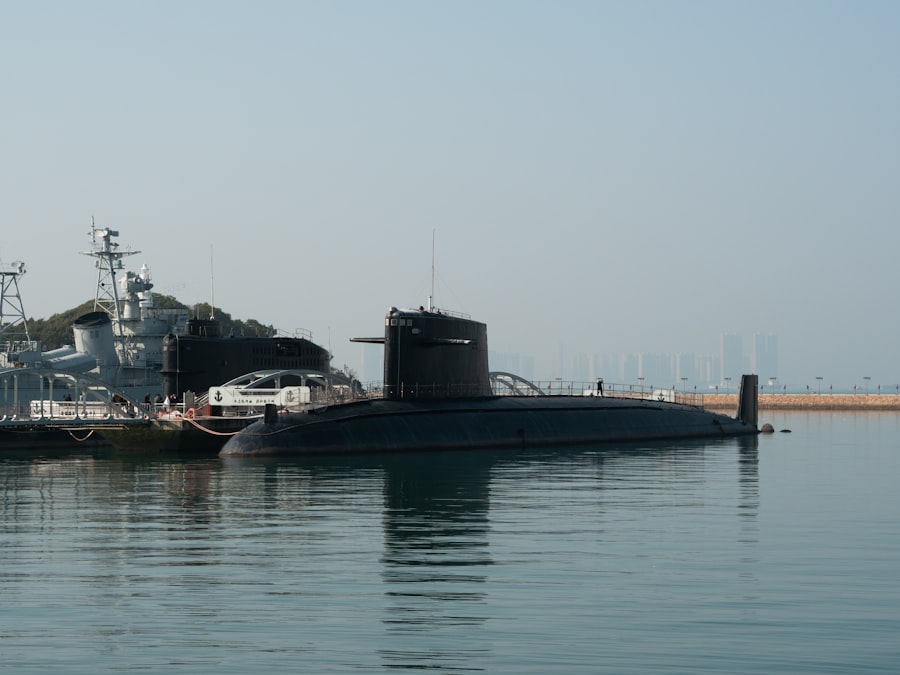
The US Navy’s efforts to track Soviet submarines were not conducted in isolation; collaboration with allied nations proved instrumental in enhancing tracking capabilities. During the Cold War, NATO allies shared intelligence and resources, creating a unified front against potential threats posed by Soviet naval forces. This collaboration included joint exercises, information sharing, and coordinated surveillance operations that leveraged each nation’s strengths.
Allied nations contributed various assets to enhance tracking efforts, including advanced sonar systems, hydrophone networks, and aerial reconnaissance capabilities. For instance, countries like Canada and the United Kingdom provided valuable support through their own maritime patrol aircraft and underwater listening stations. This collective approach not only improved detection rates but also fostered stronger diplomatic ties among allied nations, reinforcing a shared commitment to maritime security.
Advancements in signal processing and data analysis
As technology advanced, so too did the methods employed by the US Navy for analyzing acoustic data collected from various tracking systems. The development of sophisticated signal processing techniques allowed analysts to filter out noise and enhance the clarity of detected sounds. These advancements enabled more accurate identification of submarine signatures, improving the Navy’s ability to distinguish between friendly vessels and potential adversaries.
Data analysis also evolved significantly during this period. The integration of computer technology into tracking operations allowed for faster processing of large volumes of acoustic data. Analysts could now utilize algorithms to identify patterns in submarine movements, predict potential routes, and assess threat levels more effectively.
This shift towards data-driven decision-making transformed how the Navy approached submarine tracking, enabling more proactive responses to emerging threats.
Underwater acoustic arrays and their effectiveness in tracking subs
Underwater acoustic arrays emerged as a critical component of the US Navy’s submarine tracking strategy. These arrays consist of multiple hydrophones strategically positioned across vast oceanic regions to create a comprehensive listening network. By triangulating sound signals received from various points within the array, analysts could accurately determine the location and movement patterns of submarines operating in their vicinity.
The effectiveness of underwater acoustic arrays lay in their ability to cover large areas while maintaining high sensitivity to faint sounds. This capability was particularly advantageous in detecting quiet submarines that employed advanced stealth technologies. The arrays could operate continuously, providing real-time data that enhanced situational awareness for naval commanders.
As a result, underwater acoustic arrays became an essential tool in the Navy’s arsenal for monitoring Soviet submarine activity throughout the Cold War.
Integration of unmanned underwater vehicles for tracking missions
The advent of unmanned underwater vehicles (UUVs) marked a new era in submarine tracking capabilities for the US Navy. These autonomous or remotely operated vehicles are equipped with advanced sensors and can be deployed for various missions, including reconnaissance and surveillance tasks. UUVs offer several advantages over traditional manned vessels; they can operate in hazardous environments without risking human lives and can remain submerged for extended periods.
The integration of UUVs into tracking missions has enhanced the Navy’s ability to gather intelligence on enemy submarines discreetly. Equipped with advanced sonar systems and hydrophones, these vehicles can conduct detailed surveys of underwater environments while remaining undetected by adversaries. Their flexibility allows for rapid deployment in response to emerging threats or intelligence gaps, making them an invaluable asset in modern naval operations.
Evolution of tracking methods from the Cold War to present day
The evolution of tracking methods from the Cold War era to present day reflects significant advancements in technology and changes in geopolitical dynamics. During the Cold War, the primary focus was on countering Soviet submarine threats through a combination of sonar technology, hydrophone networks, and aerial surveillance. As technology progressed, so too did the sophistication of these methods, leading to improved detection rates and enhanced situational awareness.
In recent years, advancements in artificial intelligence (AI) and machine learning have further transformed how the US Navy approaches submarine tracking. These technologies enable more efficient data analysis and predictive modeling, allowing analysts to anticipate potential threats based on historical patterns and real-time data inputs. Additionally, increased collaboration with international partners has expanded the scope of tracking efforts beyond traditional adversaries, addressing emerging challenges posed by non-state actors and rogue nations.
Future prospects for tracking and monitoring submarine activity
Looking ahead, the future prospects for tracking and monitoring submarine activity appear promising yet complex. As technological innovations continue to emerge, the US Navy is likely to adopt even more advanced systems that leverage AI-driven analytics and enhanced sensor capabilities. The integration of next-generation unmanned systems will further augment traditional tracking methods, providing greater flexibility and responsiveness in dynamic maritime environments.
Moreover, as global maritime dynamics evolve with new geopolitical challenges, collaboration with allies will remain essential for effective submarine tracking operations. The sharing of intelligence and resources among allied nations will be crucial in addressing emerging threats posed by advanced submarine technologies developed by potential adversaries. Ultimately, maintaining maritime security will require continuous adaptation and innovation within the US Navy’s tracking methodologies as it navigates an increasingly complex underwater landscape.
The U.S. Navy’s efforts to locate Soviet submarines during the Cold War were marked by innovative tactics and advanced technology. For a deeper understanding of these operations and their significance, you can read more in the article available at In the War Room. This resource provides insights into the strategies employed by the Navy and the challenges they faced in tracking these elusive underwater threats.
WATCH THIS! 🎖️ The Silent Underwater Network That Doomed Every Soviet Submarine
FAQs
How did the US Navy detect Soviet submarines during the Cold War?
The US Navy used a combination of sonar technology, underwater listening devices, and intelligence gathering to detect Soviet submarines. This included deploying SOSUS (Sound Surveillance System) arrays on the ocean floor to monitor submarine movements acoustically.
What role did sonar technology play in finding Soviet subs?
Sonar technology was crucial for detecting and tracking Soviet submarines. Active sonar emitted sound pulses and listened for echoes, while passive sonar listened for noises made by submarines, such as engine sounds or propeller cavitation.
What was the SOSUS system?
SOSUS (Sound Surveillance System) was a network of underwater hydrophone arrays installed by the US Navy on the ocean floor. It was designed to detect and track Soviet submarines by capturing low-frequency sounds over long distances.
Did the US Navy use aircraft to locate Soviet submarines?
Yes, maritime patrol aircraft equipped with magnetic anomaly detectors (MAD), sonobuoys, and radar were used to locate and track Soviet submarines from the air.
How did intelligence contribute to finding Soviet subs?
Intelligence from espionage, signal interception, and reconnaissance helped the US Navy anticipate Soviet submarine deployments and tactics, improving the effectiveness of detection efforts.
Were there any notable incidents involving the detection of Soviet submarines?
Yes, several incidents, such as the detection and tracking of Soviet subs near US waters or during naval exercises, highlighted the effectiveness of US anti-submarine warfare capabilities during the Cold War.
What challenges did the US Navy face in detecting Soviet submarines?
Challenges included the vastness of the oceans, the quieting technology of Soviet submarines, and the need to distinguish between submarines and other underwater noises.
How did advancements in technology improve submarine detection?
Advancements in sonar sensitivity, signal processing, and underwater surveillance systems enhanced the US Navy’s ability to detect quieter and deeper-operating Soviet submarines over time.