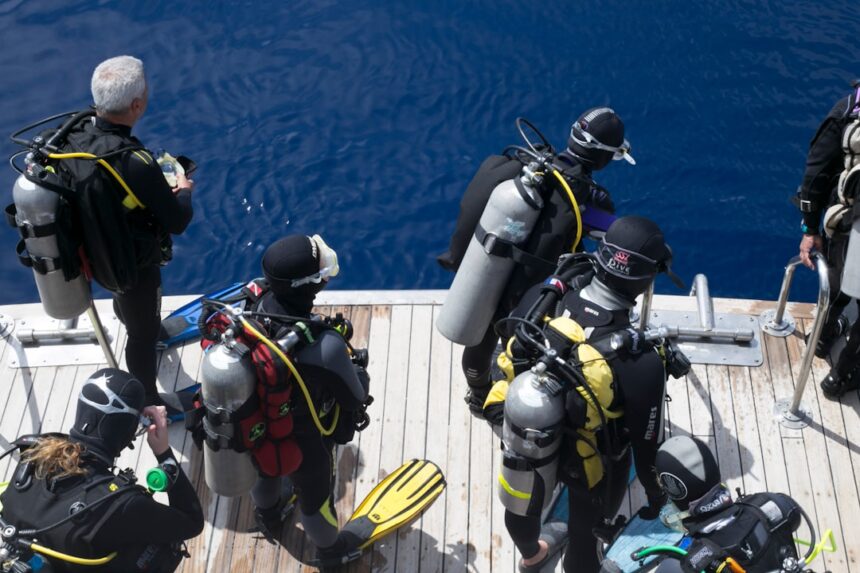
The frigid, volatile waters of the Sea of Okhotsk, a marginal sea of the western Pacific Ocean, were recently the operational theater for a detachment of United States Navy divers. Long recognized as a strategically significant and geologically dynamic region, this remote maritime expanse presented a unique training and exploratory environment for the highly specialized personnel. This article delves into the specifics of this recent deployment, examining the operational parameters, the expertise required, and the broader implications of such deep-sea engagements in an area often characterized by extreme conditions and geopolitical sensitivity.
The primary objective of the US Navy divers’ mission in the Sea of Okhotsk was multifaceted, encompassing both training and reconnaissance. These operations are critical for maintaining proficiency in diverse maritime environments and for gathering vital intelligence regarding the unique underwater topography and potential hazards of the region.
Deep-Sea Reconnaissance
One of the core tenets of the deployment was the systematic reconnaissance of the seabed and water column. This involved using advanced sonar systems and remotely operated vehicles (ROVs) to map sections of the seafloor that are poorly charted or require updated surveys.
- Bathymetric Surveying: Divers worked in conjunction with specialized surface vessels to conduct high-resolution bathymetric surveys, which provide detailed maps of the underwater terrain. This data is crucial for safe navigation, identifying potential choke points, and understanding geological formations. Imagine, if you will, painting a detailed topographical map of a mountain range, but entirely submerged and often in complete darkness.
- Seismic Activity Monitoring: The Sea of Okhotsk is an area of significant seismic activity, owing to its location at the intersection of several major tectonic plates. Divers deployed and retrieved specialized sensors designed to monitor subtle changes in the seabed, which can provide early warnings of underwater seismic events and tsunamis. This is akin to listening to the Earth’s low rumbling voice from beneath the waves.
Specialized Training and Skill Enhancement
Beyond intelligence gathering, the mission served as an invaluable training exercise for the divers. The extreme conditions of the Sea of Okhotsk, from its near-freezing temperatures to its unpredictable currents, offered a crucible for honing advanced diving techniques.
- Cold Water Diving Protocols: Divers rigorously practiced and refined protocols specific to cold-water environments. This included meticulous attention to thermal protection, equipment integrity in low temperatures, and physiological responses to prolonged cold exposure. A dive in these waters is not merely entering a colder bath; it is a meticulous ballet of survival against the elements.
- Decompression Procedures in Extreme Environments: The depths encountered in the Sea of Okhotsk necessitate precise decompression schedules. The divers ran simulations and live exercises to practice multi-stage decompression procedures, critical for preventing decompression sickness in such challenging conditions. Think of it as carefully releasing the pressure from a deep-sea submersible, but with a human body as the vessel.
- Equipment Evaluation and Adaptation: The deployment also provided an opportunity to evaluate existing diving equipment under stress and to test new technologies. This iterative process of testing and refinement is fundamental to enhancing operational capabilities and ensuring diver safety. Every piece of equipment, from rebreathers to buoyancy compensators, undergoes a real-world crucible.
In a recent article on the challenges faced by US Navy divers in the Sea of Okhotsk, the complexities of underwater operations in this remote region are explored in depth. The piece highlights the unique environmental conditions and the strategic importance of the area, shedding light on the rigorous training and advanced technology employed by the divers. For more insights into this topic, you can read the full article at In the War Room.
The Sea of Okhotsk: A Unique Maritime Theater
The geographical and environmental characteristics of the Sea of Okhotsk make it a particularly challenging and intriguing area for naval operations. Its complex oceanography and strategic location contribute to its significance.
Geographical and Geological Attributes
The Sea of Okhotsk is partially enclosed by the Kamchatka Peninsula, the Kuril Islands, Sakhalin Island, and the Siberian mainland. This semi-enclosed nature contributes to its distinctive hydrological regime.
- Ice Formations: During winter months, significant portions of the Sea of Okhotsk become covered in thick ice, posing considerable navigational and operational challenges. Divers must contend with the possibility of operating beneath or near ice sheets, demanding specialized skills and equipment. Navigating under ice is akin to exploring a vast, inverted labyrinth.
- Deep Basins and Volcanic Activity: The sea features several deep basins, including the Derugin Basin and the Kuril Basin, reaching depths of over 3,000 meters. These basins are associated with active volcanic arcs, manifesting in hydrothermal vents and unique abyssal ecosystems. The seafloor here is a landscape sculpted by unimaginable pressures and heat.
- Strong Currents and Tidal Rifts: The interaction of various water masses and the irregular coastline result in strong and often unpredictable currents. These dynamic conditions require expert knowledge of hydrography and meticulous dive planning to mitigate risks. Picture battling an unseen river beneath the waves, often against a backdrop of chilling cold.
Strategic Geopolitical Importance
The Sea of Okhotsk holds significant strategic value due to its proximity to major maritime powers and its role as a pathway to the broader Pacific Ocean.
- Russian Naval Activity: The area is a key operational zone for the Russian Pacific Fleet, with major naval bases situated along its periphery. US Navy diver deployments in this region implicitly carry a geopolitical dimension, necessitating careful adherence to international maritime law and diplomatic protocols. It is a chessboard where unseen moves are played out beneath the surface.
- Resource Exploitation: The sea is rich in natural resources, including fisheries, oil, and natural gas. This has led to increased commercial activity and, consequently, a heightened need for maritime surveillance and environmental monitoring. The lure of natural bounty adds another layer to the strategic calculus.
The Expertise: US Navy Divers
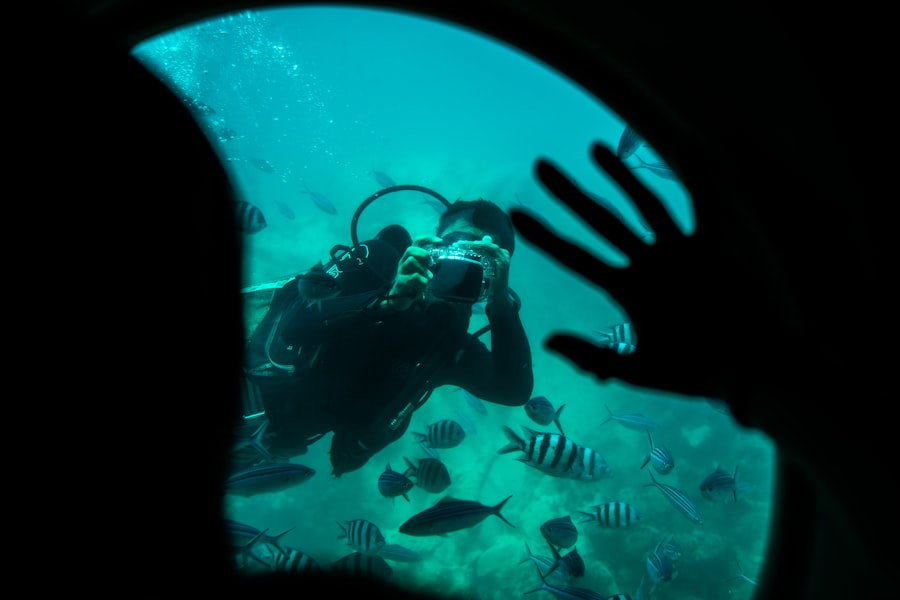
The individuals participating in these deployments are members of an elite cohort, whose training and experience are paramount to the success of such intricate operations.
Rigorous Training Regimen
Becoming a US Navy diver involves an exhaustive training program that instills not only technical proficiency but also mental fortitude and resilience.
- Fundamentals of Diving: Initial training covers the physics and physiology of diving, advanced rebreather technologies, underwater cutting and welding, and salvage operations. This foundational knowledge is the bedrock upon which all subsequent specialized skills are built.
- Salvage and Underwater Construction: Divers are proficient in various salvage techniques, from simple object recovery to complex vessel salvage. Their training also extends to underwater construction, including the repair of submerged infrastructure. They are, in essence, engineers and mechanics of the deep.
- Search and Recovery Operations: A significant portion of their training focuses on search and recovery, often under challenging conditions with limited visibility. This requires meticulous planning, precise execution, and an unwavering commitment to the mission. Imagine searching for a needle in a haystack, but the haystack is submerged and shrouded in perpetual twilight.
Psychological and Physical Demands
Operating in the Sea of Okhotsk, particularly at significant depths and in extreme cold, places immense psychological and physical strain on divers.
- Mental Fortitude: Divers must possess exceptional mental resilience to cope with isolation, claustrophobia, pressure, and the inherent dangers of the underwater environment. Their minds must be as sharp and unyielding as their bodies.
- Peak Physical Condition: The physical demands are substantial, requiring superior cardiovascular endurance, strength, and an ability to withstand prolonged exposure to cold. Every muscle group, every physiological system, is tested to its limits.
- Teamwork and Communication: In such high-stress environments, seamless teamwork and clear communication are not merely beneficial; they are existential. Each diver is a vital cog in a precisely calibrated machine, where a single failure can have cascading consequences.
Technological Integration for Deep-Sea Exploration
Modern deep-sea exploration relies heavily on cutting-edge technology that augments human capabilities and allows for data collection in environments inaccessible to divers.
Remotely Operated Vehicles (ROVs)
ROVs play an increasingly critical role in reconnaissance, inspection, and light intervention tasks, especially at depths beyond the safe limits for human divers.
- High-Resolution Imaging: Equipped with advanced cameras and lighting systems, ROVs can capture high-resolution imagery and video, providing invaluable visual data for analysis and mapping. They are the eyes and ears where human divers cannot reach.
- Manipulator Arms and Sensor Packages: Many ROVs feature manipulator arms for sample collection or light intervention, along with an array of sensors for chemical analysis, environmental monitoring, and acoustic surveys. These robotic extensions allow for intricate work in hostile environments.
- Autonomous Underwater Vehicles (AUVs): While distinct from ROVs, AUVs often work in conjunction with diver operations. These untethered vehicles can perform pre-programmed surveys over vast areas, creating a broader picture of the underwater landscape before divers are deployed. They are the tireless scouts of the deep.
Advanced Sonar and Navigation Systems
The efficacy of underwater operations is profoundly enhanced by sophisticated sonar and navigation technologies.
- Multi-beam Sonar Arrays: These systems provide highly detailed three-dimensional maps of the seafloor, revealing subtle features and potential hazards with unprecedented clarity. It’s like painting a highly detailed portrait of the invisible.
- Underwater Acoustic Positioning Systems: Precise navigation for both divers and underwater vehicles is achieved through acoustic positioning networks, which track their movements relative to surface vessels or fixed transponders. In the opaque world beneath the waves, these systems are the infallible compass.
- Through-Water Communication: Specialized acoustic communication systems allow for limited, but critical, communication between divers, ROVs, and surface support, ensuring real-time coordination. These whispers through water are lifelines and directives.
US Navy divers recently conducted a significant operation in the Sea of Okhotsk, showcasing their expertise in underwater exploration and recovery missions. This operation highlights the strategic importance of the region and the ongoing efforts to enhance naval capabilities. For more insights into military operations and the role of naval forces in various regions, you can read a related article on this topic here.
Environmental Considerations and Challenges
| Metric | Details |
|---|---|
| Operation Area | Sea of Okhotsk |
| Diving Depth | Up to 60 meters (approximate operational depth) |
| Water Temperature | Ranges from -1°C to 10°C depending on season |
| Mission Types | Underwater reconnaissance, salvage, mine countermeasures |
| Diving Equipment | Standard Navy diving suits, mixed gas rebreathers |
| Typical Dive Duration | 30 to 90 minutes depending on mission |
| Number of Divers Deployed | Varies; typically 6-12 divers per operation |
| Support Vessels | Diving support ships and submarines |
Operating in an environment as pristine and yet as vulnerable as the Sea of Okhotsk necessitates a profound awareness of ecological impact and a commitment to environmental stewardship.
Minimizing Ecological Footprint
Naval operations, by their nature, carry the potential for environmental disruption. The US Navy divers are trained to execute their missions with the utmost consideration for the marine ecosystem.
- Strict Adherence to Environmental Protocols: All operations are conducted in strict accordance with international and national environmental protection regulations, minimizing waste and preventing pollutant discharge. The credo is to leave no trace.
- Non-intrusive Data Collection: Where possible, non-intrusive methods of data collection are prioritized, such as passive acoustic monitoring or purely visual surveys, to avoid disturbing marine life or fragile ecosystems. They are observers, not disruptors.
- Awareness of Protected Species: The Sea of Okhotsk is home to several protected marine species, including various whale populations and seals. Divers receive briefings on identifying and avoiding interactions with these sensitive populations. Their operations are conducted with respect for the ocean’s indigenous inhabitants.
Facing the Abyss: Unknowns and Future Endeavors
Despite the advancements in technology and the extensive training of divers, the deep sea remains, in many respects, Earth’s last frontier. The Sea of Okhotsk, with its immense depths and remote location, embodies this perfectly.
- Uncharted Territories: Even in the 21st century, vast expanses of the world’s oceans, particularly deep-sea basins, remain largely unexplored and unmapped. Every deployment offers the potential for discovery.
- Adaptation to Climate Change: The Arctic and sub-Arctic regions are experiencing profound changes due to climate change, including ice melt and altered ocean currents. Future operations will increasingly need to factor in these dynamic environmental shifts.
- Advancements in Autonomous Systems: The trend towards greater reliance on autonomous underwater vehicles (AUVs) will likely continue, extending the reach and duration of underwater reconnaissance, potentially pushing the boundaries of what is achievable without human presence.
The US Navy divers’ recent deployment to the Sea of Okhotsk represents a confluence of specialized skill, advanced technology, and strategic foresight. It underscores the ongoing imperative for nations to maintain a robust and adaptable presence in the world’s oceans, particularly in areas of immense environmental challenge and geopolitical significance. These silent guardians of the deep continue to push the boundaries of human endurance and technological innovation, navigating a world that remains, in so many ways, an enigmatic and awe-inspiring frontier.
FAQs
1. What is the primary mission of US Navy divers in the Sea of Okhotsk?
US Navy divers in the Sea of Okhotsk typically conduct underwater reconnaissance, salvage operations, and maintenance of naval equipment. Their missions may also include gathering intelligence and ensuring the safety of naval vessels operating in the region.
2. Why is the Sea of Okhotsk strategically important for the US Navy?
The Sea of Okhotsk is strategically important due to its proximity to Russia’s eastern coast and its role in regional maritime security. It is a key area for monitoring naval activities and maintaining a presence in the Pacific theater.
3. What types of training do US Navy divers undergo for operations in the Sea of Okhotsk?
US Navy divers receive specialized training in cold-water diving, underwater navigation, demolition, and salvage techniques. They are also trained to operate in challenging weather and sea conditions typical of the Sea of Okhotsk.
4. Are US Navy divers involved in joint exercises in the Sea of Okhotsk?
While specific details may vary, US Navy divers often participate in joint exercises with allied forces to enhance interoperability, practice search and rescue operations, and improve underwater combat readiness in the Sea of Okhotsk region.
5. What equipment do US Navy divers use for missions in the Sea of Okhotsk?
US Navy divers use advanced diving suits designed for cold water, underwater communication devices, rebreathers, and specialized tools for salvage and demolition. They also employ remotely operated vehicles (ROVs) for deep or hazardous underwater tasks.