The sheer scale of the Three Gorges Dam, a colossal undertaking on the Yangtze River, presents a complex interplay of engineering marvel and inherent geological challenges. Among these challenges, uplift pressure and its implications for the dam’s foundation represent a persistent area of scrutiny and ongoing management. This article delves into the nature of uplift pressure at the Three Gorges Dam, the potential risks it poses to the foundation’s stability, and the engineering strategies employed to mitigate these concerns.
Uplift pressure, in the context of dam engineering, refers to the upward force exerted by water within the foundation materials beneath and around the dam’s structure. This force arises from the hydrostatic pressure of the groundwater that permeates the pores, fissures, and fractures within the soil and rock beneath the dam. Effectively, the reservoir water, under significant head pressure, infiltrates the foundation and exerts an upward push against the dam’s base.
The Genesis of Uplift Pressure
The creation of the Three Gorges Reservoir dramatically altered the hydrological regime of the region. The inundation of a vast area of land behind the dam led to a substantial increase in the groundwater table in the surrounding vicinities. This rise in groundwater levels directly translates to an increase in the pore water pressure within the foundation materials.
Reservoir Level and Infiltration
The operational range of the Three Gorges Reservoir is a key determinant of uplift pressure. As the reservoir level fluctuates, so too does the head of water pushing downwards, consequently influencing the depth and intensity of water infiltration into the foundation. Higher reservoir levels generally correlate with increased hydrostatic pressures at greater depths within the foundation.
Permeability of Foundation Materials
The geological composition of the foundation plays a crucial role in the magnitude of uplift pressure. Highly permeable materials, such as fractured rock or porous soil, allow water to infiltrate more readily and build up higher pore water pressures. The Three Gorges Dam is founded on a complex geological strata, including sedimentary rocks which can exhibit varying degrees of permeability.
The Mechanics of the Upward Force
Uplift pressure acts against the downward force exerted by the dam’s own weight. This upward force, if significant enough, can reduce the effective normal stress at the foundation interface. The effective normal stress is what provides the frictional resistance that prevents the dam from sliding or overturning.
Reduction in Effective Stress
When uplift pressure counteracts the weight of the dam, the total stress at the foundation interface is reduced. The effective stress is calculated as the total stress minus the pore water pressure. A decrease in effective stress diminishes the shear strength of the foundation, making it more susceptible to deformation and failure.
Influence on Shear Strength
The shear strength of a soil or rock mass is a critical factor in its ability to support the load of a dam. This strength is largely derived from the frictional resistance between particles or along discontinuities. Uplift pressure, by reducing the effective normal stress, directly weakens this frictional component, thus compromising the foundation’s shear strength.
The Three Gorges Dam, one of the largest hydroelectric projects in the world, has raised concerns regarding uplift pressure on its foundation, which poses significant risks to its structural integrity. An insightful article discussing these risks and the engineering challenges involved can be found at In The War Room. This resource provides a comprehensive analysis of the factors contributing to uplift pressure and the measures being taken to mitigate potential failures, highlighting the importance of ongoing monitoring and maintenance in ensuring the dam’s safety.
Potential Risks to the Three Gorges Dam Foundation
The presence of uplift pressure, if not adequately controlled, can introduce a range of risks to the structural integrity of the Three Gorges Dam. These risks are multifaceted and can manifest in various forms of foundation instability and dam behavior.
Sliding Instability
One of the primary concerns related to uplift pressure is the potential for sliding instability. The upward force can reduce the frictional resistance at the base of the dam, making it more vulnerable to horizontal movement under the forces exerted by the water pressure in the reservoir and potential seismic activity.
Shear Strength Reduction
As previously discussed, uplift pressure directly reduces the shear strength of the foundation. If this reduction is substantial, the shear forces acting on the foundation could exceed its reduced shear strength, leading to a catastrophic sliding failure.
Seismic Amplification
Seismic events pose an amplified threat in the presence of significant uplift pressure. Ground motion during an earthquake can induce dynamic forces that, combined with the already reduced foundation stability due to uplift, could trigger large displacements and potentially compromise the dam’s structure.
Overturning Instability
While sliding is a more immediate concern, high uplift pressures can also contribute to overturning instability. By reducing the effective weight of the dam, uplift can lessen its resistance to the overturning moment generated by the reservoir’s water pressure.
Moment Equilibrium
The stability of a dam against overturning relies on the equilibrium of moments about its toe. Uplift pressure, by reducing the net downward force, can diminish the stabilizing moment provided by the dam’s weight, making it more susceptible to the destabilizing moment from the reservoir.
Cracking and Deformation
Elevated pore water pressures within the foundation can lead to cracking and excessive deformation of the rock and soil masses. This not only compromises the structural integrity of the foundation but can also lead to increased water ingress, further exacerbating the uplift problem.
Foundation Permeability Changes
The development of cracks within the foundation can effectively create new pathways for water to infiltrate, thus increasing the overall permeability of the foundation material. This creates a feedback loop where increased permeability leads to higher uplift pressures, which in turn can cause more cracking and further permeability increases.
Differential Settlement
Uneven uplift pressures across the dam’s footprint can lead to differential settlement. This means that different parts of the dam foundation may sink or deform at different rates, creating stresses within the dam structure itself and potentially leading to cracking or misalignment.
Mitigation Strategies: Counteracting Uplift Forces
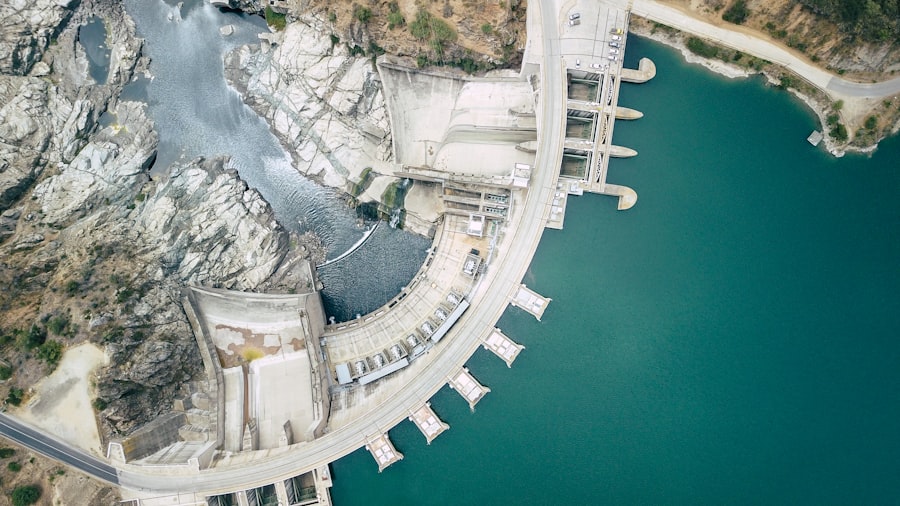
Recognizing the potential risks, extensive measures have been implemented during the design and construction of the Three Gorges Dam to manage and mitigate uplift pressures. These engineering solutions are designed to intercept, reduce, or drain the water that generates this upward force.
Grouting and Impermeabilization
Grouting is a common technique used in dam construction to fill voids and fissures in the foundation rock. This process significantly reduces the permeability of the foundation, thereby limiting the extent of water ingress and the development of uplift pressures.
Consolidation Grouting
This type of grouting aims to consolidate and strengthen the foundation by filling small cracks and pores. It enhances the overall integrity of the rock mass and reduces the potential for water seepage.
Curtain Grouting
Curtain grouting involves creating a relatively impermeable barrier of grout injected into the foundation along the dam’s axis. This barrier is designed to deflect or block the flow of groundwater from the reservoir into the foundation downstream of the curtain.
Drainage Systems
A critical component of uplift pressure management is the installation of effective drainage systems within the dam and its foundation. These systems are designed to collect and remove groundwater, thus lowering pore water pressures.
Galleries and Adits
The Three Gorges Dam incorporates internal drainage galleries and adits. These are essentially horizontal tunnels constructed within the dam’s body and beneath its foundation. Drainage holes are drilled from these galleries into the foundation, allowing water to flow freely into the galleries, where it can be collected and discharged.
Foundation Drains
In addition to galleries within the dam, extensive networks of drainage holes and vertical drains are often installed directly into the foundation rock mass. These drains are strategically placed to capture water that would otherwise contribute to uplift.
Drainage Wells
In some cases, deep drainage wells may be drilled into the foundation to intercept subsurface water flows at greater depths and reduce the groundwater head contributing to uplift.
Monitoring and Instrumentation
Continuous monitoring of uplift pressures is paramount to ensuring the long-term safety of the dam. A sophisticated network of instrumentation is deployed across the dam and its foundation to measure pore water pressures, seepage flow rates, and foundation deformation.
Piezometers
Piezometers are instruments specifically designed to measure hydrostatic pressure in boreholes. A dense network of piezometers is installed within the foundation of the Three Gorges Dam to continuously monitor the pore water pressures at various depths and locations. Changes in these readings provide early indicators of potential issues.
Flow Meters
Flow meters are used to measure the rate of water seepage through drainage galleries and outlets. By tracking flow rates, engineers can assess the effectiveness of the drainage systems and identify any unexpected increases in seepage.
Inclinometers and Extensometers
These instruments are used to measure lateral and vertical movements of the foundation and the dam structure itself. Any significant or differential movement could be an indication of problems related to uplift or other geotechnical issues.
Geological Considerations and Site Suitability
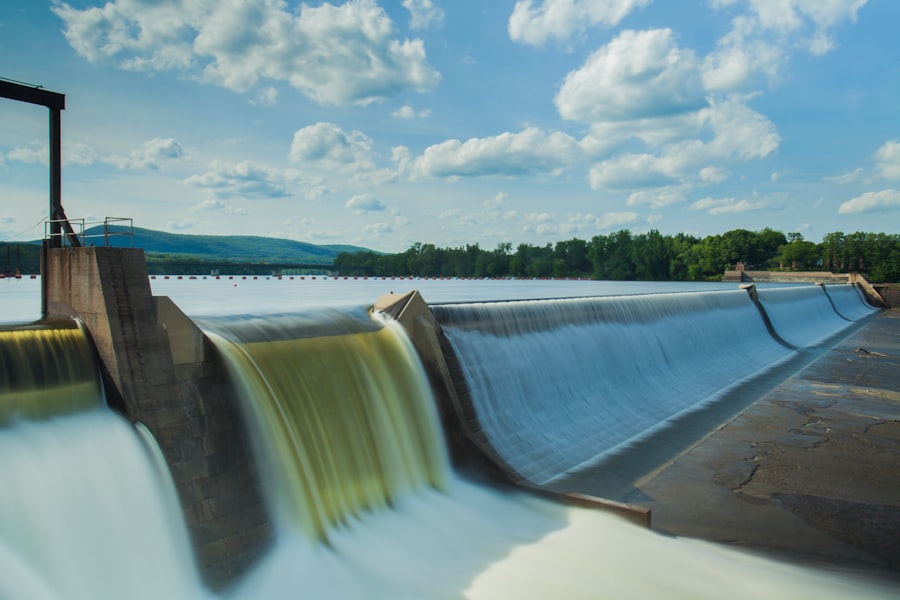
The geological context of the Three Gorges Dam site played a significant role in the design and the ultimate mitigation strategies employed. While the location offered advantages for hydropower generation, it also presented specific challenges related to the foundation’s susceptibility to water infiltration.
Rock Mass Quality
The quality of the rock mass beneath the dam is a crucial factor in its stability. The Three Gorges region is characterized by complex geological formations, including karst features and fractured sedimentary rocks, which can have varying degrees of strength and permeability.
Karst Topography and Soluble Rocks
The presence of soluble rocks and karst features in the foundation can lead to the formation of underground cavities and channels. These features can significantly increase the permeability of the foundation, making it more prone to water ingress and high uplift pressures. Thorough geological investigations are essential to identify and characterize such features.
Jointing and Faulting
The presence of joints and faults within the rock mass creates natural pathways for water flow. The orientation, width, and connectivity of these discontinuities are critical factors influencing the extent of seepage and the development of uplift pressures.
Foundation Treatment and Improvement
Based on extensive geological investigations, specific foundation treatment measures were implemented to enhance the dam’s foundation’s stability and reduce seepage.
Dental Grouting
In areas where the rock surface was weathered or fractured, dental grouting was applied. This involves removing the poor-quality material and then filling the void with grout to create a more competent bearing surface.
Foundation Excavation and Cleaning
In some locations, it was necessary to excavate and clean the foundation surface to remove loose material and ensure a sound bearing stratum for the dam. This process also aimed to expose and address any significant fissures or defects.
The Three Gorges Dam, one of the largest hydroelectric projects in the world, has raised concerns regarding uplift pressure on its foundation, which could pose significant risks to its structural integrity. A related article discusses the potential implications of these pressures and the engineering measures being implemented to mitigate them. For more insights on this critical issue, you can read the article here. Understanding these risks is essential for ensuring the safety and longevity of such monumental infrastructure.
International Perspectives and Ongoing Research
| Metrics | Value |
|---|---|
| Uplift Pressure | High |
| Foundation Risk | Elevated |
The Three Gorges Dam, by virtue of its magnitude and the extensive data it generates, has become a focal point for geotechnical engineering research and international collaboration. The lessons learned from its construction and operation, particularly concerning uplift pressure management, contribute significantly to the global understanding of large dam safety.
Case Study in Dam Engineering
The Three Gorges Dam serves as a monumental case study in large-scale dam engineering, offering invaluable insights into the challenges of constructing and operating such structures in complex geological environments. The extensive monitoring data collected provides a rich resource for researchers worldwide.
Long-Term Performance Analysis
The ongoing monitoring of uplift pressures and foundation behavior at the Three Gorges Dam allows for continuous analysis of its long-term performance. This data is crucial for refining predictive models and understanding the evolution of geotechnical conditions over time.
Sharing of Best Practices
The engineering challenges and solutions implemented at the Three Gorges Dam contribute to a broader repository of knowledge for the global dam engineering community. The sharing of best practices in site investigation, design, construction, and monitoring is vital for ensuring the safety of similar projects worldwide.
Future Research Directions
While significant efforts have been made to manage uplift pressures, ongoing research aims to further enhance understanding and develop even more effective mitigation techniques.
Advanced Modeling Techniques
Researchers are continually developing and refining advanced numerical modeling techniques to simulate groundwater flow and pore water pressure development within complex geological formations. This enables more accurate predictions and better informed design decisions.
Novel Drainage Materials and Technologies
Exploration into novel drainage materials and technologies, such as advanced geotextiles and pre-fabricated vertical drains, continues to offer potential improvements in the efficiency and lifespan of drainage systems.
In conclusion, uplift pressure at the Three Gorges Dam is a fundamental geotechnical consideration that necessitates rigorous engineering solutions. The meticulous planning, construction, and ongoing monitoring strategies employed are testament to the commitment to mitigating the inherent risks associated with such a monumental structure. The continuous study of its performance provides invaluable lessons for the future of large-scale civil engineering projects globally.
FAQs
What is the Three Gorges Dam?
The Three Gorges Dam is a hydroelectric gravity dam that spans the Yangtze River in Hubei province, China. It is the world’s largest power station in terms of installed capacity.
What is uplift pressure in the context of the Three Gorges Dam?
Uplift pressure refers to the force exerted by water on the foundation of the dam, pushing it upwards. This pressure can pose a risk to the stability and integrity of the dam structure.
What are the potential risks associated with uplift pressure on the Three Gorges Dam foundation?
The potential risks associated with uplift pressure on the Three Gorges Dam foundation include increased seepage, potential for foundation erosion, and the potential for structural instability.
How is the Three Gorges Dam managing the risk of uplift pressure on its foundation?
The Three Gorges Dam is managing the risk of uplift pressure on its foundation through various measures such as grouting, drainage systems, and monitoring of the dam’s foundation to ensure its stability.
What are the potential implications of foundation risk due to uplift pressure on the Three Gorges Dam?
The potential implications of foundation risk due to uplift pressure on the Three Gorges Dam include the potential for structural damage, increased maintenance costs, and the need for ongoing monitoring and management of the dam’s foundation.