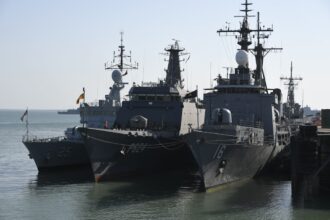
The development of Soviet depth charges evolved alongside 20th-century naval warfare advancements. After World War I, the Soviet Union prioritized strengthening its naval forces, with particular emphasis on anti-submarine warfare capabilities. During the interwar years, rapid improvements in submarine technology necessitated the development of effective countermeasures by the Soviet Navy.
Depth charges became a primary anti-submarine weapon, specifically engineered to engage submerged vessels. During World War II, German U-boat operations in the Baltic and Black Seas presented significant challenges to Soviet naval forces. This threat accelerated the development and operational deployment of depth charges by the Soviet Navy.
These weapons functioned by detonating at predetermined depths, generating underwater shock waves designed to damage or destroy enemy submarines. The combat experience gained during this conflict established the foundation for subsequent improvements in Soviet depth charge design, focusing on enhanced effectiveness and operational reliability.
Key Takeaways
- Soviet submarine depth charges played a crucial role in Cold War naval strategies and anti-submarine warfare.
- Their design evolved significantly, incorporating advanced technology and innovative functionality over time.
- These depth charges influenced submarine tactics and operations by enhancing detection and attack capabilities.
- Deployment in military operations demonstrated their effectiveness in countering enemy submarines.
- The legacy of Soviet depth charges continues to impact modern naval defense and future security developments.
The Design and Functionality of Soviet Submarine Depth Charges
Soviet submarine depth charges were meticulously designed to maximize their effectiveness against enemy submarines. Typically cylindrical in shape, these devices were filled with explosives and equipped with fuses that allowed them to detonate at predetermined depths. The design emphasized simplicity and reliability, ensuring that they could be deployed quickly and efficiently during naval engagements.
The Soviet approach to depth charge design also included variations tailored for different operational needs, such as those intended for use by surface ships or submarines themselves. Functionality was a key consideration in the development of these depth charges. The Soviet Navy employed various methods for deploying them, including launching from surface vessels or dropping them from aircraft.
Once released, the depth charges would sink to a designated depth before detonating, creating a powerful underwater explosion. This explosion generated shockwaves that could severely damage or incapacitate enemy submarines, making them an essential component of Soviet anti-submarine tactics. The ability to adjust detonation depths allowed for greater flexibility in targeting submarines operating at varying depths, enhancing the overall effectiveness of these weapons.
The Role of Soviet Submarine Depth Charges in Naval Warfare

In the context of naval warfare, Soviet submarine depth charges played a pivotal role in shaping the dynamics of undersea combat. As submarines became increasingly prevalent during the Cold War, the need for effective countermeasures grew more pressing. Depth charges provided a means for surface vessels and aircraft to engage submerged threats, allowing the Soviet Navy to maintain a strategic advantage over potential adversaries.
Their deployment was often accompanied by coordinated efforts involving sonar technology and intelligence gathering, creating a comprehensive approach to anti-submarine warfare. The effectiveness of depth charges was not solely reliant on their explosive power; rather, it was their integration into broader naval strategies that defined their impact. Soviet naval doctrine emphasized the importance of maintaining control over key maritime regions, and depth charges were instrumental in achieving this goal.
By neutralizing enemy submarines, the Soviet Navy could safeguard its own vessels and ensure the security of vital shipping lanes. This strategic application of depth charges underscored their significance in the larger context of Cold War naval operations.
The Impact of Soviet Submarine Depth Charges on Cold War Strategies
The advent of the Cold War marked a significant shift in global military strategies, with both superpowers vying for dominance on land, air, and sea. Within this context, Soviet submarine depth charges emerged as a critical element of naval strategy. The ability to effectively counter enemy submarines became paramount as both sides expanded their underwater fleets.
The Soviet Union recognized that maintaining a robust anti-submarine capability was essential for deterring potential threats and projecting power across maritime domains. Soviet depth charges not only influenced tactical decisions but also shaped broader strategic considerations during the Cold War. The presence of advanced submarine fleets on both sides necessitated a reevaluation of naval doctrines, leading to increased investments in anti-submarine technologies.
The development and deployment of depth charges were part of a larger effort to enhance naval readiness and ensure that the Soviet Navy could respond effectively to any underwater threats. This focus on anti-submarine warfare underscored the importance of depth charges as a deterrent against adversaries seeking to exploit vulnerabilities in Soviet maritime defenses.
The Development and Evolution of Soviet Submarine Depth Charges
| Metric | Value | Unit | Description |
|---|---|---|---|
| Maximum Depth | 300 | meters | Maximum effective detonation depth of Soviet depth charges |
| Explosive Charge Weight | 100 | kg TNT equivalent | Weight of the explosive charge in the depth charge |
| Detonation Pressure | 200 | bar | Pressure at which the depth charge detonates |
| Deployment Speed | 15 | knots | Recommended speed of the deploying vessel |
| Blast Radius | 50 | meters | Effective radius of damage underwater |
| Weight | 250 | kg | Total weight of the depth charge |
The development of Soviet submarine depth charges was characterized by continuous innovation and adaptation to changing technological landscapes. Early designs were relatively simple, but as the Cold War progressed, advancements in materials science and explosive technology led to more sophisticated devices. The introduction of new fusing mechanisms allowed for greater precision in detonation timing, enhancing the effectiveness of depth charges against fast-moving submarines.
As detection capabilities improved, so too did the need for more effective countermeasures. The Soviet Navy invested heavily in research and development to create depth charges that could be deployed from various platforms, including submarines and surface vessels.
This versatility ensured that Soviet forces could respond effectively to a range of underwater threats, adapting their tactics based on real-time intelligence and operational requirements.
The Deployment of Soviet Submarine Depth Charges in Military Operations

The deployment of Soviet submarine depth charges during military operations was marked by strategic planning and coordination among various branches of the armed forces. In many instances, these operations involved joint exercises that tested the effectiveness of anti-submarine tactics in real-world scenarios. The integration of depth charges into naval operations allowed for a comprehensive approach to undersea warfare, combining intelligence gathering with tactical execution.
During conflicts such as the Cold War confrontations in the Mediterranean and Arctic regions, Soviet forces utilized depth charges as part of their broader anti-submarine strategy. These operations often involved coordinated attacks on suspected enemy submarine positions, employing both surface vessels and aircraft equipped with depth charge capabilities. The successful deployment of these weapons not only demonstrated the effectiveness of Soviet anti-submarine tactics but also served as a deterrent against potential adversaries contemplating aggressive actions in contested waters.
The Technology and Innovation Behind Soviet Submarine Depth Charges
The technology underpinning Soviet submarine depth charges was a product of extensive research and innovation within the military-industrial complex. Engineers and scientists worked diligently to enhance the performance characteristics of these devices, focusing on factors such as explosive yield, reliability, and deployment mechanisms. The integration of advanced materials allowed for lighter yet more powerful depth charges that could be carried by various platforms without compromising operational efficiency.
Additionally, innovations in fusing technology played a significant role in improving the accuracy and effectiveness of depth charges. Modern fuses enabled precise control over detonation depths, allowing operators to tailor their attacks based on real-time intelligence about enemy submarine movements. This technological evolution not only increased the lethality of depth charges but also contributed to a more nuanced understanding of undersea warfare dynamics.
The Effectiveness of Soviet Submarine Depth Charges in Anti-Submarine Warfare
The effectiveness of Soviet submarine depth charges in anti-submarine warfare can be attributed to several key factors that enhanced their operational utility. First and foremost was their ability to create powerful underwater explosions capable of damaging or destroying enemy submarines. This explosive force generated shockwaves that could incapacitate even well-armored vessels, making depth charges a formidable weapon in naval engagements.
Moreover, the strategic deployment of depth charges allowed for coordinated attacks that maximized their impact on enemy submarines. By combining intelligence gathering with effective targeting strategies, Soviet forces were able to increase their chances of successfully neutralizing submerged threats. This effectiveness was further amplified by advancements in sonar technology that improved detection capabilities, enabling operators to identify enemy submarines with greater accuracy and respond accordingly.
The Legacy of Soviet Submarine Depth Charges in Modern Naval Warfare
The legacy of Soviet submarine depth charges continues to resonate within modern naval warfare strategies. As navies around the world adapt to evolving threats posed by advanced submarine technologies, lessons learned from the development and deployment of Soviet depth charges remain relevant today. The emphasis on effective anti-submarine measures has led many nations to invest in similar technologies that enhance their capabilities in undersea combat.
Furthermore, the historical significance of Soviet submarine depth charges serves as a reminder of the importance of innovation in military technology. As new challenges emerge in maritime security, navies must continue to evolve their approaches to anti-submarine warfare while drawing inspiration from past successes and failures. The legacy of these depth charges underscores the ongoing need for adaptability and strategic foresight in an ever-changing global security landscape.
The Influence of Soviet Submarine Depth Charges on Submarine Tactics and Operations
The influence of Soviet submarine depth charges on submarine tactics and operations cannot be overstated. As these weapons became integral to anti-submarine warfare strategies, they prompted significant changes in how submarines operated during conflicts. Submariners had to adapt their tactics to avoid detection and minimize vulnerability to depth charge attacks, leading to innovations in stealth technology and operational planning.
In response to the threat posed by depth charges, submarines began employing more sophisticated evasion techniques, such as altering dive depths or utilizing terrain features for concealment. This cat-and-mouse dynamic between submarines and anti-submarine forces shaped operational doctrines on both sides during the Cold War era. As a result, understanding how to effectively deploy and counteract depth charges became essential knowledge for naval strategists seeking to maintain an edge in undersea warfare.
The Future of Soviet Submarine Depth Charges in Naval Defense and Security
Looking ahead, the future of Soviet submarine depth charges within naval defense and security frameworks remains an area ripe for exploration. While advancements in technology have led to new forms of underwater warfare capabilities, the fundamental principles behind effective anti-submarine measures endure. As nations continue to invest in modernizing their naval fleets, there is likely to be renewed interest in developing advanced versions of traditional weapons like depth charges.
Moreover, as geopolitical tensions persist and new threats emerge from non-state actors or advanced underwater technologies, navies may find themselves revisiting historical strategies that proved effective during previous conflicts. The legacy of Soviet submarine depth charges serves as both a cautionary tale and an inspiration for future innovations aimed at ensuring maritime security in an increasingly complex global landscape. As military planners assess emerging challenges, they will undoubtedly draw upon lessons learned from past experiences while seeking new solutions tailored to contemporary threats.
Soviet submarines were equipped with various advanced technologies, including depth charges, which played a crucial role in underwater warfare during the Cold War. For a deeper understanding of the strategic implications and historical context of these underwater munitions, you can read more in this related article on the topic. Check it out here: Soviet Submarine Depth Charges.
FAQs
What were Soviet submarine depth charges?
Soviet submarine depth charges were anti-submarine warfare weapons designed to target and destroy enemy submarines by detonating at specific depths underwater. They were used extensively during the Cold War to protect Soviet naval assets and deter NATO submarine operations.
How did Soviet depth charges work?
Soviet depth charges were explosive devices dropped or launched into the water near suspected enemy submarines. They were equipped with hydrostatic fuses that triggered detonation at predetermined depths, creating powerful shockwaves intended to damage or destroy submarines.
What types of depth charges did the Soviet Navy use?
The Soviet Navy employed various types of depth charges, including traditional barrel-shaped charges and more advanced rocket-propelled depth charges. These ranged from simple contact explosives to sophisticated weapons with adjustable detonation depths and improved accuracy.
Were Soviet depth charges effective against submarines?
Soviet depth charges were considered effective during their time, especially when used in coordinated anti-submarine warfare tactics. However, advancements in submarine stealth and countermeasures eventually reduced their effectiveness, leading to the development of more advanced anti-submarine weapons.
Did the Soviet Union develop alternatives to depth charges?
Yes, the Soviet Union developed several alternatives and complements to depth charges, such as homing torpedoes, anti-submarine rockets (like the RBU series), and sonar-guided weapons, which provided greater range, accuracy, and lethality against modern submarines.
When were Soviet depth charges primarily used?
Soviet depth charges were primarily used from World War II through the Cold War era, with their peak usage occurring during the height of submarine confrontations between the Soviet Navy and NATO forces in the 1950s to 1980s.
Are Soviet depth charges still in use today?
Most traditional Soviet depth charges have been phased out or replaced by more modern anti-submarine weapons in the Russian Navy. However, some may still be in reserve or used by other countries that inherited Soviet naval equipment.
How did Soviet depth charges compare to those used by other navies?
Soviet depth charges were generally comparable to those used by Western navies in terms of design and function. However, the Soviets often emphasized mass deployment and integration with their unique anti-submarine warfare systems, such as the RBU rocket launchers, to enhance effectiveness.