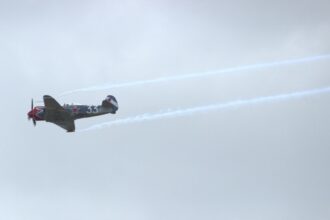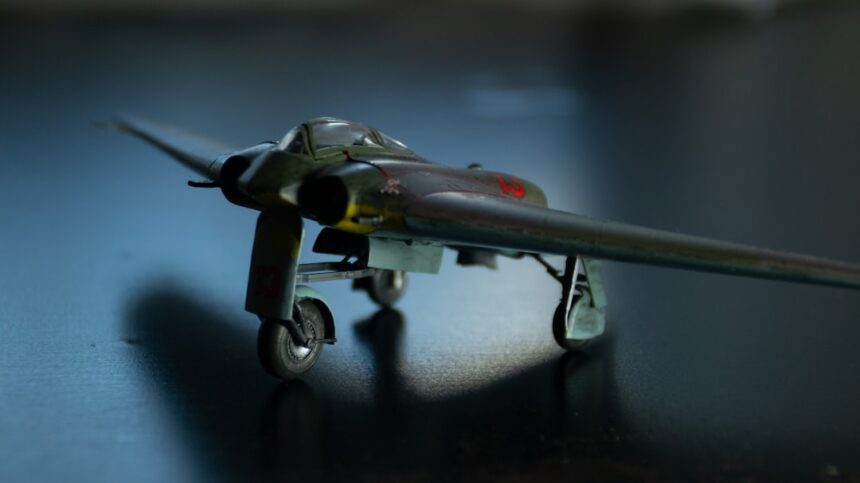
The Luftwaffe, the air arm of the German Armed Forces during the Nazi era, remains a subject of considerable historical interest and debate. Its operational record, technological advancements, and the complex motivations behind its existence and actions have been analyzed, debated, and sometimes mythologized for decades. This article seeks to delve into some of the key aspects of the Luftwaffe, moving beyond simplistic narratives to explore its development, its role in wartime operations, and its legacy.
The establishment of the Luftwaffe as a distinct branch of the German military was a clandestine and strategic endeavor, directly shaped by the Treaty of Versailles. Officially, Germany was forbidden from possessing an air force, a stipulation designed to prevent future aerial aggression. However, behind the scenes, the foundations of a new air power were being laid.
Reconstruction in Secret
The Weimar Republic, despite the treaty’s restrictions, initiated covert programs to circumvent the prohibition. This included collaboration with foreign powers, notably the Soviet Union, which allowed German pilots and engineers to train and test aircraft on Soviet territory. These early efforts, though limited and often underfunded, were crucial for maintaining a cadre of experienced personnel and developing nascent aviation technologies.
The Rise of the Third Reich and Overt Rearmament
With the ascent of the National Socialist German Workers’ Party (NSDAP) to power in 1933, the clandestine development of an air force gave way to overt rearmament. Hermann Göring, a World War I ace and a prominent figure in the Nazi regime, was appointed Reichskommissar for Aviation in 1933 and later became the first Commander-in-Chief of the Luftwaffe. This appointment signaled a new era of ambitious expansion and a clear intention to rebuild Germany’s aerial capabilities.
Technological Ambitions and Early Designs
The interwar period saw significant advancements in aviation technology worldwide. The Luftwaffe actively sought to leverage these developments. Early efforts focused on producing reliable and effective aircraft that could meet envisioned military requirements. This included the development of reconnaissance aircraft, bombers, and fighters. While some of these early designs were innovative, others were less successful, reflecting the challenges of rapid technological development and the pressures of rearmament.
For those interested in uncovering the hidden truths of the Luftwaffe, a related article that delves into the complexities of aerial warfare during World War II can be found on In The War Room. This piece explores the strategic decisions, technological advancements, and the often-overlooked human stories behind the Luftwaffe’s operations. To read more, visit In The War Room.
The Luftwaffe in Action: Early Campaigns and Blitzkrieg Doctrine
The Luftwaffe’s initial combat operations, particularly during the early years of World War II, were characterized by a close integration with ground forces, forming the bedrock of the Blitzkrieg (“lightning war”) tactic. This operational concept emphasized speed, surprise, and the coordinated application of air and ground power to achieve decisive victories.
The Polish Campaign (1939)
The invasion of Poland in September 1939 marked the Luftwaffe’s first large-scale combat deployment. It played a crucial role in softening enemy defenses, disrupting communications, and providing close air support to the advancing panzer divisions. The effectiveness of the Luftwaffe in this campaign, alongside the ground forces, contributed to the swift collapse of Polish resistance and offered a stark demonstration of the efficacy of Blitzkrieg.
The Norwegian and Danish Campaigns (1940)
In 1940, the Luftwaffe was instrumental in the German invasion of Denmark and Norway. It provided air superiority, transported troops and equipment, and engaged Norwegian and British air assets. While the campaign in Norway was prolonged and faced significant logistical challenges, the Luftwaffe’s contribution was vital to securing key strategic locations.
The Battle of France (1940)
The campaign in France and the Low Countries in May and June 1940 saw the Luftwaffe at its operational peak. It achieved near-total air superiority over the battlefield, enabling the rapid advance of German ground forces. The strategic bombing of French cities and infrastructure, along with relentless attacks on Allied positions, demoralized the defenders and facilitated the rapid German victory.
The Limitations of Early Success
While the early campaigns were marked by remarkable success, they also revealed underlying limitations. The Luftwaffe’s strategy was heavily reliant on achieving rapid breakthroughs, and it lacked the strategic bomber force necessary for sustained, deep offensives against well-defended enemy industrial centers. Furthermore, its resources, while expanding, were still finite and were being depleted in these early, attritional conflicts.
The Strategic Bombing Campaign and its Impact
The Luftwaffe’s involvement in strategic bombing evolved over the course of the war, shifting from initial tactical support to more ambitious, though ultimately less successful, attempts to cripple Allied war-making capacity.
Early Bombing Missions
In the initial stages of the war, the Luftwaffe’s bombing efforts were largely focused on tactical targets, such as airfields, railways, and ports, in support of ground offensives. The bombing of Rotterdam in May 1940, which resulted in significant civilian casualties, demonstrated the destructive potential of even tactical bombing.
The Shift to Strategic Bombing
As the war progressed and the Luftwaffe faced the formidable Royal Air Force (RAF) and later the United States Army Air Forces (USAAF), its strategic bombing capabilities were tested. The aim was to degrade Allied industrial production, disrupt supply lines, and break the enemy’s will to fight.
The London Blitz (1940-1941)
Following the Battle of Britain, the Luftwaffe initiated a sustained bombing campaign against London and other British cities, known as the Blitz. While this campaign inflicted considerable damage and caused widespread fear, it failed to achieve its strategic objectives of forcing Britain to sue for peace. The RAF, with its radar defenses and resilient population, proved a tougher adversary than anticipated.
Operations Against Soviet Cities
During the invasion of the Soviet Union, the Luftwaffe also undertook bombing missions against Soviet cities. However, the vast distances involved, the poor quality of infrastructure in many areas, and the resurgent Soviet air force limited the effectiveness of these operations.
The Undoing of Strategic Ambitions
Ultimately, the Luftwaffe lacked the sheer number of heavy bombers and the logistical capacity to conduct a sustained, high-volume strategic bombing campaign comparable to that of the Allies. The continuous need to support ground operations on multiple fronts also diverted resources. Furthermore, the effective defenses employed by Allied air forces and the decentralization of German industry made the strategic bombing campaign less decisive than intended.
Technological Innovations and Aircraft Development
The Luftwaffe was at the forefront of aviation technology during certain periods of the war. Its engineers and designers produced some of the most advanced aircraft of their era, pushing the boundaries of what was possible in aeronautical engineering.
Fighter Development: The Messerschmitt Bf 109 and Focke-Wulf Fw 190
The Messerschmitt Bf 109 became one of the most iconic and widely produced fighter aircraft of World War II. It represented a significant leap forward in fighter design, featuring a powerful engine, robust armament, and excellent maneuverability. Later in the war, the Focke-Wulf Fw 190 emerged, offering superior performance in certain aspects and becoming a formidable opponent for Allied fighters. These aircraft were crucial for maintaining air superiority in the early years of the conflict.
Bomber Design: The Dornier Do 17, Heinkel He 111, and Junkers Ju 88
The Luftwaffe operated a range of medium bombers, including the Dornier Do 17, Heinkel He 111, and Junkers Ju 88. These aircraft were versatile, used for bombing, reconnaissance, and even troop transport in some instances. While initially effective, they increasingly struggled against the evolving defensive capabilities of Allied fighters and anti-aircraft artillery.
Advanced Projects and Jet Power
The Luftwaffe was also involved in pioneering jet engine technology. The Messerschmitt Me 262 was the world’s first operational jet fighter, representing a significant technological leap. While its late introduction and production issues limited its overall impact, it demonstrated the potential of jet propulsion. Other advanced projects, such as the Messerschmitt Me 163 Komet rocket-powered interceptor, also showcased Germany’s innovation, though often at the cost of operational reliability.
Engineering Challenges and Production Limitations
Despite these technological achievements, the Luftwaffe consistently faced challenges in production and deployment. Resource limitations, the Allied bombing campaign targeting aircraft production facilities, and the sheer complexity of some advanced designs hampered the widespread adoption of the latest technologies. The focus on multiple, sometimes competing, aircraft projects also stretched resources thin.
The Luftwaffe, Germany’s air force during World War II, has long been a subject of intrigue and analysis, revealing hidden truths about its operations and strategies. For those interested in exploring this topic further, a related article provides an in-depth look at the complexities of the Luftwaffe’s role in the war. You can read more about it in this insightful piece that delves into the lesser-known aspects of their missions and tactics. To discover more, visit this article.
The Decline and Legacy of the Luftwaffe
| Aspect | Metric |
|---|---|
| Number of aircraft | Over 20,000 aircraft were in service at the peak of the Luftwaffe’s power |
| Operational range | Luftwaffe aircraft could operate across Europe and North Africa |
| Casualties | Over 160,000 Luftwaffe personnel were killed in action during World War II |
| Bombing campaigns | The Luftwaffe conducted extensive bombing campaigns, including the Blitz on London |
| Technological advancements | The Luftwaffe developed and deployed advanced aircraft such as the Messerschmitt Bf 109 and the Focke-Wulf Fw 190 |
The latter half of World War II witnessed a steady decline in the Luftwaffe’s operational effectiveness. A combination of factors, including dwindling resources, increasing Allied air superiority, and strategic miscalculations, led to its gradual subjugation.
The Erosion of Air Superiority
As the war progressed, the Allies, particularly the USAAF and the RAF, were able to field ever larger numbers of more advanced aircraft and train pilots to a higher standard. The strategic bombing campaign, while not achieving all its aims, significantly degraded Germany’s industrial capacity and its ability to replace combat losses. The Luftwaffe, fighting on multiple fronts with increasingly outdated equipment and a shortage of experienced pilots, found it increasingly difficult to contest air superiority.
The Impact of Allied Air Power
The overwhelming numerical superiority of Allied air forces, coupled with advancements in radar, electronic countermeasures, and improved aircraft designs, proved decisive. The D-Day landings in June 1944, for example, were supported by unprecedented levels of air power, which effectively neutralized German air defenses and allowed the Allied invasion to proceed with relatively few aerial interruptions.
The Role of Strategic Leadership and Resources
The Luftwaffe’s decline was also influenced by strategic decisions made at the highest levels. The commitment of resources to the Eastern Front, the continued development of some technically advanced but logistically impractical projects, and the failure to adapt quickly enough to changing aerial warfare doctrines all contributed to its erosion. The leadership of Göring also faced criticism for its management of resources and its often unrealistic expectations.
Post-War Division and the Rebirth of German Air Power
Following Germany’s defeat, the Luftwaffe was disbanded. However, the legacy of its technological advancements and the experience of its personnel continued to influence aviation development. In the post-war era, with the division of Germany, the Federal Republic of Germany eventually re-established its air force, known as the Luftwaffe, as part of the newly formed Bundeswehr in 1955. This new Luftwaffe, operating within the framework of NATO, drew upon the lessons learned from its predecessor’s history, aiming for a more defensive and technologically advanced role within a collective security alliance. The historical Luftwaffe’s impact, therefore, is a complex and enduring one, interwoven with both devastating conflict and significant technological innovation.
FAQs
What is the Luftwaffe?
The Luftwaffe was the aerial warfare branch of the German Wehrmacht during World War II. It played a crucial role in the German military’s operations and strategies during the war.
What were some hidden truths about the Luftwaffe?
Some hidden truths about the Luftwaffe include its reliance on forced labor, the use of experimental aircraft and technology, and the extent of its involvement in war crimes and atrocities.
How did the Luftwaffe impact World War II?
The Luftwaffe played a significant role in the early successes of the German military, particularly during the Blitzkrieg campaigns. However, it faced challenges and setbacks as the war progressed, ultimately contributing to Germany’s defeat.
What were some notable aircraft used by the Luftwaffe?
The Luftwaffe used a variety of aircraft during World War II, including the Messerschmitt Bf 109, Focke-Wulf Fw 190, Junkers Ju 87 Stuka, and the iconic Messerschmitt Me 262 jet fighter.
What is the legacy of the Luftwaffe today?
The legacy of the Luftwaffe is complex, as it is intertwined with the history of Nazi Germany and the atrocities committed during World War II. Today, the Luftwaffe is part of the modern German armed forces and is focused on defense and peacekeeping operations.