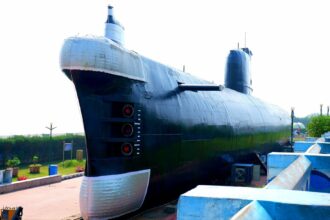
In March 1968, the Soviet submarine K-129 vanished without a trace in the vast expanse of the Pacific Ocean. This incident sent shockwaves through military and intelligence communities around the world, as the submarine was equipped with nuclear missiles and was part of the Soviet Union’s strategic deterrent force. The K-129 was a Golf-class submarine, a type that had been designed during the Cold War to carry out covert missions and to serve as a platform for nuclear strike capabilities.
Its disappearance raised numerous questions about the safety and security of nuclear assets during a time of heightened tensions between the United States and the Soviet Union.
The U.S.
Navy, suspecting that the submarine had sunk in a location of strategic interest, deployed advanced sonar technology and submarines to locate it. The mystery deepened as the Soviet Union publicly downplayed the incident, claiming that they had lost contact with the vessel but were confident in their ability to recover it. Meanwhile, rumors circulated about the potential reasons for its disappearance, ranging from mechanical failure to hostile action by enemy forces.
The intrigue surrounding K-129 only intensified as time passed, leading to speculation about what secrets might be lost with its sinking.
Key Takeaways
- K-129’s disappearance remains a Cold War mystery with significant intelligence implications.
- The recovery of K-129 code books provided crucial insights into Soviet naval communications.
- Deciphering these codes enhanced understanding of Soviet military strategies during the Cold War.
- K-129 code books played a pivotal role in advancing naval intelligence and cryptographic technology.
- Despite their importance, many questions and controversies about the code books persist today.
The Discovery of K-129 Code Books
In 1974, several years after K-129’s disappearance, a significant breakthrough occurred when the U.S. Navy successfully located the wreckage of the submarine on the ocean floor. This discovery was not merely a recovery operation; it was a pivotal moment in Cold War espionage.
Among the various artifacts retrieved from the wreckage were code books that contained critical information about Soviet naval operations and communications. These code books were invaluable to American intelligence, providing insights into the operational protocols and encrypted communications used by Soviet submarines. The retrieval of these code books marked a turning point in understanding Soviet naval capabilities.
The U.S. Navy’s operation, codenamed Project Jennifer, involved sophisticated technology and covert methods to recover parts of K-129 from depths of over 16,000 feet. The operation was shrouded in secrecy, and the implications of recovering such sensitive materials were profound.
Deciphering the Enigmatic Code

Once in American hands, the code books from K-129 presented both an opportunity and a challenge for intelligence analysts. Deciphering the codes required not only technical expertise but also an understanding of the context in which these codes were used. The complexity of Soviet encryption methods meant that analysts had to employ various techniques to break down the information contained within these books.
This process involved cross-referencing known codes with intercepted communications and employing cryptographic techniques that had been developed over decades. The task was daunting, yet it yielded significant results. Analysts began to piece together patterns and meanings behind the codes, revealing insights into Soviet naval operations that had previously been shrouded in mystery.
The information gleaned from these code books allowed American intelligence to better understand Soviet strategies, tactics, and even their technological advancements in submarine warfare. As analysts worked tirelessly to decode the messages, they uncovered not just operational details but also glimpses into the mindset of Soviet military planners during a critical period of the Cold War.
The Significance of K-129 Code Books
| Metric | Description | Value/Details |
|---|---|---|
| Code Book Volume | Number of pages in the K-129 code books | Approximately 500 pages |
| Encryption Complexity | Level of cryptographic complexity used in the codes | High; multiple layers of substitution and transposition ciphers |
| Operational Period | Years during which the K-129 code books were actively used | 1960 – 1974 |
| Intelligence Value | Impact on Cold War intelligence gathering | Critical; enabled decryption of Soviet naval communications |
| Recovery Date | Date when K-129 code books were recovered | March 1968 |
| Source of Recovery | Method by which the code books were obtained | Underwater salvage operation (Project Azorian) |
| Code Book Usage | Primary users of the K-129 code books | Soviet Pacific Fleet submarine commanders |
| Decryption Success Rate | Effectiveness of using the code books to decrypt messages | Estimated 85% accuracy |
The significance of the K-129 code books extended far beyond their immediate intelligence value. They represented a rare glimpse into the inner workings of Soviet military operations at a time when such information was scarce and highly sought after. The insights gained from these documents allowed U.S.
military planners to adjust their strategies and tactics in response to perceived threats from Soviet naval forces. This newfound knowledge contributed to shaping American naval doctrine during a pivotal era in military history. Moreover, the K-129 code books served as a reminder of the high stakes involved in Cold War espionage.
The ability to intercept and decode enemy communications was crucial for maintaining a strategic advantage. The information derived from these code books not only informed military decisions but also influenced diplomatic negotiations between the two superpowers. As tensions escalated during this period, having access to such intelligence became increasingly vital for national security.
The Impact of K-129 Code Books on Cold War History
The impact of the K-129 code books on Cold War history cannot be overstated. They provided a wealth of information that helped shape U.S. military strategy and policy during a time when nuclear deterrence was paramount.
The insights gained from these documents allowed American forces to better anticipate Soviet movements and intentions, thereby enhancing their readiness and response capabilities. Furthermore, the revelations from K-129’s code books contributed to a broader understanding of Soviet military capabilities and intentions. This knowledge played a crucial role in shaping U.S.
foreign policy decisions throughout the 1970s and beyond. As both nations navigated the complexities of arms control negotiations and military posturing, having access to accurate intelligence became essential for maintaining stability and preventing miscalculations that could lead to conflict.
The Intriguing Content of K-129 Code Books

The content of the K-129 code books was as intriguing as it was informative. They contained detailed instructions on communication protocols, operational procedures, and even specific codes used for various missions. Analysts discovered that these codes were not only technical in nature but also reflected the organizational culture and priorities of the Soviet Navy at that time.
Among the most fascinating aspects of these code books were references to specific missions and exercises conducted by K-129 and other submarines within its fleet. This information provided valuable context for understanding how Soviet naval forces operated under different scenarios, including potential conflict situations. The revelations about training exercises, patrol routes, and engagement protocols offered American intelligence a clearer picture of how their adversaries prepared for warfare.
The Role of K-129 Code Books in Naval Intelligence
The role of K-129 code books in naval intelligence was pivotal during a time when understanding enemy capabilities was crucial for national security. These documents became essential tools for analysts tasked with monitoring Soviet naval activities and assessing potential threats to U.S. interests. By providing insights into communication methods and operational strategies, they enabled American naval forces to adapt their own tactics accordingly. Moreover, the intelligence derived from these code books facilitated collaboration among various branches of U.S. military intelligence agencies. Analysts from different sectors worked together to synthesize information gleaned from K-129’s code books with other sources of intelligence, creating a more comprehensive understanding of Soviet naval operations. This collaborative effort underscored the importance of inter-agency cooperation in addressing complex security challenges during the Cold War.
The Technology Behind K-129 Code Books
The technology behind the K-129 code books was emblematic of the era’s advancements in cryptography and communication systems. The Soviets employed sophisticated encryption techniques designed to protect sensitive information from interception by adversaries. These methods included both manual coding systems and early computer-assisted encryption processes that reflected their commitment to securing military communications.
American analysts faced significant challenges in deciphering these codes due to their complexity and evolving nature. However, advancements in computing technology during this period provided analysts with new tools for breaking down encrypted messages more efficiently than ever before. The interplay between technological innovation and intelligence analysis played a crucial role in enhancing U.S.
capabilities during this critical juncture in history.
The Legacy of K-129 Code Books
The legacy of K-129 code books extends beyond their immediate impact on Cold War intelligence operations; they symbolize the broader struggle between two superpowers vying for dominance in an increasingly complex geopolitical landscape. The insights gained from these documents contributed to shaping military strategies that would influence U.S.-Soviet relations for decades to come. In addition to their historical significance, K-129’s code books serve as a reminder of the importance of intelligence gathering in modern warfare.
As nations continue to navigate evolving threats in an era marked by cyber warfare and asymmetric conflicts, lessons learned from past experiences like those surrounding K-129 remain relevant today.
The Controversies Surrounding K-129 Code Books
Despite their invaluable contributions to intelligence efforts, K-129 code books were not without controversy. Questions arose regarding the ethical implications of recovering materials from a sunken submarine belonging to another nation, particularly one engaged in Cold War hostilities with the United States. Critics argued that such actions could be seen as violations of international norms regarding respect for foreign military assets.
Additionally, debates emerged over how much information should be disclosed about what was learned from these code books. While some argued for transparency to inform public understanding of national security issues, others contended that revealing too much could compromise ongoing intelligence operations or diplomatic relations with Russia.
The Unanswered Questions about K-129 Code Books
Even decades after their discovery, unanswered questions about K-129 code books linger on in historical discourse. Scholars continue to explore what other secrets may have been lost with K-129’s sinking and how those secrets could have altered perceptions or strategies during critical moments in Cold War history. Furthermore, there remains speculation about whether additional documents or materials were recovered but never disclosed publicly due to their sensitive nature or potential implications for national security policies at that time.
As historians delve deeper into this enigmatic chapter of Cold War history, they seek not only to understand what happened but also how those events continue to shape contemporary geopolitical dynamics today. In conclusion, the story surrounding K-129 and its code books is one woven with intrigue, complexity, and lasting significance within both military history and international relations discourse. As new generations grapple with similar challenges posed by evolving threats across borders today—whether through cyber warfare or traditional military engagements—the lessons learned from this episode remain relevant reminders about vigilance amidst uncertainty on an ever-changing global stage.
In exploring the intriguing world of espionage and cryptography, the article “Secrets of the K-129 Code Books” delves into the complexities of intelligence operations during the Cold War. For further insights into military strategy and historical analysis, you can check out related content on In the War Room, which offers a wealth of information on various military topics and historical events.
WATCH THIS! The CIA’s Secret Mission to Recover a Nuclear Submarine: Project Azorian
FAQs
What is the K-129 code book?
The K-129 code book refers to a set of cryptographic materials used by the Soviet submarine K-129, which was a Golf II-class ballistic missile submarine. These code books contained encrypted communication codes and procedures used for secure naval communications during the Cold War.
Why are the K-129 code books significant?
The K-129 code books are significant because they provide insight into Soviet naval cryptography and communication methods during the Cold War. They were also a key element in intelligence operations, particularly after the submarine sank in 1968 and the United States attempted to recover its contents.
How were the K-129 code books recovered?
The United States undertook a secretive and complex operation known as Project Azorian in the early 1970s to recover parts of the sunken K-129 submarine from the Pacific Ocean floor. The operation aimed to retrieve the submarine’s cryptographic materials, including the code books, to gain intelligence on Soviet naval communications.
What type of information was contained in the K-129 code books?
The K-129 code books contained encrypted communication codes, cipher keys, and procedural instructions used by the Soviet Navy to encode and decode messages. This information was critical for maintaining secure communication between Soviet naval units and command centers.
How did the K-129 code books impact Cold War intelligence?
The recovery and analysis of the K-129 code books provided the United States with valuable intelligence on Soviet naval operations and cryptographic techniques. This helped improve U.S. signals intelligence capabilities and contributed to a better understanding of Soviet military strategies during the Cold War.
Are the K-129 code books publicly available today?
Most details about the K-129 code books and the recovery operation remain classified or partially declassified. While some information has been released through government documents and historical research, the full contents and technical details of the code books are not publicly available.
What lessons were learned from the K-129 code books?
The study of the K-129 code books highlighted the importance of cryptographic security and the vulnerabilities of naval communication systems. It also demonstrated the lengths to which intelligence agencies would go to obtain critical information during the Cold War, influencing future intelligence and cryptographic practices.