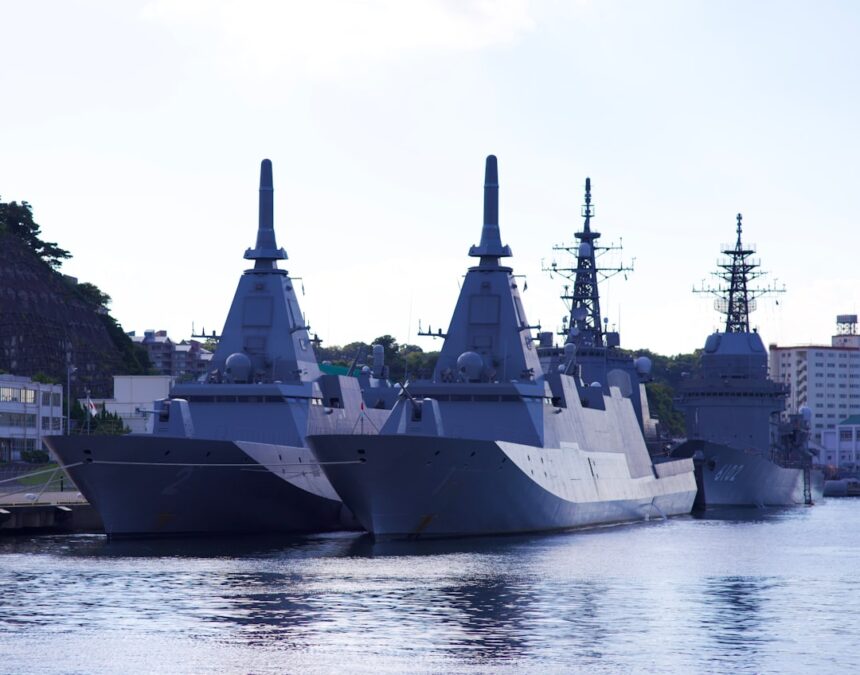
The United States Navy, a titan of global power projection, has long operated under the assumption of strategic infallibility. Its planning processes, deeply embedded within the fabric of its institutional culture, are often presented as the pinnacle of foresight and adaptability. However, a closer examination reveals a more complex and, at times, concerning reality. Rather than a seamless engine of anticipatory design, the Navy’s strategic planning frequently grapples with inherent limitations, bureaucratic inertia, and an often-unacknowledged tendency to prioritize established paradigms over disruptive innovation. This article will delve into these illusions, dissecting the mechanisms that create them and the consequences they hold for the future of naval strategy.
The very concept of strategic planning is built on the premise of looking ahead and preparing for future contingencies. For the US Navy, this often translates into highly sophisticated wargaming, scenario analysis, and the development of long-term shipbuilding plans. Yet, the illusion lies not in the effort itself, but in the belief that such exercises can truly anticipate the full spectrum of future challenges and opportunities.
The Tyranny of the Present
Strategic planning is inherently a product of its time. The assumptions, technological biases, and geopolitical understandings that shape current planning are deeply rooted in the present. This creates a powerful gravitational pull, making it difficult to conceive of strategic futures that diverge significantly from current trajectories. The Navy, like any large institution, is populated by individuals whose experiences and mental models are shaped by past conflicts and current operational realities. This can inadvertently lead to a planning process that overemphasizes familiar threats and underappreciates novel ones.
Echo Chambers of Expertise
The reliance on established experts and historical data, while valuable, can also foster an “echo chamber effect.” Within these specialized domains, consensus can solidify, and dissenting or unconventional ideas may struggle to gain traction. This is particularly true in areas where deep technical knowledge or extensive operational experience is paramount. While this ensures a degree of internal consistency, it can also stifle the kind of radical thinking that is often required to address truly disruptive shifts.
The Spectrum of Predictability
The Navy’s planning often operates on a spectrum of predictability. While broad trends, such as demographic shifts or the rise of certain technologies, can be identified with a degree of confidence, the specific manifestations and impacts of these trends are far less certain. The illusion arises when plans are built with a false sense of precision, assuming that extrapolated trends will unfold in a linear and predictable fashion. The reality of innovation and geopolitical dynamism is far more chaotic and prone to black swan events.
The Ghost of Past Successes
The Navy’s history is replete with stories of strategic triumphs, from the Pacific island-hopping campaign to the Cold War naval standoff. While these successes offer valuable lessons, they can also create a psychological trap. The tendency to plan for future conflicts by mirroring past solutions, or believing that existing doctrines and platforms will continue to be effective against analogous threats, is a persistent risk. The illusion here is that what worked yesterday will necessarily work tomorrow.
Platform-Centric Thinking
A significant consequence of this historical lens can be platform-centric thinking. The Navy’s identity is strongly tied to its capital ships and their associated capabilities. Planning often revolves around procuring, modernizing, and deploying these platforms, with the assumption that they will form the backbone of future naval operations. This can lead to a resistance to exploring entirely new operational concepts that might not rely on traditional platforms, or that might render existing ones obsolete. The success of aircraft carriers in World War II, for example, is a testament to adaptation, but it also set a precedent that could make it harder to conceptualize a future without them as the primary power projection tool.
The “Next War” Syndrome
Periods of relative peace or prolonged stability can breed a specific kind of strategic myopia. When major peer competition is not imminently apparent, planning efforts can become ossified, focusing on refining existing capabilities and doctrines rather than anticipating paradigm shifts. The Navy might then be caught off guard when a new competitor emerges with a vastly different approach to warfare, one that exploits perceived weaknesses in the established order. The illusion here is that the absence of immediate, obvious threats equates to a long-term absence of such threats.
In examining the complexities of US Navy strategic planning, it is essential to consider the insights presented in the article “Navigating the Waters of Strategic Illusions,” which delves into the misconceptions and challenges faced by naval leadership in formulating effective strategies. This article highlights the importance of realistic assessments and adaptability in a rapidly changing global landscape. For a deeper understanding of these issues, you can read the full article here: Navigating the Waters of Strategic Illusions.
The Illusion of Streamlined Decision-Making
Naval strategic planning involves a complex web of stakeholders, from uniformed officers and civilian leadership to external advisors and defense contractors. The ideal of a streamlined, efficient decision-making process is a powerful narrative, but the reality is often one of convoluted pathways, competing interests, and the slow grind of bureaucratic consensus.
Bureaucratic Inertia and Institutional Memory
Large organizations are, by their nature, prone to inertia. The US Navy, with its centuries of history and deeply ingrained culture, is no exception. The sheer size and complexity of the institution mean that changes, especially those that challenge established norms or require significant resource reallocation, can take years, if not decades, to implement. This institutional memory, while preserving valuable experience, can also act as a powerful brake on strategic agility.
The Doctrine Trap
Naval doctrine, the codified body of knowledge and principles guiding naval operations, is a crucial element of strategic planning. However, it can also become a “doctrine trap.” Once established, doctrines are often resistant to change, even when faced with evidence that they are no longer optimal. The process of doctrine revision is typically slow and deliberative, making it difficult to adapt quickly to evolving threats or technological advancements. The illusion is that doctrine, by its nature, is a perpetually evolving and adaptable framework, when in practice it can become a conservative force.
The Budgetary Gauntlet
Strategic plans, however brilliant on paper, are ultimately constrained by budgetary realities. The annual defense budget cycle, with its inherent uncertainties and political pressures, often dictates what is possible rather than what is strategically desirable. This can lead to plans being “budgeted down” or significantly altered to fit available funding, rather than the budget being shaped by strategic imperatives. The illusion is that strategic planning and budgetary allocation are integrated, when in reality, the latter often dictates the former.
The Influence of Special Interests
The defense industrial base is a powerful ecosystem with a significant stake in the Navy’s procurement and strategic decisions. Defense contractors, with their lobbying efforts and intimate knowledge of the acquisition process, can exert considerable influence. This can, intentionally or unintentionally, steer strategic planning towards solutions that favor established technologies or specific platforms, rather than those that might be more innovative or cost-effective in the long run.
The “Shiny New Toy” Syndrome
The allure of cutting-edge technology can also be a powerful driver, sometimes overshadowing a dispassionate assessment of its strategic utility. The tendency to invest heavily in the latest technological marvels, often driven by industry promotion and a desire to maintain a perceived qualitative edge, can lead to strategic plans that are technologically sophisticated but operationally unsound or lacking in strategic depth. The illusion is that technological superiority automatically translates to strategic dominance.
The Risk of Incrementalism
In such an environment, incremental improvements to existing systems often become the default strategy, rather than pursuing revolutionary leaps. This can lead to a gradual erosion of a strategic advantage as competitors pursue more disruptive paths. The illusion here is that continuous, incremental advancement is equivalent to robust, forward-looking strategy, when in fact it can lead to technological obsolescence.
The Illusion of Technological Supremacy
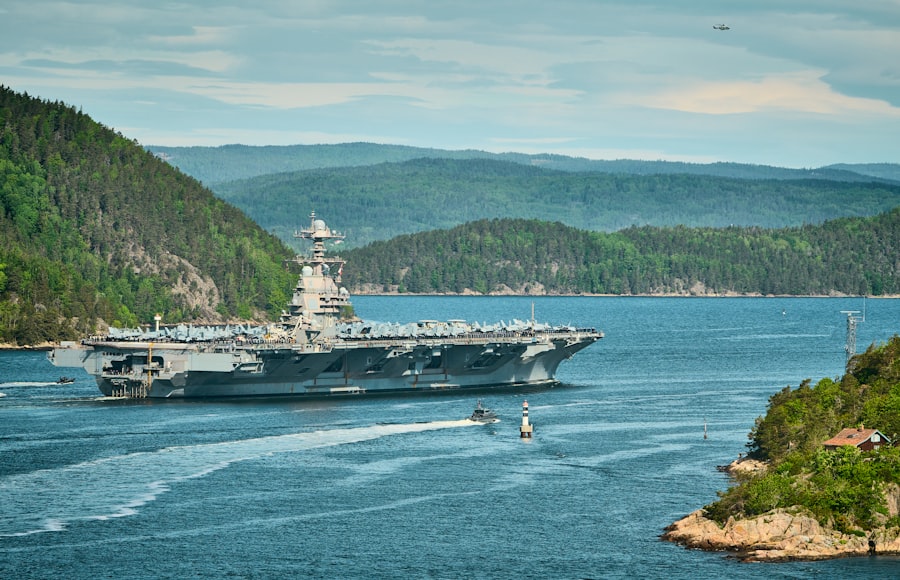
The US Navy has historically relied on technological superiority as a cornerstone of its strategic advantage. The development and deployment of state-of-the-art platforms and weapons systems have been seen as a decisive edge. However, the rapidly evolving nature of technology, coupled with the proliferation of advanced capabilities to potential adversaries, casts doubt on the sustainability of this illusion.
The Arms Race of Obsolescence
The constant pursuit of technological advancement can inadvertently create an arms race of obsolescence. As the Navy invests billions in developing and fielding the latest generation of ships and aircraft, potential adversaries are often looking for ways to counter these expensive platforms with more affordable, asymmetric means. The illusion is that a relentless march of technological innovation will perpetually keep the Navy ahead, when in reality, it can invite creative countermeasures.
The Counter-Capability Dilemma
Adversaries are not static. They observe, adapt, and develop effective counter-capabilities. Anti-ship missiles, cyber warfare capabilities, and advanced sensor networks are examples of technologies that have significantly challenged traditional naval dominance. The illusion is that the Navy’s technological lead is unassailable, when in fact, it is a constantly shifting and contested landscape.
The Cost of Cutting-Edge
The stratospheric costs associated with developing and acquiring cutting-edge military technology are a significant burden. These costs can divert resources from other critical areas, such as readiness, personnel, or research into entirely new operational concepts. The illusion is that the benefits of technological superiority always outweigh the immense financial investment and opportunity costs.
The Human Element in a Technological Age
While technology is central to naval power, the human element remains indispensable. Effective strategy requires skilled sailors, innovative tacticians, and adaptable leaders. The illusion is that advanced technology can entirely compensate for deficiencies in human capital or that strategic planning can be solely focused on hardware, neglecting the critical role of human judgment, training, and leadership.
The Over-Reliance on Automation
The drive for efficiency and reduced manning can lead to an over-reliance on automation. While automation can certainly enhance capabilities, it can also introduce vulnerabilities. Complex systems can fail, and the ability of human operators to understand, adapt, and troubleshoot when automated systems go awry is crucial. The illusion is that purely technological solutions are always more reliable and effective than human-supervised systems.
The Skills Gap
The rapid pace of technological change also creates a skills gap. The Navy must constantly train and retrain its personnel to operate and maintain new and emerging systems. Failure to keep pace with this demand can render even the most advanced platforms less effective. The illusion is that the human element will seamlessly adapt to technological evolution without significant strategic effort and investment in training and education.
The Illusion of Global Reach Without Strategic Reckoning
The US Navy’s ability to project power globally has been a defining characteristic of its role in international security. However, the assumption that this reach can be maintained indefinitely without significant strategic reassessment and adaptation is a potentially dangerous illusion.
The Spreading of Commitments and Decrepping of Resources
The very success of the Navy in maintaining global presence has led to a diffusion of its resources and attention across numerous theaters of operation. This can stretch capabilities thin and create vulnerabilities. The illusion is that a vast global footprint automatically equates to unchallenged influence and security, when in fact, it can dilute focus and create overextension.
The “One War” Planning Fallacy
Historically, US military planning has often been guided by the assumption that it could fight and win one major conflict at a time. However, the complex geopolitical landscape of the 21st century suggests a higher probability of concurrent or near-concurrent crises. The Navy’s strategic planning must therefore account for the ability to respond effectively across multiple theaters simultaneously, a challenge that stretches current resource allocations and strategic paradigms.
The Siren Song of Forward Deployment
Forward deployment, the positioning of naval assets at sea or in bases around the world, is a critical tool for power projection. However, it also creates a constant demand for resources, maintenance, and operational tempo. The illusion is that a continuous forward presence is a simple matter of logistics and procurement, when it can also create a self-perpetuating cycle of demand that can crowd out other strategic priorities.
The Rise of Distributed Maritime Operations
The advent of advanced technologies and the increasing capabilities of potential adversaries necessitate a shift towards more distributed and networked operational concepts. The illusion here lies in clinging to traditional, centralized command and control structures when a more resilient, decentralized approach might be strategically superior.
The Network-Centric Mirage
While “network-centric warfare” has been a buzzword for decades, its practical implementation remains a significant challenge. The reliance on complex communication networks to enable distributed operations creates inherent vulnerabilities to cyber-attack and electronic warfare. The illusion is that a perfectly integrated and secure network is achievable, when in reality, it remains a constant and evolving battleground.
The Asymmetric Threat Landscape
The Navy’s planning must grapple with the fact that future conflicts may not be fought on its terms. Adversaries are increasingly employing asymmetric tactics, seeking to exploit perceived weaknesses in the Navy’s strengths. This includes using cyber weapons, swarming tactics with unmanned systems, and developing sophisticated anti-access/area denial (A2/AD) capabilities. The illusion here is that the Navy can dictate the terms of engagement in all future conflicts, rather than adapting to an adversary’s chosen battlefield.
In examining the complexities of US Navy strategic planning, it is essential to consider the various illusions that can cloud decision-making processes. A related article that delves into these challenges can be found at In the War Room, where experts discuss the implications of misjudgments and the importance of clear-eyed assessments in military strategy. Understanding these factors is crucial for developing effective naval operations that can adapt to an ever-changing global landscape.
The Illusion of Strategic Agility in a Rigid Framework
| Illusion | Description |
|---|---|
| Over-reliance on technology | Relying too heavily on advanced technology without considering potential vulnerabilities. |
| Underestimating adversaries | Failing to accurately assess the capabilities and intentions of potential opponents. |
| Assuming uncontested control | Believing that the US Navy will always have uncontested control of the seas. |
| Ignoring asymmetric threats | Disregarding the potential impact of asymmetric threats such as cyber attacks or unconventional warfare. |
Strategic agility – the ability to adapt quickly and effectively to changing circumstances – is paramount in a dynamic geopolitical environment. However, the very structures and processes that govern US Navy strategic planning can inadvertently hinder this agility.
Navigating the Acquisition Maze
The defense acquisition process is notoriously slow and complex. From initial concept development to fielding, the journey of a new weapon system or capability can take well over a decade. This labyrinthine process makes it exceedingly difficult to pivot quickly to address emergent threats or capitalize on rapidly developing technologies. The illusion is that a system designed for deliberate, long-term development can simultaneously provide strategic agility.
The “Requirements Creep” Phenomenon
Once a program is initiated, requirements can often expand and evolve, leading to delays and cost overruns. This “requirements creep” can stem from a variety of sources, including evolving threat assessments, technological advancements, or inter-service rivalries. The illusion is that requirements are static and objective, when in reality they are fluid and subject to political and institutional pressures.
The Lock-in Effect
The immense investments made in developing and procuring specific platforms and systems create a significant “lock-in effect.” Once these systems are in place, it becomes incredibly difficult and costly to change course, even if strategic assessments indicate a need for a different approach. This can lead to the Navy remaining committed to outdated strategies or technologies simply because they are already deeply embedded in the force structure.
The Cultural Resistance to Change
Beyond formal processes, cultural factors play a significant role in shaping strategic planning. A deeply ingrained institutional culture, while fostering cohesion and tradition, can also create a resistance to radical change or the adoption of unconventional approaches. The illusion is that the Navy’s culture is inherently adaptive, when in fact it can be a formidable barrier to rapid strategic evolution.
The Fear of Failure
In a hierarchical organization, the fear of failure can be a powerful impediment to innovation. Officers and planners may be reluctant to propose or champion initiatives that deviate significantly from established norms, fearing the professional repercussions if their proposals do not yield the anticipated results. This can lead to a preference for safe, incremental strategies over potentially transformative but riskier ones.
The Civilian-Military Divide in Strategy
The relationship between civilian leadership and the military in shaping strategic policy can also be a source of friction. While civilian oversight is essential for democratic accountability, disagreements over priorities, resource allocation, and the fundamental direction of strategy can lead to delays and inconsistencies. The illusion is that a unified and harmonious strategic vision between the civilian and military echelons is always readily achievable.
In conclusion, the illusions surrounding US Navy strategic planning are not indicative of malicious intent or outright incompetence. Rather, they are the natural byproducts of operating within a complex, large-scale institution in a rapidly evolving world. Recognizing these illusions is the crucial first step towards achieving genuine strategic foresight, decision-making agility, technological relevance, and adaptable global reach. Without a critical examination and willingness to challenge deeply held assumptions, the US Navy risks continuing to plan for a future that may never arrive, while being ill-prepared for the one that inevitably will.
FAQs
What is the US Navy strategic planning?
The US Navy strategic planning refers to the process of setting long-term goals and objectives, determining the best course of action to achieve those goals, and allocating resources to support the plan. It involves assessing potential threats, identifying opportunities, and developing strategies to maintain the Navy’s readiness and effectiveness.
What are some common illusions in US Navy strategic planning?
Some common illusions in US Navy strategic planning include overestimating the capabilities of potential adversaries, underestimating the complexity of future conflicts, assuming that technological superiority guarantees success, and neglecting the importance of adaptability and flexibility in the face of evolving threats.
How do illusions impact US Navy strategic planning?
Illusions can impact US Navy strategic planning by leading to flawed assumptions, unrealistic expectations, and misallocation of resources. They can also result in a lack of preparedness for emerging threats and challenges, potentially undermining the Navy’s ability to effectively fulfill its mission.
What are the consequences of falling victim to strategic planning illusions?
The consequences of falling victim to strategic planning illusions in the US Navy can include decreased operational effectiveness, increased vulnerability to adversaries, wasted resources on unnecessary or ineffective capabilities, and a failure to adequately address emerging threats and challenges.
How can the US Navy mitigate strategic planning illusions?
The US Navy can mitigate strategic planning illusions by fostering a culture of critical thinking and open dialogue, conducting rigorous and objective assessments of potential threats and challenges, seeking diverse perspectives and expertise, and regularly reassessing assumptions and strategies in light of new information and developments.