
Submarines, those silent hunters of the deep, represent a pinnacle of human ingenuity. Their ability to navigate the crushing pressures of the abyssal plains, remain concealed for extended periods, and deliver devastating payloads is a testament to complex engineering and relentless innovation. This article delves into the foundational principles and advanced methodologies that underpin submarine design and operation, demystifying the secrets behind these sophisticated underwater vessels.
At its core, a submarine’s ability to dive and surface is governed by Archimedes’ principle and the delicate manipulation of buoyancy. Understanding how these forces are managed is crucial to appreciating the engineering marvel that a submarine represents.
Archimedes’ Principle and Displacement
Archimedes’ principle states that the buoyant force on a submerged object is equal to the weight of the fluid displaced by the object. For a submarine, this means that to float, the weight of the water it displaces must be greater than or equal to its own weight. Conversely, to dive, its weight must exceed the weight of the water it displaces. This seemingly simple concept forms the bedrock of submarine operation.
Ballast Tanks and Buoyancy Control
The primary mechanism for controlling a submarine’s buoyancy is its set of ballast tanks. These massive tanks, akin to the lungs of the submarine, can be flooded with seawater to increase the vessel’s overall density, causing it to submerge. To surface, compressed air is blown into these tanks, expelling the water and decreasing the submarine’s density, making it buoyant again. This precise control over the intake and expulsion of water allows for precise depth adjustments and controlled surfacing/submergence maneuvers.
The Role of Trim and Stability
Beyond simply floating or sinking, a submarine’s stability and trim are paramount. Trim refers to the submarine’s attitude in the water – whether it’s level, nose-up, or nose-down. Trim tanks, smaller than main ballast tanks, are strategically placed to adjust the distribution of weight along the submarine’s length, allowing for fine-tuning of its angle. Stability, on the other hand, refers to the submarine’s tendency to return to an upright position after being disturbed. Designers meticulously calculate the placement of heavy components and the shape of the hull to ensure inherent stability, safeguarding against capsizing or uncontrolled rolls.
In the fascinating world of submarine engineering, many secrets have been unveiled that shed light on the advanced technologies and design principles that make these underwater vessels so formidable. For those interested in exploring this topic further, a related article titled “Submarine Engineering Secrets Revealed” provides an in-depth look at the innovations and challenges faced by engineers in this field. You can read more about it by visiting this link.
Hull Design and Pressure Resistance
The integrity of a submarine’s hull is arguably its most critical feature, acting as a shield against the immense pressures of the deep sea. The design and construction of this pressure hull involve advanced materials and sophisticated engineering techniques.
The Pressure Hull: A Fortress Against Hydrostatic Forces
The pressure hull is the primary structural component that protects the crew and equipment from the crushing forces of water pressure. This inner hull is typically cylindrical or spherical in shape, as these geometries are inherently strong against external compression. The material of choice has evolved over time, from high-tensile steel to more advanced alloys, each offering increased strength-to-weight ratios. The thickness of the pressure hull can range from several inches to over a foot, depending on the submarine’s intended maximum operating depth.
Outer Hull and Hydrodynamic Efficiency
Surrounding the pressure hull is an outer hull, sometimes referred to as the “light hull.” This outer shell is not designed to withstand significant pressure but rather serves several crucial functions. It houses the ballast tanks, provides a hydrodynamically efficient shape for reduced drag, and often contains sonar arrays and other external equipment. The space between the pressure hull and the outer hull also acts as a buffer against impacts and can be utilized for various systems.
Advanced Materials and Fabrication Techniques
Modern submarine construction relies heavily on specialized high-strength low-alloy (HSLA) steels, which offer a superior balance of strength, ductility, and weldability. These steels are often heat-treated to further enhance their properties. Fabrication involves meticulous welding techniques, often performed in controlled environments, to ensure the structural integrity of every seam. Non-destructive testing methods, such as X-ray and ultrasonic inspections, are routinely employed to detect any microscopic flaws that could compromise the hull’s strength under pressure.
Propulsion and Power Systems
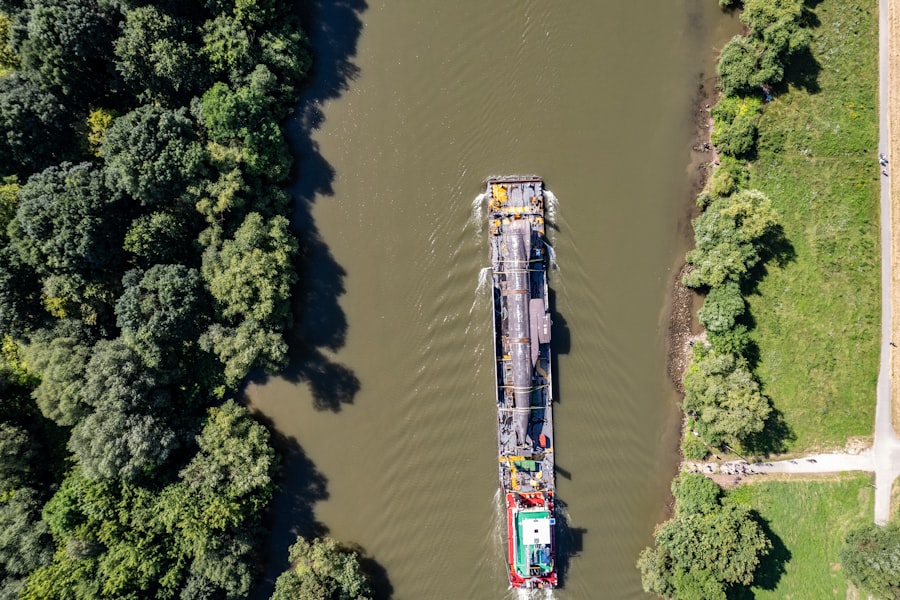
The ability to operate silently and independently for extended periods is a hallmark of submarine warfare. This capability is directly linked to the sophisticated propulsion and power generation systems employed within these vessels.
Nuclear Power: The Enduring Heart of Modern Submarines
For most modern military submarines, particularly those designed for long-duration patrols, nuclear power is the propulsion system of choice. Nuclear reactors provide a virtually limitless source of power, allowing submarines to operate indefinitely without needing to refuel. The heat generated by the reactor converts water into steam, which then drives turbines connected to reduction gears, ultimately turning the propeller. This closed-cycle system also provides ample electrical power for all onboard systems. The challenges in nuclear propulsion include shielding the crew from radiation, ensuring reactor safety under extreme conditions, and managing radioactive waste.
Diesel-Electric Propulsion: A Conventional Alternative
Conventional submarines, often referred to as attack submarines, typically employ diesel-electric propulsion. Diesel engines generate electricity, which is then used to power electric motors that drive the propeller. When submerged, these submarines rely on large battery banks to power their electric motors. This limits their underwater endurance and speed compared to nuclear submarines. However, advancements in battery technology, such as lithium-ion batteries and fuel cells (Air-Independent Propulsion – AIP systems), are significantly extending the submerged endurance of conventional submarines, making them a formidable threat.
Propeller Design and Acoustic Signature Reduction
The propeller, or propulsor, is a critical component in achieving silent operation. Early propellers were often characterized by cavitation – the formation of bubbles due to pressure differences, which generated significant noise. Modern submarine propellers are meticulously designed to minimize cavitation and reduce their acoustic signature. They often feature complex geometries, such as skewed blades, and are precisely manufactured to extremely tight tolerances. Pump-jet propulsors, a more advanced design, are sometimes employed, offering even greater acoustic stealth by enclosing the propeller within a shroud, reducing turbulence and masking noise.
Navigation, Communication, and Sensor Systems
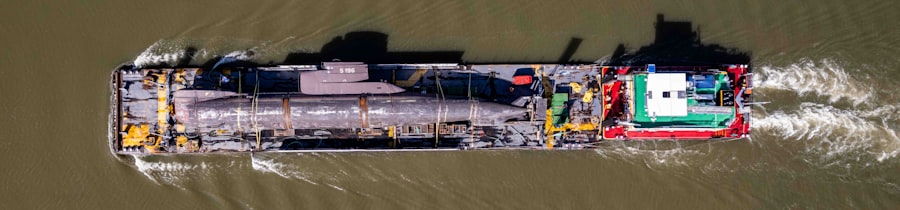
Operating in a dark and unforgiving environment, submarines rely on a sophisticated suite of navigation, communication, and sensor systems to understand their surroundings and interact with the outside world.
Inertial Navigation Systems (INS): Navigating Without External References
When submerged, GPS signals cannot penetrate the water. Therefore, submarines rely on highly accurate Inertial Navigation Systems (INS) to track their position. An INS uses gyroscopes and accelerometers to continuously measure changes in the submarine’s movement and orientation, thereby calculating its present position. While incredibly precise, INS systems accumulate small errors over time, necessitating occasional updates from external sources when surfaced or at periscope depth.
Sonar Systems: The Eyes and Ears of the Deep
Sonar (Sound Navigation and Ranging) is the primary sensory input for a submarine. Active sonar emits sound waves and listens for their echoes, providing information about the range, bearing, and speed of objects. However, active sonar reveals the submarine’s presence, so passive sonar, which simply listens for sounds emitted by other vessels, is heavily prioritized for covert operations. Modern submarines incorporate highly sensitive hydrophone arrays, meticulously integrated into the hull, to detect even the faintest sounds from distant targets.
Communication Challenges and Solutions
Communicating with a submerged submarine presents unique challenges. Radio waves, while effective in air, are rapidly attenuated by seawater. For surface communication, submarines deploy masts for conventional radio, satellite, and data link transmissions. While submerged, extremely low frequency (ELF) radio waves can penetrate shallow depths, but their data rates are exceptionally slow. Very low frequency (VLF) communication offers slightly better capabilities but still faces significant limitations. Advanced methods under development include blue-green laser communications and acoustical modems for limited data transfer over short ranges.
In the fascinating world of submarine engineering, many secrets have been unveiled that shed light on the advanced technologies used in modern submarines. A related article that delves deeper into these innovations can be found at In the War Room, where experts discuss the implications of these engineering breakthroughs on naval strategy and underwater operations. This exploration not only highlights the complexity of submarine design but also emphasizes the critical role these vessels play in contemporary military tactics.
Life Support and Habitability
| Aspect | Details | Significance |
|---|---|---|
| Hull Design | Use of anechoic tiles to reduce sonar detection | Enhances stealth capabilities |
| Propulsion System | Pump-jet propulsors replacing traditional propellers | Reduces noise and increases efficiency |
| Power Source | Nuclear reactors with improved fuel efficiency | Allows longer submerged endurance |
| Navigation | Advanced inertial navigation systems combined with GPS | Improves accuracy in underwater positioning |
| Communication | Very low frequency (VLF) and extremely low frequency (ELF) communication | Enables communication while submerged at depth |
| Sonar Technology | Passive and active sonar arrays with enhanced signal processing | Improves detection and tracking of targets |
| Materials | Use of high-strength titanium alloys for pressure hulls | Increases depth capability and durability |
Beyond the mechanical marvels, a submarine is also a self-contained ecosystem designed to sustain its human occupants for extended periods in an isolated and challenging environment.
Atmosphere Management: The Breath of Life
Maintaining a breathable atmosphere is paramount. As the crew consumes oxygen and exhales carbon dioxide, the air must be constantly refreshed. Oxygen is typically generated through electrolysis of stored water or from oxygen candles. Carbon dioxide scrubbers, often employing chemicals like lithium hydroxide or amine absorbents, remove CO2 from the air. Trace contaminants, such as volatile organic compounds, are also removed by specialized filters and catalytic converters to ensure air quality. This intricate system is carefully monitored to maintain optimal atmospheric composition.
Water and Waste Management
Freshwater is a precious commodity on a submarine. Seawater is desalinated using reverse osmosis or distillation plants to provide potable water for drinking, cooking, and hygiene. Waste management involves compacting and storing solid waste for disposal upon surfacing. Liquid waste is treated and sometimes discharged, though regulations for such discharges are becoming increasingly stringent. The efficient management of these resources is critical for long-duration patrols.
Habitability and Psychological Considerations
Life aboard a submarine, though technologically advanced, is inherently challenging. The confined spaces, lack of natural light, and prolonged isolation can take a toll on crew morale. Designers strive to maximize living space, even if minimal, and incorporate features that mitigate claustrophobia and stress, such as communal areas, exercise equipment, and access to entertainment. Psychological support programs are also crucial for maintaining the well-being of the crew during extended deployments, ensuring that the human element, as much as the technological, remains robust.
In conclusion, the submarine is a complex interplay of physics, material science, and human ingenuity. From the fundamental principles of buoyancy and pressure resistance to the advanced systems for propulsion, navigation, communication, and life support, every aspect is meticulously engineered to enable operation in one of Earth’s most demanding environments. Understanding these “secrets” reveals not just the technological prowess involved, but also the relentless pursuit of capabilities that push the boundaries of what is possible beneath the waves. The silent patrol of a submarine, therefore, is a testament to the comprehensive and unwavering dedication to conquering the deep.
FAQs
What are some key engineering challenges in submarine design?
Submarine engineering must address challenges such as pressure resistance at great depths, stealth capabilities, efficient propulsion systems, and life support for crew members in confined underwater environments.
How do submarines maintain structural integrity under high pressure?
Submarines use specially designed pressure hulls made from high-strength materials like titanium or steel alloys, shaped to evenly distribute external pressure and prevent collapse at deep ocean depths.
What propulsion systems are commonly used in modern submarines?
Modern submarines typically use nuclear reactors for propulsion, providing long endurance and high speed, or diesel-electric systems for quieter operation and shorter missions.
How is stealth achieved in submarine engineering?
Stealth is achieved through sound-dampening materials, streamlined hull designs to reduce noise, anechoic coatings to absorb sonar waves, and quiet propulsion technologies to minimize acoustic signatures.
What life support systems are essential for submarine crews?
Life support systems include air purification and oxygen generation, carbon dioxide removal, temperature and humidity control, waste management, and food storage to sustain crew members during extended underwater missions.