Submarine communication systems represent a critical, yet often inscrutable, facet of naval operations. Their primary function is to maintain a persistent link between submerged submarines and their command structures, a challenge of formidable proportions given the immense electromagnetic attenuating properties of seawater. Unlike surface vessels that can readily broadcast and receive radio waves, submarines operate in a digital blackout zone, necessitating highly specialized technologies to pierce the depths. This article aims to demystify these systems, exploring their historical evolution, the fundamental scientific principles at play, current technological approaches, and the ongoing challenges and future directions in the field.
The ocean, particularly at significant depths, acts as a formidable barrier to conventional electromagnetic signals. Radio waves, the backbone of most terrestrial and aerial communication, are rapidly absorbed by saltwater. The very properties that make seawater an excellent conductor also render it a highly efficient absorber of higher frequency electromagnetic radiation. For a submarine, this means that as it dives deeper, its ability to communicate using standard radio equipment diminishes exponentially. This isolation is not merely an inconvenience; it is a strategic necessity for submarines, enabling them to operate covertly and avoid detection. However, this very stealth creates a profound communication paradox: to be hidden, they must be disconnected, and to be connected, they risk exposure.
The Nature of the Problem: Electromagnetic Propagation in Water
Understanding the challenges of submarine communication requires a grasp of how electromagnetic waves interact with conductive media like saltwater. The conductivity of seawater, typically around 4 Siemens per meter, causes rapid attenuation of radio waves. This attenuation is frequency-dependent, with higher frequencies being absorbed far more quickly than lower frequencies. At typical submarine operating depths, common VHF and UHF radio frequencies are simply unusable. The depth of penetration for these frequencies is measured in millimeters or centimeters, rendering them entirely ineffective. This necessitates the exploration of electromagnetic spectrum regions that are less affected by water’s attenuating properties, primarily the extremely low frequency (ELF) and very low frequency (VLF) bands.
The Strategic Imperative: Why Submarine Communication Matters
The ability to communicate with submerged submarines is paramount for several strategic reasons. Firstly, it allows for the dissemination of operational orders, intelligence updates, and mission modifications. Without reliable communication, submarines would be operating with outdated information, potentially compromising their effectiveness and safety. Secondly, it enables the command to recall submarines, alter their patrol areas, or direct them to specific targets. In a rapidly evolving geopolitical landscape, the flexibility to redirect submerged assets is crucial. Finally, and perhaps most importantly, it allows for the transmission of critical status updates and confirmation of successful mission completion. The isolation of a submarine commander, while a strategic advantage, also places a heavy burden of responsibility. Communication provides a vital lifeline, ensuring that critical decisions are made with the best available information and that the submarine remains integrated into the broader naval strategy.
Submarine communication systems have long been shrouded in secrecy due to their critical role in national security and military operations. For those interested in delving deeper into this fascinating topic, a related article can be found at In The War Room, which explores the advancements and challenges faced by modern naval communication technologies. This resource provides valuable insights into how submarines maintain secure and reliable communication while remaining undetected beneath the waves.
Historical Roots: From Wires to Waves
The early days of submarine warfare presented significant communication hurdles. As submarines evolved from experimental craft to integral components of naval fleets, the need for reliable communication became increasingly apparent. Initial attempts were rudimentary, relying on physical tethers or extremely limited short-range methods. The development of more sophisticated systems was a gradual process, driven by technological advancements and the lessons learned in conflict.
The Dawn of Submersible Communication: Early Innovations
In the nascent stages of submarine development, communication was largely confined to line-of-sight methods or the deployment of floating antennae. Submarines could surface and raise a mast with a radio antenna, but this immediately compromised their stealth. Some early submarines experimented with carrying wire connections to surface vessels, allowing for limited communication while submerged. However, these systems were cumbersome, vulnerable, and severely limited in range and operational flexibility. The concept of communicating with a truly submerged vessel remained a distant aspiration, one that would require a fundamental re-evaluation of electromagnetic principles.
The Impact of World Wars: Driving the Need for Improvement
The two World Wars served as significant catalysts for the development of improved submarine communication systems. During World War I, submarines were primarily used for reconnaissance and commerce raiding, and communication was often ad hoc and unreliable. However, as submarine technology advanced and their operational capabilities expanded, the need for more robust communication became critical. The advent of more sophisticated sonar and radio technologies during World War II further highlighted the limitations of existing communication methods. The ability to detect submarines meant that their exposure on the surface for communication was a significant risk. This spurred research into methods that could penetrate deeper into the water, a challenge that began to be addressed with the exploration of lower frequency radio waves. Post-war, the Cold War arms race intensified, placing an even greater emphasis on maintaining a covert communication link with nuclear submarines, which required the ability to communicate while remaining deep and undetected.
The Science of Submerged Signals: Navigating the Electromagnetic Depths

The core of submarine communication lies in overcoming the profound attenuation of electromagnetic waves in seawater. This is achieved by operating at specific frequencies and employing highly specialized transmission and reception techniques. The deep ocean environment dictates the parameters of any successful communication system.
The Lower Frequency Advantage: Exploiting the Spectrum
The fundamental principle behind many modern submarine communication systems is the use of extremely low frequency (ELF) and very low frequency (VLF) radio waves. These frequencies, ranging from approximately 3 Hz to 30 kHz (ELF) and 30 kHz to 300 kHz (VLF), exhibit significantly less attenuation in seawater compared to higher frequencies. While still attenuated, the rate of loss is slow enough to allow signals to penetrate to depths reachable by submarines. Think of it like trying to send a faint whisper through a thick fog versus a booming shout. The lower frequency waves are the “booming shouts” that can, with difficulty, make their way through the “fog” of seawater.
ELF Communication: The Deepest Reach
ELF communication, typically in the 3 to 30 Hz range, offers the deepest penetration into saltwater, theoretically reaching depths of hundreds or even thousands of meters. However, the trade-offs are significant. The extremely long wavelengths (tens of thousands of kilometers) require massive antenna structures for transmission, often spanning hundreds of square kilometers. These antennas are typically deployed on land, often in remote locations, and their construction and maintenance are colossal undertakings. Furthermore, the data transmission rates for ELF are extraordinarily low, measured in bits per minute rather than bits per second. This means that ELF is primarily used for transmitting short, crucial messages, such as “Go to periscope depth” or “You are ordered to surface,” rather than complex data or voice communications.
VLF Communication: A Compromise in Depth and Bandwidth
VLF communication operates at higher frequencies than ELF, generally between 30 kHz and 300 kHz. This results in shorter wavelengths and consequently smaller, though still substantial, antenna requirements compared to ELF. VLF antennas can often be the length of a ship’s mast, or even kilometers long when deployed on land. VLF offers slightly better data transmission rates than ELF, albeit still relatively slow. It allows for the transmission of more information than ELF, making it suitable for more detailed instructions and status updates. However, the depth penetration of VLF is less than that of ELF, typically reaching a few tens of meters, depending on seawater conductivity. Submarines operating at greater depths must rely on the greater penetration of ELF or employ other methods to receive VLF signals.
Antennas: The Unsung Heroes of Submerged Communication
The effectiveness of any radio communication system hinges on its antennas. For submarines, creating antennas that can effectively transmit and receive signals while submerged or at periscope depth presents unique engineering challenges.
Shore-Based Transmitter Antennas: The Giants of Communication
The enormous scale of VLF and ELF transmitter antennas is a testament to the physics involved. These antennas are often erected on land and consist of vast networks of wires covering many acres. The majority of the antenna’s length is often comprised of “top-loading” wires, which increase the effective electrical length of the antenna without requiring an equally massive physical height. These shore-based facilities are crucial as they are the primary means of initiating communication with submerged submarines, broadcasting powerful signals that can be detected from significant distances beneath the waves.
Submarine Antennas: A Trade-off Between Stealth and Capability
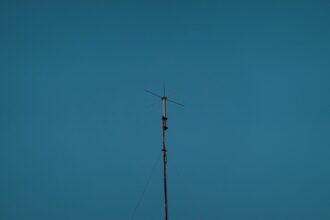
Submarines employ a variety of antenna types to facilitate communication. When at periscope depth, they can deploy a retractable mast-mounted antenna for VLF and HF (High Frequency) reception, and sometimes even for limited transmission. For deeper operations, submarines may deploy a towed antenna, a long buoyant cable that floats closer to the surface and can receive stronger signals. Modern submarines also utilize specialized internal antennas and even techniques like inductive coupling for extremely short-range communication with support vessels when necessary. The constant trade-off for submarine antennas is between their size (which dictates signal strength and reception capability) and their stealth (smaller, less obtrusive antennas are harder to detect).
Modern Systems: Bridging the Depths with Technology
The evolution of submarine communication has not stopped with VLF and ELF. Continuous innovation aims to improve the robustness, flexibility, and security of these vital links. The increasing reliance on digital technologies and the integration of multiple communication methods are key trends.
Satellite Communication: The Surface Skimmer’s Advantage
While submarines cannot directly use traditional satellite communication when fully submerged, they can leverage this technology when at periscope depth or on the surface. The deployment of a mast-mounted antenna allows for the establishment of secure satellite links, enabling the transmission of large volumes of data, including detailed reports, imagery, and even voice communication. This provides a significant upgrade in communication capabilities, albeit with the inherent risk of exposure. The development of low-probability-of-intercept (LPI) and low-probability-of-detection (LPD) satellite communication systems further enhances the security of these transmissions.
Underwater Acoustics: The Sound of Communication
Beyond electromagnetic waves, sonar and acoustic communication offer another avenue for communication within the underwater environment. Acoustic signals can travel long distances through water and are not significantly affected by depth in the same way as radio waves. However, acoustic communication also has limitations, including relatively low data rates, susceptibility to noise and interference, and the risk of detection. This method is often used for short-range, tactical communication between submarines or between submarines and other underwater assets.
Acoustic Modems: Underwater Data Transfer
Acoustic modems act as the underwater equivalents of radio modems, converting digital data into acoustic signals for transmission and vice versa. These systems are crucial for enabling communication between submarines and unmanned underwater vehicles (UUVs), as well as for certain tactical exchanges. The development of robust acoustic communication protocols is an ongoing area of research, focusing on improving reliability and reducing the likelihood of signal interception.
Network-Centric Warfare: Integrating Submarines into the Digital Battlefield
The concept of network-centric warfare, where all assets are interconnected and share information seamlessly, extends to submarines. While the deep ocean presents a challenge to full integration, efforts are underway to create secure and resilient communication pathways that allow submarines to contribute to and benefit from the broader operational network. This involves developing sophisticated data fusion techniques and secure communication protocols that can bridge the gap between submerged operations and the surface-based command and control infrastructure.
Submarine communication systems have long been shrouded in secrecy, with advancements in technology continuously evolving to enhance their capabilities. A fascinating article that delves into the intricacies of these systems can be found at this link, where readers can explore how submarines maintain secure and reliable communication underwater. Understanding these technologies is crucial for both military strategy and international security, as they play a vital role in modern naval operations.
Challenges and Future Directions: The Unending Quest for Connectivity
| Metric | Description | Typical Value | Unit | Notes |
|---|---|---|---|---|
| Communication Frequency | Operating frequency range for underwater communication | 3 – 30 | kHz | Low frequencies used for long-range communication |
| Data Transmission Rate | Speed of data transfer in submarine communication | 100 – 2400 | bps (bits per second) | Limited by underwater acoustic channel bandwidth |
| Communication Range | Maximum effective communication distance | 10 – 50 | km | Depends on frequency, power, and environmental conditions |
| Signal Attenuation | Loss of signal strength per kilometer | 0.1 – 1.0 | dB/km | Higher frequencies experience greater attenuation |
| Encryption Level | Security strength of communication encryption | 256 | bits | Advanced encryption standard (AES) commonly used |
| Latency | Time delay in communication signal transmission | 500 – 1500 | ms | Due to slow speed of sound in water (~1500 m/s) |
| Power Consumption | Energy used by communication system | 50 – 200 | Watts | Varies with transmission power and system design |
Despite significant advancements, the realm of submarine communication remains an arena of ongoing challenges and relentless innovation. The fundamental conflict between stealth and communication, the ever-evolving threat landscape, and the demands of increasingly complex naval operations drive the continuous development of new technologies and strategies.
The Stealth vs. Communication Dilemma: A Perpetual Balancing Act
The inherent paradox of submarine operations – the need for extreme stealth to ensure survivability and operational effectiveness, juxtaposed with the requirement for reliable communication – remains the central challenge. Any communication attempt, whether electromagnetic or acoustic, carries a risk of detection. The quest for communication systems that can operate with the lowest possible signature, minimizing the chances of being detected by enemy sensors, is a constant driving force. This involves developing more efficient transmission techniques, reducing power outputs, and employing sophisticated signal processing to mask intentions.
Counter-Detection and Interception: The Arms Race Beneath the Waves
As communication technologies advance, so too do the capabilities of adversaries to detect and intercept these signals. The development of highly sensitive listening devices and advanced signal analysis techniques means that even seemingly secure communication channels can be vulnerable. This necessitates a continuous evolution of encryption methods, transmission protocols, and a focus on employing methods that are inherently harder to detect and track. The battle to stay ahead in this clandestine race is a defining characteristic of submarine communication development.
Quantum Communication: A Glimpse into the Future
Emerging technologies such as quantum communication hold the potential to revolutionize submarine communications. Quantum entanglement offers the possibility of secure, unhackable communication channels. While still in its nascent stages of development and facing significant engineering hurdles for deployment in the harsh underwater environment, quantum communication represents a potential paradigm shift, offering unprecedented levels of security and potentially overcoming some of the bandwidth limitations of current systems.
The Future of Submarine Communication: Towards Ubiquitous, Secure Connectivity
The future of submarine communication is likely to involve a multi-layered approach, leveraging a combination of existing and emerging technologies. This will include continued reliance on advanced VLF and ELF systems, enhanced satellite communication capabilities with higher data rates and LPI/LPD features, sophisticated acoustic communication networks, and potentially the eventual integration of quantum communication technologies. The goal is to achieve a level of ubiquitous, secure, and resilient connectivity that allows submerged submarines to operate with both the ultimate stealth and the instantaneous situational awareness demanded by modern warfare. The silent depths will continue to be a place where the echoes of communication strive to reach, bridging the vast expanse between the hidden and the informed.
FAQs
What are submarine communication systems?
Submarine communication systems are networks of underwater cables and technologies used to transmit data, voice, and internet signals across oceans and seas. These systems enable global telecommunications by connecting continents and countries through fiber-optic cables laid on the seabed.
How do submarine communication cables work?
Submarine communication cables use fiber-optic technology to transmit data as pulses of light. These cables are composed of multiple layers of protective materials to withstand harsh underwater conditions. Signals are amplified at intervals by repeaters to maintain data integrity over long distances.
What are the main challenges in maintaining submarine communication systems?
Challenges include physical damage from natural events like earthquakes and underwater landslides, human activities such as fishing and anchoring, and technical issues like signal degradation. Maintenance requires specialized ships and equipment to locate faults and repair cables on the ocean floor.
Are submarine communication systems secure?
While submarine cables are generally secure due to their physical protection and encryption technologies, they can be vulnerable to espionage, tapping, or sabotage. Governments and organizations implement strict security measures to monitor and protect these critical infrastructures.
Why are submarine communication systems important?
These systems carry over 95% of international data traffic, making them essential for global internet connectivity, financial transactions, and communication. They support economic activities, national security, and international cooperation by enabling fast and reliable data exchange worldwide.