The Cold War, an era defined by shadows and whispers, birthed some of humanity’s most audacious clandestine operations. Among these, “Operation Ivy Bells” remains a less-heralded yet profoundly significant endeavor, a testament to technological ingenuity and human daring in the pursuit of strategic intelligence. This article aims to unveil the layers of this remarkable operation, moving beyond the sensationalism to a factual examination of its genesis, execution, and ultimate compromise, offering readers a deeper understanding of its complex legacy.
The 1970s marked a pivotal period in the Cold War. Strategic arms limitation talks were underway, and accurate intelligence on Soviet submarine capabilities was paramount. The Soviet Pacific Fleet, based in Vladivostok, was a formidable force, and understanding its command and control – particularly its ballistic missile submarine communications – was a top priority for the United States. Conventional intelligence gathering methods, such as signal interception from land-based stations or airborne platforms, were proving insufficient. These methods were often susceptible to jamming, limited by line-of-sight restrictions, and lacked the subtlety required for comprehensive information acquisition.
The Lure of Inaccessible Depths
The Soviet Union’s communication infrastructure included hardened undersea cables, a seemingly impregnable network that carried vital strategic messages. These cables, laid across the seabed, represented a blind spot for Western intelligence. They were thought to be secure from eavesdropping, a silent highway transmitting information crucial to Soviet defense. However, the seemingly insurmountable challenge of tapping into these deep-sea arteries ignited the imagination of intelligence strategists. The thought was simple, yet profoundly complex in execution: if direct access to the cables could be achieved, a trove of intelligence would be unlocked.
Precursors to Ivy Bells: A Gradual Evolution
Operation Ivy Bells was not born in a vacuum; it was the culmination of years of naval intelligence development and technological advancement. Prior to Ivy Bells, smaller-scale attempts at undersea cable tapping had been undertaken, yielding valuable lessons in deep-sea engineering and hostile environment operations. These early ventures, while not achieving the scale or significance of Ivy Bells, served as critical proving grounds for specialized equipment and operational procedures. The development of advanced underwater vehicles, sophisticated acoustic sensors, and powerful navigational technologies were all contributing factors that made Ivy Bells a feasible, albeit perilous, undertaking.
Operation Ivy Bells was a covert operation during the Cold War that involved the tapping of underwater communication lines to gather intelligence from the Soviet Union. For a deeper understanding of this fascinating operation and its implications on espionage tactics, you can read a related article that delves into the intricacies of underwater surveillance and its historical context. Check it out here: Operation Ivy Bells Explained.
The Technological Marvel: Submarine and Sentinel
The heart of Operation Ivy Bells lay in an audacious technological feat: the deployment of a sophisticated listening device directly onto a Soviet undersea communication cable. This required the merging of cutting-edge submarine technology with highly specialized intelligence-gathering equipment. The deployment platform was no ordinary vessel; it was the USS Halibut (SSN-587), a unique nuclear-powered attack submarine, specifically modified for clandestine missions. Its capabilities extended far beyond standard submarine operations, encompassing meticulous survey work and precise underwater manipulation.
The USS Halibut: A Submersible Swiss Army Knife
The USS Halibut was an unconventional submarine from its inception. Originally designed as a guided missile submarine, it was later refitted for a variety of deep-sea intelligence missions. Its modifications included a large, dedicated compartment for deploying and retrieving covert equipment, as well as sophisticated sonar and navigation systems that allowed for unparalleled precision in underwater operations. The Halibut’s ability to approach and operate silently in close proximity to hostile infrastructure was paramount. It became the unsung hero of many deep-sea intelligence missions, its very existence a testament to naval engineering ingenuity.
The Pod: An Acoustic Ear in the Deep
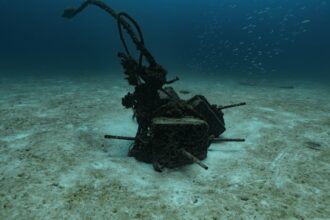
The core intelligence-gathering component was a specially designed “pod,” a self-contained unit capable of intercepting and recording communications from the undersea cable. This pod was not simply a passive listener; it employed inductive coupling, meaning it could extract signals from the cable without physically severing or breaching its outer protective layers. This non-invasive approach was crucial for maintaining the secrecy of the operation. The pod contained advanced recording equipment, powered by a radioisotope thermoelectric generator (RTG) to ensure long-term, uninterrupted operation without the need for external power. Its design was robust, capable of withstanding the immense pressures of the deep ocean and resisting detection from Soviet patrols. The data recorded by the pod was then retrieved periodically by the USS Halibut, which would return to the site, retrieve the full data tapes, and replace them with empty ones, ensuring a continuous flow of intelligence.
Operational Execution: A Dance in the Shadows

The execution of Operation Ivy Bells was a masterclass in covert operations. It involved meticulous planning, expert navigation, and a high degree of risk mitigation. The target cable lay in Okhotsk Sea, in waters controlled by the Soviet Union, making every mission a foray into enemy territory. The crews of the USS Halibut and subsequent submarines involved in the operation faced constant threats, from natural perils of the deep to the ever-present danger of Soviet anti-submarine warfare (ASW) patrols.
Navigating the Hostile Depths
The mission began with the USS Halibut’s silent penetration of Soviet territorial waters. Navigating through known Soviet patrol routes and avoiding detection was a primary concern. The crew relied on sophisticated sonar systems and an intimate knowledge of prevailing currents and seabed topography. Each approach to the cable required pinpoint accuracy, as the pod needed to be precisely positioned and attached without disturbing the surrounding seabed or triggering any alarms. The sheer difficulty of identifying a relatively small cable on the vast, dark ocean floor, often at depths exceeding several hundred meters, cannot be overstated.
The Delicate Art of Tapping
Once the Halibut located the cable, the real challenge began. Specially trained divers, operating in saturation diving systems, were deployed to attach the pod. These divers worked in extreme conditions, battling biting cold, crushing pressure, and limited visibility. Their movements had to be precise and deliberate, ensuring the pod was securely fastened and correctly positioned to intercept the maximum signal strength. The risk of equipment malfunction, diver error, or accidental contact with a Soviet vessel was ever-present. Each successful tap was not merely a technological triumph but a victory of human endurance and specialized skill.
The Unveiling: Betrayal and Compromise

For nearly a decade, Operation Ivy Bells remained one of the United States’ most successful and closely guarded intelligence secrets. The intelligence gleaned from the tapped cable provided invaluable insights into Soviet naval strategy, their technological capabilities, and their command and control infrastructure. This steady stream of information provided a significant strategic advantage during the height of the Cold War. However, like many successful clandestine operations, its ultimate undoing came not from direct enemy action but from within.
The Aldrich Ames Betrayal
The compromise of Operation Ivy Bells can be attributed, with chilling clarity, to Aldrich Ames, a Central Intelligence Agency (CIA) officer who became a Soviet spy. Ames, driven by financial need and a deep-seated resentment, began selling classified information to the KGB in 1985. Among the vast quantities of secrets he betrayed was the existence and precise location of the Ivy Bells listening device. This betrayal was a devastating blow to US intelligence, not only costing millions of dollars in investment but, more importantly, eliminating a critical source of information.
Soviet Retaliation and Retrieval
Upon receiving Ames’s intelligence, the Soviets launched a covert operation of their own. They dispatched a specialized ship to the location of the pod, carefully retrieved it, and analyzed its technology. The discovery of the sophisticated listening device was a major propaganda coup for the Soviets, demonstrating the audacity of American espionage and the vulnerability of their own secure communications. The incident was a stark reminder of the fragile balance of power and the constant cat-and-mouse game played by intelligence agencies. The Americans, realizing the compromise, quickly moved to withdraw any remaining equipment and assess the damage. The loss of Ivy Bells sent ripples through the intelligence community, forcing a re-evaluation of security protocols and a desperate search for the source of the leak, which would eventually lead to Ames’s downfall.
Operation Ivy Bells was a covert operation during the Cold War that involved the tapping of underwater communication cables used by the Soviet Navy. This intricate mission showcased the lengths to which intelligence agencies would go to gather crucial information. For a deeper understanding of the complexities and implications of such operations, you can explore a related article that delves into the broader context of espionage during this era. Check out the insightful piece on intelligence operations to learn more about the fascinating world of Cold War espionage.
The Lingering Legacy: A Cold War Epilogue
| Metric | Details |
|---|---|
| Operation Name | Operation Ivy Bells |
| Purpose | Underwater wiretapping of Soviet communication cables |
| Conducted By | United States Navy and National Security Agency (NSA) |
| Time Period | 1970s to early 1980s |
| Location | Sea of Okhotsk, near Soviet naval bases |
| Technology Used | Submersible vehicles, underwater tapping devices |
| Outcome | Successful interception of Soviet naval communications |
| Compromise | Discovered by Soviet spy Ronald Pelton in 1980 |
| Significance | One of the most daring and successful Cold War espionage operations |
Operation Ivy Bells stands as a testament to the extremes to which nations will go in pursuit of intelligence. Its legacy is complex, encompassing both the brilliance of its conception and the bitter taste of its betrayal. The operation, though compromised, profoundly impacted Cold War intelligence gathering and left an indelible mark on the annals of submarine warfare and covert technology.
Reshaping Intelligence Paradigms
The success of Ivy Bells, even before its compromise, fundamentally altered the United States’ approach to signals intelligence (SIGINT). It proved the feasibility and efficacy of non-traditional, deep-sea intelligence gathering, fostering further investment in advanced undersea technology and specialized naval units. The intelligence gathered from the Soviet cable provided a critical window into Soviet strategic thinking, allowing the US to tailor its responses and negotiations with greater precision. It offered a crucial counter-narrative to official Soviet pronouncements, providing a more accurate assessment of their military capabilities and intentions.
Enduring Lessons in Security and Secrecy
The eventual compromise of Ivy Bells served as a harsh, yet invaluable, lesson in counterintelligence and the paramount importance of internal security. The Aldrich Ames affair, leading to the exposure of numerous highly classified operations and the deaths of many agents, underscored the devastating impact of insider threats. It led to significant reforms within US intelligence agencies, emphasizing stricter vetting processes, enhanced security protocols, and a constant vigilance against espionage from within. The story of Ivy Bells continues to be studied in intelligence circles, not only for its technological prowess but also for its cautionary tale about the human element in espionage. Ultimately, while its lifespan was finite, the echo of Operation Ivy Bells continues to resonate, reminding us of the silent battles fought and the profound implications of uncovering the “untold stories” of history.
FAQs
What was Operation Ivy Bells?
Operation Ivy Bells was a secret United States intelligence-gathering mission during the Cold War. It involved tapping underwater Soviet communication cables in the Sea of Okhotsk to intercept military communications.
When did Operation Ivy Bells take place?
The operation began in the early 1970s and continued for several years during the Cold War, primarily throughout the 1970s and early 1980s.
How was the cable tapping conducted in Operation Ivy Bells?
U.S. Navy submarines and divers covertly located and attached wiretapping devices to Soviet underwater communication cables. These devices recorded the transmissions, which were later retrieved and analyzed by U.S. intelligence agencies.
What was the significance of Operation Ivy Bells?
Operation Ivy Bells provided the U.S. with valuable intelligence on Soviet naval operations and military communications, enhancing U.S. strategic knowledge during the Cold War.
How was Operation Ivy Bells compromised?
The operation was compromised in the early 1980s when a former NSA employee, Ronald Pelton, disclosed details of the mission to the Soviet Union, leading to the cessation of the cable tapping activities.