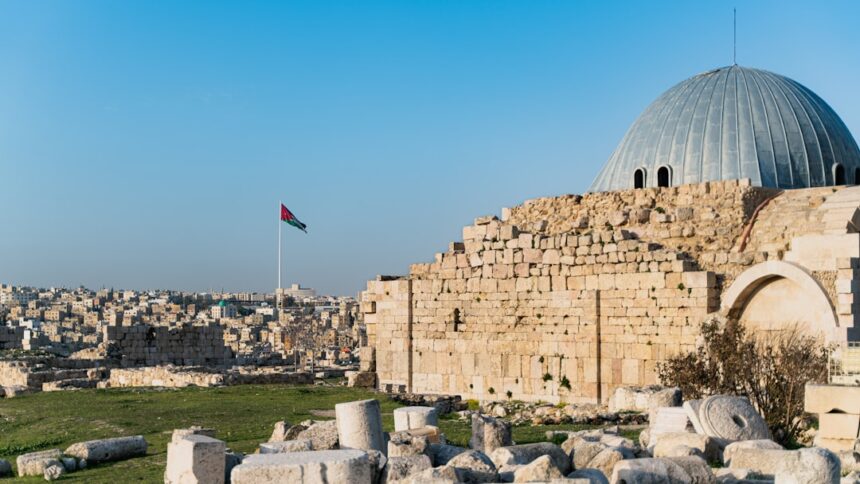
The Middle East, a region perpetually at the crossroads of continents and civilizations, has a geopolitical history as intricate and layered as its ancient archeological sites. Its narrative is not a simple linear progression but a complex tapestry woven with threads of imperial ambitions, religious fervor, resource competition, and the enduring struggle for self-determination. Understanding this history is crucial, not as a mere academic exercise, but as a lens through which to comprehend the region’s present-day complexities and its profound impact on the global order.
Ancient Roots and Imperial Echoes
The foundations of Middle Eastern geopolitics were laid millennia ago, with the rise and fall of empires that shaped its cultural, religious, and political contours. These early power struggles, often driven by control over fertile river valleys and strategic trade routes, established patterns of influence and conflict that would resonate through centuries.
The Fertile Crescent and Early Civilizations
The cradles of civilization, Mesopotamia and the Nile Valley, witnessed the emergence of some of the world’s earliest complex societies. The Sumerians, Akkadians, Babylonians, and Egyptians developed sophisticated administrative systems, legal codes, and religious structures. Their interactions, often characterized by both trade and military campaigns, laid the groundwork for regional power dynamics. Control over water resources, agricultural surplus, and burgeoning urban centers was paramount.
The Persian Empire: A Model of Imperial Administration
The Achaemenid Persian Empire, in particular, stands out for its innovative approach to governance across a vast and diverse territory. They established a centralized bureaucracy, a unified currency, and a well-maintained road system, facilitating trade and communication. Their tolerance for local customs and religions, while not absolute, fostered a degree of stability and integration across their domains, from Anatolia to the Indus Valley. This model of imperial reach and administration would influence subsequent empires.
The Hellenistic and Roman Legacies
The conquests of Alexander the Great introduced Hellenistic culture and political thought to the region, leaving a lasting intellectual and architectural imprint. Following Alexander’s fragmentation, various successor states vied for dominance. The subsequent rise of the Roman Empire further reshaped the geopolitical landscape, incorporating much of the Levant and parts of Mesopotamia into its vast administration. Roman military strength and legal frameworks left an indelible mark on the region’s political organization and its interactions with the wider Mediterranean world.
For those interested in uncovering the hidden truths of Middle Eastern geopolitical history, a compelling article can be found at In the War Room. This resource delves into the complexities and often overlooked narratives that have shaped the region’s political landscape, offering insights into the historical events and decisions that continue to influence contemporary issues.
The Rise of Islam and the Caliphates
The advent of Islam in the 7th century CE marked a monumental shift, initiating a new era of religious, cultural, and political unification that profoundly altered the Middle East’s trajectory. The spread of Islam fostered a sense of shared identity and a vast imperial expanse governed by successive caliphates.
The Rashidun and Umayyad Caliphates: Expansion and Consolidation
The early Islamic conquests, fueled by both religious zeal and the strategic weaknesses of the Byzantine and Sasanian empires, led to the rapid expansion of the Caliphate. The Rashidun Caliphate began this process, followed by the Umayyad Caliphate, which established its capital in Damascus and extended its influence from North Africa to the Indus River. This period saw the integration of diverse populations and the dissemination of Islamic law and culture.
The Abbasid Revolution and the Golden Age
The Abbasid Caliphate, which overthrew the Umayyads in the mid-8th century and moved the capital to Baghdad, is often associated with a “Golden Age” of Islamic civilization. This era witnessed significant advancements in science, philosophy, mathematics, medicine, and art. The Caliphate served as a vibrant intellectual hub, attracting scholars from across its vast territories. However, internal divisions and external pressures gradually weakened the Abbasids, leading to a fragmentation of authority and the rise of semi-autonomous dynasties.
The Mongol Invasions and their Aftermath
The arrival of the Mongol armies in the 13th century was a devastating blow to the existing political order. The sack of Baghdad in 1258 marked the symbolic end of the Abbasid Caliphate in its traditional form. While the Mongol invasions brought considerable destruction, they also led to the establishment of new Mongol successor states, such as the Ilkhanate, which gradually assimilated into the region’s cultural and political fabric, influencing administrative practices and promoting trade routes.
The Ottoman Ascendancy and the Eastern Question
For over six centuries, the Ottoman Empire stood as the dominant power in much of the Middle East, shaping its political boundaries, legal systems, and cultural landscape. Its eventual decline and disintegration in the early 20th century ushered in a new era of fragmentation and the emergence of modern nation-states, often shaped by external interests.
The Conquest of Constantinople and Ottoman Expansion
The Ottoman conquest of Constantinople in 1453 by Mehmed the Conqueror was a watershed moment, marking the end of the Byzantine Empire and the solidification of Ottoman power. The empire’s expansion continued, encompassing Anatolia, the Levant, North Africa, and parts of the Balkans. The Ottomans developed a complex administrative structure, the “millet system,” which allowed religious communities a degree of autonomy under their own leaders, thereby managing a diverse population.
The Ottoman-Safavid Rivalry: A Geopolitical and Religious Divide
The enduring rivalry between the Sunni Ottoman Empire and the Shi’a Safavid Empire (later Afsharid and Qajar dynasties) in Persia was a defining feature of the region’s geopolitical landscape for centuries. This conflict was not merely territorial but also deeply rooted in religious and sectarian differences, shaping alliances and conflicts across the Middle East and beyond. It contributed to the enduring division between Turkish and Persian spheres of influence.
The Sick Man of Europe and the Scramble for Influence
By the 18th and 19th centuries, the vast Ottoman Empire, riddled with internal weaknesses and lagging in industrialization, became known as the “Sick Man of Europe.” This decline attracted the attention of Great Powers such as Britain, France, and Russia, who sought to expand their influence and carve out spheres of interest within the empire’s declining territories. This period saw a complex interplay of diplomacy, economic penetration, and occasional military interventions, sowing the seeds of future conflicts.
The Balkan Wars and the Erosion of Ottoman Power
The series of Balkan Wars in the early 20th century further weakened the Ottoman Empire, resulting in the loss of most of its remaining European territories. This demonstrated the empire’s inability to withstand nationalistic movements and the military might of European powers, accelerating its eventual collapse.
The Age of Mandates and the Birth of Nation-States
The end of World War I and the disintegration of the Ottoman Empire led to a radical redrawing of the Middle East’s political map. The Sykes-Picot Agreement and subsequent mandates established by the victorious Allied powers created artificial borders that often disregarded existing ethnic and sectarian realities, laying the groundwork for generations of instability.
The Sykes-Picot Agreement and its Legacy
The secret Sykes-Picot Agreement of 1916, negotiated between Britain and France, planned the partition of the Ottoman Arab provinces into spheres of influence. This agreement, largely conceived without consultation with the Arab populations themselves, created a lasting resentment and is often cited as a primary source of ongoing regional instability. It exemplifies the imposition of external geopolitical priorities onto the region.
The British and French Mandates: Shaping Modern States
Following the war, Britain and France were granted mandates by the League of Nations to administer former Ottoman territories. Britain took control of modern-day Iraq, Palestine, and Transjordan, while France oversaw Syria and Lebanon. These mandates significantly influenced the formation of the region’s modern nation-states, imposing administrative structures, introducing legal systems, and often favoring certain ethnic or religious groups, leading to internal tensions.
The Balfour Declaration and the Palestinian Question
The Balfour Declaration of 1917, expressing British support for the establishment of a “national home for the Jewish people” in Palestine, introduced a new and deeply contentious element into the region’s geopolitics. The subsequent influx of Jewish immigration and the growing Arab resistance laid the foundation for the perpetual Arab-Israeli conflict, which has remained a central geopolitical challenge in the Middle East.
The Rise of Arab Nationalism and Anti-Colonial Struggles
The experience of colonial rule and the perceived artificiality of the mandated borders fueled the rise of Arab nationalism. Movements advocating for pan-Arab unity and self-determination gained momentum, challenging both the lingering colonial presence and the newly formed states. These struggles for independence often involved armed resistance and political mobilization.
The hidden truths of Middle Eastern geopolitical history often reveal the complex interplay of power, culture, and conflict that has shaped the region over centuries. For a deeper understanding of these intricate dynamics, you might find it enlightening to explore an article that delves into the historical context and contemporary implications of these issues. This insightful piece can be accessed through this link: here. By examining these narratives, we can better appreciate the factors that continue to influence the geopolitical landscape today.
The Cold War and the Proxy Arena
The mid-20th century saw the Middle East become a significant arena for Cold War rivalry between the United States and the Soviet Union. Both superpowers sought to secure allies, access to vital resources, and strategic advantage, often fueling regional conflicts and shaping internal political dynamics.
The Discovery of Oil and its Geopolitical Significance
The discovery and exploitation of vast oil reserves, particularly in the Persian Gulf, fundamentally altered the Middle East’s global geopolitical importance. Oil became a strategic commodity, influencing international relations, driving economic development (albeit unevenly), and making the region a focal point of global energy security concerns. The wealth generated also empowered regional actors, leading to increased military spending and a greater role on the international stage.
The Arab-Israeli Wars: Escalating Regional Tensions
A series of Arab-Israeli wars, beginning with the establishment of Israel in 1948, have been defining events in the post-mandate era. These conflicts, often supported by the superpowers, have led to significant displacement of populations, ongoing political instability, and a persistent source of regional animosity. The wars have also highlighted the complex web of international alliances and interventions.
The Rise of Regional Powers and Ideological Competition
The post-WWII era witnessed the emergence of powerful regional actors, such as Egypt under Gamal Abdel Nasser and later the Islamic Republic of Iran. These states, driven by varying ideologies – from Arab socialism to Islamic revolution – often sought to project their influence and challenge the existing regional order, contributing to a period of ideological competition and proxy conflicts.
The Iranian Revolution and the Rise of Political Islam
The 1979 Iranian Revolution was a seismic event that fundamentally reshaped the geopolitical landscape of the Middle East. The establishment of an Islamic Republic fundamentally altered Iran’s role in the region, challenging existing secular regimes and ushering in an era of heightened sectarian tensions and a greater focus on theopolitical implications of political Islam.
Contemporary Challenges and the Shifting Sands
In the 21st century, the Middle East continues to grapple with a complex interplay of legacy issues and new challenges. The region remains a focal point of global interest due to its strategic location, vital energy resources, and the ongoing impact of its conflicts.
The Iraq War and its Repercussions
The 2003 invasion of Iraq and its subsequent occupation by a U.S.-led coalition had profound and destabilizing consequences for the region. Despite the overthrow of Saddam Hussein’s regime, the war unleashed sectarian violence, contributed to the rise of extremist groups like ISIS, and significantly weakened the Iraqi state, with lasting implications for regional security.
The Arab Spring and its Unfulfilled Promises
The wave of protests and uprisings that swept across the Arab world in 2010-2011, known as the Arab Spring, initially offered hope for democratic change. However, in many cases, these revolutions devolved into prolonged civil wars, political instability, and humanitarian crises, particularly in Syria, Libya, and Yemen, demonstrating the fragility of state institutions and the complexities of political transitions.
The Rise of Non-State Actors and Asymmetric Warfare
The 21st century has witnessed the increasing prominence of non-state actors, such as Al-Qaeda and ISIS. These groups, exploiting ungoverned spaces and exploiting sectarian grievances, have engaged in asymmetric warfare, posing significant threats to regional stability and international security. Their tactics, ideology, and transnational reach present unique geopolitical challenges.
The Ongoing Israeli-Palestinian Conflict and the Quest for Peace
Despite numerous diplomatic efforts, the Israeli-Palestinian conflict remains unresolved. The lack of a lasting peace settlement continues to fuel regional tensions, influence international relations, and contribute to a cycle of violence. The differing narratives, political aspirations, and the occupation continue to be major geopolitical sticking points.
The Global Intersection: Energy, Diplomacy, and Intervention
The Middle East remains inextricably linked to the global economy through its energy resources. This interdependence shapes international diplomacy, fosters alliances, and continues to invite external intervention, albeit in evolving forms. The region’s future geopolitical trajectory will undoubtedly be influenced by the shifting global energy landscape, the dynamics of great power competition, and the resilience of its populations in navigating these complex and often turbulent currents.
FAQs
What is the significance of the Middle East in geopolitical history?
The Middle East has been a crucial region in geopolitical history due to its strategic location at the crossroads of Europe, Asia, and Africa. It is rich in natural resources, particularly oil, and has been a major focus of global powers seeking to exert influence in the region.
What are some hidden truths about the Middle Eastern geopolitical history?
Some hidden truths about Middle Eastern geopolitical history include the role of colonial powers in shaping the region’s borders, the impact of religious and ethnic divisions on political dynamics, and the complex web of alliances and rivalries among Middle Eastern countries and global powers.
How has the Middle Eastern geopolitical history influenced global politics?
The Middle Eastern geopolitical history has had a significant impact on global politics, particularly in terms of energy security, international conflicts, and the spread of ideologies such as Islamism. The region’s history has also shaped the policies of major powers, including the United States, Russia, and China.
What are some key events that have shaped the Middle Eastern geopolitical history?
Key events that have shaped Middle Eastern geopolitical history include the Sykes-Picot Agreement, the establishment of Israel, the Iranian Revolution, the Gulf Wars, and the Arab Spring. These events have had far-reaching consequences for the region and the world.
How does the Middle Eastern geopolitical history impact current events in the region?
The Middle Eastern geopolitical history continues to impact current events in the region, including ongoing conflicts in Syria, Yemen, and Libya, as well as the rivalry between Iran and Saudi Arabia. The legacy of colonialism, the Arab-Israeli conflict, and the rise of extremist groups also continue to shape the region’s political landscape.