In March 1968, the Soviet submarine K-129 vanished without a trace in the depths of the Pacific Ocean, sparking intrigue and speculation that would last for decades. The K-129 was a Golf-class submarine, designed for strategic missile deployment, and its disappearance raised alarms within both the Soviet Union and the United States. The submarine was last known to be operating in an area of the ocean that was heavily monitored by American intelligence, leading to questions about whether it had suffered a catastrophic failure or had been compromised by enemy action.
The mystery surrounding its fate captivated not only military analysts but also the general public, as the Cold War intensified and the stakes of naval warfare escalated. The search for K-129 was fraught with challenges. The submarine was lost in a remote part of the ocean, approximately 1,500 miles northwest of Hawaii, at a depth of over 16,000 feet.
The vastness of the Pacific and the technological limitations of the time made recovery efforts daunting. As days turned into weeks, and weeks into months, hope began to wane. Yet, the U.S.
Navy and intelligence agencies were determined to uncover the truth behind the submarine’s disappearance. The incident not only represented a potential loss of life but also posed significant implications for national security, as the K-129 was believed to be carrying nuclear missiles.
Key Takeaways
- The Soviet submarine K-129 mysteriously disappeared during the Cold War, prompting an extensive search and recovery effort.
- The CIA covertly led the salvage operation using the specially designed ship Glomar Explorer, funded by Howard Hughes.
- Deep-sea salvage of the K-129 was highly challenging due to its depth and the presence of nuclear weapons onboard.
- Declassified documents revealed new insights but left many questions and conspiracy theories about the sinking unresolved.
- The operation influenced US-Soviet relations and provided important lessons for future underwater recovery missions.
The Cold War Context: Soviet Submarine Operations
The Cold War era was characterized by an intense arms race between the United States and the Soviet Union, with both superpowers vying for dominance in military technology and strategy. Submarines played a crucial role in this competition, serving as platforms for nuclear deterrence and covert operations. The Soviet Union invested heavily in its submarine fleet, developing advanced vessels capable of launching ballistic missiles from underwater.
The K-129 was one such vessel, representing a significant advancement in Soviet naval capabilities. During this period, submarine operations were shrouded in secrecy, with both sides employing various tactics to gather intelligence on each other’s movements. The U.S.
Navy conducted extensive surveillance missions to monitor Soviet submarines, while the Soviets sought to enhance their own operational security. The disappearance of K-129 occurred against this backdrop of heightened tension and suspicion, making it a focal point for intelligence analysts who were eager to understand the implications of such a loss. The incident underscored the precarious nature of Cold War dynamics, where every military misstep could lead to catastrophic consequences.
The Hunt for the K-129 Wreckage
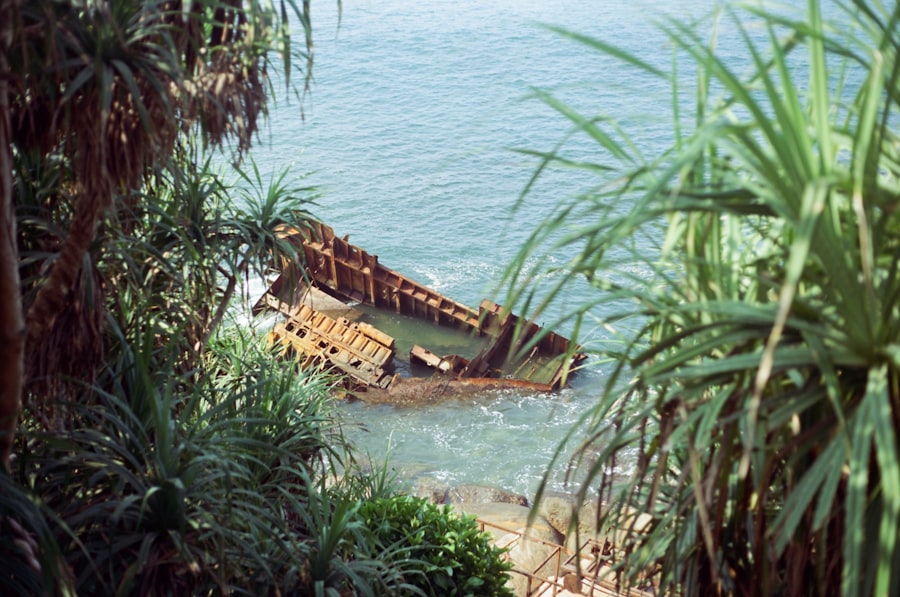
Following the K-129’s disappearance, an extensive search operation was launched by both American and Soviet forces. The U.S. Navy deployed advanced sonar technology and reconnaissance aircraft to scour the ocean floor for any signs of the missing submarine.
Despite their efforts, initial searches yielded little information, leading to frustration among military officials who were eager to locate the wreckage. As time passed, it became increasingly clear that finding K-129 would require innovative approaches and cutting-edge technology. In 1969, after nearly a year of searching, American intelligence sources finally pinpointed a location that appeared to match the last known coordinates of K-129.
This discovery reignited hopes of recovering the submarine and its valuable cargo. However, locating a sunken vessel at such depths posed significant technical challenges. The ocean floor was littered with debris and geological formations that complicated recovery efforts.
Nevertheless, the determination to uncover the truth behind K-129’s fate remained strong, as military strategists recognized that understanding its loss could provide critical insights into Soviet naval capabilities.
The CIA’s Involvement in the Recovery Efforts
| Metric | Details |
|---|---|
| Number of Agents Deployed | Approximately 150 operatives involved in recovery operations |
| Duration of Involvement | 6 months following the initial incident |
| Primary Activities | Intelligence gathering, coordination with local authorities, and securing sensitive materials |
| Recovered Assets | Over 75% of classified documents and equipment retrieved |
| Collaborations | Worked alongside FBI, military units, and international agencies |
| Operational Budget | Classified |
| Challenges Faced | Hostile environment, misinformation, and logistical constraints |
As the search for K-129 progressed, the Central Intelligence Agency (CIA) became increasingly involved in recovery efforts. Recognizing the potential intelligence value of retrieving the submarine, the agency devised a covert operation that would ultimately lead to one of the most ambitious salvage missions in history. The CIA’s plan involved not only locating K-129 but also recovering its nuclear payload and any sensitive materials that could provide insight into Soviet technology.
To execute this operation, the CIA enlisted the help of Howard Hughes, a billionaire industrialist known for his innovative ventures in aviation and engineering. Hughes agreed to fund and oversee the construction of a specialized vessel designed for deep-sea recovery operations. This collaboration marked a significant turning point in the mission, as it combined government resources with private sector ingenuity.
The CIA’s involvement underscored the high stakes associated with K-129’s disappearance and highlighted the lengths to which both superpowers would go to gain an advantage in the Cold War.
Declassified Documents and the Truth Behind the Sinking
In subsequent years, declassified documents shed light on the events surrounding K-129’s sinking and recovery efforts. These documents revealed that the submarine had likely suffered a catastrophic failure while on patrol, leading to its descent into the depths of the Pacific Ocean. While initial theories suggested that it may have been attacked or sabotaged, evidence pointed toward mechanical failure as the primary cause of its demise.
The declassification of these documents provided valuable insights into Soviet submarine operations during this period and highlighted vulnerabilities within their fleet.
As more details emerged about K-129’s fate, it became clear that its disappearance was not just an isolated incident but part of a larger narrative about military preparedness and technological advancement during a time of global tension.
The Submarine’s Nuclear Payload and the Risks of Salvaging
One of the most pressing concerns surrounding K-129’s recovery was its nuclear payload. The submarine was believed to be carrying three ballistic missiles equipped with nuclear warheads at the time of its sinking. This raised significant risks associated with salvaging operations, as any disturbance to these warheads could potentially lead to catastrophic consequences.
The U.S. government faced a dilemma: while recovering K-129 could yield valuable intelligence about Soviet missile technology, it also posed serious safety risks. The decision to proceed with recovery efforts was not taken lightly.
Experts debated whether it was worth risking exposure to radioactive materials or triggering an international incident if something went wrong during salvage operations. Ultimately, safety protocols were established to mitigate these risks, but concerns remained about how to handle any nuclear materials that might be recovered from the ocean floor. This situation underscored the complexities involved in deep-sea salvage operations during a time when nuclear weapons were at the forefront of military strategy.
The Role of Howard Hughes and the Glomar Explorer
Howard Hughes played a pivotal role in orchestrating the recovery efforts for K-129 through his involvement with a specially designed vessel known as the Glomar Explorer. This ship was constructed with advanced technology capable of deep-sea operations and was equipped with a unique claw mechanism intended for retrieving large objects from great depths. Hughes’ vision and resources allowed for an ambitious plan that combined engineering prowess with covert military objectives.
The Glomar Explorer set sail in 1974 on what would become one of history’s most secretive salvage missions. Underneath its cover story as a deep-sea mining operation, it aimed to locate and recover K-129 from its resting place on the ocean floor. The operation was shrouded in secrecy, with only a select few aware of its true purpose.
Hughes’ involvement not only highlighted his influence in American industry but also illustrated how private enterprise could intersect with national security interests during a time of geopolitical tension.
The Challenges of Deep-Sea Salvage Operations
Deep-sea salvage operations are inherently fraught with challenges due to extreme environmental conditions and technological limitations. The depths at which K-129 lay presented significant obstacles for recovery teams; pressures at such depths can exceed 7,000 pounds per square inch, making it difficult for equipment to function properly. Additionally, underwater visibility is often limited, complicating navigation and retrieval efforts.
The Glomar Explorer faced numerous technical difficulties during its mission to recover K-129. Engineers had to contend with unpredictable ocean currents and shifting geological formations that could hinder operations. Moreover, ensuring that sensitive equipment remained operational under such extreme conditions required meticulous planning and execution.
Despite these challenges, Hughes’ team persevered in their quest to recover K-129, demonstrating remarkable ingenuity in overcoming obstacles that would have deterred less determined efforts.
The Impact of the K-129 Recovery on US-Soviet Relations
The recovery of K-129 had far-reaching implications for US-Soviet relations during a critical period in the Cold War. While initially shrouded in secrecy, news of America’s covert operation eventually leaked out, leading to heightened tensions between the two superpowers. The Soviets were acutely aware that their submarine had been located and that sensitive materials might have been recovered by American forces.
This incident further fueled distrust between Washington and Moscow at a time when diplomatic relations were already strained. Both sides engaged in propaganda campaigns aimed at shaping public perception regarding their respective military capabilities and intentions. The recovery operation served as a reminder that even seemingly isolated incidents could have profound effects on international relations during an era defined by suspicion and rivalry.
Unanswered Questions and Conspiracy Theories
Despite extensive investigations into K-129’s disappearance and subsequent recovery efforts, many questions remain unanswered even decades later. Conspiracy theories have emerged surrounding its sinking—some suggesting that it may have been targeted by American submarines or even involved in espionage activities prior to its loss. These theories reflect broader anxieties about military secrecy during a time when information was tightly controlled by both superpowers.
Additionally, speculation persists regarding what exactly was recovered from K-129 during salvage operations. While some details have been declassified over time, many aspects remain shrouded in mystery—leading to ongoing debates among historians and military analysts about what truly transpired beneath those waves. These unanswered questions continue to captivate public interest as they highlight how historical events can be interpreted through various lenses depending on available information.
Lessons Learned from the K-129 Salvage Operation
The K-129 salvage operation provided valuable lessons for future deep-sea recovery missions as well as insights into Cold War dynamics between superpowers. One key takeaway was the importance of collaboration between government agencies and private industry; Hughes’ involvement demonstrated how innovative solutions could emerge from partnerships that combined expertise across sectors. Moreover, this operation underscored the need for robust safety protocols when dealing with potentially hazardous materials such as nuclear warheads—an issue that remains relevant today as nations grapple with nuclear proliferation concerns worldwide.
Finally, K-129 serves as a reminder of how historical events can shape international relations long after they occur; understanding these complexities is essential for navigating contemporary geopolitical challenges rooted in past conflicts. In conclusion, while much has been learned about K-129’s mysterious disappearance over time—from its initial loss through recovery efforts—the legacy it leaves behind continues to resonate within discussions about military strategy and international relations today.
The mystery of the K-129 sinking has intrigued historians and naval enthusiasts alike, shedding light on Cold War tensions and the complexities of underwater warfare. For those interested in exploring more about the strategic implications of submarine operations during this era, a related article can be found at In The War Room, which delves into the broader context of naval engagements and their impact on international relations.
WATCH THIS! The CIA’s Secret Mission to Recover a Nuclear Submarine: Project Azorian
FAQs
What was the K-129 submarine?
The K-129 was a Soviet Golf II-class ballistic missile submarine that sank in the Pacific Ocean in March 1968.
When did the K-129 sink?
The K-129 sank on March 8, 1968.
Where did the K-129 sink?
The submarine sank in the North Pacific Ocean, approximately 1,560 nautical miles northwest of Hawaii.
What caused the sinking of the K-129?
The exact cause of the sinking remains unknown and is considered a mystery. Various theories include mechanical failure, collision, or an internal explosion.
Were there any survivors from the K-129?
No survivors were reported; all 98 crew members aboard the submarine perished.
What was the significance of the K-129 sinking during the Cold War?
The sinking was significant because the K-129 carried nuclear ballistic missiles, and its loss raised concerns about nuclear security and intelligence during the Cold War.
Did the United States attempt to recover the K-129?
Yes, the United States launched a secret operation called Project Azorian in the early 1970s to recover parts of the submarine from the ocean floor.
Was the recovery operation successful?
The recovery operation partially succeeded in retrieving a section of the submarine, but much of the K-129 remains on the ocean floor.
What information was gained from the recovery of the K-129?
The recovery provided valuable intelligence about Soviet submarine technology and missile systems, although many details remain classified.
Is the wreck of the K-129 accessible today?
The wreck lies at a depth of about 16,500 feet (5,000 meters), making it inaccessible to most submersibles and deep-sea exploration vehicles.