
The Cold War developed following World War II, a conflict that fundamentally altered the international system and created new tensions among nations based on their wartime partnerships and conflicts. After the war’s conclusion, two major powers emerged as dominant forces: the United States and the Soviet Union. These nations held fundamentally different political and economic systems and competing visions for organizing the post-war world, which created sustained tension and competition between them.
The United States promoted democratic governance and capitalist economics, seeking to establish a liberal international order based on these principles. The Soviet Union, led by Joseph Stalin, pursued the expansion of communist ideology and Soviet influence throughout Europe and other regions. The period immediately following World War II included several significant developments that intensified U.S.-Soviet tensions.
Europe became divided into distinct spheres of influence, with the Iron Curtain serving as a physical and symbolic representation of this ideological separation. The United States implemented the Marshall Plan to provide economic assistance for European reconstruction, which Soviet leaders interpreted as a strategy to limit Soviet influence in Eastern Europe. The installation of communist governments throughout Eastern European nations reinforced this division.
These circumstances generated mutual suspicion and antagonism, establishing the conditions for a prolonged geopolitical rivalry that would shape international relations throughout the second half of the twentieth century.
At the heart of the Cold War lay a profound ideological struggle between communism and capitalism. The Soviet Union’s commitment to Marxist-Leninist principles dictated its approach to governance and international relations. Communism sought to abolish private property and establish a classless society, which was fundamentally at odds with the capitalist principles espoused by the United States.
Capitalism, characterized by private ownership and free markets, was seen as a vehicle for individual freedom and economic prosperity. This ideological clash was not merely theoretical; it manifested in real-world policies and actions that shaped global events. The competition between these two ideologies extended beyond mere political rhetoric.
In the United States, capitalism was celebrated as a means of fostering innovation and personal liberty, while in the Soviet Union, communism was portrayed as a path to equality and social justice. This dichotomy fueled propaganda efforts on both sides, as each sought to portray its system as superior.
The ideological battle became a defining feature of the Cold War, influencing everything from foreign policy decisions to domestic governance. The documentary reveals the shocking story of a KGB mole who infiltrated the highest levels of government.
Key Takeaways
- The Cold War originated from post-World War II tensions between the US and the Soviet Union, rooted in conflicting ideologies of capitalism and communism.
- The arms race, especially nuclear proliferation, created a dangerous balance of power known as mutually assured destruction.
- Proxy wars and espionage were key strategies used by both superpowers to extend influence without direct conflict.
- The fall of the Berlin Wall symbolized the collapse of Soviet control and the eventual end of the Cold War.
- Understanding Cold War history offers valuable lessons for addressing modern geopolitical challenges and preventing future conflicts.
The Arms Race: Nuclear Proliferation and the Threat of Mutually Assured Destruction
As tensions escalated between the United States and the Soviet Union, both nations embarked on an arms race that would have dire implications for global security. The development of nuclear weapons marked a significant turning point in military strategy and international relations. The bombings of Hiroshima and Nagasaki in 1945 demonstrated the devastating power of nuclear weapons, prompting both superpowers to invest heavily in their arsenals.
The race to achieve nuclear superiority became a central focus of their rivalry, leading to an unprecedented accumulation of weapons capable of annihilating entire populations. The concept of Mutually Assured Destruction (MAD) emerged as a chilling deterrent against direct conflict between the two superpowers. Each side recognized that any nuclear exchange would result in catastrophic consequences for both, creating a precarious balance of power.
This understanding led to a tense standoff characterized by brinkmanship, where both nations engaged in provocative actions while avoiding direct confrontation. The arms race not only heightened global tensions but also spurred debates about ethics, security, and the future of warfare.
The Space Race: Competition for Technological Supremacy
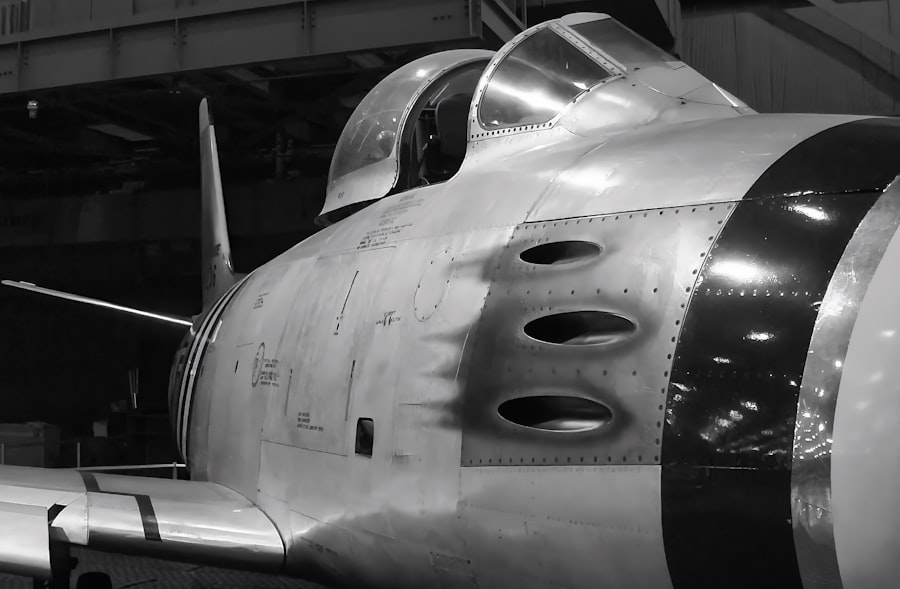
The Cold War also manifested in a fierce competition for technological supremacy known as the Space Race. Initiated by the launch of Sputnik by the Soviet Union in 1957, this race symbolized not only advancements in science and technology but also national pride and ideological superiority. The successful launch of Sputnik shocked the United States and prompted fears that the Soviets had gained an upper hand in technological capabilities.
In response, the U.S. government accelerated its own space program, leading to significant investments in research and development. The Space Race culminated in landmark achievements, including the Apollo 11 mission that landed humans on the Moon in 1969.
This event was not merely a scientific triumph; it represented a victory for American ideals over Soviet communism in the eyes of many. The competition extended beyond mere exploration; it encompassed military applications as well, with both superpowers seeking to develop technologies that could enhance their strategic capabilities. Ultimately, the Space Race became a defining aspect of Cold War rivalry, showcasing how technological advancements could be intertwined with ideological competition.
Proxy Wars: The Cold War’s Impact on Global Conflicts
The Cold War’s influence extended far beyond the borders of the United States and the Soviet Union; it permeated conflicts around the globe through a series of proxy wars. These conflicts were characterized by indirect confrontations where both superpowers supported opposing sides in civil wars or regional disputes. From Korea to Vietnam to Afghanistan, these proxy wars became battlegrounds for competing ideologies, with devastating consequences for local populations.
In many cases, these conflicts were fueled by Cold War dynamics rather than local grievances alone. For instance, in Vietnam, U.S. involvement was driven by fears of communism spreading throughout Southeast Asia, leading to a protracted conflict that resulted in significant loss of life and resources.
Similarly, in Afghanistan during the 1980s, Soviet intervention was met with U.S.-backed resistance fighters known as the Mujahideen. These proxy wars not only exacerbated regional tensions but also contributed to long-lasting instability that continues to affect these regions today.
The Cuban Missile Crisis: A Tense Standoff between the United States and Soviet Union
| Year | Event | Significance | Impact on Cold War Dynamics | Key Figures |
|---|---|---|---|---|
| 1947 | Truman Doctrine Announced | US policy to contain communism | Marked start of active US involvement in Cold War | Harry S. Truman |
| 1948-1949 | Berlin Blockade and Airlift | First major crisis of the Cold War | Demonstrated US commitment to West Berlin, increased tensions | Harry S. Truman, Joseph Stalin |
| 1950-1953 | Korean War | Proxy war between US-led UN forces and North Korea/China | Solidified division of Korea, intensified military buildup | Douglas MacArthur, Kim Il-sung, Mao Zedong |
| 1962 | Cuban Missile Crisis | Closest Cold War came to nuclear conflict | Led to improved communication (Hotline) and arms control talks | John F. Kennedy, Nikita Khrushchev, Fidel Castro |
| 1972 | SALT I Treaty Signed | First strategic arms limitation agreement | Marked beginning of détente between US and USSR | Richard Nixon, Leonid Brezhnev |
| 1985 | Gorbachev Becomes Soviet Leader | Introduced reforms: Glasnost and Perestroika | Accelerated end of Cold War tensions | Mikhail Gorbachev |
| 1989 | Fall of Berlin Wall | Symbolized collapse of communist regimes in Eastern Europe | Signaled imminent end of Cold War | Helmut Kohl, Mikhail Gorbachev |
| 1991 | Dissolution of the Soviet Union | Official end of the Cold War | Marked shift to unipolar world dominated by the US | Boris Yeltsin, Mikhail Gorbachev |
One of the most critical moments in Cold War history was the Cuban Missile Crisis of 1962, which brought the world perilously close to nuclear war. The crisis began when U.S. intelligence discovered Soviet missile installations in Cuba, just 90 miles from American shores.
This revelation triggered a tense standoff between President John F. Kennedy and Soviet Premier Nikita Khrushchev, as both leaders grappled with how to respond without escalating into full-scale conflict. The crisis unfolded over thirteen harrowing days during which diplomatic negotiations and military posturing dominated headlines worldwide.
Kennedy’s decision to impose a naval blockade around Cuba aimed to prevent further Soviet shipments of military equipment while allowing time for negotiations. Ultimately, both leaders reached a resolution that involved the withdrawal of Soviet missiles from Cuba in exchange for a U.
commitment not to invade the island and a secret agreement to remove U.S.
missiles from Turkey. The Cuban Missile Crisis underscored the fragility of peace during the Cold War era and highlighted the importance of diplomacy in averting catastrophic outcomes.
The Role of Espionage: Spies, Double Agents, and Covert Operations

Espionage played a crucial role in shaping Cold War dynamics as both superpowers sought to gain an advantage through intelligence gathering and covert operations. Spies became emblematic figures of this era, operating behind enemy lines to gather critical information about military capabilities and strategic intentions. Organizations such as the CIA in the United States and the KGB in the Soviet Union engaged in elaborate schemes involving double agents, surveillance, and disinformation campaigns.
The impact of espionage extended beyond mere intelligence gathering; it influenced public perception and policy decisions on both sides. High-profile cases like that of Aldrich Ames or Kim Philby revealed how deeply infiltrated intelligence agencies could be compromised by betrayal from within. These revelations fueled paranoia and mistrust between nations while also highlighting the lengths to which each side would go to protect its interests.
Espionage became an integral part of Cold War strategy, shaping not only military outcomes but also diplomatic relations.
The Fall of the Berlin Wall: Symbolism and Significance
The fall of the Berlin Wall on November 9, 1989, marked a pivotal moment in Cold War history and symbolized the collapse of communist regimes across Eastern Europe. For nearly three decades, this concrete barrier had divided not only a city but also represented the broader ideological divide between East and West. Its dismantling signified not just physical reunification but also an ideological victory for democracy over authoritarianism.
The events leading up to the wall’s fall were fueled by widespread discontent with oppressive regimes in Eastern Europe. Grassroots movements advocating for reform gained momentum throughout 1989, culminating in mass protests that challenged communist authority. As East Germans began to demand greater freedoms and opportunities for travel, pressure mounted on government officials who ultimately decided to open border crossings.
The fall of the Berlin Wall became a powerful symbol of hope and change, inspiring movements for democracy worldwide while signaling an end to an era defined by division.
The End of the Cold War: The Collapse of the Soviet Union
The Cold War officially came to an end with the dissolution of the Soviet Union in December 1991—a momentous event that reshaped global politics and ushered in a new era characterized by unipolarity dominated by Western ideals. Internal strife within the Soviet Union had been brewing for years due to economic stagnation, political corruption, and growing nationalist sentiments among various republics seeking independence from Moscow’s control. Mikhail Gorbachev’s policies of glasnost (openness) and perestroika (restructuring) aimed at reforming Soviet society but inadvertently accelerated its disintegration as citizens demanded more freedoms than his reforms could provide.
By 1991, several republics declared independence from Soviet rule, leading to an irreversible decline in central authority. The collapse marked not only an end to decades-long hostilities but also raised questions about future geopolitical alignments as former communist states transitioned toward democracy and market economies.
Repercussions of the Cold War: Political, Economic, and Social Consequences
The repercussions of the Cold War were profound and far-reaching across political, economic, and social dimensions globally. Politically, many nations found themselves grappling with legacies left behind by superpower interventions—some emerging democracies struggled against authoritarian remnants while others faced civil unrest fueled by ethnic tensions exacerbated during proxy conflicts. Economically speaking, countries that had aligned with either superpower often experienced significant shifts post-Cold War as they navigated new relationships within an increasingly interconnected world economy.
Former Eastern Bloc nations faced daunting challenges transitioning from centrally planned economies toward market-oriented systems—often resulting in economic hardship before eventual recovery. Socially, communities worldwide felt lasting impacts from decades-long ideological battles—cultural exchanges were stifled during periods of intense rivalry but flourished post-Cold War as barriers fell away allowing greater interaction among peoples previously divided by ideology or geography.
Lessons Learned: Applying Cold War History to Contemporary Geopolitical Challenges
Reflecting on Cold War history offers valuable lessons applicable to contemporary geopolitical challenges facing nations today. One key takeaway is recognizing how ideological divides can shape international relations—understanding differing worldviews remains crucial when navigating complex global issues such as climate change or cybersecurity threats where cooperation is essential yet often hindered by mistrust. Additionally, historical examples underscore importance diplomacy plays in averting conflict—whether through backchannel negotiations during crises like Cuba or multilateral dialogues addressing modern security concerns—engaging adversaries constructively can yield positive outcomes even amidst deep-seated tensions.
Ultimately, studying this tumultuous period provides insights into human behavior under pressure—highlighting resilience amid adversity while reminding us that history is not merely a series of events but rather interconnected narratives shaping our present-day realities.
For those interested in a comprehensive exploration of Cold War history, a deep dive analysis can be found in the article on In The War Room. This resource offers a detailed examination of the geopolitical tensions, key events, and influential figures that shaped the era, providing valuable insights for both history enthusiasts and scholars alike.
WATCH THIS 🛑 SHOCKING: The KGB Mole Who Made Every Soviet Submarine Visible
FAQs
What was the Cold War?
The Cold War was a period of geopolitical tension between the United States and its NATO allies, and the Soviet Union and its satellite states, lasting roughly from 1947 to 1991. It was characterized by political, military, and ideological rivalry without direct large-scale fighting between the two superpowers.
When did the Cold War begin and end?
The Cold War is generally considered to have begun shortly after World War II, around 1947, with the Truman Doctrine and the start of U.S. containment policy. It ended in 1991 with the dissolution of the Soviet Union.
What were the main causes of the Cold War?
The main causes included ideological differences between capitalism and communism, mutual distrust between the U.S. and the USSR, competition for global influence, and disagreements over the post-World War II reconstruction of Europe.
What were some key events during the Cold War?
Key events include the Berlin Blockade (1948-1949), Korean War (1950-1953), Cuban Missile Crisis (1962), Vietnam War (1955-1975), the Space Race, the construction and fall of the Berlin Wall (1961-1989), and the Soviet invasion of Afghanistan (1979-1989).
What was the role of nuclear weapons in the Cold War?
Nuclear weapons played a central role in the Cold War, leading to a strategy of deterrence known as Mutually Assured Destruction (MAD). Both superpowers built large arsenals to prevent either side from launching a first strike.
How did the Cold War affect countries outside the U.S. and USSR?
Many countries became proxy battlegrounds for Cold War conflicts, with the U.S. and USSR supporting opposing sides in regional wars, revolutions, and political movements in Asia, Africa, Latin America, and the Middle East.
What was the significance of the Berlin Wall?
The Berlin Wall, erected in 1961, symbolized the division between the communist East and capitalist West. It physically and ideologically separated East and West Berlin until its fall in 1989, which marked the beginning of the end of the Cold War.
How did the Cold War end?
The Cold War ended due to a combination of factors including economic stagnation in the Soviet Union, political reforms under Mikhail Gorbachev (glasnost and perestroika), the fall of communist regimes in Eastern Europe, and the eventual dissolution of the Soviet Union in 1991.
What was the impact of the Cold War on global politics?
The Cold War shaped international relations for decades, leading to the formation of military alliances like NATO and the Warsaw Pact, influencing foreign policies worldwide, and setting the stage for the modern geopolitical landscape.
Where can I learn more about Cold War history?
You can explore Cold War history through academic books, documentaries, archives, and reputable online resources such as university websites, history-focused organizations, and government archives. Museums dedicated to Cold War history also provide valuable insights.