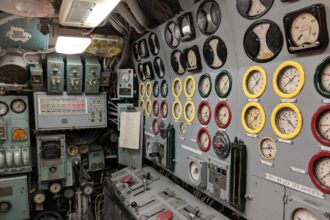
The Cold War was characterized by geopolitical tension between the Soviet Union and the United States, during which both nations significantly expanded their military capabilities, particularly in naval warfare. As each superpower competed for global influence, submarine technology became a central element of their military strategies. The Soviet Union invested substantially in its submarine fleet, recognizing it as a vital component of naval power.
Soviet submarines were engineered for stealth operations and precise strikes, presenting a considerable challenge to Western naval forces. Submarines held critical strategic importance during this period. They served multiple functions: delivering nuclear missiles, gathering intelligence, and executing covert operations.
The United States responded to the expanding Soviet submarine threat by developing advanced anti-submarine warfare (ASW) technologies, initiating an arms race between the two powers. Given the risk of nuclear conflict, detecting and neutralizing Soviet submarines became a primary objective of U.S. naval strategy.
The documentary reveals the shocking story of a KGB mole who infiltrated the highest levels of government.
Key Takeaways
- MAD technology was developed during the Cold War to detect Soviet submarines by sensing magnetic anomalies caused by their metal hulls.
- It played a crucial role in unmasking and tracking Soviet submarines, significantly enhancing anti-submarine warfare capabilities.
- Despite its effectiveness, MAD faced challenges such as limited detection range and interference from environmental factors.
- Over time, MAD technology evolved and remains an important tool in modern naval warfare for submarine detection.
- MAD contributed to the decline of the Soviet submarine threat and influenced Cold War naval strategy, leaving a lasting legacy in naval operations.
The Development of Magnetic Anomaly Detection (MAD) Technology
In response to the increasing sophistication of Soviet submarines, the United States and its allies began to explore innovative technologies for detecting these underwater threats. One such advancement was Magnetic Anomaly Detection (MAD) technology, which emerged as a critical tool in the arsenal of anti-submarine warfare. Developed in the late 1940s and early 1950s, MAD systems were designed to exploit the unique magnetic signatures produced by submarines as they traversed the ocean depths.
The initial development of MAD technology was driven by the need for a reliable method to locate submarines without relying solely on sonar or visual detection methods. By measuring variations in the Earth’s magnetic field caused by the presence of ferromagnetic materials in submarines, MAD systems offered a new dimension to ASW capabilities. This innovation marked a significant leap forward in naval warfare, as it allowed for more effective tracking of enemy vessels and enhanced situational awareness for naval commanders.
How MAD Technology Works

MAD technology operates on the principle that submarines, particularly those constructed with metal hulls, create detectable disturbances in the Earth’s magnetic field. As a submarine moves through the water, its metallic components generate a magnetic signature that can be identified by specialized sensors. These sensors are typically mounted on aircraft or ships and are designed to detect minute changes in magnetic fields caused by nearby submarines.
When a MAD-equipped aircraft flies over an area where a submarine is present, it scans for anomalies in the magnetic field. If a significant deviation is detected, it indicates the potential presence of a submarine beneath the surface. The sensitivity of MAD systems allows them to identify even small submarines or those operating at shallow depths, making them an invaluable asset in anti-submarine operations.
The Role of MAD in Unmasking Soviet Submarines
Throughout the Cold War, MAD technology played a pivotal role in unmasking Soviet submarines and mitigating their threat to Western naval forces. As Soviet submarines became increasingly advanced and capable of evading traditional detection methods, MAD provided a means to counteract their stealthy operations. The ability to detect submarines from the air allowed naval forces to maintain a strategic advantage and respond effectively to potential threats.
MAD systems were particularly effective in detecting submarines operating near coastal areas or in shallow waters where traditional sonar might struggle. This capability enabled naval forces to monitor Soviet submarine movements closely and gather intelligence on their operational patterns. By unmasking these underwater threats, MAD technology contributed significantly to the overall effectiveness of anti-submarine warfare strategies employed by NATO forces during this tense period.
The Challenges of Detecting Submarines with MAD
| Factor | Description | Impact on Visibility | US Countermeasure |
|---|---|---|---|
| Acoustic Signature | Noise generated by Soviet submarine engines and machinery | High noise levels made subs easier to detect via sonar | Advanced passive and active sonar systems |
| Propeller Cavitation | Bubbles formed by propeller blades at high speeds | Produced distinctive noise detectable by hydrophones | Development of low-frequency sonar arrays |
| Hull Design | Less hydrodynamic and noisier hull shapes compared to US subs | Increased water turbulence and noise signature | Improved sonar tracking and signal processing |
| Operational Patterns | Predictable patrol routes and depths | Allowed US to anticipate and monitor movements | Deployment of SOSUS (Sound Surveillance System) networks |
| Communication Signals | Radio and sonar transmissions emitted by subs | Provided electronic signatures for detection | Electronic intelligence (ELINT) and signal interception |
Despite its advantages, detecting submarines with MAD technology was not without challenges. One of the primary limitations was the environmental factors that could interfere with magnetic readings. Variations in the Earth’s magnetic field due to geological formations or human-made structures could lead to false positives or missed detections.
Additionally, the presence of multiple submarines operating in close proximity could complicate the interpretation of magnetic anomalies. Another challenge was the need for precise calibration and operation of MAD systems. Operators had to be highly trained to distinguish between genuine submarine signatures and background noise caused by other factors.
This required not only technical expertise but also an understanding of the operational environment and potential sources of interference. As a result, while MAD technology was a powerful tool in anti-submarine warfare, it was not infallible and required careful integration with other detection methods for optimal effectiveness.
The Evolution of MAD Technology

As naval warfare evolved throughout the Cold War, so too did MAD technology. Initial systems were relatively basic, relying on analog sensors and manual interpretation of data. However, advancements in electronics and computing power led to significant improvements in MAD capabilities.
By the 1970s and 1980s, digital processing techniques allowed for more sophisticated analysis of magnetic data, enhancing detection accuracy and reducing false alarms. Moreover, as submarine technology advanced, so did the need for more sensitive and versatile MAD systems. Newer models incorporated advanced algorithms that could filter out environmental noise and focus on genuine submarine signatures.
Additionally, improvements in sensor design allowed for greater range and sensitivity, enabling naval forces to detect submarines at greater depths and distances than ever before. This evolution ensured that MAD remained a relevant and effective tool in the ever-changing landscape of naval warfare.
MAD in Modern Naval Warfare
In contemporary naval operations, MAD technology continues to play a vital role in anti-submarine warfare strategies. While advancements in stealth technology have made it more challenging to detect submarines, modern MAD systems have adapted to these changes by incorporating new features and capabilities. Today’s MAD systems are often integrated with other sensor technologies, such as sonar and radar, creating a multi-layered approach to submarine detection.
Furthermore, advancements in data fusion techniques allow for real-time analysis of information from various sources, enhancing situational awareness for naval commanders. This integration enables more effective decision-making during operations and improves response times when engaging potential threats. As navies around the world continue to invest in advanced technologies, MAD remains an essential component of their anti-submarine warfare capabilities.
The Impact of MAD on Cold War Naval Strategy
The introduction and refinement of MAD technology had profound implications for naval strategy during the Cold War.
The ability to track enemy submarines closely contributed to deterrence strategies, as it reduced uncertainty regarding potential threats lurking beneath the waves.
Moreover, MAD technology influenced the development of naval tactics and operational planning. Commanders could deploy resources more effectively based on real-time intelligence gathered through MAD systems, allowing for targeted responses to specific threats. This shift in strategy underscored the importance of technological superiority in modern warfare and highlighted how advancements in detection capabilities could shape the balance of power at sea.
MAD’s Contribution to the Decline of the Soviet Submarine Threat
As Western navies enhanced their anti-submarine warfare capabilities through technologies like MAD, the effectiveness of Soviet submarine operations began to wane. The increased likelihood of detection forced Soviet commanders to reconsider their strategies and operational deployments. The psychological impact of knowing that their submarines could be tracked contributed to a decline in confidence among Soviet naval leaders.
Additionally, as NATO forces improved their ability to counter submarine threats, it became increasingly difficult for Soviet submarines to operate freely without risking detection or engagement. This shift played a role in diminishing the overall effectiveness of Soviet naval power during the latter stages of the Cold War, contributing to broader geopolitical changes that ultimately led to the dissolution of the Soviet Union.
The Future of MAD Technology
Looking ahead, the future of MAD technology appears promising as advancements continue to reshape its capabilities. Emerging technologies such as artificial intelligence and machine learning are being integrated into MAD systems, allowing for more sophisticated data analysis and anomaly detection. These innovations could enhance detection rates while reducing false positives, further improving operational effectiveness.
Moreover, as navies around the world face new challenges posed by advanced submarine technologies and hybrid warfare tactics, MAD will likely evolve to meet these demands. Future developments may include enhanced sensor designs that can operate effectively in diverse environments or integration with unmanned systems for expanded operational reach. As maritime security remains a critical concern globally, continued investment in MAD technology will be essential for maintaining naval superiority.
MAD’s Legacy in Naval Warfare
The legacy of Magnetic Anomaly Detection technology is one marked by its significant contributions to naval warfare during one of history’s most tense periods—the Cold War. By providing an effective means of detecting Soviet submarines, MAD not only enhanced anti-submarine warfare capabilities but also shaped broader naval strategies employed by Western forces. Its evolution over time reflects the dynamic nature of military technology and its ability to adapt to emerging threats.
As modern navies continue to navigate complex maritime environments filled with evolving challenges, MAD remains an integral part of their operational toolkit. Its legacy serves as a reminder of how technological advancements can influence military strategy and alter the balance of power at sea. In an era where underwater threats persist and new technologies emerge, MAD’s role will undoubtedly continue to evolve while maintaining its foundational importance in ensuring maritime security.
The visibility of Soviet submarines to U.S. forces during the Cold War was significantly enhanced by advancements in sonar technology and satellite surveillance. These developments allowed for better tracking and identification of submarine movements, which played a crucial role in naval strategy. For more insights into military technology and its implications, you can read a related article on this topic at In the War Room.
WATCH THIS 🛑 SHOCKING: The KGB Mole Who Made Every Soviet Submarine Visible
FAQs
What were the main factors that made Soviet submarines visible to the US during the Cold War?
The primary factors included advancements in US sonar technology, improved underwater surveillance systems such as SOSUS (Sound Surveillance System), and the development of quieter US submarines that could better detect Soviet subs. Additionally, intelligence gathering and signal interception played roles in tracking Soviet submarine movements.
How did US sonar technology contribute to detecting Soviet submarines?
US sonar technology, particularly passive sonar arrays, allowed for the detection of the unique acoustic signatures emitted by Soviet submarines. Improvements in signal processing and the deployment of extensive underwater listening networks enhanced the US Navy’s ability to locate and track Soviet subs over vast ocean areas.
What role did the SOSUS network play in making Soviet submarines visible?
SOSUS was a chain of underwater hydrophone arrays placed on the ocean floor, primarily in the Atlantic and Pacific Oceans. It was designed to detect low-frequency sounds from Soviet submarines, enabling early detection and continuous tracking, which significantly increased the visibility of Soviet subs to US forces.
Did Soviet submarine design affect their detectability by the US?
Yes, early Soviet submarines were generally noisier than their US counterparts, making them easier to detect with sonar. Over time, the Soviets improved their submarine designs to reduce noise, but US technological advancements often kept pace, maintaining the ability to detect Soviet subs.
How did intelligence and espionage impact the US’s ability to track Soviet submarines?
Intelligence gathering, including espionage and signal interception, provided the US with valuable information about Soviet submarine capabilities, patrol routes, and technological developments. This intelligence helped refine detection methods and anticipate Soviet submarine operations.
Were there any specific incidents that highlighted the visibility of Soviet submarines to the US?
Yes, incidents such as the detection and tracking of Soviet ballistic missile submarines during patrols, and the 1981 collision between the US submarine USS Augusta and a Soviet sub, underscored the effectiveness of US detection capabilities and the risks involved in submarine surveillance during the Cold War.
How did the visibility of Soviet submarines influence US naval strategy?
The ability to detect Soviet submarines allowed the US Navy to develop counter-submarine warfare tactics, allocate resources effectively, and maintain strategic advantages in nuclear deterrence by monitoring Soviet ballistic missile submarine deployments. This visibility was crucial for maintaining a balance of power during the Cold War.