Unlocking the Secrets of Underwater Communication
The aquatic realm, a vast and enigmatic expanse covering over 70% of Earth’s surface, presents a formidable challenge to human ingenuity, particularly in the domain of communication. Unlike the aerial or terrestrial environments where sound travels efficiently and electromagnetic waves propagate readily, water significantly alters these physical principles. This article explores the intricate science and technological advancements enabling communication beneath the waves, delving into the limitations imposed by the medium and the innovative solutions developed to circumvent them.
Sound as the Primary Medium
Water, being significantly denser and less compressible than air, exhibits distinct acoustic properties. Sound waves, which are mechanical vibrations, travel approximately 4.5 times faster in water (around 1,500 meters per second) than in air (approximately 343 meters per second). This higher speed, however, is accompanied by substantial attenuation, meaning the sound energy dissipates more rapidly over distance.
Absorption and Scattering
Energy loss in water occurs through two primary mechanisms: absorption and scattering. Absorption converts sound energy into heat, predominantly by the molecular relaxation of water itself and dissolved salts, with higher frequencies experiencing greater absorption. Scattering, on the other hand, occurs when sound waves encounter irregularities in the medium, such as suspended particles, air bubbles, or fluctuations in temperature and salinity. These interactions redirect sound energy, diminishing the coherence and intensity of the original signal.
Refraction and Reflection
The ocean is not a uniform medium. Variations in temperature, pressure (and thus depth), and salinity alter the speed of sound, leading to refraction – the bending of sound paths. This phenomenon can create complex sound channels, such as the deep-sound channel (SOFAR channel), where sound can travel thousands of kilometers with minimal loss. Conversely, reflections occur when sound waves encounter boundaries, such as the seabed or the sea surface. These reflections can create multipath propagation, where multiple copies of the same signal arrive at a receiver at different times, causing interference and signal degradation.
The Limits of Electromagnetic Waves
While radio waves (a form of electromagnetic radiation) are the cornerstone of terrestrial and atmospheric communication, their efficacy in water is severely curtailed. Water, a conductive medium, readily absorbs electromagnetic energy.
High Attenuation
The primary limitation for electromagnetic waves in water is their rapid attenuation. The conductive properties of water cause electromagnetic fields to induce currents within the medium, leading to significant energy loss. This attenuation is frequency-dependent, meaning higher frequencies are absorbed more rapidly. For instance, visible light, which is part of the electromagnetic spectrum, can only penetrate a few tens to hundreds of meters before being significantly attenuated, making it unsuitable for long-range communication.
Skin Depth Phenomenon
The concept of “skin depth” is crucial in understanding electromagnetic propagation in water. Skin depth is the depth at which the intensity of an electromagnetic wave falls to approximately 37% of its surface value. In seawater, even at extremely low frequencies (ELF), the skin depth is only a few tens of meters. This means that for practical communication distances, the power required to overcome attenuation becomes prohibitively large, rendering electromagnetic waves impractical for most underwater communication applications beyond very short ranges or specialized scenarios.
Underwater communication is a fascinating field that explores the challenges and technologies involved in transmitting information beneath the surface of the water. For those interested in learning more about this topic, a related article can be found at this link, which delves into various methods and innovations that are shaping the future of underwater communication systems.
Acoustic Communication Systems
Given the limitations of electromagnetic waves, acoustic waves have emerged as the dominant medium for underwater communication. The development of robust acoustic modems and advanced signal processing techniques has been pivotal in advancing underwater networking capabilities.
Principles of Acoustic Modems
Acoustic modems convert digital data into acoustic signals for transmission through water and vice-versa. These devices are equipped with transducers – devices that convert electrical energy into acoustic energy (and vice versa) – and sophisticated digital signal processors.
Transducers
Transducers are the heart of acoustic communication. Piezoelectric materials, which generate an electrical charge in response to mechanical stress and vice versa, are commonly used for their efficiency in converting electrical signals into sound waves and vice versa. The design of the transducer dictates its operating frequency, beam pattern (directional or omnidirectional), and power output.
Modulation and Coding
To transmit data efficiently and reliably, acoustic modems employ various modulation and coding schemes. Modulation involves encoding digital data onto an acoustic carrier wave. Common techniques include Phase Shift Keying (PSK), Frequency Shift Keying (FSK), and Orthogonal Frequency Division Multiplexing (OFDM). Coding adds redundancy to the data, allowing receivers to correct errors caused by noise and channel distortions, thus improving the overall reliability of the communication link.
Challenges and Solutions in Acoustic Communication
Despite being the preferred method, acoustic communication faces significant challenges primarily due to the dynamic and complex nature of the underwater environment.
Multipath Propagation
As discussed earlier, multipath propagation, where signals arrive at different times due to reflections, is a major impediment. This phenomenon leads to inter-symbol interference (ISI), blurring successive data bits and making it difficult for the receiver to distinguish them. Adaptive equalizers are employed to mitigate ISI by dynamically adjusting their parameters to compensate for channel distortions.
Doppler Spread and Frequency Selectivity
The relative motion between a transmitter and a receiver, or even changes in the water medium itself, can cause a Doppler shift – a change in the observed frequency of the sound wave. In a dynamic underwater environment, different frequency components of a signal can experience different Doppler shifts, leading to Doppler spread. Additionally, frequency selectivity occurs when different frequency components of a signal experience different attenuation and phase shifts. Advanced modulation techniques like OFDM, which divides the data into multiple narrowband subcarriers, are particularly effective in combating frequency-selective fading and Doppler spread.
Noise and Interference
The underwater environment is far from silent. Ambient noise from natural sources like biological sounds (e.g., snapping shrimp, whales), surface waves, and currents, as well as anthropogenic noise from shipping, sonar, and offshore construction, can significantly interfere with acoustic communication. Robust error correction codes and sophisticated filtering techniques are crucial for extracting weak signals from a noisy background.
Optical Communication: A Niche Technology

While generally limited in range, optical communication, utilizing visible light or lasers, offers compelling advantages in certain underwater scenarios, particularly for high-bandwidth, short-range applications.
Principles of Underwater Optical Links
Underwater optical communication leverages the transmission of modulated light beams. Blue and green light, with wavelengths between 450-550 nanometers, experience the least attenuation in clear ocean water, making them the preferred choices.
Absorption and Scattering of Light
Similar to sound, light in water is subject to absorption and scattering. Absorption is caused by water molecules themselves and dissolved organic matter. Scattering occurs when light interacts with suspended particles like plankton, sediment, and air bubbles. These processes limit the range and clarity of optical links.
Directional Beaming
Unlike acoustic waves, which can be transmitted omnidirectionally over long distances, optical communication beams are highly directional. This characteristic is both a strength and a weakness. It allows for high spatial isolation, meaning multiple links can operate in close proximity without interfering with each other, but it also requires precise alignment between the transmitter and receiver, which can be challenging in dynamic underwater environments.
Applications and Limitations
Underwater optical communication is particularly suited for high-data-rate links over short distances, such as between autonomous underwater vehicles (AUVs) and fixed observatories, or for high-speed data download from submerged sensors.
High Bandwidth Potential
The primary advantage of optical communication lies in its potential for very high data rates – orders of magnitude greater than acoustic systems. This makes it ideal for transmitting large volumes of data, such as high-resolution video or scientific datasets.
Short Range and Line-of-Sight Requirement
The major limitation is its limited range, typically tens to hundreds of meters, and the strict requirement for a clear line of sight. Any obstruction or significant turbidity in the water can severe the connection. Therefore, it frequently complements acoustic systems, providing high-bandwidth links when devices are in close proximity, while acoustic links handle longer-range, lower-bandwidth communication.
Emerging Technologies and Future Directions
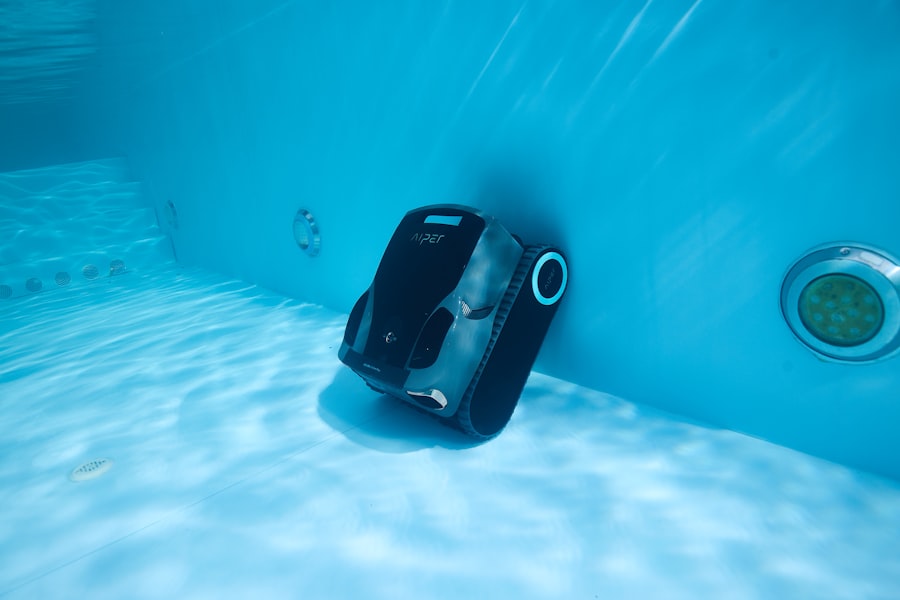
The quest for more efficient and robust underwater communication continues, driving research into novel technologies and hybrid approaches.
Hybrid Communication Systems
Recognizing the complementary strengths and weaknesses of acoustic and optical communication, researchers are developing hybrid systems that intelligently switch between or combine these modalities.
Acoustic-Optical Blends
A hybrid system might use acoustic modems for long-range navigation and low-bandwidth data telemetry, while seamlessly switching to an optical link when two nodes come within close range, facilitating high-speed data exchange. This approach leverages the best of both worlds, providing robust, flexible, and high-performance communication. For example, an AUV searching for a target might communicate with a surface vessel via acoustics, but once it identifies a target and approaches it, an optical link could be used for detailed visual data transmission.
Integration with Other Sensing Modalities
Future underwater communication systems may also integrate with other sensing modalities, such as inertial navigation systems or pressure sensors, to improve positioning accuracy and optimize communication links. This holistic approach aims to create a more intelligent and adaptive underwater network.
Quantum Communication Potential
Still in its nascent stages for underwater applications, quantum communication offers intriguing possibilities for secure data transmission. Unlike classical communication, which relies on the properties of physical signals, quantum communication utilizes the principles of quantum mechanics, such as entanglement and superposition, to encrypt and transmit information.
Secure Data Transmission
The primary advantage of quantum communication is its inherent security. Any attempt to eavesdrop on a quantum communication link would inevitably disturb the quantum state, alerting the legitimate parties to the intrusion. This makes it theoretically impervious to interception.
Challenges of Quantum Propagation
However, the challenges for quantum communication in water are immense. Maintaining the fragile quantum states of photons or other carriers over significant distances in a turbulent, scattering, and absorbent medium like seawater presents monumental engineering hurdles. While the potential for ultra-secure underwater communication is captivating, practical implementation remains a distant goal, requiring breakthroughs in quantum repeater technologies and robust quantum state preservation in harsh environments.
Underwater communication has become an increasingly important field as researchers explore innovative ways to transmit data in aquatic environments. A related article that delves into the advancements in this area can be found at In the War Room, where various technologies and their applications are discussed. This exploration highlights the challenges and breakthroughs that are shaping the future of communication beneath the waves, making it a fascinating read for anyone interested in marine technology.
The Broader Impact
| Metric | Description | Typical Values | Unit |
|---|---|---|---|
| Frequency Range | Operating frequency for underwater communication signals | 10 Hz – 1 MHz (Acoustic), 100 MHz – 1 GHz (Optical) | Hz |
| Data Rate | Maximum achievable data transmission speed | Up to 100 kbps (Acoustic), up to 1 Gbps (Optical) | bits per second (bps) |
| Communication Range | Maximum distance over which communication is effective | Up to 10 km (Acoustic), up to 100 m (Optical) | meters (m) |
| Latency | Time delay in signal transmission | 10 ms – 1 s (Acoustic) | milliseconds (ms) |
| Signal Attenuation | Loss of signal strength over distance | 0.1 – 1 dB/m (Acoustic), 10 – 100 dB/m (Optical) | decibels per meter (dB/m) |
| Modulation Techniques | Methods used to encode data onto carrier signals | FSK, PSK, OFDM (Acoustic); OOK, PPM (Optical) | N/A |
| Power Consumption | Energy required for communication devices | 0.5 – 5 W (Acoustic) | Watts (W) |
The ability to communicate effectively underwater transcends purely technological advancement; it holds profound implications for myriad fields, from scientific exploration and environmental monitoring to resource management and national security.
Oceanographic Research and Exploration
Reliable underwater communication empowers oceanographers to deploy vast networks of sensors, enabling continuous, real-time monitoring of ocean currents, temperature, salinity, and marine life behavior. This influx of data is crucial for understanding climate change, predicting extreme weather events, and protecting vulnerable ecosystems. Furthermore, remotely operated vehicles (ROVs) and autonomous underwater vehicles (AUVs) can be controlled and communicate their findings more effectively, facilitating exploration of previously inaccessible deep-sea environments.
Industry and Defense Applications
In industry, underwater communication is vital for offshore oil and gas operations, underwater mining, and cable laying. It enables the remote control and monitoring of subsea infrastructure, ensures safety, and optimizes operational efficiency. From a defense perspective, secure and reliable underwater communication is paramount for submarine operations, anti-submarine warfare, and covert intelligence gathering. The ability to communicate without detection or interception is a strategic imperative.
Environmental Monitoring and Conservation
Effective underwater communication networks are indispensable for monitoring the health of coral reefs, tracking endangered species, and detecting pollution events. This technology enables timely intervention and informed decision-making for conservation efforts. For instance, acoustic telemetry allows researchers to track individual marine animals, understanding their migration patterns, foraging behaviors, and interactions within their ecosystems.
The relentless pursuit of unlocking the secrets of underwater communication represents a monumental undertaking. Despite the formidable natural barriers imposed by the aquatic environment, human ingenuity continues to devise innovative solutions. From the enduring relevance of acoustic systems to the promising potential of hybrid and quantum technologies, the future of underwater communication is poised for advancements that will profoundly reshape our understanding and interaction with the ocean. The challenge is akin to navigating a complex, ever-shifting labyrinth, but with each technological stride, humanity draws closer to fully integrating the silent world beneath the waves into its connected global tapestry.
FAQs
What is underwater communication?
Underwater communication refers to the methods and technologies used to transmit information beneath the surface of water, typically in oceans, seas, lakes, or rivers. It is essential for activities such as marine research, underwater exploration, and military operations.
What are the common methods of underwater communication?
The most common methods include acoustic communication (using sound waves), optical communication (using light signals), and electromagnetic communication (using radio waves). Acoustic communication is the most widely used due to sound’s ability to travel long distances underwater.
Why is acoustic communication preferred underwater?
Acoustic communication is preferred because sound waves can travel much farther and with less attenuation in water compared to radio waves or light. Water absorbs electromagnetic waves quickly, and light signals are limited by water clarity and distance.
What are the challenges of underwater communication?
Challenges include signal attenuation, multipath propagation, limited bandwidth, high latency, and environmental noise. Water conditions such as temperature, salinity, and pressure also affect signal quality and reliability.
What are some applications of underwater communication?
Applications include submarine communication, remotely operated vehicles (ROVs), underwater sensor networks, marine biology studies, oil and gas exploration, and search and rescue operations. These systems enable data exchange and coordination in underwater environments.