The Hughes Glomar Explorer, a vessel of improbable design and clandestine purpose, remains an enduring enigma in maritime history. Commissioned under the guise of deep-sea mining exploration, its true mission – the recovery of a sunken Soviet submarine – captivated the global imagination. While the covert operation, Project Azorian, has been extensively documented, a lesser-known yet equally intriguing aspect of the Glomar Explorer’s narrative concerns the very reason for its ostensible existence: the retrieval of manganese nodules. This article delves into the factual intricacies of the Glomar Explorer’s connection to these metallic seafloor deposits, peeling back the layers of deception to reveal the scientific and geopolitical context surrounding their purported extraction.
The Allure of Manganese Nodules: A Deep-Sea Treasure
Manganese nodules, polymetallic concretions scattered across vast swathes of the deep ocean floor, emerged as a significant focus of scientific and commercial interest in the mid-20th century. Their rich composition of valuable metals made them a tantalizing prospect for nations seeking to secure strategic resources.
Formation and Composition: Nature’s Mineral Accumulators
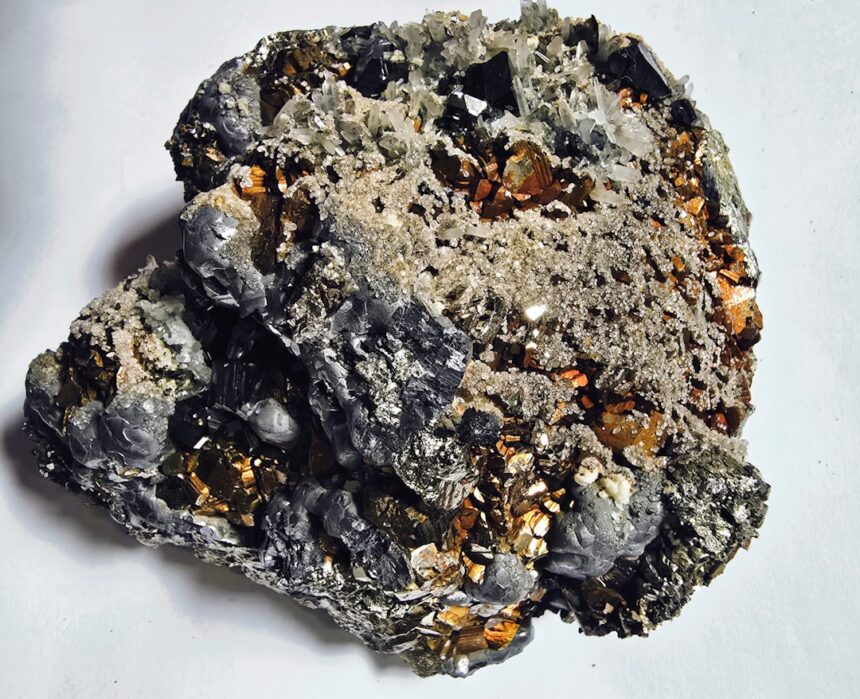
These potato-sized or larger nodules form through incredibly slow accretion, thousands to millions of years, as metal ions precipitate from seawater or interstitial pore water onto a nucleus, which can be anything from a shark’s tooth to a rock fragment. The primary constituents are manganese and iron hydroxides, but they also contain significant concentrations of commercially valuable metals such as nickel, copper, and cobalt, and trace amounts of rare earth elements. The specific composition varies depending on the ocean basin and local geochemical conditions.
Economic Potential: A Future Rich in Resources
The allure of manganese nodules stemmed from their projected economic value. As terrestrial reserves of critical metals began to dwindle, the deep sea presented a vast, untapped frontier. Proponents envisioned advanced mining technologies extracting these nodules, thereby securing a steady supply of essential raw materials for industrialized nations. Estimates of the reserves were staggering, suggesting centuries of supply for critical minerals.
Geopolitical Implications: The Scramble for the Seabed
The potential wealth locked within manganese nodules ignited a global competition for access and control. Developing nations, many of whom lacked the technological capability for deep-sea mining, feared being left behind in this new “blue gold rush.” Industrialized nations, on the other hand, saw an opportunity to reduce their dependence on terrestrial suppliers and potentially gain a strategic advantage in resource security. This nascent scramble for the seabed laid the groundwork for complex international legal frameworks, notably the United Nations Convention on the Law of the Sea (UNCLOS), which sought to regulate activities in the deep sea.
Project Azorian and the Manganese Nodule Cover Story
The Hughes Glomar Explorer’s primary mission, Project Azorian, was shrouded in an elaborate and highly successful disinformation campaign. The story of deep-sea manganese nodule mining served as an impermeable shell, diverting attention from the vessel’s true, clandestine objective.
The Genesis of the Deception: A Perfect Alibi
The decision to use manganese nodule mining as a cover was a stroke of strategic brilliance. It capitalized on existing public awareness and scientific interest in deep-sea resources. Howard Hughes, the eccentric billionaire, a figure synonymous with daring technological feats and vast wealth, lent instant credibility to the enterprise. His reputation as a visionary industrialist made the deep-sea mining venture seem perfectly plausible, a pioneering endeavor in the grand tradition of American innovation. This alibi offered a compelling, if ultimately false, narrative for a ship of such unusual design and capabilities.
Technical Specifications of the Glomar Explorer: Built for More Than Nodules
The Glomar Explorer itself was a testament to extraordinary engineering. Its immense size – over 600 feet long – and sophisticated equipment, including a massive central moon pool and a heavy-lift system, were ostensibly designed for the collection of manganese nodules from depths exceeding 5,000 meters. However, these features were uniquely suited for its actual mission: the delicate and precise recovery of large, heavy objects from the abyssal plain. The vessel’s dynamic positioning system and specialized lifting apparatus, while plausible for nodule mining, were in reality carefully optimized for the recovery of a sunken Soviet submarine, the K-129.
The “Mining” Operations: A Carefully Orchestrated Façade
While the Glomar Explorer was indeed equipped with a highly sophisticated “claw” – the capture vehicle ultimately known as Clementine – and elaborate systems for deploying and retrieving it, the actual collection of manganese nodules was minimal, if it occurred at all on a significant scale. Public perception, fueled by carefully leaked information and plausible corporate statements, was that a cutting-edge deep-sea mining operation was underway. This illusion was meticulously maintained, even during periods of intense scrutiny. The vessel’s highly specialized design features, such as the elaborate heave compensation system, were explained away as necessary for the efficient and safe retrieval of large quantities of nodules in varying sea states.
The Scientific Pursuit vs. Military Imperatives
The intersection of legitimate scientific inquiry into deep-sea resources and the strategic imperatives of the Cold War created a complex tapestry around the Glomar Explorer narrative. While the nods toward manganese nodule research were a diversion, they unwittingly contributed to a broader understanding of the deep ocean.
Academic Involvement: Lending Credibility to the Cover
To bolster the façade, various academic institutions and individual scientists were involved in superficial research projects related to deep-sea mining. This lent an air of legitimate scientific endeavor to the Glomar Explorer’s activities, further convincing external observers that its purpose was purely commercial and scientific. These collaborations, while perhaps unwitting tools in a larger deception, undoubtedly contributed to the pool of knowledge regarding deep-sea ecosystems and resource potential. The scientific community, keen to explore the unknown reaches of the ocean, was an ideal partner for such a carefully crafted deception.
Data Collection and Oceanography: Unintended Consequences
Even though the primary objective was entirely different, the Glomar Explorer’s lengthy deployments and sophisticated sensor arrays inevitably collected vast amounts of oceanographic data. While not directly related to manganese nodules, this data – concerning currents, bathymetry, sediment composition, and marine life at extreme depths – indirectly contributed to scientific understanding of the deep-sea environment. The sheer scale and duration of the covert operation provided a unique platform for observing and recording aspects of the abyssal plain, data that likely proved valuable for various scientific disciplines long after Project Azorian became public.
The Deep Sea’s Ecosystem: An Evolving Understanding
The environmental impact of deep-sea mining is a subject of ongoing debate. At the time of the Glomar Explorer’s deployment, understanding of deep-sea ecosystems was rudimentary. The ostensible purpose of mining manganese nodules, however, brought attention to the fragility and uniqueness of these environments. While the Glomar Explorer itself did not engage in extensive nodule extraction, the very premise of its cover sparked early discussions and concerns about the potential consequences of industrial-scale exploitation of the deep seabed. This foreshadowed the future environmental considerations that would become central to any legitimate deep-sea mining endeavor.
The Unveiling of Project Azorian and its Aftermath
The dramatic revelation of Project Azorian irrevocably altered the perception of the Hughes Glomar Explorer and its purported mission. The manganese nodule cover story dissolved, unveiling a tale of Cold War espionage that captivated the world.
The Los Angeles Times Scoop: Cracks in the Facade
The meticulously maintained secrecy of Project Azorian began to unravel in early 1975. A series of leaks, culminating in a bombshell report in the Los Angeles Times, exposed the true nature of the Glomar Explorer’s mission: the recovery of a sunken Soviet submarine. This journalistic triumph shattered the illusion of a commercial deep-sea mining venture, revealing the elaborate and audacious intelligence operation beneath. The public and international community reacted with a mixture of awe, astonishment, and geopolitical tension.
Public Reaction and Geopolitical Fallout: A Global Spectacle
The revelation triggered a global sensation. The intricate details of the recovery operation, the sheer scale of the deception, and the chilling echoes of the Cold War gripped the public imagination. The Soviet Union, while outwardly condemning the operation, was likely impressed by the audacity and technical prowess demonstrated by the United States. The incident created a diplomatic stir and highlighted the lengths to which superpowers would go to gain an intelligence advantage. The manganese nodule narrative, once a sturdy shield, now lay in tatters, a mere footnote to a much grander espionage tale.
The Glomar Explorer’s Legacy Beyond Nodules: A Symbol of Espionage
After its secret mission was made public, the Hughes Glomar Explorer ceased to be solely associated with deep-sea mining. It became, and remains, an iconic symbol of Cold War espionage, a testament to American ingenuity and clandestine capability. The term “Glomar response” entered the lexicon, referring to the refusal by government agencies to confirm or deny information, a direct result of the CIA’s handling of inquiries about the vessel. While its subsequent career involved legitimate activities, including deep-sea drilling and oil exploration, its initial purpose, the retrieval of manganese nodules, forever remained a fascinating, if ultimately false, prologue to its true story.
The Future of Manganese Nodule Mining: A Lingering Question
Despite the Glomar Explorer’s deceptive association, the concept of mining manganese nodules persists. Technological advancements and growing demand for critical minerals continue to fuel discussions and research into the feasibility and ethics of deep-sea resource extraction.
Technological Advancements: From Concept to Reality
Since the 1970s, significant strides have been made in deep-sea mining technology. Remotely operated vehicles (ROVs) and autonomous underwater vehicles (AUVs) are now capable of operating at extreme depths, mapping the seabed with unprecedented detail. Prototype collection systems, involving autonomous crawlers and hydraulic suction pumps, have been successfully tested. The engineering challenges are immense, demanding solutions that can withstand immense pressure, extreme temperatures, and corrosive environments. The dream of economically viable deep-sea mining is slowly but surely moving closer to technical reality.
Environmental Concerns: Balancing Development and Preservation
The most significant hurdle facing the future of manganese nodule mining is environmental. The deep sea, once thought to be a barren wasteland, is now recognized as home to unique and fragile ecosystems, many of which are still poorly understood. Scientists and environmental groups express serious concerns about the potential for irreversible damage to these environments from habitat destruction, sediment plumes, noise pollution, and the disruption of nutrient cycles. Striking a balance between the perceived necessity of resource extraction and the imperative of environmental protection remains a formidable ethical and practical challenge.
International Regulations and Governance: A Complex Web
The legal and governance framework for deep-sea mining is complex and evolving. UNCLOS established the International Seabed Authority (ISA) to regulate mineral-related activities in the international seabed area, beyond national jurisdiction. The ISA is tasked with developing a mining code that would govern future deep-sea mining activities, including environmental regulations and benefit-sharing mechanisms. As of late 2023, a comprehensive mining code is still under negotiation, reflecting the diverse national interests and environmental concerns at play. The future of manganese nodule mining will ultimately hinge on the successful development and implementation of robust international regulations that ensure both economic viability and environmental stewardship. The ghost of the Hughes Glomar Explorer, as a symbol of both technological marvel and a narrative of deep-sea resource interest, continues to subtly inform these ongoing discussions.

WARNING: The $800 Million Mechanical Failure That Almost Started WWIII
FAQs

What was the Hughes Glomar Explorer?
The Hughes Glomar Explorer was a specially designed deep-sea drilling ship built in the early 1970s. It was originally commissioned by the CIA for a secret mission to recover a sunken Soviet submarine from the ocean floor.
What is the connection between the Hughes Glomar Explorer and manganese nodules?
After the secret submarine recovery mission was canceled, the Hughes Glomar Explorer was repurposed for commercial deep-sea mining exploration, specifically to investigate and potentially harvest manganese nodules from the ocean floor.
What are manganese nodules?
Manganese nodules are rock concretions found on the ocean floor, rich in valuable metals such as manganese, nickel, copper, and cobalt. They are considered a potential resource for mining due to their metal content.
Why was the Hughes Glomar Explorer significant in the context of deep-sea mining?
The Hughes Glomar Explorer was one of the first vessels equipped to explore and attempt to recover manganese nodules from the deep ocean, marking an early effort in the commercial exploitation of seabed mineral resources.
What was the outcome of the Hughes Glomar Explorer’s manganese nodule project?
The project faced technical and economic challenges, and despite some successful recovery of nodules, it did not lead to large-scale commercial mining. The ship’s manganese nodule operations were eventually discontinued.