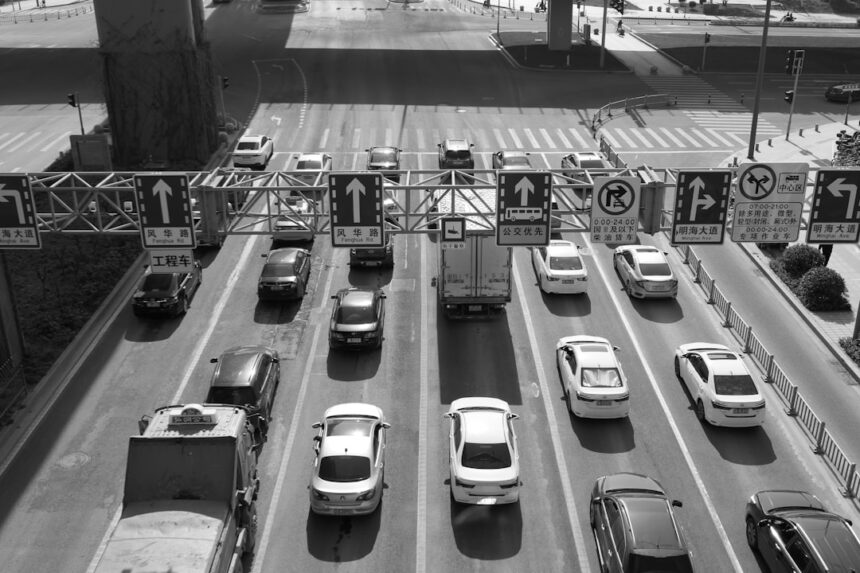
Routine traffic, often dismissed as mere background noise in the urban symphony, holds a robust reservoir of actionable intelligence. The patterns of movement, the velocity of vehicles, the duration of stops, the aggregation of density – these are not random occurrences. They are tangible manifestations of human activity, economic forces, and societal needs. Analyzing this seemingly mundane flow can unlock profound insights into a city’s pulse, providing a granular understanding critical for effective urban planning, resource allocation, and public safety. Imagine the traffic network as a circulatory system; understanding its ebb and flow reveals the health and vitality of the urban body.
Congestion, the bane of every commuter, is more than just a frustrating delay. It is a data-rich phenomenon that speaks volumes about the underlying dynamics of a city. The location, timing, and severity of traffic jams act as diagnostic tools, pinpointing areas of stress and inefficiency within the urban infrastructure.
Echoes of Economic Activity
The presence and duration of traffic congestion often correlate directly with economic activity. During peak business hours, increased vehicular movement is expected. However, persistent congestion in specific industrial or commercial zones can signal unmet demand for transportation infrastructure in those areas. For instance, a perpetual bottleneck near a port or a large manufacturing plant might indicate that freight volumes have outstripped the capacity of the access roads. This is akin to observing stagnant water in a vital artery, suggesting a blockage that needs to be addressed.
Spatio-temporal Signatures of Daily Life
Understanding when and where congestion occurs reveals the intricate tapestry of daily life. Morning commutes invariably highlight arteries leading into central business districts, while evening commutes reveal the reverse flow. Weekend traffic patterns, often concentrated around retail hubs or recreational areas, offer a different perspective on urban behavior. These spatio-temporal signatures are not static; they evolve with changing work patterns, the rise of new commercial centers, and shifts in population distribution. By dissecting these patterns, urban planners can anticipate future needs and proactively manage infrastructure development.
The Ripple Effect of Incidents
Minor traffic incidents, like a fender-bender or a disabled vehicle, can propagate waves of congestion throughout the network. Analyzing the swiftness of the system’s recovery or the extent of the ripple effect can provide insights into the resilience of the traffic management system. A rapid recovery suggests effective incident response mechanisms, while prolonged delays might indicate shortcomings in emergency services deployment or traffic diversion strategies. This analysis is like detecting the subtle tremors that precede a larger event, allowing for preventative measures.
In the realm of military operations, understanding routine administrative traffic can provide valuable intelligence insights. For a deeper exploration of this topic, you can refer to the article on the significance of monitoring communication patterns and their implications for operational security. This article can be found at In the War Room, where it discusses how analyzing routine traffic can enhance situational awareness and inform strategic decision-making.
Uncovering Commuter Behavior
The way people move through a city is a direct reflection of their habits, preferences, and constraints. Routine traffic data, when analyzed deeply, can paint a detailed portrait of commuter behavior, enabling more targeted and effective transportation planning.
Mode Choice Indicators
The modal split – the proportion of people using different forms of transportation (cars, public transit, cycling, walking) – is a crucial indicator of urban livability and sustainability. Observing aggregated traffic patterns can provide indirect insights into these choices. For example, sustained high volumes of single-occupancy vehicles on specific routes might suggest a lack of attractive public transit alternatives or challenging cycling infrastructure. Conversely, the increasing use of bus lanes or the clustering of ride-sharing vehicles can signal growing adoption of these modes. This is analogous to observing the footprints left on different trails; the density and type of footprints reveal the preferred paths.
The Psychology of the Journey
Beyond the purely functional, traffic data can also hint at the psychological aspects of commuting. The willingness of drivers to sit in traffic for extended periods versus opting for alternative routes, even if longer, can suggest a trade-off between time and perceived stress. Analyzing speed variations can reveal driver frustration levels – sudden braking and acceleration might indicate impatience. Understanding these subtle behavioral cues can inform the design of more human-centric transportation systems.
The Impact of External Factors
Routine traffic is not solely dictated by infrastructure and individual choices. External factors play a significant role. Weather conditions, major public events, and even school holidays invariably influence traffic flow. By tracking deviations from normal patterns during these times, one can quantify the impact of these external forces. This allows for more accurate predictions and the development of contingency plans for disruptive events. It is like understanding how tides are influenced by the moon’s gravitational pull; external forces shape the predictable flow.
Data as the Foundation for Smart Cities

The ubiquitous deployment of sensors, cameras, and connected vehicles has transformed routine traffic into a rich, real-time data stream. This data forms the bedrock for developing intelligent urban environments.
The Sensor Network: Eyes and Ears of the City
Traffic sensors, embedded in roadways or mounted on poles, along with ubiquitous CCTV cameras, function as the city’s distributed nervous system. These sensors collect raw data on vehicle count, speed, occupancy, and classification. This raw information, when processed and analyzed, becomes the intelligence that fuels smart city initiatives. This is the initial gathering of sensory input, the raw perception of the world.
The Algorithm’s Role: From Data to Insight
Raw traffic data, by itself, is largely inert. It is through the application of sophisticated algorithms that insights are extracted. Machine learning models can identify anomalies, predict future traffic conditions, and optimize traffic signal timings. These algorithms act as the brain, interpreting the sensory input and generating meaningful understanding and action. This is where the raw data is transformed into actionable knowledge.
Real-Time Decision Making
The true power of traffic data lies in its potential for real-time application. Dynamic traffic signal control systems, for instance, can adjust signal timings based on current traffic volumes, reducing waiting times and improving flow. Coordinated incident management systems can dispatch emergency services more effectively based on real-time traffic conditions, minimizing response times. This capability is akin to a sophisticated physician constantly monitoring vital signs and adjusting treatment accordingly.
Predicting and Mitigating Future Bottlenecks

The predictive capabilities derived from analyzing routine traffic are invaluable for proactive urban planning. Instead of reacting to problems after they emerge, cities can anticipate and address them before they escalate.
Forecasting Future Demand
By analyzing historical traffic data and overlaying it with demographic projections and planned development, urban planners can forecast future transportation demand. This allows for the strategic expansion of road networks, the development of new public transit lines, and the implementation of congestion pricing mechanisms before severe bottlenecks materialize. This is like a meteorologist predicting an approaching storm and issuing warnings and recommendations.
The Art of Dynamic Management
Routine traffic analysis enables dynamic management strategies. This involves adjusting traffic signal timings, implementing variable speed limits, and deploying reversible lanes in response to changing traffic conditions. This adaptability allows the transportation network to flex and respond to the ever-shifting demands of urban mobility. It is like a skilled conductor managing an orchestra, adjusting the tempo and dynamics to achieve a harmonious performance.
Investing in Resilient Infrastructure
Understanding where and why congestion occurs provides data-driven justification for infrastructure investments. Instead of relying on anecdotal evidence or political expediency, cities can prioritize projects that will have the most significant impact on reducing congestion and improving travel times. This data-informed approach ensures that public funds are allocated efficiently towards building a more resilient and functional transportation system. This is about making informed decisions based on evidence, not guesswork.
Routine administrative traffic can often provide valuable insights into organizational operations and security postures. For a deeper understanding of how this type of traffic can serve as intelligence, you might find the article on the topic particularly enlightening. It discusses various methods of analyzing routine communications to uncover potential vulnerabilities and enhance overall security measures. To explore this further, you can read the full article here.
The Ethical Dimensions of Traffic Data
| Metric | Description | Example Data | Significance |
|---|---|---|---|
| Packet Volume | Total number of routine administrative packets observed | 1,250,000 packets/day | Indicates baseline network activity and potential anomalies |
| Protocol Distribution | Breakdown of administrative protocols used (e.g., SNMP, ICMP, SSH) | SNMP: 45%, ICMP: 30%, SSH: 25% | Helps identify common management tools and potential misuse |
| Source IP Diversity | Number of unique source IP addresses sending administrative traffic | 350 unique IPs | Measures the spread of administrative access points |
| Destination IP Concentration | Percentage of traffic targeting top 5 destination IPs | 65% | Highlights critical infrastructure or potential targets |
| Average Packet Size | Mean size of administrative packets in bytes | 128 bytes | Helps differentiate between routine and suspicious traffic |
| Traffic Timing Patterns | Distribution of administrative traffic over 24 hours | Peak: 9 AM – 5 PM (80%), Off-peak: 20% | Identifies normal operational hours and unusual activity |
| Failed Authentication Attempts | Number of unsuccessful login attempts via administrative protocols | 120 attempts/day | Indicator of potential brute force or reconnaissance activity |
| Change in Traffic Volume | Percentage increase or decrease compared to previous period | +15% week-over-week | Signals shifts in network management or possible incidents |
While the potential for extracting intelligence from routine traffic is immense, it is crucial to acknowledge and address the ethical considerations associated with the collection and use of this data.
Privacy Concerns
The collection of granular traffic data, particularly from connected vehicles and surveillance systems, raises significant privacy concerns. It is essential to anonymize data wherever possible and implement robust security measures to prevent unauthorized access or misuse. The public needs assurance that their movements are not being tracked in an intrusive manner. This is about respecting individual space and ensuring that the pursuit of intelligence does not infringe upon fundamental rights.
Algorithmic Bias
The algorithms used to analyze traffic data can inadvertently perpetuate existing societal biases. For instance, if historical data disproportionately reflects under-investment in certain neighborhoods, predictive models might continue to deprioritize those areas, exacerbating existing inequalities. Careful design and regular auditing of algorithms are necessary to mitigate such biases and ensure equitable outcomes. This is akin to ensuring that a medical diagnostic tool doesn’t have blind spots that lead to misdiagnosis in certain patient populations.
Transparency and Accountability
The decision-making processes that utilize traffic data should be transparent and accountable. The public has a right to understand how their data is being used and how traffic management decisions are being made. Clear policies and public consultation are vital to building trust and fostering community engagement in the development of smart transportation systems. This is about open governance and ensuring that those in power are answerable for their actions.
In conclusion, routine traffic is far from a passive backdrop to urban life. It is a dynamic and data-rich environment that, when properly analyzed, can unlock a wealth of intelligence. This intelligence is the key to building more efficient, sustainable, and livable cities. By understanding the hidden language of congestion, the nuances of commuter behavior, and the power of real-time data, urban planners and policymakers can move beyond reactive measures and embrace a future of proactive, intelligent urban management. The journey towards smarter cities begins with recognizing the profound insights hidden within the seemingly ordinary ebb and flow of traffic.
FAQs
What is routine administrative traffic in the context of intelligence?
Routine administrative traffic refers to the regular, everyday communication and data exchanges that occur within and between organizations. In intelligence, this traffic can include emails, reports, memos, and other standard communications that, when analyzed, may provide valuable insights or indicators relevant to intelligence gathering.
How can routine administrative traffic be used as a source of intelligence?
By monitoring and analyzing routine administrative traffic, intelligence agencies can identify patterns, anomalies, or hidden messages that might indicate security threats, operational changes, or other significant activities. This type of traffic often contains metadata and content that, when aggregated, can reveal trends or connections not immediately apparent.
What are the challenges in using routine administrative traffic for intelligence purposes?
Challenges include the vast volume of data to process, ensuring privacy and legal compliance, distinguishing relevant information from noise, and the need for sophisticated analytical tools to detect subtle indicators within routine communications.
What tools or methods are commonly used to analyze routine administrative traffic?
Common tools include data mining software, natural language processing (NLP), machine learning algorithms, and network analysis techniques. These tools help automate the extraction of meaningful patterns and insights from large datasets of routine communications.
Is the use of routine administrative traffic for intelligence gathering legal?
The legality depends on jurisdiction, the nature of the data, and the methods used for collection and analysis. Intelligence activities must comply with applicable laws, regulations, and privacy protections to ensure that the use of routine administrative traffic respects individual rights and organizational policies.