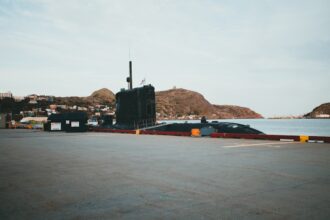
The concept of underwater nuclear deterrence represents a cornerstone of modern strategic stability, a silent guardian beneath the waves, ensuring a delicate balance of power. This article explores the multifaceted dimensions of underwater nuclear deterrence, from its historical origins to its technological advancements and the ongoing debates surrounding its future. It delves into the strategic implications of these submerged sentinels, examining their role in preventing large-scale conflict and the complexities of maintaining such a potent and clandestine force.
The development of underwater nuclear deterrence was not an instantaneous leap but a gradual progression driven by evolving geopolitical realities and technological breakthroughs. The initial quest for nuclear weapons delivery systems focused predominantly on land-based intercontinental ballistic missiles (ICBMs) and strategic bombers. However, the inherent vulnerabilities of these systems to a first strike prompted a reevaluation of strategic thinking.
The Vulnerability of Fixed Sites: A Driving Force
Early ICBM silos, though hardened, were fixed targets whose locations were increasingly ascertainable through reconnaissance. This created a scenario where an adversary, with sufficient targeting intelligence, could theoretically launch a devastating first strike, crippling a nation’s nuclear retaliatory capability. The concept of “pre-emption” loomed large, threatening the very foundations of mutual assured destruction (MAD). Strategic bombers, while mobile, faced similar challenges in terms of air defenses and the time required to scramble and reach their targets.
The Nuclear-Powered Submarine Revolution
The advent of nuclear-powered submarines in the 1950s proved to be a revolutionary development that offered a solution to the vulnerability problem. These vessels possessed unprecedented endurance and speed, allowing them to remain submerged for extended periods, essentially becoming invisible to conventional detection methods. This newfound stealth provided an ideal platform for delivering nuclear weapons, offering a retaliatory capability that could survive even a massive first strike.
Early SLBM Systems: From Polaris to Poseidon
The United States Navy’s Polaris program, initiated in the late 1950s, marked the birth of operational SLBMs. The Polaris A-1, first deployed in 1960, was a solid-propellant, two-stage ballistic missile with an initial range of approximately 1,200 nautical miles. While its range was limited, the submarines carrying these missiles could patrol vast ocean areas, making their detection and destruction incredibly challenging. Subsequent advancements led to the Polaris A-2 and A-3, with increased range and payload capacity.
The 1970s saw the introduction of the Poseidon C-3 missile, a significant upgrade that incorporated multiple independently targetable reentry vehicles (MIRVs). This technological leap allowed a single submarine to deliver multiple warheads to different targets, dramatically increasing its destructive potential and making it even more challenging for an adversary to counter its impact. The development of SLBMs fundamentally altered the strategic landscape, establishing an enduring and virtually invulnerable second-strike capability.
Nuclear deterrence has evolved significantly over the years, with one of the most intriguing aspects being the role of underwater capabilities. Submarines equipped with nuclear weapons provide a stealthy and secure means of deterrence, ensuring that a nation can respond to threats even when surface assets are compromised. For a deeper understanding of this topic, you can explore the article on the strategic implications of underwater nuclear deterrence found at this link.
The Pillars of Deterrence: Stealth, Survivability, and Second-Strike Capability
The effectiveness of underwater nuclear deterrence rests upon three interconnected pillars: stealth, survivability, and the assured second-strike capability. These elements collectively form a formidable shield against aggression, ensuring that any potential adversary faces unacceptable consequences for initiating a nuclear conflict.
The Cloak of Invisibility: Maintaining Submarine Secrecy
The primary strength of SLBM platforms lies in their stealth. Modern ballistic missile submarines (SSBNs) are engineered to operate with extreme quietness, employing advanced quieting technologies, sophisticated acoustic dampening, and deep-diving capabilities. This “cloak of invisibility” makes them incredibly difficult to locate and track in the vast expanse of the world’s oceans. Hunting an SSBN is akin to searching for a needle in an oceanic haystack, a task rendered even more challenging by advanced counter-detection measures.
Hardened Against Attack: The Survivability Factor
Beyond stealth, SSBNs are designed with remarkable survivability in mind. Their robust hull construction can withstand tremendous pressure, allowing them to operate at significant depths. Furthermore, their operational doctrine emphasizes dispersal and constant movement, further complicating any potential targeting efforts. In the event of a conventional or even a limited nuclear attack, the chances of a preemptive strike successfully neutralizing an entire submarine fleet are exceedingly low, if not practically impossible.
The Unwavering Retaliation: Assured Second-Strike
The combination of stealth and survivability culminates in the assured second-strike capability, the bedrock of nuclear deterrence. This means that even if an adversary were to launch a devastating first strike targeting a nation’s land-based nuclear forces, the submerged SSBNs would remain operational and capable of retaliating with a devastating counter-strike. This guarantee of an unacceptable response, often referred to as “retaliation in kind,” is what ultimately discourages nuclear aggression. It transforms the potential benefits of a first strike into an unimaginable catastrophe, thus acting as a powerful deterrent.
Technological Evolution and Ongoing Modernization
The technological landscape of underwater nuclear deterrence is constantly evolving, driven by the need to maintain an edge against ever-improving anti-submarine warfare (ASW) capabilities. This ongoing arms race influences the design, deployment, and operational strategies of SSBNs and their missile systems.
Advancements in Missile Technology: Trident and Beyond
The Trident missile program, initiated by the United States and the United Kingdom, represents a significant leap forward in SLBM technology. The Trident II D5 missile, currently in service, is highly accurate, possesses an extended range, and can carry multiple MIRVs, each capable of independently targeting a distinct objective. These capabilities significantly enhance the deterrent effect, offering greater flexibility and a more credible threat. Other nuclear powers, such as Russia and China, also possess sophisticated SLBM systems, each with unique characteristics and ongoing modernization efforts.
Submarine Technology: Quietness and Automation
Modern SSBNs, such as the U.S. Ohio-class (soon to be replaced by the Columbia-class) or Russia’s Borei-class, are marvels of engineering. They incorporate advanced propulsion systems, ultra-quiet pumps and machinery, and sophisticated acoustic coatings to minimize their sonar signature. Automation plays an increasingly crucial role, reducing crew size and improving operational efficiency. Furthermore, developments in hydrodynamics and advanced materials contribute to enhanced stealth and deeper operational capabilities.
Counter-Detection Technologies and the ASW Challenge
The relentless pursuit of stealth in SSBN design is continuously challenged by advancements in anti-submarine warfare (ASW) technologies. Passive and active sonar systems are becoming more sophisticated, capable of detecting fainter acoustic signatures over longer ranges. Satellite imagery, magnetic anomaly detectors (MAD), and even non-acoustic methods are being explored to counter the stealth of submarines. This technological arms race is a perpetual cycle, with each side striving to gain an advantage, ensuring that no decisive breakthrough fundamentally undermines the deterrent.
Strategic Implications and Global Stability
The presence of underwater nuclear deterrence has profound strategic implications, shaping global stability and influencing international relations in unprecedented ways. It is a force that, while rarely seen, constantly exerts its influence on the geopolitical stage.
The “Tripwire” Effect and Crisis Stability
Underwater nuclear deterrence contributes significantly to crisis stability. The guaranteed second-strike capability essentially creates a “tripwire” effect. An aggressor knows that initiating a nuclear attack, even a limited one, will inevitably lead to a devastating retaliation. This understanding dramatically raises the stakes of any potential conflict, forcing decision-makers to exercise extreme caution and discouraging rash actions that could escalate to nuclear exchanges. Some argue that this mechanism has effectively prevented large-scale wars between major powers since World War II.
Arms Control and Non-Proliferation Efforts
The existence of powerful underwater nuclear arsenals also influences arms control negotiations. Treaties like the Strategic Arms Reduction Treaty (START) aim to limit the number of deployed nuclear warheads and delivery systems, including SLBMs. However, the unique characteristics of SSBNs, particularly their stealth and difficulty in verification, introduce complexities into these agreements. Furthermore, the ambition of certain non-nuclear states to acquire such a capability underscores the ongoing challenges to nuclear non-proliferation efforts. The desire for a guaranteed second-strike capability is a powerful motivator for states seeking nuclear weapons.
The Ethical Dilemma of “Launch on Warning”
The concept of “launch on warning” or “launch under attack” scenarios, though primarily associated with land-based ICBMs, also has implications for SSBNs. While SSBNs are designed for survivability and typically operate with a greater degree of deliberation, the command and control structures in a heated nuclear crisis would be under immense pressure. The ethical dilemma of responding to an unconfirmed attack or one where the full extent of the damage is still unknown remains a critical concern, highlighting the immense responsibility associated with wielding such power.
Nuclear deterrence strategies have evolved significantly, particularly with the increasing focus on undersea capabilities. A related article that delves into the complexities of this topic can be found on In The War Room, which explores how submarines play a crucial role in maintaining a balance of power. The article highlights the strategic advantages of stealth and mobility in underwater operations, making them a vital component of modern defense systems. For more insights, you can read the full article here.
The Future of Underwater Nuclear Deterrence: Challenges and Debates
| Metric | Description | Typical Values | Significance |
|---|---|---|---|
| Number of Nuclear Submarines | Total active ballistic missile submarines (SSBNs) deployed by major nuclear powers | USA: 14, Russia: 11, China: 6 | Indicates the scale of underwater nuclear deterrence capability |
| Missile Range | Range of submarine-launched ballistic missiles (SLBMs) | 4,000 – 9,000 km | Determines the reach of nuclear strike from underwater platforms |
| Patrol Duration | Average time a nuclear submarine remains on deterrent patrol | 60 – 90 days | Ensures continuous at-sea deterrence presence |
| Stealth Capabilities | Acoustic signature level and noise reduction technologies | Noise levels as low as 110 dB re 1 μPa at 1 m | Critical for survivability and second-strike capability |
| Warhead Count per Submarine | Number of nuclear warheads carried on each SSBN | Up to 96 warheads (e.g., US Ohio-class) | Determines destructive potential of underwater deterrent |
| Detection Range by Anti-Submarine Warfare (ASW) | Range at which enemy forces can detect nuclear submarines | Varies widely; typically 10-50 km depending on conditions | Impacts effectiveness of stealth and survivability |
As technology continues to advance and geopolitical landscapes shift, the future of underwater nuclear deterrence faces a range of challenges and ongoing debates. The longevity of this silent guardian is subject to intense scrutiny and continuous adaptation.
The Threat of Advanced Anti-Submarine Warfare (ASW)
One of the most persistent challenges to underwater nuclear deterrence is the ongoing development of advanced ASW technologies. If future ASW systems become capable of reliably and consistently tracking and targeting SSBNs, the fundamental premise of their deterrent value – their stealth and survivability – could be undermined. This ongoing technological race necessitates continuous investment in research and development to maintain the stealth advantage. This could involve exploring new propulsion systems, even quieter designs, and potentially entirely new methods of evasion.
New Domains of Warfare: Cyber and Space Threats
The emergence of cyber and space warfare introduces new vulnerabilities into the command and control systems that underpin underwater nuclear deterrence. A sophisticated cyberattack could potentially disrupt communication links, compromise targeting data, or even incapacitate a submarine’s operational systems. Similarly, threats to satellite-based navigation and communication systems, vital for SSBN operations, present a new dimension of concern. Securing these critical infrastructure components against state-sponsored attacks is a paramount priority for nations relying on underwater deterrence.
The Cost of Maintenance and Modernization
Operating and maintaining a modern SSBN fleet is extraordinarily expensive. The development and procurement of new classes of submarines, such as the Columbia-class in the United States or the Dreadnought-class in the United Kingdom, represent multi-billion-dollar investments. These costs are exacerbated by the highly specialized nature of the technology, the need for continuous research and development, and the protracted construction timelines. The economic burden of sustaining these forces can be a significant point of debate, particularly in times of competing national priorities.
The Role of Artificial Intelligence and Autonomy
The increasing sophistication of artificial intelligence (AI) and autonomous systems presents both opportunities and challenges for underwater nuclear deterrence. While AI could enhance situational awareness, optimize operational efficiency, and even aid in ASW, its integration into decision-making processes, especially concerning nuclear launch authority, raises profound ethical and safety concerns. The “human in the loop” principle remains a cornerstone of nuclear command and control, and the appropriate balance between human oversight and autonomous capabilities will be a critical debate for the future.
Arms Control in a Multipolar World
The landscape of nuclear deterrence is becoming increasingly multipolar, with several nations possessing or developing advanced SLBM capabilities. This complicates traditional bilateral arms control frameworks and necessitates new approaches to international security and stability. Finding effective mechanisms for verification, transparency, and risk reduction in a world with more nuclear actors, each with its own strategic calculus, will be a defining challenge for the coming decades.
In conclusion, underwater nuclear deterrence stands as a testament to human ingenuity and a stark reminder of the destructive potential of modern warfare. It represents a complex and expensive commitment, a constant interplay between technological innovation and strategic necessity. As we navigate an increasingly intricate geopolitical landscape, the silent guardian beneath the waves will likely continue to play a pivotal, albeit controversial, role in preventing large-scale conflict, its presence an enduring symbol of both humanity’s capacity for destruction and its desire for peace through strength.

WATCH NOW ▶️ SHOCKING: How The CIA Stole A Nuclear Submarine
FAQs
What is nuclear deterrence under the ocean?
Nuclear deterrence under the ocean refers to the strategy of deploying nuclear weapons on submarines beneath the sea. These submarines, often called ballistic missile submarines (SSBNs), serve as a secure and hidden platform to maintain a credible second-strike capability, deterring potential nuclear attacks by ensuring retaliation.
Why are submarines used for nuclear deterrence?
Submarines are used because they can operate stealthily and remain hidden underwater for extended periods, making them difficult to detect and target. This survivability ensures that a country can respond to a nuclear attack, thereby maintaining strategic stability and deterring adversaries from launching a first strike.
How do nuclear-armed submarines contribute to global security?
Nuclear-armed submarines contribute to global security by providing a continuous at-sea deterrent. Their presence reduces the likelihood of nuclear conflict by assuring adversaries that any nuclear aggression would result in a devastating retaliatory strike, thus promoting strategic stability among nuclear-armed states.
Which countries currently operate nuclear deterrent submarines?
As of now, several countries operate nuclear deterrent submarines, including the United States, Russia, the United Kingdom, France, and China. These nations maintain fleets of ballistic missile submarines equipped with nuclear missiles as part of their strategic defense forces.
What are the challenges associated with nuclear deterrence under the ocean?
Challenges include the high cost of building and maintaining nuclear submarines, technological complexities, risks of accidents or unauthorized launches, and the difficulty of verifying compliance with arms control agreements. Additionally, advancements in anti-submarine warfare technology may threaten the stealth and survivability of these deterrent platforms.