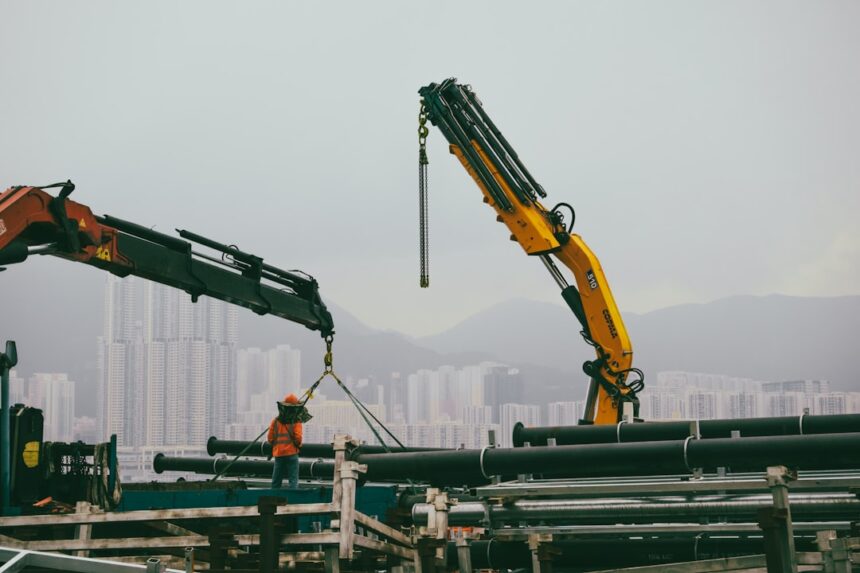
A raft foundation is a large, continuous concrete slab that supports a structure. Rafted machinery foundations are specifically designed to provide a stable and vibration-resistant base for heavy machinery. This type of foundation is often employed when a structure has a high load density, or when the soil conditions are poor, necessitating a uniform distribution of the load over a wide area. The “raft” appellation aptly describes its function; much like a raft on water, it distributes the weight of the machinery and the entire structure over a larger surface, preventing excessive settlement and mitigating the impact of vibrations.
Commonly, rafted machinery foundations are used for heavy industrial equipment such as large turbines, presses, compressors, and generators, where the dynamic forces generated by operation are significant. They are also utilized in seismic zones to provide enhanced stability. The meticulous design and construction of these foundations are paramount to ensuring the longevity and efficient operation of the machinery they support.
The decision to employ a rafted foundation is not a capricious one, but rather a strategic choice driven by load, soil, and operational considerations. It represents a commitment to a robust and enduring solution for the critical components of industrial infrastructure.
The earth beneath our feet, an intricate tapestry of granular and cohesive materials, plays a pivotal role in the performance of any foundation. For rafted machinery foundations, understanding the soil’s characteristics is as crucial as designing the concrete slab itself. The soil is the ultimate support, and its behavior under load dictates the foundation’s success or failure.
Bearing Capacity
The bearing capacity of soil refers to its ability to withstand loads without excessive deformation or shear failure. For rafted foundations, which spread loads over a substantial area, the average pressure exerted on the soil is generally lower than with isolated pad footings. However, variations in soil type and density across the foundation’s footprint can lead to differential settlement, a phenomenon where different parts of the foundation subside at different rates. This can be likened to trying to float a rigid plank on water with uneven depths; the plank will tilt.
- Ultimate Bearing Capacity: This is the maximum pressure the soil can sustain before shear failure occurs.
- Allowable Bearing Capacity: This is a reduced value of the ultimate bearing capacity, incorporating a factor of safety to account for uncertainties in soil properties and loading.
- Effect of Moisture Content: Water is a significant factor in soil behavior. High moisture content can reduce the bearing capacity of cohesive soils (like clay) and can lead to liquefaction in some granular soils (like sand) under seismic loading. Conversely, dry, granular soils can be quite stable.
- Layered Soil Strata: The presence of multiple soil layers with differing properties adds complexity. The foundation’s load might be supported by a strong upper layer and a weak lower layer, requiring careful consideration of the combined behavior and the potential for the load to “punch through” weaker strata.
Settlement Analysis
Settlement refers to the downward movement of a foundation under load. For machinery foundations, even small amounts of settlement can be detrimental, leading to misalignment of moving parts, increased vibration, and premature wear. Rafted foundations, by their very nature of distributing load, aim to minimize total settlement and, more importantly, differential settlement.
- Immediate Settlement: This occurs as the soil grains rearrange themselves at the time of load application. It is generally more significant in granular soils.
- Consolidation Settlement: This is a time-dependent process, primarily occurring in cohesive soils (clays and silts). It is due to the gradual expulsion of pore water from the soil as the load compresses the soil skeleton. For heavy machinery, this can take years to fully develop.
- Primary and Secondary Consolidation: Primary consolidation is the main stage of water expulsion. Secondary consolidation, or creep, is a slower process that occurs after primary consolidation is largely complete and involves the rearrangement of soil particles themselves.
- Differential Settlement: This is the variation in settlement across the foundation. It can induce bending moments and shear forces within the foundation and the supported structure, leading to cracks and operational issues. A well-designed raft foundation aims to make the soil pressure distribution as uniform as possible, thereby minimizing differential settlement. Think of it like a perfectly balanced ship; it sits evenly on the water, whereas an unbalanced one will list.
Soil Investigation and Testing
Before any concrete is poured, a thorough understanding of the subsurface conditions is essential. This is achieved through a combination of site investigation and laboratory testing.
- Boreholes and Sampling: Drilling boreholes allows for visual inspection of soil layers and the collection of disturbed and undisturbed soil samples.
- In-situ Testing: Techniques like the Standard Penetration Test (SPT) and Cone Penetration Test (CPT) provide direct measurements of soil strength and density in the ground.
- Laboratory Testing: Samples collected are subjected to various tests, including:
- Classification Tests (Sieve analysis, Atterberg limits): To determine the type and properties of the soil.
- Shear Strength Tests (Triaxial compression, Direct shear): To measure the soil’s resistance to shearing forces.
- Consolidation Tests: To determine the compressibility and settlement characteristics of cohesive soils.
- Compaction Tests: To assess the optimum moisture content and maximum dry density for granular soils, relevant if soil improvement is considered.
For a deeper understanding of rafted machinery foundations and their applications in engineering, you may find the article on the topic particularly insightful. It elaborates on the principles of load distribution and soil interaction, which are crucial for the design and implementation of such foundations. To explore this further, visit the related article at In The War Room.
Design Principles of Rafted Machinery Foundations
The design of a rafted machinery foundation is a multi-faceted engineering challenge that balances structural integrity with dynamic performance. It is not merely about providing a strong base, but a base that can coexist harmoniously with the vibrations and forces generated by the machinery.
Load Types and Combinations
Machinery foundations are subjected to a complex interplay of static and dynamic loads. Accurately identifying and quantifying these loads is the bedrock of sound design.
- Static Loads: These are constant forces of the machinery’s weight and the weight of the foundation itself. They can also include the weight of any static components housed within the foundation.
- Dynamic Loads: These are forces that vary with time, arising from the operational characteristics of the machinery.
- Rotating Machinery Loads: Unbalanced rotating masses in turbines, pumps, and compressors generate periodic forces and moments that can excite the foundation.
- Reciprocating Machinery Loads: The starting, stopping, and reciprocating motion of pistons in engines and compressors create impact loads and vibrations.
- Impact Loads: Drop hammers, forging presses, and other impact machinery impose sudden, high-magnitude forces.
- Thermal Loads: Significant temperature variations in machinery can induce expansion and contraction, creating stresses within the foundation.
- Seismic Loads: In earthquake-prone regions, the foundation must be designed to withstand lateral forces and ground accelerations.
- Load Combinations: Engineers consider various combinations of these loads, applying appropriate load factors as defined by relevant design codes (e.g., Eurocodes, ACI codes) to ensure safety under worst-case scenarios.
Structural Analysis and Reinforcement
The concrete raft slab acts as a large beam or plate, supporting the machinery and resisting the applied loads. The analysis ensures the slab has adequate strength and stiffness to prevent cracking and excessive deflection.
- Bending Moments and Shear Forces: The distribution of loads on the raft creates bending moments and shear forces that must be calculated. These are typically determined using finite element analysis (FEA) or simplified analytical methods, depending on the complexity of the geometry and loading. FEA allows for a detailed modeling of the raft as a continuous structure interacting with the soil.
- Reinforcement Design: Steel reinforcement bars (rebar) are embedded within the concrete to provide tensile strength, as concrete is weak in tension. The amount, size, and placement of rebar are critical to resisting bending moments and shear forces.
- Top and Bottom Reinforcement: Typically, reinforcing steel is placed in both the top and bottom of the slab to resist positive and negative bending moments respectively.
- Shear Reinforcement: In areas of high shear stress, additional shear reinforcement, such as stirrups or bent-up bars, may be required.
- Distribution Reinforcement: Smaller diameter bars are often used transversely to help distribute loads and prevent crack propagation.
- Punching Shear: This is a critical consideration for localized heavy loads, where the machinery’s supports can exert high concentrated forces that can cause the concrete to fail by “punching” through. The design must ensure adequate concrete strength and potentially localized reinforcement to resist this.
Vibration Analysis and Isolation
A defining characteristic of machinery foundations is their role in mitigating vibrations. Without proper design, vibrations can propagate through the soil, affecting adjacent structures and causing discomfort or damage. Vibration analysis uses principles of dynamics to predict and control the vibrational response of the foundation.
- Natural Frequencies: Every structure has natural frequencies at which it will tend to vibrate when disturbed. If the operating frequency of the machinery matches a natural frequency of the foundation, resonance can occur, leading to dangerously amplified vibrations.
- Forced Vibration Response: This is the vibration of the foundation when subjected to external dynamic forces from the machinery. The analysis predicts the amplitude and frequency of these vibrations.
- Vibration Isolation: Techniques are employed to prevent or reduce the transmission of vibrations.
- Isolation Bearings: These are specialized pads or elements made of materials like rubber, cork, or spring steel placed between the machinery and the foundation, or between the foundation and the ground. They act as springs and dampers, absorbing vibrational energy.
- Mass-Spring Systems: The foundation itself can be considered a mass, and the soil beneath it provides an equivalent spring and damping system. The design aims to tune these properties to avoid resonance. Adding mass to the foundation is a common strategy to lower its natural frequency, making it less susceptible to excitation by common machinery frequencies.
- Damping: Energy dissipation mechanisms are incorporated to reduce the amplitude of vibrations. This is achieved through materials with inherent damping properties or through specific damping devices.
Construction Methods and Quality Control
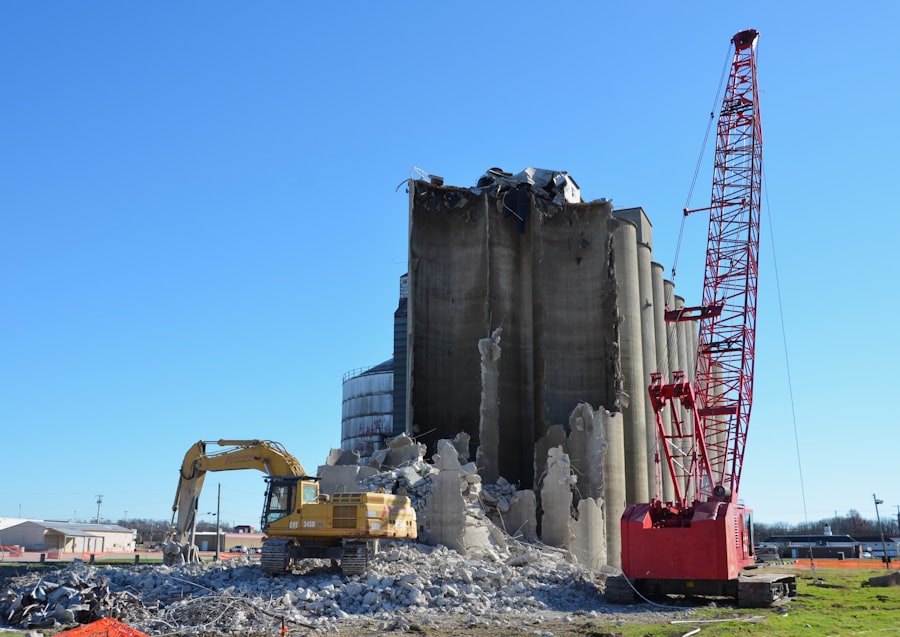
The successful implementation of a rafted machinery foundation hinges on meticulous construction practices and rigorous quality control. Even the most sophisticated design can be undermined by subpar execution.
Site Preparation and Excavation
The foundation’s journey begins with careful preparation of the ground. This step is akin to laying a solid foundation for a house – any compromises here will ripple upwards.
- Clearing and Grubbing: The site must be cleared of all vegetation, debris, and organic material, which can decay and cause voids or settlement.
- Excavation: Excavation proceeds to the required depth as determined by the foundation design. The sides of the excavation must be adequately supported to prevent collapse, especially in unstable soil conditions.
- Soil Compaction: If the existing soil is to form part of the foundation bed, it must be adequately compacted to achieve its designed bearing capacity. This is often done in layers, with each layer compacted using specialized equipment like vibratory rollers.
- Over-excavation and Granular Fill: If the in-situ soil is deemed unsuitable, it may be excavated and replaced with a specified granular material (e.g., well-graded gravel or crushed stone). This imported fill is then carefully compacted to form a stable and well-draining base layer.
Formwork and Reinforcement Placement
The formwork defines the shape of the concrete raft, while the reinforcement provides its tensile strength. Precision in this stage is paramount.
- Formwork Construction: Formwork systems must be robust, accurately dimensioned, and watertight to contain the wet concrete. They are typically made from timber, steel, or proprietary modular systems.
- Reinforcement Assembly: Steel reinforcing bars are tied together in precise configurations according to the structural drawings. Correct bar spacing, overlap lengths, and cover (the distance between the rebar and the concrete surface) are critical for durability and structural performance.
- Bar Bending and Fixing: Bars are bent to shape using specialized equipment. They are then fixed in position using tie wire, chairs, and supports to maintain their designed location during concrete pouring.
- Concrete Cover: Adequate concrete cover is essential to protect the reinforcement from corrosion and fire damage. This cover is maintained by using plastic or concrete spacers.
- Inspection Before Pouring: A thorough inspection of the formwork and reinforcement is conducted by the engineer or a quality control inspector before any concrete is allowed to be poured. This is a critical checkpoint to ensure all specifications are met.
Concrete Pouring and Curing
The act of pouring concrete is a dynamic process that requires careful planning and execution to ensure a homogenous, strong, and durable final product.
- Batching and Transportation: Concrete is typically batched at a plant to ensure consistent mix proportions. It is then transported to the site in transit mixers.
- Placement: Concrete is placed into the formwork using methods such as pumping, chutes, or buckets. Careful attention is paid to avoiding segregation of the concrete mix (separation of aggregates and cement paste).
- Compaction (Vibration): Internal or external vibrators are used to consolidate the concrete, removing entrapped air voids and ensuring the concrete flows around the reinforcement. Over-vibration can lead to segregation, while under-vibration results in honeycombing and reduced strength.
- Finishing: The surface of the concrete is finished to the required level of smoothness.
- Curing: This is a critical process that allows the concrete to gain strength and durability. It involves maintaining adequate moisture and temperature conditions for a specified period after pouring.
- Water Curing: Methods include ponding water on the surface, spraying with water, or covering with wet burlap or hessian.
- Membrane Curing: Application of liquid curing compounds that form a film to trap moisture.
- Steam Curing: Used in certain industrial applications for accelerated strength gain.
- Quality Control Sampling: Concrete strength is verified through the casting and testing of concrete cylinders or cubes taken during the pouring process. These samples are then subjected to compressive strength tests at specified ages (e.g., 7 days, 28 days).
Advanced Considerations for Specialized Machinery
The general principles of rafted machinery foundations are often augmented with specialized considerations when dealing with particularly demanding or sensitive equipment. These advanced techniques ensure optimal performance and longevity, even in the face of extreme operational demands.
Dynamic Analysis Techniques
For machinery with high levels of vibration or complex dynamic behavior, more sophisticated analytical tools are employed. These go beyond basic frequency calculations to model the nuanced interactions between the machinery and its foundation.
- Finite Element Analysis (FEA): As mentioned previously, FEA is a powerful computational tool that can model the entire system – the foundation, the soil, and even the machinery itself. It allows engineers to simulate the response of the foundation to complex dynamic loads and identify areas of stress concentration or potential resonance. This is like creating a digital twin of the foundation to test its limits virtually.
- Modal Analysis: This is a specific type of FEA that determines the natural frequencies and mode shapes of the foundation. Understanding these characteristics helps in avoiding resonance by ensuring that the machinery’s operating frequencies do not align with the foundation’s natural frequencies.
- Time History Analysis: This involves simulating the response of the foundation to time-varying dynamic loads, such as those generated by impact machinery or reciprocating engines. It provides a detailed picture of how the foundation deforms and vibrates over time.
- Harmonic Analysis: This method is used to determine the steady-state response of the foundation to sinusoidal dynamic loads, which are typical of rotating machinery.
Soil-Structure Interaction (SSI)
The assumption that the soil acts simply as a stiff, unmoving support is often an oversimplification. In reality, the foundation and the soil interact dynamically.
- Foundation Stiffness vs. Soil Stiffness: The relative stiffness of the foundation and the soil influences how vibrations are transmitted and absorbed. A very stiff foundation on soft soil will likely transmit more vibration.
- Damping Mechanisms: The soil itself provides a degree of damping to vibrations. This damping effect, along with any intentionally introduced damping, plays a crucial role in reducing the amplitude of oscillations.
- Wave Propagation: Vibrations can propagate through the soil as elastic waves. Understanding the speed and attenuation of these waves helps in predicting the extent of vibration dispersal and its impact on surrounding areas. SSI analyses incorporate these effects, providing a more realistic picture of the foundation’s performance. This is akin to understanding how ripples spread on a pond when a stone is dropped.
Seismic Design and Retrofitting
In earthquake-prone regions, foundations must be designed to withstand seismic forces. This involves incorporating specific strategies to ensure structural integrity during seismic events.
- Ductility: The foundation is designed to deform elastically and even somewhat plastically without catastrophic failure. This ductility allows it to absorb seismic energy.
- Base Isolation: In extreme cases, base isolation systems can be employed. These systems, often using large bearings or flexible layers, essentially decouple the structure from the ground motion, significantly reducing the seismic forces transmitted to the foundation and the machinery.
- Retrofitting: For existing foundations, seismic retrofitting might involve strengthening the foundation with additional reinforcement, improving soil conditions beneath the foundation, or incorporating viscous dampers to dissipate seismic energy.
In the realm of civil engineering, understanding rafted machinery foundations is crucial for ensuring stability and durability in various constructions. For those looking to delve deeper into this topic, a related article can provide valuable insights and practical examples. You can explore more about these foundations and their applications by visiting this informative resource, which discusses the principles and considerations involved in designing effective rafted machinery foundations.
Maintenance and Monitoring of Rafted Machinery Foundations
| Parameter | Description | Typical Values / Notes |
|---|---|---|
| Foundation Type | Rafted Machinery Foundation | Continuous slab supporting entire machinery base |
| Purpose | Distribute heavy loads over a large area to reduce soil pressure | Used for heavy machinery with high dynamic loads |
| Material | Reinforced Concrete | High strength concrete with steel reinforcement |
| Thickness | Foundation slab thickness | Typically 300 mm to 1000 mm depending on load |
| Load Types | Static and Dynamic Loads | Includes machine weight, operational vibrations, and impact forces |
| Soil Bearing Capacity | Maximum pressure soil can safely support | Varies widely; typically 100 kPa to 300 kPa for raft foundations |
| Settlement Control | Minimizing differential settlement | Raft foundation reduces uneven settlement under heavy machinery |
| Vibration Isolation | Reducing transmission of vibrations to surrounding structures | May include isolation pads or dampers embedded in foundation |
| Reinforcement | Steel bars layout | Designed to resist bending moments and shear forces |
| Design Codes | Applicable standards | ACI, Eurocode, IS 456 depending on region |
The lifecycle of a rafted machinery foundation extends far beyond its construction. Regular maintenance and proactive monitoring are essential to ensure continued performance and to detect potential issues before they become critical.
Routine Inspections
Scheduled visual inspections are the first line of defense against foundation degradation. These inspections help identify early signs of distress and allow for timely intervention.
- Surface Condition: Looking for cracks, spalling (chipping of concrete), efflorescence (white powdery deposits indicating water movement), and signs of settlement or heaving.
- Drainage: Ensuring that drainage systems around the foundation are clear and functioning correctly to prevent water accumulation, which can exacerbate material deterioration and affect soil stability.
- Anchor Bolts and Grouting: Checking the condition of anchor bolts that secure the machinery to the foundation, as well as the integrity of any grouting material used to fill gaps. Loose or corroded anchor bolts can lead to machinery instability.
- Surrounding Areas: Inspecting the ground and any adjacent structures for signs of settlement or movement that might be related to the foundation’s performance.
Vibration Monitoring
Vibration is a key indicator of the health of both the machinery and its foundation. Continuous or periodic vibration monitoring provides valuable data on operational status and potential issues.
- Portable Vibration Analyzers: Used for periodic checks, these devices measure vibration levels at various points on the foundation and machinery. Changes in vibration amplitude, frequency, or patterns can signal problems like bearing wear, imbalance, or foundation degradation.
- Online Monitoring Systems: For critical machinery, permanent vibration sensors (accelerometers) can be installed. These systems continuously collect data and can be programmed to trigger alarms if vibration levels exceed predefined thresholds.
- Frequency Analysis: Analyzing the frequency spectrum of vibrations can help diagnose the specific cause of a problem. For example, a specific frequency might indicate a particular type of imbalance or a resonance issue.
Structural Health Monitoring (SHM)
More advanced monitoring techniques can provide deeper insights into the foundation’s structural integrity over time.
- Strain Gauges: Embedded in the concrete during construction, strain gauges can measure the deformation of the foundation under load. This data helps in assessing the stress levels within the concrete and monitoring its long-term behavior.
- Displacement Transducers: These devices can measure any vertical or horizontal movement of the foundation, providing direct evidence of settlement or uplift.
- Crack Monitoring: Sophisticated crack gauges can be used to measure the opening and closing of existing cracks, indicating whether they are active and progressing.
- Data Analysis and Trend Identification: The data collected from these various monitoring systems is analyzed to identify trends, predict potential failures, and optimize maintenance schedules. This proactive approach is far more cost-effective than reacting to a catastrophic failure.
By understanding the principles of soil mechanics, adhering to robust design and construction practices, and implementing ongoing monitoring and maintenance, rafted machinery foundations can provide a stable, reliable, and enduring platform for the world’s most vital industrial equipment.

WATCH NOW ▶️ WARNING: The $17M Deal That Blinded The US Navy
FAQs
What is a rafted machinery foundation?
A rafted machinery foundation is a type of structural base designed to support heavy machinery by distributing the load over a large area. It typically consists of a thick reinforced concrete slab that spreads the weight evenly to prevent excessive settlement and vibrations.
When is a rafted machinery foundation used?
Rafted machinery foundations are used when the soil bearing capacity is low or uneven, and when heavy machinery requires stable support to minimize vibrations and movement. They are ideal for large equipment where individual footings would be insufficient or impractical.
What materials are commonly used in rafted machinery foundations?
The primary material used is reinforced concrete, which provides strength and durability. Steel reinforcement bars (rebar) are embedded within the concrete to enhance tensile strength and resist cracking under heavy loads.
How does a rafted foundation help in vibration control?
By spreading the load over a wide area and providing a rigid base, rafted foundations reduce the amplitude of vibrations transmitted to the surrounding soil and structures. This helps protect both the machinery and nearby equipment from damage caused by excessive vibrations.
What factors influence the design of a rafted machinery foundation?
Key factors include the weight and dynamic forces of the machinery, soil properties such as bearing capacity and settlement characteristics, environmental conditions, and the need for vibration isolation. Engineers also consider the foundation’s thickness, reinforcement layout, and overall dimensions to ensure stability and performance.