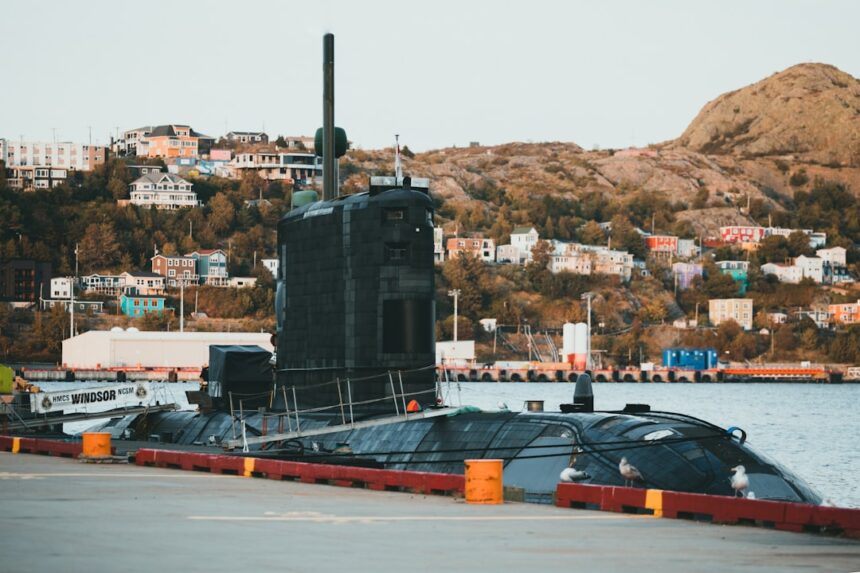
The history of the Sound Surveillance System, commonly known as SOSUS, is deeply intertwined with the geopolitical tensions of the Cold War era. Developed in the late 1950s, SOSUS was a response to the growing threat posed by Soviet submarines, particularly those equipped with nuclear capabilities. The United States Navy recognized the need for a robust underwater surveillance system to monitor submarine movements in the Atlantic and Pacific Oceans.
This initiative led to the establishment of a network of underwater listening posts that could detect and track submarines over vast distances. Initially, SOSUS was a classified project, shrouded in secrecy due to its strategic importance. The system utilized hydrophones—underwater microphones—to capture sounds produced by submarines, including engine noise and propeller cavitation.
By the early 1960s, SOSUS had become operational, providing the U.S. Navy with a significant advantage in anti-submarine warfare. The system’s ability to detect submarines at great distances allowed for early warning and enhanced situational awareness, fundamentally changing naval tactics and strategies during the Cold War.
Key Takeaways
- SOSUS is a historic underwater surveillance system designed to detect submarines using advanced acoustic technology.
- It plays a critical role in national security by monitoring submarine movements and supporting anti-submarine warfare.
- The system has evolved over time, expanding its global reach and integrating new technological advancements.
- Despite its effectiveness, SOSUS faces challenges such as environmental limitations and ethical/legal concerns.
- Future developments aim to enhance SOSUS capabilities while addressing operational and ethical issues.
The Technology Behind SOSUS
At the heart of SOSUS lies an intricate array of advanced technology designed to capture and analyze underwater sounds. The primary components of this system include hydrophones, data processing centers, and communication links. Hydrophones are strategically placed on the ocean floor, often in arrays that can cover large areas.
These devices are sensitive enough to pick up even the faintest sounds generated by submarines, such as engine noise or the sound of water being displaced by their hulls. The data collected by hydrophones is transmitted to onshore processing centers where sophisticated algorithms analyze the acoustic signatures. This analysis allows operators to identify specific submarine classes based on their unique sound profiles.
The technology behind SOSUS has evolved significantly over the years, incorporating advancements in digital signal processing and machine learning to enhance detection capabilities. As a result, SOSUS has become increasingly adept at distinguishing between various underwater sounds, improving its accuracy and reliability in submarine detection.
How SOSUS Works
SOSUS operates through a network of underwater sensors that continuously monitor oceanic sounds. When a submarine passes within range of a hydrophone array, the system captures the acoustic signatures produced by the vessel. These sounds are then transmitted via underwater cables to processing stations located on land or on ships.
The data is analyzed in real-time, allowing naval operators to track submarine movements and assess potential threats. The effectiveness of SOSUS is largely attributed to its ability to operate in a passive mode. Unlike active sonar systems that emit sound waves and wait for echoes, SOSUS relies solely on listening for sounds generated by submarines.
This passive approach not only makes it more difficult for submarines to detect SOSUS but also allows for continuous monitoring without revealing the system’s presence. By maintaining a low profile, SOSUS can gather intelligence without alerting adversaries, making it an invaluable tool for naval operations.
The Role of SOSUS in National Security
| Metric | Description | Impact on National Security | Example/Notes |
|---|---|---|---|
| Detection Range | Distance over which SOSUS can detect underwater acoustic signals | Enables early warning of submarine movements | Up to several hundred nautical miles depending on ocean conditions |
| Number of Hydrophone Arrays | Total deployed undersea listening stations | Coverage of strategic maritime areas | Approximately 25 arrays during peak Cold War operations |
| Submarine Tracking Accuracy | Precision in locating and following submarine targets | Critical for anti-submarine warfare and threat assessment | Accuracy within a few kilometers |
| Operational Timeframe | Years SOSUS has been active | Long-term strategic surveillance capability | Operational since the 1950s, still in use with upgrades |
| Integration with Other Systems | Coordination with naval and intelligence assets | Enhances overall maritime domain awareness | Linked with ASW aircraft, surface ships, and satellites |
| Number of Submarine Detections | Confirmed submarine contacts detected annually | Measures effectiveness in monitoring adversary movements | Classified, but estimated in hundreds during Cold War peak |
The role of SOSUS in national security cannot be overstated. During the Cold War, it served as a critical component of the United States’ defense strategy against Soviet submarine threats. By providing early warning capabilities and real-time tracking of enemy submarines, SOSUS enabled U.S.
naval forces to respond swiftly to potential threats. This capability was particularly vital during periods of heightened tension, where the risk of conflict was ever-present. In addition to its strategic military applications, SOSUS has also played a significant role in intelligence gathering.
The system has been instrumental in monitoring not only adversarial submarines but also other maritime activities that could pose a threat to national security. By providing comprehensive situational awareness of underwater environments, SOSUS has helped shape U.S. naval policy and strategy, ensuring that military leaders have access to critical information when making decisions regarding national defense.
The Evolution of SOSUS
Over the decades, SOSUS has undergone significant evolution in response to changing technological landscapes and emerging threats. Initially designed for Cold War-era submarine detection, the system has adapted to address new challenges posed by advancements in submarine technology and warfare tactics. As submarines became quieter and more sophisticated, SOSUS incorporated enhanced detection algorithms and improved hydrophone technology to maintain its effectiveness.
Moreover, the integration of satellite communications and advanced data processing capabilities has further expanded SOSUS’s reach and efficiency. Modern iterations of the system can now process vast amounts of data in real-time, allowing for quicker decision-making and response times. This evolution reflects not only advancements in technology but also a broader understanding of maritime security dynamics in an increasingly complex global environment.
The Global Reach of SOSUS
While originally developed for U.S. naval operations, the global reach of SOSUS has implications that extend beyond American shores. The system’s ability to monitor vast oceanic expanses means that it can detect submarine activity in international waters as well as near coastal regions of allied nations.
This capability fosters international collaboration in maritime security efforts, as allied navies can share information gathered through SOSUS to enhance collective defense strategies. Furthermore, the global reach of SOSUS underscores the importance of international maritime law and cooperation in addressing submarine threats. As nations increasingly recognize the significance of underwater surveillance, there is a growing emphasis on collaborative efforts to ensure maritime security.
This includes joint exercises and information-sharing agreements among allied nations that leverage SOSUS technology for mutual benefit.
SOSUS and Anti-Submarine Warfare
SOSUS has been a cornerstone of anti-submarine warfare (ASW) strategies since its inception. By providing real-time intelligence on submarine movements, it enables naval forces to deploy resources effectively and respond to potential threats with precision. The ability to track submarines over vast distances allows for proactive measures rather than reactive responses, fundamentally altering how navies approach ASW operations.
In addition to tracking enemy submarines, SOSUS also plays a crucial role in training and preparedness for ASW missions. Naval forces utilize data from SOSUS to simulate various scenarios and develop tactics for engaging submarines effectively. This training ensures that personnel are well-equipped to handle real-world situations, enhancing overall readiness and operational effectiveness.
The Impact of SOSUS on Naval Operations
The impact of SOSUS on naval operations is profound and multifaceted. By providing continuous surveillance capabilities, it allows naval commanders to make informed decisions based on real-time data rather than relying solely on traditional intelligence-gathering methods. This shift towards data-driven decision-making enhances operational efficiency and effectiveness in maritime operations.
Moreover, SOSUS has influenced naval strategy by emphasizing the importance of underwater domain awareness. As submarines continue to play a pivotal role in modern naval warfare, understanding their movements and capabilities becomes paramount for maintaining maritime superiority. The insights gained from SOSUS have led to more strategic deployments of naval assets and improved coordination among allied forces during joint operations.
Challenges and Limitations of SOSUS
Despite its many advantages, SOSUS is not without challenges and limitations. One significant challenge is the increasing sophistication of modern submarines, which are designed to operate quietly and evade detection.
Additionally, environmental factors can impact the effectiveness of SOSUS. Oceanographic conditions such as temperature gradients, salinity levels, and background noise can all affect sound propagation underwater, potentially hindering detection efforts.
The Future of SOSUS Technology
Looking ahead, the future of SOSUS technology appears promising yet complex. As advancements in artificial intelligence and machine learning continue to evolve, there is potential for significant improvements in data analysis capabilities within SOSUS systems. These technologies could enable more accurate identification of submarine signatures and enhance predictive analytics for potential threats.
Moreover, as global maritime security dynamics shift with emerging powers and new geopolitical challenges, there will be an increasing emphasis on integrating SOSUS with other surveillance systems and technologies. Collaborative efforts among allied nations will likely play a crucial role in shaping the future landscape of underwater surveillance and anti-submarine warfare strategies.
Ethical and Legal Considerations of SOSUS
The deployment and operation of SOSUS raise important ethical and legal considerations that must be addressed as technology continues to evolve. Issues related to privacy rights in international waters, potential overreach in surveillance capabilities, and compliance with international law are all critical factors that require careful consideration. Furthermore, as nations increasingly rely on advanced surveillance systems like SOSUS for national security purposes, there is a need for transparency and accountability in their use.
Ensuring that these systems are employed responsibly while respecting international norms will be essential for maintaining trust among nations and fostering cooperative security efforts in an interconnected world. In conclusion, the Sound Surveillance System represents a remarkable achievement in underwater detection technology with far-reaching implications for national security and naval operations. Its history reflects the evolving nature of maritime threats and the continuous need for innovation in defense strategies.
As technology advances and global dynamics shift, SOSUS will undoubtedly continue to play a vital role in safeguarding maritime interests while navigating the complex ethical landscape associated with surveillance practices.
The SOSUS (Sound Surveillance System) submarine detection system has long been a topic of intrigue and speculation, particularly regarding its operational secrets and capabilities. For those interested in a deeper exploration of this subject, a related article can be found at this link, which delves into the historical context and technological advancements of underwater surveillance systems.
WATCH THIS! The Billion-Dollar Whisper: How One KGB Mole Made Every Soviet Submarine Visible
FAQs
What is the SOSUS submarine detection system?
SOSUS, or the Sound Surveillance System, is a network of underwater hydrophone arrays developed by the United States during the Cold War to detect and track Soviet submarines by monitoring low-frequency sound waves in the ocean.
How does the SOSUS system work?
SOSUS uses long-range underwater listening devices called hydrophones placed on the ocean floor. These hydrophones detect acoustic signals generated by submarines, which are then transmitted to onshore processing stations for analysis and tracking.
When was SOSUS developed and deployed?
The SOSUS system was developed in the early 1950s and became operational in the mid-1950s. It was a key component of U.S. anti-submarine warfare efforts throughout the Cold War.
What made SOSUS a secret system?
SOSUS was classified to protect its technology and strategic advantage. Its existence and capabilities were kept secret to prevent adversaries from developing countermeasures or avoiding detection.
Is SOSUS still in use today?
While the original SOSUS system has been largely replaced or integrated into modern surveillance technologies, some components and principles of SOSUS continue to be used in contemporary undersea monitoring and naval operations.
What types of submarines could SOSUS detect?
SOSUS was primarily designed to detect large, nuclear-powered submarines, especially those carrying ballistic missiles, by tracking their distinctive acoustic signatures over long distances.
How did SOSUS impact submarine warfare?
SOSUS significantly enhanced the ability of the U.S. Navy to monitor Soviet submarine movements, contributing to strategic deterrence and naval dominance during the Cold War by reducing the stealth advantage of enemy submarines.
Were there any limitations to the SOSUS system?
Yes, SOSUS was limited by factors such as oceanographic conditions, background noise, and the need for fixed hydrophone arrays, which restricted coverage to certain ocean areas and required complementary detection methods.
Who was responsible for operating and maintaining SOSUS?
The U.S. Navy operated and maintained the SOSUS system, with specialized personnel managing the hydrophone arrays, data processing centers, and analysis of acoustic information.
Has information about SOSUS been declassified?
Over time, many details about SOSUS have been declassified, allowing public knowledge of its existence and general function, though some technical specifics and operational details remain classified for security reasons.