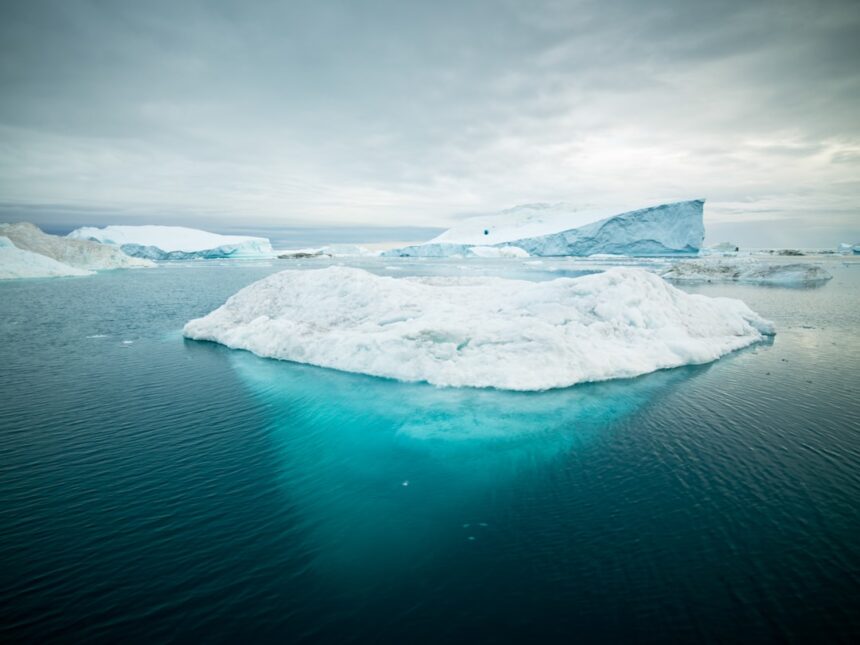
Greenland’s Ice Sheet, a colossal expanse of ice covering approximately 1.7 million square kilometers, stands as one of the most significant natural features on the planet. It is not merely a frozen landscape; it is a dynamic system that plays a crucial role in the Earth’s climate and sea level. The sheer size of the ice sheet, which contains about 10% of the world’s freshwater, makes it a focal point for scientists studying climate change and its far-reaching effects.
As global temperatures rise, understanding the intricacies of this ice sheet becomes increasingly vital, not only for the inhabitants of Greenland but for the entire planet. The ice sheet has been a subject of fascination and concern for researchers and environmentalists alike. Its vastness and the mysteries it holds have prompted extensive studies aimed at uncovering its secrets.
The implications of these studies extend beyond academic curiosity; they touch on issues of global importance, such as rising sea levels and changing weather patterns. As the world grapples with the consequences of climate change, Greenland’s Ice Sheet serves as both a barometer and a warning sign, highlighting the urgent need for comprehensive research and understanding.
Key Takeaways
- Greenland’s ice sheet is the second largest ice body in the world, covering about 80% of the island’s surface.
- The formation of Greenland’s ice sheet began over 2.5 million years ago and is composed of layers of snow that have been compressed into ice over time.
- Studying Greenland’s ice sheet is crucial for understanding past climate change, predicting future climate patterns, and assessing the impact of global warming.
- Techniques such as ice core drilling, satellite observations, and climate modeling are used to uncover the secrets of Greenland’s ice sheet and its role in the Earth’s climate system.
- Climate change is causing the Greenland ice sheet to melt at an accelerating rate, contributing to rising sea levels and posing a threat to coastal communities worldwide.
The Formation and Structure of Greenland’s Ice Sheet
The formation of Greenland’s Ice Sheet is a tale that spans thousands of years, rooted in the climatic conditions that have shaped the region. It began during the last Ice Age, around 2.4 million years ago, when cooler temperatures allowed snow to accumulate over time. This snow compacted into ice, creating layers that would eventually form the massive ice sheet seen today.
The process is ongoing; new snow continues to fall, adding to the existing layers while older ice slowly flows toward the coast, where it can calve into the ocean. Structurally, the ice sheet is complex and multifaceted. It consists of various layers, each representing different climatic periods and conditions.
The uppermost layer is composed of firn, a granular form of snow that has partially melted and refrozen. Beneath this lies dense glacial ice, which can be several kilometers thick in some areas. The ice sheet is also characterized by its movement; it flows under its own weight, creating crevasses and seracs that are both beautiful and dangerous.
Understanding this structure is essential for predicting how the ice sheet will respond to changing temperatures and for assessing its stability in the face of climate change.
The Importance of Studying Greenland’s Ice Sheet

Studying Greenland’s Ice Sheet is crucial for several reasons, primarily due to its implications for global sea levels. As one of the largest reserves of freshwater on Earth, any significant melting of this ice could lead to catastrophic increases in sea levels, threatening coastal communities worldwide.
By understanding the dynamics of the ice sheet, scientists can better predict future changes and their potential impacts. Moreover, the ice sheet serves as a historical record of Earth’s climate. The layers of ice contain trapped air bubbles that provide valuable information about past atmospheric conditions.
By analyzing these bubbles, researchers can gain insights into how climate has changed over millennia and how it may continue to evolve. This knowledge is essential for developing accurate climate models and for informing policy decisions aimed at mitigating climate change. Thus, studying Greenland’s Ice Sheet is not just an academic pursuit; it is a critical endeavor with far-reaching implications for humanity’s future.
Techniques for Uncovering the Secrets of Greenland’s Ice Sheet
| Technique | Advantages | Disadvantages |
|---|---|---|
| Satellite Remote Sensing | Provides large-scale coverage, long-term monitoring | Limited resolution, affected by cloud cover |
| Airborne Radar | High-resolution data, penetration through ice | Costly, limited spatial coverage |
| Ice Core Analysis | Provides historical climate data | Labor-intensive, limited spatial coverage |
| Ground-based GPS | Direct measurement of ice movement | Localized, requires fieldwork |
Researchers employ a variety of techniques to study Greenland’s Ice Sheet, each offering unique insights into its structure and behavior. One of the most prominent methods is remote sensing, which utilizes satellites equipped with advanced imaging technology to monitor changes in the ice sheet over time. These satellites can capture detailed images that reveal shifts in ice thickness, surface elevation, and even temperature variations across vast areas.
This data is invaluable for tracking the effects of climate change on the ice sheet. In addition to remote sensing, ground-based measurements play a crucial role in understanding the ice sheet’s dynamics. Scientists often conduct field studies, using GPS technology to measure ice flow and assess how quickly different sections are moving.
They also drill into the ice to extract core samples, which provide a direct record of past climate conditions. These cores can reveal information about temperature fluctuations, precipitation patterns, and even volcanic activity over thousands of years. By combining these techniques, researchers can create a comprehensive picture of Greenland’s Ice Sheet and its response to environmental changes.
The Impact of Climate Change on Greenland’s Ice Sheet
Climate change poses a significant threat to Greenland’s Ice Sheet, with rising temperatures leading to increased melting rates and altered precipitation patterns. Over recent decades, scientists have observed alarming trends: the ice sheet has been losing mass at an accelerating rate, contributing to global sea level rise. This melting is not uniform; certain areas are experiencing more rapid changes than others due to variations in temperature and ocean currents.
Understanding these localized effects is essential for predicting future scenarios. The consequences of this melting extend beyond just rising sea levels. As freshwater from the ice sheet enters the ocean, it can disrupt ocean circulation patterns, which play a critical role in regulating global climate systems.
Additionally, the loss of reflective ice surfaces leads to increased absorption of solar energy by darker ocean waters, further exacerbating warming trends. This feedback loop highlights the interconnectedness of climate systems and underscores the urgency of addressing climate change on a global scale.
Discoveries and Findings from Research on Greenland’s Ice Sheet
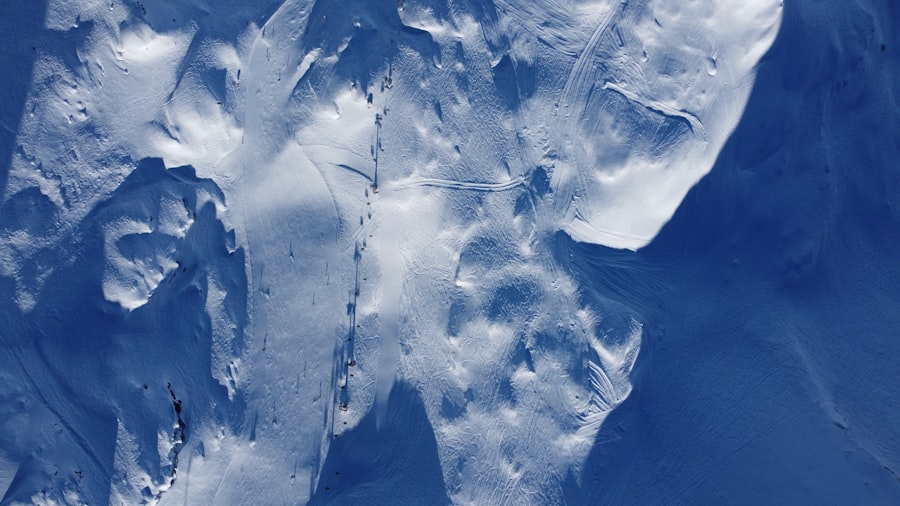
Research on Greenland’s Ice Sheet has yielded numerous discoveries that enhance our understanding of both past and present climate dynamics. One significant finding is that the ice sheet has experienced periods of rapid melting in response to warming events throughout history. These historical patterns suggest that current rates of melting may not be unprecedented when viewed through a geological lens; however, the speed at which these changes are occurring today is alarming.
Another important discovery relates to the role of meltwater in influencing ice flow dynamics. Researchers have found that meltwater can percolate through surface crevasses and reach the base of the ice sheet, lubricating it and accelerating its movement toward the ocean. This phenomenon has implications for predicting future sea level rise, as faster-moving glaciers can lead to more significant calving events and increased mass loss from the ice sheet.
Such findings underscore the complexity of interactions within the ice sheet system and highlight the need for continued research.
The Role of Greenland’s Ice Sheet in Global Sea Level Rise
Greenland’s Ice Sheet plays a pivotal role in global sea level rise, accounting for approximately 25% of observed increases in sea levels since 1992. As temperatures continue to rise due to climate change, scientists project that this contribution will only increase unless significant mitigation efforts are undertaken globally. The melting of this vast ice reservoir poses an existential threat to low-lying coastal regions around the world, where millions reside.
The mechanisms behind this contribution are multifaceted. As surface temperatures rise, increased melting occurs during warmer months, leading to more runoff entering the ocean. Additionally, as glaciers flow more rapidly into the sea due to lubrication from meltwater, they contribute further to rising sea levels through calving events—where chunks of ice break off from glaciers and float away into the ocean.
Understanding these processes is crucial for developing accurate models that predict future sea level scenarios and inform policy decisions aimed at protecting vulnerable communities.
Challenges and Limitations of Studying Greenland’s Ice Sheet
Despite advancements in technology and research methodologies, studying Greenland’s Ice Sheet presents numerous challenges and limitations. One significant hurdle is the harsh Arctic environment itself; extreme weather conditions can hinder fieldwork and data collection efforts. Researchers often face logistical difficulties in accessing remote areas of the ice sheet, which can limit their ability to gather comprehensive data across different regions.
Additionally, there are inherent uncertainties in modeling future changes to the ice sheet due to its complex dynamics. While scientists have made strides in understanding various processes at play, predicting how these processes will evolve under different climate scenarios remains challenging. The interplay between atmospheric conditions, ocean currents, and ice dynamics introduces variables that complicate projections.
Addressing these challenges requires ongoing collaboration among scientists from various disciplines and institutions.
Collaborative Efforts in Uncovering the Secrets of Greenland’s Ice Sheet
Collaboration has become increasingly vital in efforts to study Greenland’s Ice Sheet effectively. Researchers from around the world are joining forces to share data, resources, and expertise in order to tackle this complex issue comprehensively. International initiatives such as NASA’s Operation IceBridge and the European Space Agency’s CryoSat mission exemplify how collaborative efforts can enhance our understanding of polar regions.
These partnerships extend beyond scientific research; they also involve engaging local communities in Greenland who possess valuable knowledge about their environment. By incorporating indigenous perspectives into research efforts, scientists can gain insights that may otherwise be overlooked. Such collaborations foster a holistic approach to studying the ice sheet while also promoting awareness about climate change impacts on local populations.
Future Implications and Applications of Research on Greenland’s Ice Sheet
The implications of research on Greenland’s Ice Sheet extend far beyond academic circles; they have real-world applications that can inform policy decisions and climate action strategies globally. As scientists continue to uncover new findings about how this massive ice reservoir responds to changing conditions, their work will be instrumental in shaping responses to climate change at local, national, and international levels. Moreover, advancements in technology used for studying the ice sheet may lead to innovations in other fields as well—such as improving predictive models for natural disasters or enhancing water resource management strategies in regions affected by changing precipitation patterns due to climate change.
Ultimately, understanding Greenland’s Ice Sheet will not only contribute to our knowledge about past climates but also equip society with tools needed for navigating an uncertain future.
The Ongoing Quest to Understand Greenland’s Ice Sheet
The quest to understand Greenland’s Ice Sheet is an ongoing journey filled with challenges but also immense potential for discovery. As researchers delve deeper into its complexities—unraveling its formation history, monitoring its current state, and predicting its future—they contribute invaluable knowledge that resonates far beyond scientific inquiry alone. The implications of their work touch upon critical issues such as global sea level rise and climate resilience.
As humanity faces unprecedented environmental challenges brought about by climate change, understanding this colossal ice sheet becomes increasingly urgent. It serves as both a warning sign and a source of hope—reminding us that while our planet’s systems are interconnected and fragile, they also hold secrets waiting to be uncovered through dedicated research and collaboration across disciplines. The ongoing efforts to study Greenland’s Ice Sheet will undoubtedly shape our understanding of Earth’s climate system for generations to come.
The secrets of the Greenland ice sheet are crucial for understanding climate change and its global impacts. For a deeper dive into related topics, you can explore the article on climate dynamics and their implications for global sea levels at In the War Room.
WATCH THIS! Inside Iceworm: America’s Secret Nuclear City Built Under Greenland
FAQs
What is the Greenland ice sheet?
The Greenland ice sheet is a vast body of ice covering approximately 80% of the surface of Greenland. It is the second largest ice body in the world, after the Antarctic ice sheet.
How thick is the Greenland ice sheet?
The thickness of the Greenland ice sheet varies, but it can reach up to 3 kilometers (1.9 miles) in some areas.
What secrets does the Greenland ice sheet hold?
The Greenland ice sheet holds valuable information about past climate conditions, atmospheric composition, and environmental changes. By studying ice cores from the Greenland ice sheet, scientists can learn about Earth’s climate history and make predictions about future climate change.
How does the Greenland ice sheet contribute to sea level rise?
The Greenland ice sheet contributes to sea level rise as it melts and releases water into the ocean. The rate of melting has increased in recent years due to global warming, making the Greenland ice sheet a significant contributor to rising sea levels.
What are some of the challenges of studying the Greenland ice sheet?
Studying the Greenland ice sheet presents challenges such as extreme weather conditions, logistical difficulties, and the sheer size of the ice sheet. Researchers also face challenges in accessing remote and inaccessible areas of the ice sheet.
What are some potential impacts of the melting Greenland ice sheet?
The melting of the Greenland ice sheet can lead to rising sea levels, which can threaten coastal communities and ecosystems. It can also disrupt ocean currents and weather patterns, leading to global climate changes. Additionally, the release of freshwater from the melting ice sheet can affect marine ecosystems and biodiversity.