
The Thames Estuary, a vast and dynamic expanse of water where the river meets the sea, holds within its depths many secrets forged in the crucible of history. Among these submerged narratives lies the intriguing story of the Decoy Docklands, a site veiled in mystery and often overlooked in broader historical accounts. This article aims to meticulously unearth the facts surrounding these fascinating remnants, offering a factual exposition for those seeking to understand their origins, purpose, and eventual decline.
The development of the Decoy Docklands was not born from abstract architectural ambition, but rather from the stark realities of national defence and strategic planning. During periods of heightened international tension, particularly spanning the late 19th and early 20th centuries, Britain’s coastal defences were a paramount concern. The Thames Estuary, with its vital role as a gateway to the heart of London and its industrial powerhouses, became a focal point for such considerations.
The Shadow of Warfare
Throughout this era, the spectre of naval invasion loomed large in the public consciousness and military strategy. Germany’s burgeoning naval power in the lead-up to World War I, and the ever-present threat of maritime conflict, meant that every potential vulnerability needed to be addressed. The estuary’s navigable channels offered a direct route for enemy vessels to penetrate inland, posing an existential threat to London’s infrastructure and populace.
The Ingenuity of Defence
In response to these perceived threats, military engineers and planners began to explore innovative solutions. Conventional fortifications, while essential, could only provide static defence. The need for a more dynamic and deceptive approach to naval defence became apparent. This led to the conceptualisation of strategies that could lure enemy forces into ambushes or deter them through the creation of perplexing navigational hazards.
The intriguing history of the Thames Estuary Decoy Docklands is further explored in a related article that delves into the strategic importance of these hidden waterways during wartime. This piece sheds light on how the decoy docks were ingeniously designed to mislead enemy forces and protect vital shipping routes. For more insights into this fascinating topic, you can read the full article here: The Secrets of the Thames Estuary Decoy Docklands.
Unveiling the Purpose: A Deceptive Labyrinth
The primary function of the Decoy Docklands has long been a subject of speculation. However, through careful examination of archival documents, historical accounts, and the physical remnants themselves, a clearer picture emerges. These installations were designed not as active combat bases, but as sophisticated elements of a broader defensive network, intended to mislead and misdirect potential adversaries.
The Art of Deception in Naval Warfare
Naval deception has been a tried and tested tactic throughout history. From the Trojan Horse to the elaborate feints employed in the D-Day landings, the element of surprise and misdirection has often been a deciding factor in the outcome of conflicts. The Decoy Docklands were a manifestation of this principle applied to coastal defence, leveraging the natural environment to create a strategic illusion.
The “Decoy” Mechanism Explained
The term “decoy” itself suggests a lure or a trap. In the context of the Decoy Docklands, this likely involved the creation of apparent naval infrastructure or fortifications that were, in reality, either non-functional or designed to serve a specific, misleading purpose. This could have included:
- Dummy Fortifications: Structures that mimicked the appearance of actual gun emplacements or coastal batteries, intended to draw enemy fire and reveal their positions, or to simply appear as formidable obstacles.
- False Harbours or Anchorages: The creation of seemingly safe havens that, upon closer inspection, would reveal themselves to be treacherous, filled with submerged obstacles, or strategically positioned for ambush.
- Misleading Navigation Aids: The use of lights, buoys, or other navigational markers that, rather than guiding ships safely, were intended to lead them into dangerous waters or away from intended targets.
Strategic Placement and Concealment
The location of the Decoy Docklands was as crucial as their function. Situated within the labyrinthine channels and mudflats of the Thames Estuary, they benefited from the natural obscurity offered by the tidal environment. This allowed for their construction and operation to be carried out with a degree of secrecy, further enhancing their effectiveness as deceptive installations.
The Design and Construction: A Marvel of Pragmatism
The construction of the Decoy Docklands was a testament to the engineering capabilities of the era, driven by military necessity and often executed with a degree of pragmatism. Their design was dictated by their intended function and the challenging environmental conditions of the estuary.
Architectural Symbiosis with the Environment
The structures were often built using materials readily available and suitable for the marine environment. Timber, concrete, and iron were common, chosen for their durability and adaptability. The designs frequently incorporated elements that would blend with the natural landscape, such as camouflage netting or paint schemes that mimicked the surrounding mudflats and water.
Submerged Structures and Tidal Influence
A significant aspect of their design involved their relationship with the tides. Many of these installations would have been partially or fully submerged at high tide, only to emerge as the water receded. This fluctuating visibility served as an inherent part of their deceptive nature, making them difficult to assess from a distance or in varying light conditions. The tidal patterns of the Thames Estuary, a rhythmic ebb and flow, would have been a key consideration in their placement and the materials used in their construction.
Evidence from Existing Remnants
While much has been lost to the passage of time and the relentless forces of nature, the surviving remnants of the Decoy Docklands offer tangible evidence of their existence. These often take the form of concrete foundations, submerged metal structures, or peculiar earthen mounds that stand as silent sentinels in the estuarine landscape. Their very presence, often discovered by intrepid explorers or revealed during periods of extreme low tide, serves as a compelling reminder of their historical significance.
The Operational Life: A Silent Vigil
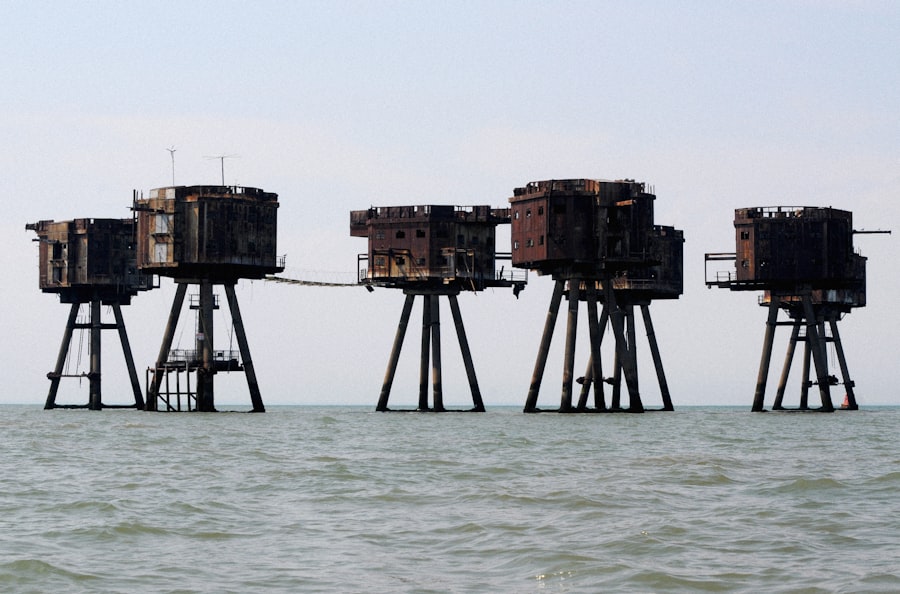
The operational life of the Decoy Docklands was likely characterized by a period of quiet vigilance, punctuated by moments of strategic deployment. Their effectiveness would have depended on their ability to remain credible as legitimate military or navigational assets in the eyes of potential adversaries.
Maintaining the Illusion
The sustained effectiveness of these decoys hinged on their ability to maintain the illusion of authenticity. This would have required periodic maintenance and, crucially, the careful management of their visibility and perceived activity. The military would have employed measures to ensure that the decoys did not appear derelict or obviously false, thereby compromising their strategic value.
The Role in Deterrence and Misdirection
The primary role of the Decoy Docklands was likely one of deterrence and misdirection. By presenting a complex and potentially hazardous environment, they aimed to:
- Discourage direct assaults: The perception of a heavily defended or unpredictable estuary could have deterred enemy forces from attempting a direct advance on London.
- Force detours or caution: Adversaries might have been forced to take longer, more circuitous routes, or to proceed with extreme caution, slowing their advance and potentially exposing them to other defensive measures.
- Create opportunities for counter-attack: If an enemy force was lured into a designated trap or misdirected into a minefield, it would have presented an opportunity for the defending forces to engage them.
Limited Active Engagement
It is important to note that the Decoy Docklands were unlikely to have been actively engaged in direct combat. Their purpose was passive, relying on their physical presence and the psychological impact they had on an approaching enemy. They were the silent actors on a historical stage, playing their part without overt fanfare.
The intriguing history of the Thames Estuary decoy docklands reveals a fascinating aspect of wartime strategy, as explored in a related article that delves into the secrets of these hidden sites. For those interested in understanding the complexities of this topic, you can read more about it in this insightful piece on In The War Room, which provides a comprehensive overview of the strategic importance and the mysteries surrounding these decoy operations.
The Legacy and Decline: Fading Echoes of Strategy
| Metric | Details | Significance |
|---|---|---|
| Location | Thames Estuary, near Docklands, London | Strategic position for controlling river traffic and defense |
| Type | Decoy Site (Starfish Site) | Used to mislead enemy bombers during WWII |
| Operational Period | 1940 – 1945 | Active during the Blitz to protect London |
| Area Covered | Approximately 50 acres | Large enough to simulate urban and industrial targets |
| Key Features | Controlled fires, lighting arrays, and fake buildings | Created realistic illusions of bombed areas to divert attacks |
| Effectiveness | Estimated to have diverted dozens of bombing raids | Helped reduce damage to actual Docklands and London |
| Current Status | Mostly reclaimed by nature, some remnants visible | Historical interest and heritage site |
Like many military installations, the Decoy Docklands eventually succumbed to the relentless march of time, technological advancement, and shifting strategic priorities. Their decline was not necessarily a failure, but rather a natural consequence of their obsolescence.
The Shifting Sands of Warfare
The nature of warfare is in constant flux. As military technologies evolved, so too did defensive strategies. The advent of aerial bombardment, long-range artillery, and sophisticated submarine warfare rendered some of the earlier defensive concepts, including those embodied by the Decoy Docklands, less relevant.
The Environmental Reclamation
Nature, with its persistent and powerful forces, also played a significant role in the decline of these structures. The dynamic environment of the Thames Estuary, with its tidal currents, sediment deposition, and erosion, would have gradually worn away at the man-made installations. What was once a carefully constructed deception would, over time, have been reclaimed by the very environment it sought to exploit.
The Rediscovery and Preservation
In recent decades, there has been a growing interest in uncovering and understanding the hidden history of the Thames Estuary. The Decoy Docklands, once shrouded in secrecy, are now being brought to light through the efforts of historians, archaeologists, and amateur enthusiasts. The surviving remnants serve as poignant reminders of a bygone era of strategic ingenuity and national vulnerability.
The Enduring Mystery
Despite the progress in uncovering their secrets, a degree of mystery still surrounds the Decoy Docklands. The full scope of their deployment, their precise operational details, and their ultimate effectiveness in deterring enemy forces remain subjects of ongoing research and debate. They stand as a testament to the fact that even in the most documented historical periods, the waterways and landscapes can still hold hidden chapters, waiting to be revealed to those who are willing to look. The story of the Decoy Docklands is a powerful reminder that history is not always written in grand pronouncements and visible monuments, but often lies submerged, waiting patiently in the quiet corners of our past.
FAQs
What is the Thames Estuary Decoy in the Docklands?
The Thames Estuary Decoy in the Docklands refers to a historic waterway feature designed to attract and trap wildfowl. It was used primarily for hunting and conservation purposes, utilizing a system of channels and nets to guide birds into a controlled area.
Where is the Thames Estuary Decoy located?
The decoy is situated in the Docklands area along the Thames Estuary, which is the tidal mouth of the River Thames where it meets the North Sea. This location was chosen due to its natural bird migration routes and abundant wildlife.
How did the decoy system work?
The decoy system worked by using a series of curved water channels called “pipes” that led from a central pond. Wildfowl were lured into these pipes by trained dogs or food, and then trapped using nets. This method allowed hunters to catch birds efficiently without disturbing the surrounding environment.
What was the historical significance of the Thames Estuary Decoy?
Historically, the decoy was significant as a sustainable hunting method that supported local communities by providing food and income. It also played a role in wildlife management and conservation, helping to maintain bird populations in the estuary region.
Is the Thames Estuary Decoy still in use today?
Most traditional decoy systems, including the one in the Thames Estuary Docklands, are no longer used for hunting. However, some have been preserved as heritage sites or nature reserves to educate the public about historical wildlife management practices and to protect local bird species.