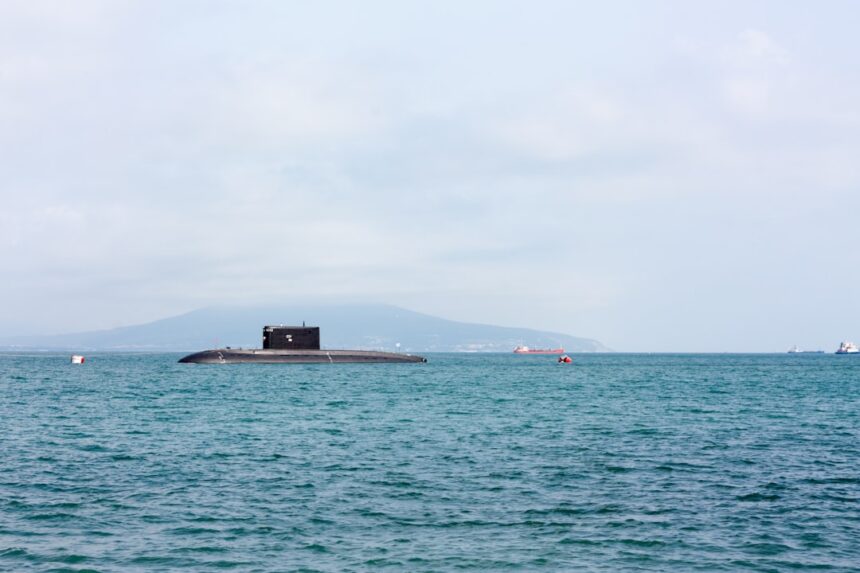
Submarine tracking acoustic intelligence represents a critical component of modern naval warfare and maritime security. This sophisticated field involves the use of sound waves to detect, classify, and track submarines, which are often considered the stealthiest vessels in naval fleets. The ability to monitor these underwater behemoths is essential for maintaining strategic advantages in both peacetime and conflict scenarios.
As nations continue to invest in advanced submarine technology, the development of acoustic intelligence systems has become increasingly vital for ensuring national security and safeguarding maritime interests. The significance of submarine tracking acoustic intelligence extends beyond mere detection; it encompasses a wide array of technologies and methodologies that have evolved over decades. From the early days of rudimentary sound detection to the sophisticated sonar systems employed today, the journey of acoustic intelligence reflects the broader advancements in military technology.
As the geopolitical landscape shifts and new threats emerge, the importance of understanding and improving submarine tracking capabilities remains paramount for naval forces around the globe.
Key Takeaways
- Submarine tracking acoustic intelligence evolved significantly from World War I through the Cold War, becoming crucial for naval strategy.
- Technological innovations, especially during World War II and the Cold War, greatly enhanced the accuracy and effectiveness of acoustic submarine detection.
- Acoustic intelligence played a pivotal role in critical events like the Cuban Missile Crisis, influencing geopolitical outcomes.
- Beyond military use, submarine tracking technologies have found important civilian applications, such as marine research and environmental monitoring.
- Ethical and legal challenges continue to shape the development and deployment of submarine tracking acoustic intelligence, with future advancements expected to address these concerns.
Early Development of Submarine Tracking Technology
The origins of submarine tracking technology can be traced back to the late 19th and early 20th centuries when the first submarines began to emerge as viable military assets. Early attempts at tracking these submerged vessels relied on simple sound detection methods, such as listening for the noise generated by a submarine’s engines or propellers. These rudimentary techniques laid the groundwork for more sophisticated systems that would follow.
The advent of World War I marked a turning point in the development of submarine tracking technology, as nations recognized the need for effective countermeasures against the growing threat posed by enemy submarines. During this period, various nations experimented with different acoustic detection methods, including hydrophones—devices designed to listen for underwater sounds. These early hydrophones were often deployed on ships or fixed installations along coastlines, allowing naval forces to monitor submarine activity in specific areas.
However, the technology was still in its infancy, and the effectiveness of these systems was limited by factors such as background noise and environmental conditions. Despite these challenges, the groundwork was laid for future advancements in submarine tracking acoustic intelligence.
World War I and the Emergence of Acoustic Intelligence
World War I served as a catalyst for the development of acoustic intelligence, as submarines became a prominent threat to naval operations. The German U-boat campaign demonstrated the devastating potential of submarines in disrupting supply lines and attacking enemy vessels. In response, Allied forces sought innovative ways to detect and counter these underwater threats.
The introduction of more advanced hydrophone systems marked a significant step forward in submarine tracking capabilities during this tumultuous period. As the war progressed, naval forces began to refine their acoustic intelligence techniques. The use of passive sonar systems allowed for improved detection of submarines without revealing the position of the detecting vessel.
The lessons learned during World War I laid the foundation for further advancements in submarine tracking technology, setting the stage for even more significant developments in subsequent conflicts.
Advancements in Submarine Tracking during World War II
| Advancement | Description | Impact on Submarine Tracking | Year Introduced |
|---|---|---|---|
| Sonar (ASDIC) | Active sonar technology that emitted sound pulses to detect submarines underwater. | Significantly improved detection range and accuracy of submerged submarines. | 1939 |
| High-Frequency Direction Finding (HF/DF or “Huff-Duff”) | Radio direction-finding equipment used to locate enemy submarine radio transmissions. | Enabled Allied forces to pinpoint U-boat positions and intercept convoys. | Early 1940s |
| Radar | Radio detection and ranging system used to detect surfaced submarines, especially at night or in poor visibility. | Allowed surface ships and aircraft to detect submarines on the surface before they could dive. | 1941 |
| Cryptanalysis (Ultra Intelligence) | Breaking of German Enigma codes to intercept and decode U-boat communications. | Provided strategic information on submarine movements and attack plans. | 1941-1943 |
| Escort Carriers and Aircraft Patrols | Deployment of aircraft carriers and long-range patrol aircraft to hunt submarines. | Extended the range of submarine detection and attack beyond surface ships. | 1942 |
| Depth Charges and Hedgehog Mortars | Improved anti-submarine weapons designed to detonate at specific depths or on contact. | Increased effectiveness of attacks on detected submarines. | 1942-1943 |
The technological advancements made during World War II revolutionized submarine tracking acoustic intelligence. As both Axis and Allied powers recognized the strategic importance of submarines, they invested heavily in developing more sophisticated detection systems. The introduction of active sonar—where sound waves are emitted and reflected back from objects—marked a significant leap forward in tracking capabilities.
This technology allowed naval forces to locate submarines with greater accuracy and efficiency than ever before. Moreover, World War II saw the integration of radar technology with acoustic intelligence systems. By combining these two modalities, naval forces could enhance their situational awareness and improve their ability to track submarines across vast oceanic expanses.
The development of sonar arrays, which utilized multiple hydrophones arranged in specific patterns, further increased detection range and accuracy. These advancements not only changed the dynamics of naval warfare but also underscored the critical role that acoustic intelligence would play in future conflicts.
The Cold War and the Heightened Importance of Acoustic Intelligence
The Cold War era ushered in a new phase of submarine tracking acoustic intelligence, characterized by an arms race between superpowers and an increased emphasis on underwater warfare. As both the United States and the Soviet Union expanded their submarine fleets, the need for effective tracking systems became more pressing than ever. The introduction of nuclear-powered submarines added another layer of complexity to submarine tracking efforts, as these vessels could remain submerged for extended periods without surfacing.
During this period, advancements in technology led to the development of sophisticated sonar systems capable of detecting even the quietest submarines. The use of passive sonar became increasingly prevalent, allowing naval forces to monitor underwater activity without revealing their own positions. Additionally, advancements in signal processing techniques enabled analysts to filter out background noise and improve target discrimination, making it easier to identify specific submarines amidst a cacophony of underwater sounds.
The Role of Acoustic Intelligence in the Cuban Missile Crisis

The Cuban Missile Crisis of 1962 highlighted the critical role that acoustic intelligence played in global security during a time of heightened tension between superpowers. As U.S. naval forces sought to monitor Soviet submarine activity in the Caribbean Sea, acoustic intelligence became an essential tool for assessing potential threats.
The ability to track Soviet submarines equipped with nuclear missiles was crucial for U.S. decision-makers as they navigated this precarious geopolitical situation. During this crisis, U.S.
Navy ships deployed advanced sonar systems to detect and track Soviet submarines operating in close proximity to Cuba. The information gathered through acoustic intelligence provided vital insights into Soviet intentions and capabilities, allowing U.S. leaders to make informed decisions regarding military responses.
The successful application of acoustic intelligence during this tense standoff underscored its importance not only for naval operations but also for broader strategic considerations in international relations.
Technological Innovations in Submarine Tracking Acoustic Intelligence
As technology continued to evolve, so too did the capabilities of submarine tracking acoustic intelligence systems. Innovations such as digital signal processing revolutionized how sonar data was analyzed and interpreted. By leveraging advanced algorithms and machine learning techniques, analysts could sift through vast amounts of data more efficiently than ever before, identifying patterns and anomalies that might indicate submarine activity.
Furthermore, advancements in sensor technology have led to the development of more sensitive hydrophones capable of detecting even faint sounds produced by submarines. These innovations have enhanced the ability to track submarines at greater distances and depths, providing naval forces with a significant advantage in underwater warfare. Additionally, improvements in data fusion techniques have allowed for better integration of information from multiple sources, including satellite imagery and other surveillance technologies, creating a comprehensive picture of underwater activity.
The Impact of Submarine Tracking Acoustic Intelligence on Naval Warfare
The impact of submarine tracking acoustic intelligence on naval warfare cannot be overstated. As submarines have become increasingly sophisticated and capable, so too has the need for effective tracking systems that can keep pace with evolving threats. Acoustic intelligence has fundamentally changed how naval forces approach underwater warfare, enabling them to detect, classify, and engage submarines with greater precision.
By maintaining robust submarine tracking capabilities, nations can project power and deter potential adversaries from engaging in aggressive actions. This dynamic has reshaped naval strategies worldwide, emphasizing the importance of maintaining technological superiority in submarine tracking systems.
Civilian Applications of Submarine Tracking Acoustic Intelligence
While submarine tracking acoustic intelligence is primarily associated with military applications, its technologies have also found civilian uses across various sectors. For instance, marine biologists utilize similar acoustic techniques to study marine life and monitor ecosystems. By employing hydrophones to listen for sounds produced by marine animals, researchers can gain valuable insights into their behavior and migration patterns.
Additionally, commercial shipping companies have begun adopting acoustic monitoring systems to enhance maritime safety and efficiency. By detecting underwater obstacles or potential hazards, these systems can help prevent accidents and improve navigation routes. The crossover between military and civilian applications underscores the versatility of acoustic intelligence technologies and their potential benefits beyond traditional defense contexts.
Ethical and Legal Considerations in Submarine Tracking Acoustic Intelligence
As with any advanced technology, submarine tracking acoustic intelligence raises important ethical and legal considerations that must be addressed by policymakers and military leaders alike. The potential for invasive surveillance practices poses significant concerns regarding privacy rights and international law. Nations must navigate complex legal frameworks governing maritime operations while ensuring that their tracking efforts do not infringe upon sovereign rights or violate treaties.
Moreover, ethical dilemmas arise when considering the implications of advanced tracking technologies on global security dynamics. The proliferation of sophisticated submarine tracking systems may lead to an arms race among nations seeking to enhance their underwater capabilities. This competitive environment raises questions about stability and escalation risks in international relations, necessitating careful consideration by policymakers as they develop strategies for managing these technologies responsibly.
The Future of Submarine Tracking Acoustic Intelligence
Looking ahead, the future of submarine tracking acoustic intelligence is poised for continued evolution driven by technological advancements and changing geopolitical landscapes. Emerging technologies such as artificial intelligence and machine learning are expected to play a pivotal role in enhancing detection capabilities and improving data analysis processes. As these technologies mature, they will likely enable naval forces to respond more effectively to emerging threats posed by advanced submarines.
Furthermore, as nations increasingly recognize the importance of maritime security in an interconnected world, investments in submarine tracking capabilities are expected to grow. Collaborative efforts among allied nations may also lead to shared advancements in acoustic intelligence technologies, fostering greater interoperability among naval forces. Ultimately, the future landscape of submarine tracking acoustic intelligence will be shaped by ongoing innovation and strategic considerations that prioritize both national security and global stability.
The history of submarine tracking and acoustic intelligence is a fascinating subject that highlights the evolution of naval warfare and technology. For a deeper understanding of this topic, you can explore the article on submarine tracking techniques and their implications in modern warfare. For more information, visit this article which delves into the advancements in acoustic intelligence and its critical role in submarine detection.
WATCH THIS! The Billion-Dollar Whisper: How One KGB Mole Made Every Soviet Submarine Visible
FAQs
What is submarine tracking acoustic intelligence?
Submarine tracking acoustic intelligence refers to the use of sound detection and analysis technologies to monitor and track the movements of submarines. This involves capturing underwater acoustic signals, such as engine noise or sonar pings, to identify and locate submarines.
When did submarine acoustic tracking begin?
The history of submarine acoustic tracking dates back to World War I, when navies first developed hydrophones to detect enemy submarines. The technology advanced significantly during World War II with the introduction of active sonar systems.
How does acoustic intelligence help in submarine tracking?
Acoustic intelligence helps by intercepting and analyzing underwater sounds emitted by submarines. This information can reveal the submarine’s position, speed, and type, enabling naval forces to monitor and counter submarine threats effectively.
What are some key technologies used in submarine acoustic tracking?
Key technologies include passive sonar (listening for sounds), active sonar (emitting sound pulses and listening for echoes), hydrophone arrays, and advanced signal processing techniques to filter and interpret acoustic data.
Which countries have historically led in submarine acoustic intelligence?
The United States, the United Kingdom, and the Soviet Union (now Russia) have historically been leaders in developing submarine acoustic intelligence capabilities, especially during the Cold War era.
What role did the Cold War play in the development of submarine acoustic intelligence?
During the Cold War, the intense rivalry between NATO and Warsaw Pact countries spurred rapid advancements in submarine detection technologies to counter the threat of nuclear-armed submarines, leading to sophisticated acoustic intelligence systems.
How has submarine acoustic intelligence evolved with modern technology?
Modern advancements include the use of digital signal processing, machine learning algorithms, and networked sensor arrays, which have improved the accuracy, range, and speed of submarine detection and classification.
Are there limitations to submarine acoustic intelligence?
Yes, factors such as ocean noise, water temperature, salinity, and seabed topography can affect acoustic signal propagation, making detection challenging. Additionally, submarines use noise-reduction technologies to evade acoustic tracking.
What is the significance of the SOSUS system in submarine tracking history?
The Sound Surveillance System (SOSUS) was a key U.S. Navy underwater hydrophone network established during the Cold War to detect Soviet submarines across the Atlantic and Pacific Oceans, marking a major milestone in acoustic intelligence.
Can submarine acoustic intelligence be used for purposes other than military tracking?
Yes, acoustic intelligence techniques are also used in scientific research, such as studying marine life, monitoring oceanographic conditions, and detecting underwater earthquakes or volcanic activity.