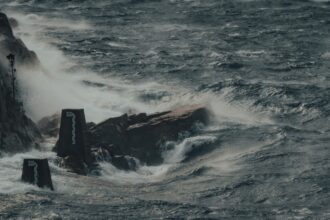
The vast expanse of the world’s oceans, often perceived as a serene and timeless domain, played a far more complex and contested role during the Cold War than is commonly understood. Beneath the placid surface of international diplomacy and the thunderous pronouncements of ideological struggle lay a submerged battleground, a theater of operations where military might, scientific advancement, and the unblinking eye of intelligence converged. This article aims to uncover the hidden truths of this Cold War ocean, exploring the technological race, the strategic implications, and the enduring legacy of a global competition conducted largely out of sight.
The ocean floor, once a virtually uncharted frontier, became an increasingly vital strategic asset during the Cold War. The immense pressure and darkness offered unparalleled cover for clandestine operations and the deployment of advanced military hardware. Nations, driven by the existential threat of nuclear annihilation, sought to secure their interests and project power in ways that eluded traditional lines of sight.
The Rise of Submarine Warfare: The Ghost Fleets Emerge
The submarine, a marvel of underwater engineering, transformed naval warfare. For the Soviet Union and the United States, submarines represented the ultimate survivable second-strike capability. Their ability to loiter undetected for extended periods, lurking like unseen predators in the deep, instilled a profound sense of vulnerability in the opposing superpower.
Ballistic Missile Submarines (SSBNs): The Doomsday Deterrent
The development of Submarine-Launched Ballistic Missiles (SLBMs) on platforms like the American Polaris and the Soviet Typhoon submarines elevated the strategic importance of the underwater realm exponentially. These mobile, hidden nuclear arsenals represented a “dead hand” that could survive a first strike, ensuring mutual assured destruction (MAD) and, ironically, maintaining a fragile peace through mutual fear. The silent ballet of these metal behemoths, patrolling vast oceanic expanses, was a constant, chilling reminder of the destructive potential held in reserve.
Attack Submarines (SSNs): The Hunter and the Hunted
Beyond the strategic deterrent, attack submarines (SSNs) engaged in a continuous game of cat and mouse. Their missions ranged from the interdiction of enemy naval forces to intelligence gathering and the covert deployment of special forces. The Silent Service, as the U.S. Navy’s submarine force was known, dedicated considerable resources to developing quieter propulsion systems and advanced sonar technology to outwit their Soviet counterparts. Conversely, the Soviets poured immense effort into their own submarine programs, often prioritizing sheer numbers and robust construction. This relentless pursuit of underwater stealth fueled an ongoing technological arms race.
Undersea Cables: The Veins of Global Communication
The global network of undersea communication cables, the vital arteries of international data flow, also became a target and a strategic prize during the Cold War. These seemingly innocuous bundles of wires, laid across the ocean floor like a technological nervous system, carried an immense volume of sensitive information, from diplomatic communiqués to financial transactions.
Espionage and Interception: Listening to the World’s Secrets
Both superpowers recognized the immense intelligence value of these cables. Covert operations were designed to tap into these lines, allowing for the passive interception of enemy communications. The effectiveness of such operations could be a game-changer in understanding an adversary’s intentions and capabilities. The ocean floor, in this context, became a vast, dark vault for the world’s most valuable secrets.
Sabotage and Disruption: The Threat of Severing the Flow
Beyond mere listening, the threat of physically severing these cables loomed large. A strategic strike against key cable landing points or sections of the undersea network could cripple an adversary’s ability to communicate and coordinate, potentially paralyzing their military and economic functions. This made the protection of these vital links a significant aspect of naval strategy.
The exploration of the Cold War’s lesser-known aspects continues to captivate historians and enthusiasts alike, particularly through the lens of maritime strategies and operations. A related article that delves into the intricate naval maneuvers and hidden truths of this era can be found at In the War Room. This resource provides valuable insights into how the oceans played a crucial role in the geopolitical tensions between superpowers, revealing the often-overlooked stories that shaped the course of history.
The Arctic Frontline: A Frozen Battle for Supremacy
The Arctic, a vast and unforgiving expanse of ice and frigid waters, emerged as a critical strategic theater during the Cold War. Its proximity to both the United States and the Soviet Union, coupled with its unique geographical position, made it a focal point for military deployments and intelligence gathering.
Strategic Bombers and Early Warning Systems: The Northern Gatekeepers
The shortest route between North America and the Soviet Union lay over the Arctic. This geographical reality dictated the deployment of strategic bombers and the development of sophisticated early warning radar systems. The DEW Line (Distant Early Warning Line), a chain of radar stations stretching across northern Canada and Alaska, was a monumental undertaking designed to detect incoming Soviet bomber formations.
The Constant Vigilance: A World on Edge
The constant threat of a surprise attack from the north instilled a perpetual state of vigilance. The harsh Arctic environment presented immense logistical challenges, but the strategic imperative justified the enormous investment in infrastructure and personnel. The whirring of radar dishes and the drone of long-range reconnaissance aircraft became the soundtrack to this frozen standoff.
Submarine Patrols in Icy Waters: Navigating the Perilous Depths
The Arctic’s frozen surface presented unique challenges and opportunities for submarine operations. Submarines could use the ice as cover, surfacing in ice-free leads or even beneath thick ice sheets to maintain a low profile.
The Ice as a Shield and a Barrier: A Dual-Edged Sword
For Soviet submarines, the Arctic offered a vast, relatively secure operating environment, allowing them to patrol close to American shores or position themselves for a first strike. American submarines, in turn, developed specialized capabilities for operating in these challenging conditions, learning to navigate treacherous ice floes and utilize sonars that could penetrate the icy canopy. The ability to conduct covert operations beneath the permafrost of the Arctic Ocean was a testament to the ingenuity and determination of both sides.
Deep Sea Intelligence: The Eyes and Ears of the Cold War
The Cold War was as much about information as it was about firepower. The quest for intelligence about an adversary’s capabilities, intentions, and movements drove significant advancements in underwater surveillance and reconnaissance. The deepest reaches of the ocean provided an unparalleled environment for these clandestine operations.
Oceanographic Surveys: More Than Just Scientific Curiosity
Scientific exploration of the ocean depths during the Cold War was often intertwined with military objectives. While seemingly benign, extensive oceanographic surveys conducted by both superpowers were often cover for gathering critical data related to submarine detection, sonar performance, and the mapping of underwater terrain.
Mapping the Unseen: The Strategic Importance of Bathymetry
Detailed bathymetric maps, charting the contours and depths of the ocean floor, were invaluable for submarine navigation, the identification of potential ambush sites, and the strategic placement of listening devices. What may have appeared as a purely scientific endeavor on the surface was, in reality, a crucial component of the strategic intelligence apparatus.
Sonar Technology: The Unblinking Ear of the Deep
The development of sonar (SOund Navigation And Ranging) technology was a bedrock of Cold War undersea warfare and intelligence. Continuous improvements in sonar capabilities allowed naval forces to “see” and “hear” in the murky depths, transforming the submarine from a mere vessel into a sophisticated sensor platform.
Active vs. Passive Sonar: The Eavesdropper and the Revealer
Active sonar, which emits sound pulses and listens for echoes, could pinpoint the location and characteristics of underwater contacts. However, its use also revealed the user’s own position. Passive sonar, designed to detect and analyze ambient sounds produced by other vessels, offered a more covert method of intelligence gathering, allowing for the passive listening and identification of enemy submarines without revealing one’s own presence. The ongoing tension between the need for detection and the imperative of stealth fueled constant innovation in sonar technology. The development of noise reduction techniques in submarines, for example, was a direct response to the increasing effectiveness of passive sonar.
Covert Operations and Special Forces: The Deepest Infiltration
The capabilities honed for Cold War undersea operations extended to highly specialized covert missions. Special forces units, trained for underwater infiltration, reconnaissance, and sabotage, were an integral part of the intelligence gathering apparatus.
Planting Bugs and Intercepting Signals: The Unseen Saboteur
These highly trained individuals could be deployed from submarines or specialized vessels to plant listening devices on enemy cables, conduct physical reconnaissance of sensitive underwater installations, or even disrupt enemy communications networks. The ocean floor became a silent stage for clandestine operations, carried out by individuals who operated in the shadows, their actions never fully revealed.
The Technological Arms Race: Pushing the Boundaries of the Possible
The Cold War was a period of unprecedented technological advancement, driven by the relentless competition between the United States and the Soviet Union. The oceans, as a vast and largely unexploited domain, became a fertile ground for this technological arms race, pushing the boundaries of engineering, physics, and materials science.
Materials Science: Building Stronger, Quieter Vessels
The immense pressures and corrosive environment of the deep ocean demanded the development of advanced materials for submarine construction. New alloys and composite materials were engineered to withstand crushing depths while reducing the acoustic signature of vessels, making them harder to detect.
From Steel to Composites: The Evolution of Submarine Hulls
Early submarines were primarily constructed of steel. However, the pursuit of greater depth capabilities and reduced acoustic reflectivity led to the exploration and eventual adoption of titanium and advanced composite materials. This constant evolution in hull construction was directly driven by the need to outmaneuver and outwit an ever-vigilant enemy.
Acoustic Engineering: The Pursuit of Silence
Silence became the ultimate weapon in the undersea warfare of the Cold War era. The development of advanced acoustic engineering techniques was paramount to achieving stealth. This involved not only designing quieter propulsion systems but also implementing sophisticated sound-dampening technologies throughout the submarine.
Noise Reduction: The Stealth Imperative
Minimizing vibrations, isolating machinery, and employing specialized coatings became standard practice in submarine design. The goal was to render the submarine virtually undetectable to enemy sonar, creating a phantom presence that could elude even the most advanced detection systems. The constant refinement of these techniques was a testament to the ingenuity born of intense rivalry.
Miniaturization and Automation: The Intelligent Machine
The drive for greater efficiency and operational capability led to significant advancements in miniaturization and automation. Electronic components became smaller and more powerful, enabling more sophisticated sonar systems, navigation equipment, and weapon control systems to be integrated into submarines.
The Rise of the Automated Fleet: Efficiency in Depth
Automation also played a crucial role, reducing the human workload and increasing the speed and accuracy of complex operations. This contributed to the development of more capable and autonomous underwater vehicles, hinting at the future of naval warfare.
The Hidden Truths of the Cold War Ocean reveals fascinating insights into the underwater espionage and military strategies employed during this tense period in history. For those interested in exploring more about the geopolitical dynamics of the Cold War, a related article can be found at this link, which delves into the covert operations that shaped international relations beneath the waves. Understanding these hidden narratives not only enriches our knowledge of the Cold War but also highlights the significant role that the ocean played in global power struggles.
The Enduring Legacy: Ripples in the Global Ocean
| Metric | Details | Significance |
|---|---|---|
| Number of Submarines Deployed | Over 1,200 nuclear and diesel submarines by both NATO and Warsaw Pact | Key for underwater surveillance and nuclear deterrence |
| Underwater Surveillance Networks | Approximately 50 SOSUS (Sound Surveillance System) arrays installed globally | Enabled detection of enemy submarines and tracking of naval movements |
| Secret Oceanic Intelligence Operations | Hundreds of covert missions involving underwater espionage and tapping undersea cables | Provided critical intelligence on enemy communications and capabilities |
| Naval Incidents | Over 30 documented underwater collisions and confrontations between US and Soviet vessels | Heightened tensions and risk of escalation during the Cold War |
| Deep Sea Exploration for Military Purposes | Development of deep-diving submersibles capable of reaching depths over 6,000 meters | Allowed recovery of sunken vessels and tapping of communication cables |
| Environmental Impact | Unreported nuclear tests and submarine accidents leading to localized ocean contamination | Long-term ecological consequences still being studied |
The Cold War may have concluded, but its impact on the world’s oceans continues to resonate. The technological advancements, strategic doctrines, and environmental consequences of this period have left an indelible mark, shaping the present and influencing the future of maritime affairs.
Environmental Scars: The Unintended Consequences
The vast scale of military operations during the Cold War, while largely unseen, inevitably had environmental consequences. The testing of nuclear weapons, the disposal of hazardous materials, and the accidental sinking of vessels have left their mark on the ocean floor. Research into these environmental impacts is ongoing, revealing the long-term consequences of this global confrontation.
Radioactive Traces: Lingering Hazards Beneath the Waves
The legacy of nuclear testing in oceanic environments, particularly in the Arctic and Pacific, continues to be a concern. Understanding the distribution and impact of radioactive contaminants is a crucial area of scientific inquiry.
The Foundation for Modern Naval Power: Lessons Learned
The technological innovations and strategic lessons learned during the Cold War have formed the bedrock of modern naval power projection and undersea warfare capabilities. The development of advanced sonar, submarine technology, and intelligence-gathering techniques continues to inform contemporary military doctrine and technological development.
The Ghosts of the Past: Shaping Present Strategies
The ghosts of the Cold War submarines still patrol the deep, their silent presence a reminder of a world teetering on the brink. The strategies and technologies forged in that era, though evolved, continue to shape the geopolitical landscape of our oceans. The pursuit of undersea dominance, though perhaps less overt, remains a significant factor in global security. The story of the Cold War ocean is a testament to human ingenuity, a chilling reminder of the destructive potential of conflict, and a vital chapter in our understanding of the complex relationship between humanity and the vast, mysterious depths that cover our planet.
STOP: The Fake Mining Ship That Almost Started WW3
FAQs
What was the strategic importance of the oceans during the Cold War?
The oceans were crucial during the Cold War as they served as key routes for naval and submarine operations, enabling the deployment of nuclear missiles and the monitoring of enemy activities. Control of the seas was vital for maintaining a balance of power between the United States and the Soviet Union.
How did submarine technology impact Cold War naval strategies?
Advancements in submarine technology allowed both superpowers to develop stealthy nuclear missile platforms, enhancing their second-strike capabilities. This led to an underwater arms race, with innovations in sonar, propulsion, and missile systems shaping naval strategies throughout the Cold War.
What role did oceanic espionage play during the Cold War?
Oceanic espionage involved covert operations such as tapping undersea communication cables, deploying surveillance devices on the ocean floor, and tracking enemy submarines. These activities provided critical intelligence that influenced diplomatic and military decisions during the Cold War.
Were there any significant underwater incidents during the Cold War?
Yes, several underwater incidents occurred, including submarine collisions, sinkings, and near-detection events. Notable examples include the loss of the Soviet submarine K-219 and the detection of U.S. submarines by Soviet forces, which heightened tensions and underscored the risks of underwater operations.
How did Cold War ocean exploration contribute to scientific knowledge?
Military investments in ocean technology during the Cold War led to advancements in oceanography, sonar mapping, and underwater navigation. These developments not only served strategic purposes but also expanded scientific understanding of the ocean’s depths, geology, and ecosystems.