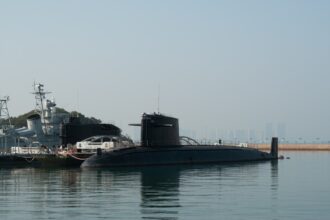
Submarines have long captured the imagination of both military strategists and the general public alike. Their ability to operate stealthily beneath the waves has made them a formidable force in naval warfare and a subject of intrigue throughout history. The concept of underwater vessels dates back to ancient times, with early designs appearing in various cultures, but it was not until the 17th century that the first practical submarine was developed.
This vessel, known as the “Turtle,” was designed by American inventor David Bushnell during the American Revolutionary War. Although it was not successful in its intended mission, the Turtle marked the beginning of a new era in naval technology. As time progressed, the development of submarines continued to evolve, driven by the need for more effective military strategies and advancements in engineering.
The Industrial Revolution played a crucial role in this evolution, providing the necessary technological advancements that would allow submarines to become more efficient and powerful. By the early 20th century, submarines had transitioned from rudimentary designs to more sophisticated vessels capable of extended underwater operations. This transformation set the stage for their significant role in both World Wars and beyond, as nations recognized the strategic advantages that submarines could offer in naval warfare.
Key Takeaways
- Submarines have played a crucial role in naval history, evolving significantly from early designs to advanced modern vessels.
- They have been pivotal in warfare, espionage, and intelligence gathering, shaping naval strategies across different eras.
- Notable submarine missions and battles highlight their strategic importance and technological capabilities.
- Innovations in submarine technology continue to enhance their stealth, endurance, and operational effectiveness.
- The future of submarines promises further advancements that could transform maritime trade, military tactics, and underwater exploration.
The Evolution of Submarine Technology
The evolution of submarine technology is a fascinating journey marked by innovation and adaptation. Early submarines were primarily powered by human effort or simple steam engines, limiting their operational capabilities and range. However, the introduction of diesel-electric propulsion systems in the early 20th century revolutionized submarine design.
This advancement allowed submarines to travel greater distances while submerged, significantly enhancing their stealth and operational effectiveness. The ability to recharge batteries while on the surface also provided submarines with a tactical advantage, enabling them to remain hidden for longer periods. The technological advancements did not stop there; the mid-20th century saw the introduction of nuclear-powered submarines, which further transformed naval warfare.
The USS Nautilus, launched in 1954, was the first nuclear-powered submarine and marked a significant milestone in submarine technology. Nuclear propulsion allowed submarines to operate underwater for extended periods without the need to surface for fuel, fundamentally changing naval strategy. This innovation not only increased their endurance but also expanded their operational range, allowing them to patrol vast areas of ocean without detection.
Submarines in Warfare Throughout History
Submarines have played pivotal roles in various conflicts throughout history, often altering the course of battles and wars. During World War I, submarines emerged as a game-changer for naval warfare. The German U-boat campaign targeted Allied shipping routes, aiming to disrupt supply lines and weaken enemy forces.
The effectiveness of these underwater vessels forced nations to adapt their naval strategies, leading to the development of anti-submarine warfare techniques and technologies. The psychological impact of U-boats on Allied shipping was profound, instilling fear and uncertainty among merchant sailors and military planners alike.
Both the Axis and Allied powers recognized their strategic value, leading to an arms race in submarine technology. The Battle of the Atlantic became a defining conflict where submarines played a crucial role in disrupting supply chains between North America and Europe. The introduction of advanced sonar technology and depth charges marked a significant evolution in anti-submarine warfare tactics.
The war also saw notable submarine engagements, such as the sinking of the Japanese battleship Yamato by American submarines, showcasing their lethal capabilities.
Famous Submarine Missions and Battles
Throughout history, several submarine missions have become legendary due to their daring nature and significant impact on naval warfare. One such mission was Operation Drumbeat during World War II, where German U-boats targeted American merchant ships along the East Coast. This operation resulted in substantial losses for the Allies and highlighted the vulnerability of unprotected shipping lanes.
The audacity of these missions demonstrated how submarines could strike fear into enemy hearts while simultaneously altering strategic calculations. Another notable engagement was the sinking of the USS Indianapolis in 1945. After delivering critical components for the atomic bomb to Tinian Island, the cruiser was torpedoed by a Japanese submarine.
The subsequent loss of life and the harrowing survival story of those who were stranded at sea underscored the dangers faced by naval vessels during wartime. Such missions not only showcased the tactical prowess of submarines but also left lasting legacies that continue to be studied by military historians.
The Impact of Submarines on Naval Strategy
| Submarine | Year Introduced | Country | Historical Significance | Notable Missions |
|---|---|---|---|---|
| Turtle | 1775 | USA | First documented military submarine used in combat | Attempted attack on British HMS Eagle during American Revolutionary War |
| H.L. Hunley | 1863 | Confederate States (USA) | First combat submarine to sink an enemy warship | Sank USS Housatonic during American Civil War |
| U-9 | 1910 | Germany | Early WWI submarine known for sinking three British cruisers in one engagement | Battle of Heligoland Bight, 1914 |
| USS Nautilus (SSN-571) | 1954 | USA | First nuclear-powered submarine, revolutionized underwater endurance and speed | First submarine to complete a submerged transit of the North Pole |
| K-19 | 1960 | USSR | First Soviet nuclear-powered submarine, notable for early nuclear accidents | Cold War patrols and nuclear deterrence missions |
| Typhoon-class | 1981 | USSR | Largest class of nuclear ballistic missile submarines ever built | Strategic nuclear deterrence during the Cold War |
The advent of submarines has had a profound impact on naval strategy, forcing nations to rethink their approaches to maritime warfare. The stealthy nature of submarines allows them to operate undetected, making them ideal for reconnaissance missions and surprise attacks. This capability has led to a shift in how navies structure their fleets and allocate resources.
Traditional surface ships are now often accompanied by submarines to provide protection against potential threats lurking beneath the waves. Moreover, submarines have introduced new dimensions to deterrence strategies. The concept of mutually assured destruction during the Cold War relied heavily on nuclear-powered submarines equipped with ballistic missiles.
These vessels served as a second-strike capability, ensuring that even if a nation were attacked, it could retaliate with devastating force from underwater. This strategic balance has shaped international relations and military posturing for decades, highlighting how submarines have become integral components of modern military doctrine.
Submarine Espionage and Intelligence Gathering
Submarines have also played a crucial role in espionage and intelligence gathering throughout history. Their ability to operate covertly beneath the surface makes them ideal platforms for surveillance missions. During the Cold War, both the United States and the Soviet Union deployed submarines equipped with advanced listening devices to monitor each other’s naval activities.
These missions provided valuable intelligence that informed military strategies and diplomatic negotiations. One notable example is Project Ivy Bells, a covert operation conducted by the United States during the 1970s. American submarines were tasked with tapping undersea communication cables used by the Soviet Navy, allowing U.S.
intelligence agencies to intercept critical information about Soviet naval operations. Such operations underscored the dual role of submarines as both offensive weapons and tools for gathering intelligence, further emphasizing their significance in modern warfare.
Submarine Innovation and Advancements
Innovation has been at the heart of submarine development since their inception. As technology has advanced, so too have submarine capabilities. Modern submarines are equipped with cutting-edge systems that enhance their stealth, maneuverability, and combat effectiveness.
Advances in materials science have led to quieter hull designs that reduce noise signatures, making it more challenging for enemy forces to detect them. Additionally, advancements in weaponry have transformed submarines into formidable platforms for launching precision strikes. Modern submarines can carry a variety of missiles capable of engaging land targets or other vessels from great distances.
The integration of advanced sonar systems allows for improved target detection and tracking, further enhancing their combat capabilities. As nations continue to invest in submarine technology, it is clear that innovation will remain a driving force behind their evolution.
Submarines in the Cold War
The Cold War era marked a significant period for submarine development and deployment as tensions between superpowers escalated. Both the United States and the Soviet Union recognized that control of the seas was vital for national security and global influence. As a result, they invested heavily in building advanced fleets of nuclear-powered submarines capable of carrying ballistic missiles.
The presence of these submarines created a delicate balance of power known as “deterrence.” Each side understood that an attack on one would likely result in a devastating counterattack from underwater forces. This understanding led to a tense standoff that defined much of international relations during this period. Submarines became symbols of national strength and technological prowess, shaping military strategies on both sides.
Submarine Archaeology and Discoveries
Submarine archaeology has emerged as an intriguing field that combines history with underwater exploration. As nations have sought to understand their maritime pasts, numerous shipwrecks have been discovered beneath the waves, including those belonging to submarines from various conflicts. These discoveries provide valuable insights into historical events and technological advancements.
One notable example is the discovery of World War II-era submarines off the coast of various countries. These wrecks often contain artifacts that tell stories about life aboard these vessels during wartime. Archaeologists study these sites not only for historical significance but also to understand how submarine technology evolved over time.
Such discoveries contribute to a broader understanding of maritime history and its impact on global events.
Submarine’s Influence on Maritime Trade and Commerce
The presence of submarines has significantly influenced maritime trade and commerce throughout history. Their ability to disrupt shipping routes has made them critical players in conflicts where control over trade is paramount. During both World Wars, submarine campaigns targeted merchant vessels carrying essential supplies, leading to economic strain on affected nations.
Modern navies deploy submarines as part of anti-piracy operations to ensure safe passage for commercial vessels traversing high-risk areas such as the Gulf of Aden or Southeast Asia’s Strait of Malacca. This dual role highlights how submarines can impact global commerce both positively and negatively.
The Future of Submarine Technology and its Potential Impact
Looking ahead, the future of submarine technology promises exciting advancements that could reshape naval warfare once again. Emerging technologies such as artificial intelligence (AI) and unmanned underwater vehicles (UUVs) are set to revolutionize how submarines operate and engage with threats. AI could enhance decision-making processes onboard submarines while UUVs may serve as reconnaissance platforms or even assist in combat operations.
Moreover, as nations continue to invest in advanced submarine capabilities, there is potential for increased competition among global powers regarding underwater dominance. This could lead to new arms races or shifts in military alliances as countries seek to bolster their underwater fleets with cutting-edge technology. In conclusion, submarines have played an integral role throughout history—from their early designs to modern innovations that continue shaping naval strategy today.
Their impact on warfare, espionage efforts, maritime trade dynamics, archaeological discoveries, and future technological advancements underscores their significance within both military contexts and broader societal implications moving forward into an uncertain future at sea.
Submarines have played a crucial role in naval warfare throughout history, significantly impacting the outcomes of various conflicts. For a deeper understanding of their historical significance, you can explore the article on this topic at In the War Room, which delves into the evolution of submarine technology and its strategic importance in modern warfare.
FAQs
What is the historical significance of submarines?
Submarines have played a crucial role in naval warfare and maritime exploration since their development. They revolutionized naval strategy by enabling stealth attacks, reconnaissance, and underwater defense, significantly impacting both World Wars and modern naval operations.
When were submarines first used in warfare?
The first military use of submarines dates back to the American Revolutionary War with the Turtle in 1776. However, submarines became more effective and widely used during the American Civil War and especially in World War I and World War II.
How did submarines change naval warfare?
Submarines introduced the ability to attack enemy ships covertly from beneath the water, bypassing traditional surface defenses. This changed naval tactics by emphasizing stealth, surprise, and underwater combat, leading to the development of anti-submarine warfare techniques.
What technological advancements have been important in submarine history?
Key advancements include the development of the diesel-electric engine, nuclear propulsion, sonar technology, and ballistic missile capabilities. These innovations increased submarines’ range, endurance, stealth, and offensive power.
What role did submarines play in World War II?
Submarines were vital in disrupting enemy supply lines, particularly in the Battle of the Atlantic where German U-boats targeted Allied shipping. They also conducted reconnaissance, special operations, and attacks on naval and merchant vessels.
How have submarines contributed to scientific exploration?
Submarines have enabled deep-sea exploration, allowing scientists to study underwater geology, marine biology, and oceanography at depths unreachable by other means. Manned and unmanned submersibles have expanded our understanding of the ocean environment.
Are submarines still important in modern navies?
Yes, submarines remain a key component of naval forces worldwide. They provide strategic deterrence through nuclear missile capabilities, intelligence gathering, special operations support, and control of sea lanes.
What is the difference between military and research submarines?
Military submarines are designed primarily for combat, surveillance, and strategic missions, often equipped with weapons and stealth technology. Research submarines focus on scientific exploration and data collection, usually equipped with sensors and instruments rather than weapons.