The Cold War, a period of persistent geopolitical tension, saw both the United States and the Soviet Union engage in an unprecedented arms race. Beneath the waves, a silent war was waged, with both sides striving to perfect the art of submarine warfare and, crucially, its counterpoint: anti-submarine warfare (ASW). This article delves into the technological innovations and strategic doctrines employed by the Soviet Union in its pursuit of tracking and neutralizing enemy submarines, particularly those of NATO.
The Soviet Union’s emphasis on anti-submarine warfare was not arbitrary. Following World War II, the emergence of nuclear weapons and the development of ballistic missile submarines (SSBNs) by the West presented a profound strategic threat. These underwater platforms, capable of launching devastating attacks from hidden depths, necessitated a robust and comprehensive ASW capability. The Soviet Navy, initially focused on coastal defense and surface fleet engagements, rapidly pivoted to address this new dimension of warfare.
Early Post-War Developments
In the aftermath of the Great Patriotic War, the Soviet Navy began a methodical assessment of its naval capabilities. Lessons learned from Allied ASW efforts during the war, particularly against German U-boats, deeply influenced early Soviet thinking. However, the unique challenges posed by nuclear submarines, with their increased speed, deeper diving capabilities, and significantly reduced acoustic signatures, demanded entirely new approaches.
- Reliance on Acoustic Detection: Passive and active sonar technologies became the cornerstone of Soviet ASW. Early systems were rudimentary but underwent rapid development throughout the 1950s and 1960s.
- Initial Focus on Coastal Waters: The initial ASW efforts were primarily concentrated on protecting the Soviet Union’s extensive coastline and its strategically vital naval bases.
- Espionage and Reverse Engineering: Soviet intelligence aggressively sought out Western ASW technologies, and reverse engineering played a significant role in accelerating their own technological progress. This often involved the acquisition of foreign sonar designs and acoustic data.
The Rise of Naval Aviation
The vastness of the ocean made purely naval detection systems insufficient. Naval aviation quickly emerged as an indispensable component of Soviet ASW. Aircraft offered extended range, rapid deployment, and the ability to cover large areas that surface ships and submarines alone could not.
- Tupolev Tu-142 “Bear-F” Maritime Patrol Aircraft: This formidable aircraft became the backbone of Soviet long-range ASW aviation. Equipped with magnetic anomaly detectors (MAD), sonobuoys, and advanced radar, the Tu-142 could patrol vast swathes of the ocean, searching for submerged targets.
- Helicopter-borne Sonar: Helicopters, such as the Kamov Ka-25 and Ka-27, provided a more agile and localized ASW capability. They could rapidly deploy dipping sonars to investigate suspicious contacts or provide close-in protection for surface formations.
Soviet submarine tracking technology has been a topic of significant interest, particularly during the Cold War era when naval capabilities were crucial for national security. For a deeper understanding of the advancements in submarine detection and the strategies employed by various nations, you can explore the article titled “The Evolution of Submarine Tracking Technology” available at this link. This article delves into the technological innovations that shaped submarine warfare and the ongoing developments in tracking systems.
The Symphony of Sound: Acoustic Tracking Technologies
At the heart of any submarine tracking effort lies the ability to detect and interpret sound. The ocean, often perceived as silent, is in fact a complex acoustic environment, a veritable symphony of natural phenomena and man-made noises. Soviet acoustics researchers and engineers dedicated substantial resources to mastering this domain.
Passive Sonar Systems
Passive sonar, which listens for sounds produced by a submarine itself (propeller cavitation, machinery noise, etc.), was particularly valued for its stealth. A passive platform does not reveal its own presence as an active sonar ping does.
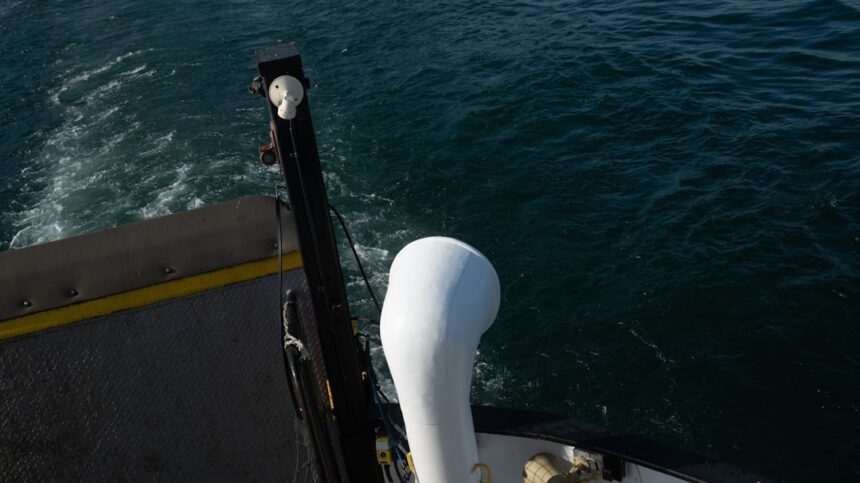
- Towed Array Sonar (TAS): Early in the Cold War, the Soviets recognized the potential of towed arrays – long cables trailing behind a ship or submarine, equipped with multiple hydrophones. These arrays offered enhanced sensitivity and directionality, allowing for the detection of fainter signals over longer ranges.
- Bottom-mounted Hydrophone Arrays: Similar to the U.S. SOSUS (Sound Surveillance System), the Soviets developed their own network of bottom-mounted hydrophones, particularly in strategic choke points and approaches to their naval bases. These systems, often connected by underwater cables, provided continuous surveillance of specific areas.
- Hull-mounted Arrays: Soviet submarines and surface vessels were equipped with increasingly sophisticated hull-mounted passive sonar arrays. These arrays evolved from simple intercept systems to complex, multi-element arrays capable of sophisticated signal processing.
Active Sonar Systems
While passive sonar offered stealth, active sonar provided range and precision, especially in situations where a target’s noise signature was low or environmental conditions were unfavorable.
- Low-Frequency Active Sonar (LFAS): As Western submarines became quieter, the Soviets experimented with lower frequency active sonar systems. Lower frequencies travel further in water and are less susceptible to attenuation, albeit at the cost of reduced resolution.
- Variable Depth Sonar (VDS): To counteract thermal layers and other acoustic anomalies that could mask submarines, the Soviets developed variable depth sonars. These systems allowed sonars to be deployed at different depths, effectively probing through acoustically obscured layers.
The Eyes from Above: Magnetic and Hydro-meteorological Tracking

Beyond sound, other physical phenomena offered clues to a submarine’s presence. The Soviet Union invested heavily in technologies that exploited these subtle signatures.
Magnetic Anomaly Detection (MAD)
Every metallic object creates a disturbance in the Earth’s magnetic field. Submarines, being large metallic structures, generate significant magnetic anomalies. MAD aircraft exploited this principle.
- Principle of Operation: A MAD boom, often extended from the tail of an ASW aircraft, housed sensitive magnetometers. As the aircraft flew over a submerged submarine, the magnetometers would detect the localized distortion in the Earth’s magnetic field, indicating the submarine’s presence.
- Limitations and Strengths: MAD was effective at relatively short ranges and required the aircraft to fly directly over the submarine. However, it was a completely passive system, offering no tell-tale emissions that could alert the target. It was most effective in conjunction with other sensors, like sonobuoys, to pinpoint a target.
Hydro-meteorological Warfare (HMW) and Environmental Profiling
The ocean is not a uniform medium. Temperature, salinity, and pressure variations significantly affect sound propagation. The Soviets recognized the critical importance of understanding and exploiting these environmental factors.
- Oceanographic Surveys: Extensive oceanographic surveys were conducted by the Soviet Navy to map oceanographic conditions in strategically important areas. This data was fed into sophisticated models to predict acoustic propagation and optimize sensor deployment.
- “Sound Channels” and Convergence Zones: Soviet ASW doctrine incorporated an understanding of natural sound channels (like the deep sound channel, or SOFAR channel) and convergence zones, where sound could travel thousands of kilometers. This knowledge was used to both detect distant targets and to evade detection.
- Ice Penetration Technology: For ASW operations in the Arctic, a region of immense strategic importance due to potential under-ice launch areas for Western SSBNs, the Soviets developed specialized ice-penetrating sonobuoys and techniques for operating under the ice.
The Networked Web: Integrated ASW Systems
Individual sensors, no matter how advanced, are limited in their effectiveness when operating in isolation. The Soviet Union’s ASW efforts progressively shifted towards the development of integrated, networked systems.
Command, Control, Communications, and Intelligence (C3I)
The vast amounts of data generated by diverse ASW platforms necessitated sophisticated C3I systems to collate, analyze, and disseminate information in near real-time.
- ASW Task Forces: The Soviets organized dedicated ASW task forces comprising destroyers, frigates, submarines, and ASW aircraft. These forces operated under centralized command to optimize their search patterns and engagement procedures.
- Satellite Reconnaissance: While primarily focused on surface targets, Soviet reconnaissance satellites could provide valuable information on suspected submarine operating areas, aiding in the initial deployment of ASW assets.
- Data Link Systems: Secure data links were crucial for sharing sensor data between different platforms, allowing a more comprehensive picture of the underwater battlespace to be built up.
The Problem of Quieting and Evasion
As Soviet tracking technology improved, so too did Western submarine technology, primarily in the domain of stealth and noise reduction. This became a persistent cat-and-mouse game.
- Anechoic Coatings: Western submarines adopted anechoic tiles – rubber-like coatings designed to absorb sonar pings and reduce radiated noise. This significantly complicated active sonar detection.
- Advanced Propeller Design: Quieter propellers, designed to minimize cavitation, made passive acoustic detection more challenging.
- Strategic Depth and Speed Control: Submarine crews were trained to operate at optimal depths and speeds to exploit thermal layers and minimize their acoustic signature. This forced Soviet ASW forces to constantly adapt their search strategies.
Soviet submarine tracking technology has played a crucial role in naval warfare, particularly during the Cold War. The advancements made in sonar systems and underwater surveillance have significantly influenced military strategies and maritime security. For a deeper understanding of how these technologies evolved and their impact on global naval operations, you can read a related article on this topic at In the War Room. This resource provides valuable insights into the intricacies of submarine detection and the ongoing developments in underwater warfare.
The Legacy and Evolution of Soviet ASW
| Metric | Description | Estimated Capability | Time Period |
|---|---|---|---|
| SONAR Detection Range | Maximum effective range of active and passive sonar systems used for submarine tracking | Up to 20 km (passive), 10 km (active) | 1970s-1980s |
| Satellite Surveillance | Use of reconnaissance satellites to monitor naval movements and submarine activity | Low Earth Orbit satellites with optical and radar sensors | 1980s-1990s |
| Underwater Hydrophone Arrays | Fixed and mobile hydrophone networks for long-range acoustic detection | Detection range up to 100 km in optimal conditions | 1960s-1980s |
| Signal Processing Speed | Computational ability to analyze sonar and acoustic data in real-time | Several thousand operations per second | 1980s |
| Submarine Tracking Accuracy | Precision in locating and following submarine targets | Within 500 meters under ideal conditions | 1970s-1980s |
The dissolution of the Soviet Union brought an end to an era of intense ASW development. However, the technologies and doctrines forged during the Cold War continue to influence modern naval warfare.
Post-Soviet Developments and Current Russian ASW
While the scale of ASW operations dramatically reduced in the immediate post-Soviet era, Russia has since made efforts to revitalize its naval capabilities, including ASW.
- Modernized Naval Platforms: Newer Russian warships and submarines are equipped with updated sonar systems, including advanced digital signal processing and multi-static active sonar capabilities.
- Focus on Arctic Operations: With growing strategic interest in the Arctic, Russian ASW focuses on adapting to the unique challenges of ice-covered waters, including new under-ice acoustic sensors and unmanned underwater vehicles (UUVs).
- Integration of Artificial Intelligence (AI): There is increasing interest in using AI and machine learning algorithms to process vast amounts of sonar data, detect subtle anomalies, and improve target classification.
The Enduring Challenge of a Silent World
Despite advancements, the challenge of detecting and tracking modern, ultra-quiet submarines remains formidable. The underwater environment continues to be a realm of immense complexity, a three-dimensional chessboard where light does not penetrate, and sound is the primary medium of interaction. The metaphorical “fog of war” is particularly dense beneath the waves.
The Soviet Union’s concerted efforts in ASW, driven by existential strategic imperatives, left an indelible mark on naval technology and doctrine. Their innovative use of acoustic, magnetic, and environmental data, combined with a vast network of platforms and intelligence, represented a monumental endeavor in human ingenuity dedicated to uncovering the secrets of the silent deep. The Cold War ASW race was a testament to both the destructive potential of human conflict and the remarkable creativity it could spur in the realm of technological advancement. As you reflect on these developments, consider the profound impact that such an unseen and unheard struggle had on the course of global history.
FAQs
What was the primary purpose of Soviet submarine tracking technology?
Soviet submarine tracking technology was developed to detect, monitor, and track the movement of enemy submarines, particularly those of NATO countries, to maintain strategic naval superiority and ensure national security during the Cold War.
What types of technologies did the Soviet Union use for submarine tracking?
The Soviet Union employed a combination of sonar systems, underwater hydrophone arrays, magnetic anomaly detectors, and satellite reconnaissance to track submarines. They also used specialized surface ships and aircraft equipped with advanced sensors.
How did the Soviet Union’s tracking technology compare to that of the United States?
While both superpowers developed sophisticated submarine tracking systems, the Soviet Union focused heavily on passive sonar networks and underwater listening posts, whereas the United States invested significantly in active sonar and satellite surveillance. Each had strengths and limitations based on their strategic priorities and technological capabilities.
What role did the “SOSUS” system play in submarine tracking during the Cold War?
SOSUS (Sound Surveillance System) was a U.S. Navy passive sonar network designed to detect Soviet submarines. The Soviet Union developed similar systems to counteract SOSUS and track NATO submarines, highlighting the technological competition in underwater surveillance.
Are any Soviet submarine tracking technologies still in use today?
Some Soviet-era submarine tracking technologies have been modernized and integrated into the current Russian Navy’s anti-submarine warfare capabilities. However, many systems have been replaced or upgraded with newer technologies to address modern naval threats.