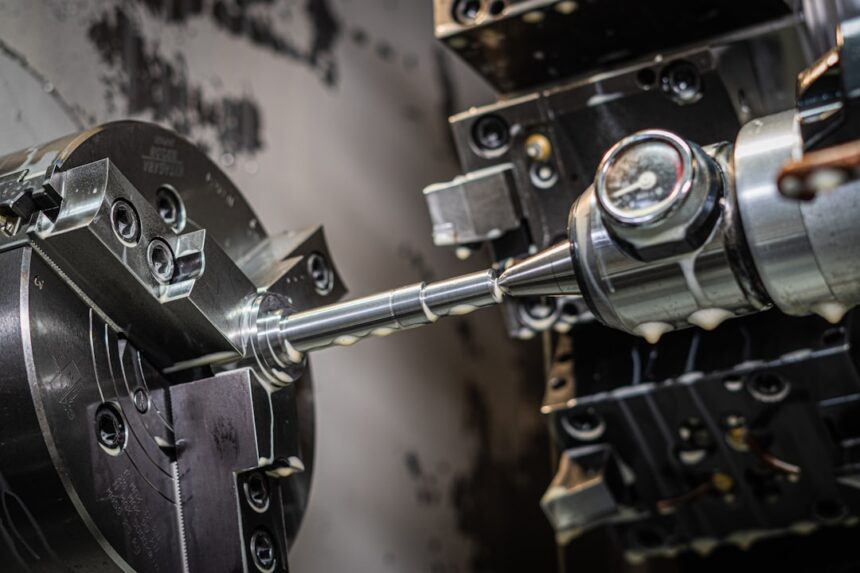
For CNC machine operators and maintenance technicians, the ghost in the machine – subtle deviations from intended path known as “flex” – can be a persistent adversary. This article details a systematic approach to identifying and rectifying these inaccuracies through dynamic error mapping, particularly focusing on how this technique can illuminate the hidden flex that compromises precision.
Dynamic error mapping offers a powerful lens through which to view the often-elusive nature of CNC machine inaccuracies. Unlike static calibration, which captures a snapshot of the machine’s geometry at a single point in time, dynamic error mapping observes the machine’s behavior over its operational envelope. Think of static calibration as taking a photograph of a bridge’s structure. It tells you if the beams are straight when the bridge is at rest. Dynamic error mapping, however, is like watching the bridge in motion under load, observing how it deflects and vibrates. This dynamic perspective is crucial for understanding and mitigating CNC machine flex.
CNC machine flex, also referred to as geometric inaccuracies or volumetric error, represents the deviation between the commanded position of the cutting tool and its actual position. This deviation is not a single, fixed error but a complex interplay of factors that can change with the machine’s position, speed, and even temperature.
The Genesis of Flex: Sources of Error
The root causes of CNC machine flex are multifaceted, stemming from the machine’s fundamental design, its operational environment, and the wear and tear associated with use. Identifying these sources is the first step in developing effective troubleshooting strategies.
Structural Deficiencies and Inherent Design Flaws
Even the most robust CNC machines are subject to the laws of physics. The inherent stiffness of their components – the bed, column, spindle housing, and axis slides – plays a significant role in determining their susceptibility to flex.
- Material Properties: The choice of materials for machine components influences their stiffness and thermal expansion characteristics. Steel, cast iron, and composite materials all exhibit different behaviors under stress and temperature fluctuations. A machine constructed with less rigid materials will inevitably exhibit more flex, especially under heavy cutting loads.
- Component Geometry and Reinforcement: The shape and cross-section of structural elements, along with the presence of internal ribbing and bracing, are critical to their resistance to deformation. A slender beam will bend much more readily than a box-section beam.
- Joint Rigidity: The joints between machine components, such as those connecting the column to the bed or the spindle head to the ram, are potential weak points. If these joints are not sufficiently rigid or are improperly fastened, they can introduce significant flex.
Environmental Factors and Operational Stresses
The environment in which a CNC machine operates can dramatically influence its accuracy. External forces and ambient conditions can impose stresses that lead to deformation.
- Thermal Expansion and Contraction: Temperature changes are a pervasive source of error. As machine components heat up due to ambient temperature or internal friction (e.g., from the spindle motor), they expand. This expansion is often non-uniform, leading to distortion and misalignment. Conversely, cooling causes contraction.
- Vibrations and Dynamic Loads: The cutting process itself generates vibrations. These vibrations can resonate with the machine’s natural frequencies, amplifying deflections. External vibrations from nearby machinery or the factory floor can also be transmitted to the CNC machine, impacting its accuracy.
- Foundation Stability: The stability and rigidity of the machine’s foundation are paramount. An uneven or unstable foundation can lead to tilting and twisting of the machine structure, manifesting as significant geometric inaccuracies.
Mechanical Wear and Maintenance Issues
Over time, mechanical components experience wear, and a lack of proper maintenance can exacerbate existing issues, leading to increased flex.
- Bearing Wear: Wear in linear guideways, ball screws, and spindle bearings can introduce play and looseness, allowing for uncontrolled movement and increased flex.
- Preload Loss: Ball screws and linear bearings are often preloaded to eliminate backlash and ensure rigidity. Loss of preload due to wear or improper adjustment can result in increased flex.
- Component Misalignment: Wear or damage to axis slides, scraped surfaces, or assembly errors can lead to misalignment between axes, contributing to volumetric error.
- Tooling and Fixturing Issues: While not directly part of the machine itself, improper tooling, worn cutting tools, or inadequately secured workpieces and fixtures can induce forces that exacerbate machine flex.
The Impact of Flex on Machining Precision
The manifestations of flex in machined parts can range from minor surface finish issues to critical dimensional inaccuracies that render a part unusable. Understanding these consequences highlights the importance of addressing flex.
- Dimensional Inaccuracies: The most direct consequence of flex is the deviation of the machined feature from its intended dimensions. This can include incorrect diameters, lengths, angles, or profiles.
- Surface Finish Degradation: Flex can cause the cutting tool to chatter or vibrate, leading to a rough or uneven surface finish on the workpiece.
- Poor Geometric Tolerances: Achieving tight geometric tolerances, such as flatness, straightness, parallelism, and perpendicularity, becomes increasingly difficult when the machine exhibits significant flex.
- Increased Tool Wear: Chatter and vibration caused by flex can lead to premature wear on cutting tools, increasing operational costs and requiring more frequent tool changes.
- Compromised Part Interchangeability: For parts that need to be assembled with other components, dimensional inaccuracies due to flex can lead to fitment issues and a reduction in the overall quality of the assembled product.
Dynamic error mapping in CNC machine flex is a crucial advancement in enhancing precision and efficiency in manufacturing processes. For a deeper understanding of this innovative technology, you can explore a related article that discusses its applications and benefits in detail. Check it out here: Dynamic Error Mapping in CNC Machines. This resource provides valuable insights into how dynamic error mapping can optimize CNC operations and reduce production errors.
Dynamic Error Mapping: A Deeper Dive
Dynamic error mapping moves beyond static measurements to capture the machine’s volumetric error in motion. This is achieved by using specialized laser measurement systems or kinematic measuring instruments that can track the tool center point’s actual trajectory as the machine executes programmed movements.
The Principles Behind Dynamic Error Measurement
The core idea of dynamic error mapping is to measure the actual path traced by the tool center point (TCP) relative to its commanded path. This is typically done by analyzing the machine’s motion along multiple axes simultaneously.
- Kinematic Chain Analysis: Every CNC machine has a kinematic chain – a series of interconnected links and joints that define the movement of the cutting tool. Errors can accumulate at each joint and along each link. Dynamic error mapping analyzes the cumulative effect of these errors throughout the entire kinematic chain.
- Volumetric Error Decomposition: Volumetric error, the error in 3D space, can be decomposed into constituent errors such as linear positioning errors, straightness errors, angular errors (pitch, yaw, roll), and non-perpendicularity between axes. Dynamic measurement systems can often identify and quantify these individual error components.
- Real-Time Data Acquisition: Sophisticated sensors and data acquisition systems are used to capture high-frequency data during machine movements. This allows for the observation of dynamic behavior, including responses to acceleration and deceleration.
Common Dynamic Error Mapping Techniques
Several methods and technologies are employed for dynamic error mapping, each with its strengths and applications.
- Laser Interferometry: Laser-based systems are highly accurate and can measure linear displacement and straightness with sub-micron precision. By attaching retroreflectors to various points on the machine and analyzing the laser beam’s path, deviations can be precisely quantified during programmed movements.
- Ballbar Analysis: While often considered a form of semi-dynamic testing, a circular interpolation ballbar measurement simultaneously excites motion on two axes. Deviations from a perfect circle reveal errors related to straightness, squareness, and backlash. Modern ballbar systems can also capture data at varying speeds, offering insights into dynamic behavior.
- Kinematic Measuring Arms (e.g., K-CAP): These articulated arms equipped with encoders can measure the position and orientation of a probe within their reach. By systematically moving the probe along commanded trajectories, the actual path can be mapped, allowing for the calculation of volumetric errors.
- Automated Measuring Systems (AMS): Dedicated automated systems with integrated sensors and software can perform comprehensive volumetric error mapping by guiding the machine through a series of precise movements and capturing the resulting deviations.
The Information Uncovered by Dynamic Mapping
The data generated from dynamic error mapping provides a detailed blueprint of the machine’s inaccuracies, far beyond what static checks can reveal.
- Identification of Positional Dependencies: The mapping reveals how errors change as the machine moves to different locations within its work envelope. Some errors might be more pronounced at the extremes of travel or in specific quadrants.
- Characterization of Dynamic Behavior: Crucially, dynamic mapping shows how the machine responds to acceleration and deceleration. This is where flex often becomes most apparent, as inertial forces begin to dominate.
- Quantification of Specific Error Types: The data can be analyzed to quantify specific error components, such as the straightness error of an axis or the squareness error between two axes.
- Thermal Drift Analysis: By performing measurements at different temperatures or over extended periods, dynamic mapping can help to identify and quantify errors caused by thermal expansion and contraction.
Diagnosing Flex with Dynamic Error Mapping Data
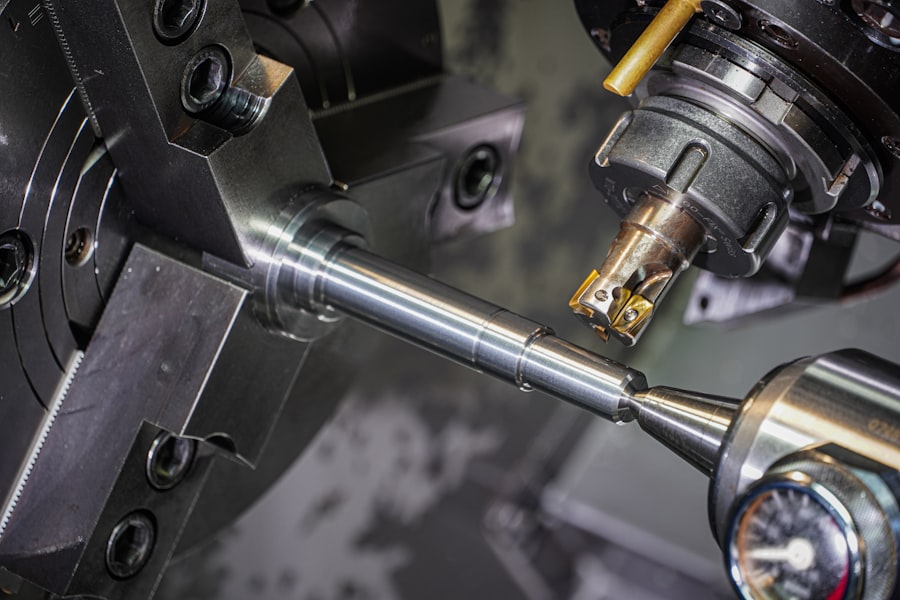
The raw data from a dynamic error mapping test resembles a complex weather report for your CNC machine – it’s a lot of information, and without the right tools, it can be overwhelming. The key is to translate this data into actionable insights that pinpoint the sources of flex.
Interpreting Geometric Deviation Plots
The output of dynamic error mapping software typically includes various plots and charts that visualize the machine’s errors. Understanding these visualizations is crucial for diagnosis.
- Vector Plots: These plots show the direction and magnitude of the error at specific points in the machine’s work envelope. A recurring pattern in the vector plot can indicate a systemic issue. For instance, if all vectors in a particular region point in the same direction, it suggests a consistent deflection.
- Contour Maps: Contour maps provide a color-coded representation of error magnitudes across the work envelope. Hot spots (areas of high error) immediately draw attention to potential problem areas.
- Error Component Graphs: These graphs break down the volumetric error into its constituent components (linear, straightness, angular). This allows for the isolation of specific types of flex. For example, a large straightness error on a particular axis is a clear indicator of an issue with that axis’s guideways or structural support.
Identifying Specific Error Sources from the Data
By correlating the observed error patterns with the machine’s mechanical characteristics, one can infer the most likely sources of flex.
- Axis-Specific Errors: If the error primarily manifests along the travel of a single axis, attention should be directed to the guideways, ball screw, and structural stiffness of that specific axis assembly. For example, consistently high straightness errors on the X-axis might point to worn X-axis guideways or a sag in the machine bed supporting the X-axis.
- Thermal-Related Errors: Errors that appear to grow or change systematically with temperature gradients or over extended periods of operation strongly suggest thermal expansion is a major contributor. The direction of the error might even correlate with the orientation of the heat source.
- Positional Dependencies and Load Magnification: Errors that become significantly larger when the machine is positioned in certain areas or under load indicate issues with structural stiffness or damping. This could be due to a flexure in the machine’s column or spindle head under cantilevered loads.
- Angular Errors and Squareness Issues: Pitch, yaw, and roll errors, or the non-perpendicularity between axes, often point to structural inaccuracies in how machine components are mounted or aligned. A machine that exhibits consistently poor squareness between the X and Y axes might have issues with the way the saddle is mounted to the column.
Strategies for Mitigating CNC Machine Flex
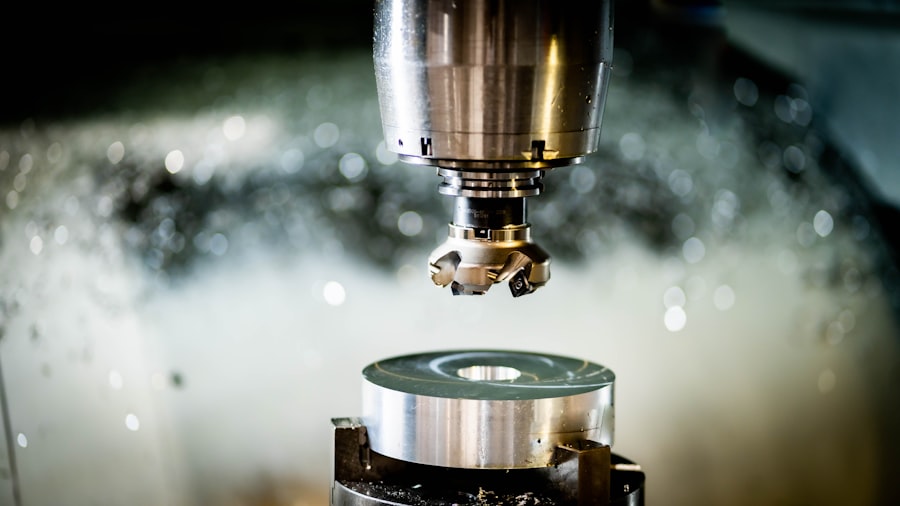
Once the sources of flex have been identified through dynamic error mapping, a targeted approach to correction and mitigation can be implemented. This often involves a combination of mechanical adjustments, environmental controls, and advanced compensation techniques.
Mechanical Adjustments and Component Repair
The most direct approach to addressing flex is to rectify the underlying mechanical issues.
- Guideway Resurfacing and Adjustment: For worn or damaged guideways, resurfacing and re-scraping, followed by proper adjustment of the guideway gibs or bearing preloads, can restore straightness and rigidity.
- Ball Screw and Bearing Replacement/Adjustment: Worn ball screws or bearings need to be replaced. If the issue is related to preload, adjustment or shimming might be necessary.
- Structural Reinforcement and Repair: In cases of significant structural weakness, reinforcement with additional bracing or repair of damaged weldments or castings might be required.
- Spindle and Turret Maintenance: Ensuring the spindle bearings are in good condition and the turret clamping mechanism is robust is critical, as these are often points of significant force application.
Environmental Control and Machine Mounting
Creating a stable and controlled environment can significantly reduce the impact of external factors on machine accuracy.
- Temperature Control: Implementing climate control within the production facility can minimize thermal expansion and contraction. This might involve air conditioning, heating, or insulation.
- Vibration Isolation: Using vibration-damping mounts or pads beneath the CNC machine can isolate it from external vibrations originating from the factory floor or other machinery.
- Foundation Stability: Ensuring the machine is mounted on a solid, level, and adequately engineered foundation is crucial. Regular checks of the foundation’s integrity are recommended.
- Warm-Up Procedures: Implementing robust machine warm-up procedures before critical machining operations can allow components to reach a stable operating temperature, minimizing thermal-induced errors.
Software-Based Error Compensation
Modern CNC controllers offer sophisticated error compensation capabilities that can actively counteract measured inaccuracies.
- Volumetric Error Compensation (VEC): This advanced compensation method uses the data from dynamic error mapping to create a 3D model of the machine’s errors. The controller then actively adjusts the commanded tool path in real-time to compensate for the measured deviations, effectively “straightening” the machine’s inherent flex.
- Linear and Angular Error Compensation: Simpler forms of compensation can address individual axis errors, such as straightness errors or squareness issues between axes, without requiring full volumetric mapping.
- Thermal Compensation: Some CNC systems can incorporate thermal sensors to monitor component temperatures and automatically adjust tool paths to compensate for expansion and contraction.
In the realm of advanced manufacturing, the concept of dynamic error mapping in CNC machines is gaining significant attention for its potential to enhance precision and efficiency. A related article discusses the implications of this technology on production workflows and its ability to adapt to real-time changes in machining conditions. For more insights on this topic, you can explore the article on dynamic error mapping and its impact on CNC machine flexibility. This innovative approach not only minimizes downtime but also ensures that the final products meet the highest quality standards.
Predictive Maintenance and Continuous Improvement
| Metric | Description | Typical Value | Unit | Measurement Method |
|---|---|---|---|---|
| Dynamic Error Magnitude | Maximum positional deviation due to machine flex during dynamic operation | 5-20 | micrometers (µm) | Laser interferometry during high-speed machining |
| Frequency Response | Frequency range over which error mapping is effective | 0-200 | Hz | Vibration analysis with accelerometers |
| Compensation Latency | Time delay between error detection and compensation application | 1-5 | milliseconds (ms) | Real-time CNC controller monitoring |
| Repeatability Improvement | Percentage reduction in positional error after dynamic error mapping | 30-70 | percent (%) | Comparative machining tests |
| Temperature Influence | Change in error magnitude due to thermal expansion | 0.5-2 | micrometers per °C (µm/°C) | Thermal chamber testing |
| Sensor Resolution | Minimum detectable error by sensors used in mapping | 0.1-0.5 | micrometers (µm) | Sensor datasheet specifications |
Dynamic error mapping is not a one-time fix but a valuable tool for establishing a proactive and continuous improvement approach to CNC machine maintenance.
Establishing Baseline Performance
The initial dynamic error mapping provides a baseline against which future performance can be measured. This baseline represents the machine’s optimal achievable accuracy in its current state.
- Benchmarking Machine Health: This baseline serves as a benchmark for evaluating the overall health and precision of the CNC machine. Any significant deviations from this baseline in subsequent measurements indicate a degradation in performance.
- Setting Performance Standards: The baseline data can be used to establish realistic performance standards for the machine, informing production planning and quality control.
Periodic Re-Mapping and Trend Analysis
Regularly scheduled re-mapping of the CNC machine allows for the detection of subtle changes in performance over time.
- Early Detection of Wear: By comparing current mapping data with the baseline, emerging issues such as bearing wear or guideway degradation can be detected long before they lead to significant production problems. This is akin to a doctor performing regular check-ups to catch health issues early.
- Trend Analysis of Error Progression: Tracking error trends over time can help predict potential future failures and schedule maintenance proactively, avoiding costly unplanned downtime. For example, if straightness errors on a particular axis are observed to be increasing at a predictable rate, you can plan for its maintenance before it causes scrap.
- Evaluating Maintenance Effectiveness: Re-mapping after maintenance interventions provides objective data on whether the repairs or adjustments were successful in restoring the machine’s accuracy.
Integrating Dynamic Mapping into the Maintenance Workflow
Incorporating dynamic error mapping as a standard part of the CNC machine maintenance workflow transforms reactive troubleshooting into a proactive strategy.
- Scheduled Maintenance Intervals: Establish regular intervals for dynamic error mapping, perhaps annually or semi-annually, depending on machine usage and criticality.
- Post-Repair Verification: Always perform a dynamic error mapping after significant mechanical repairs or adjustments to confirm the effectiveness of the work.
- Data Archiving and Management: Maintain a historical database of all error mapping data. This repository of information is invaluable for long-term trend analysis and for troubleshooting persistent issues.
- Training and Skill Development: Ensure that maintenance personnel are adequately trained in the operation of dynamic error mapping equipment and the interpretation of the resulting data.
By embracing dynamic error mapping, CNC machine operators and maintenance teams can move beyond guessing games and towards a data-driven approach to understanding and eliminating flex. This not only leads to superior part quality but also enhances machine reliability, reduces waste, and ultimately contributes to a more efficient and profitable manufacturing operation. The ghost in the machine is no longer a mystery; it’s a measurable entity that can be understood, mitigated, and controlled.
FAQs
What is dynamic error mapping in CNC machines?
Dynamic error mapping in CNC machines refers to the process of identifying and compensating for errors that occur during machine operation due to dynamic factors such as vibrations, thermal changes, and mechanical deflections. This technique helps improve machining accuracy by adjusting the machine’s control parameters in real-time.
Why is dynamic error mapping important for CNC machine flexibility?
Dynamic error mapping enhances CNC machine flexibility by allowing the machine to adapt to varying operational conditions and maintain precision. It enables the machine to handle complex tasks and different materials more effectively by minimizing errors caused by dynamic influences.
How is dynamic error mapping implemented in CNC machines?
Dynamic error mapping is typically implemented using sensors and measurement systems that monitor the machine’s behavior during operation. Data collected is analyzed to create error models, which are then used by the CNC controller to compensate for detected errors dynamically, ensuring higher accuracy.
What types of errors can dynamic error mapping correct in CNC machines?
Dynamic error mapping can correct various errors including thermal expansion, structural deflections, backlash, servo lag, and vibrations. By addressing these errors, the CNC machine can maintain tighter tolerances and improve overall machining quality.
Can dynamic error mapping improve the lifespan of a CNC machine?
While dynamic error mapping primarily focuses on improving machining accuracy, it can indirectly contribute to the machine’s lifespan by reducing mechanical stress and wear caused by compensating for errors. This leads to smoother operation and potentially less frequent maintenance requirements.