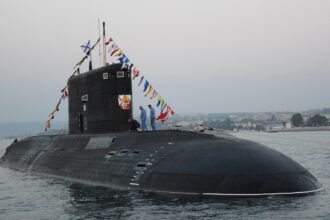
During the Cold War, the Soviet Union developed a substantial naval capability, with submarines becoming a central element of its military strategy. The Soviet submarine fleet expanded significantly, presenting operational challenges to U.S. naval forces and raising concerns about global security.
These submarines incorporated advanced technology and weapons systems, enabling them to operate with minimal detection and conduct strikes at considerable distances. Monitoring and tracking these vessels became a priority for U.S. military planners seeking to maintain naval dominance and protect national interests.
The Soviet submarine threat was demonstrated through documented incidents and military exercises that revealed the necessity for comprehensive surveillance systems. As Cold War tensions persisted, the U.S. Navy confronted an adversary with increasingly sophisticated capabilities.
The potential for naval conflict carried implications for broader military escalation, making it essential for U.S. defense strategists to develop effective countermeasures and maintain detailed knowledge of Soviet submarine operations and capabilities.
Key Takeaways
- The US employed a multi-faceted approach combining sonar, satellite, and airborne surveillance to track Soviet submarines.
- Advanced technologies like underwater drones and electronic warfare enhanced detection and monitoring capabilities.
- Collaboration with allied nations was crucial for effective tracking and intelligence sharing.
- Despite technological advances, challenges such as stealth capabilities and vast ocean areas limited tracking effectiveness.
- Future trends focus on integrating AI, improved sensors, and autonomous systems to enhance submarine surveillance.
Overview of US Surveillance Tactics
In response to the growing Soviet submarine threat, the United States developed a multifaceted approach to surveillance that combined various technologies and methodologies. This comprehensive strategy aimed to detect, track, and neutralize Soviet submarines before they could pose a significant risk to U.S. interests. The U.S. Navy employed a combination of surface ships, aircraft, and land-based systems to create a layered defense that could monitor vast expanses of ocean. One of the key components of U.S. surveillance tactics was the integration of intelligence gathering from multiple sources. This included signals intelligence (SIGINT), human intelligence (HUMINT), and imagery intelligence (IMINT). By synthesizing information from these diverse channels, U.S. military planners could develop a clearer picture of Soviet submarine movements and intentions. This holistic approach allowed for more effective decision-making and resource allocation in the face of an evolving threat. The documentary reveals the shocking story of a KGB mole who infiltrated the highest levels of government.
Sonar and Acoustic Detection Systems

Sonar technology played a pivotal role in the U.S. Navy’s efforts to detect and track Soviet submarines. The use of active and passive sonar systems enabled naval forces to listen for the sounds produced by submarines, such as engine noise or propeller cavitation.
Active sonar emits sound waves that bounce off objects in the water, while passive sonar relies on listening for sounds without emitting any signals, allowing for stealthier detection. The development of advanced sonar systems significantly enhanced the U.S. Navy’s capabilities in anti-submarine warfare (ASW).
These systems were deployed on surface ships, submarines, and aircraft, creating a comprehensive network of detection capabilities. The ability to triangulate sound sources allowed U.S. forces to pinpoint the location of enemy submarines with greater accuracy, thereby increasing the chances of successful engagement.
Satellite Tracking and Monitoring
As technology advanced, satellite tracking became an integral part of U.S. surveillance tactics for monitoring Soviet submarines. Satellites equipped with sophisticated sensors could detect changes in ocean temperature, surface movements, and even emissions from submarines operating near the surface.
This capability provided a strategic advantage by allowing for real-time monitoring of vast oceanic areas that were previously difficult to surveil. The use of satellites also facilitated the collection of data over long periods, enabling analysts to identify patterns in submarine movements and behaviors. By correlating satellite data with other intelligence sources, U.S.
military planners could develop predictive models that informed operational decisions. This integration of satellite technology into submarine tracking efforts marked a significant evolution in how naval forces approached maritime surveillance.
Underwater Drones and Remote Operated Vehicles
| Metric | Description | Value/Details |
|---|---|---|
| Number of SOSUS Arrays | Underwater hydrophone arrays deployed to detect Soviet submarines | Over 25 arrays deployed globally |
| Detection Range | Maximum effective range of SOSUS arrays for submarine detection | Up to 1,000 nautical miles |
| Frequency Range Monitored | Acoustic frequencies used to detect submarine noises | Low frequency, typically 10 Hz to 1 kHz |
| Number of Tracked Submarines | Estimated number of Soviet submarines tracked during Cold War | Hundreds annually |
| Time to Detection | Average time from submarine entering monitored area to detection | Minutes to hours depending on location |
| Use of Magnetic Anomaly Detection (MAD) | Technology used by aircraft to detect submarines | Deployed on P-3 Orion and other patrol aircraft |
| Number of Patrol Aircraft | Aircraft dedicated to anti-submarine warfare patrols | Over 200 P-3 Orions and other types during peak Cold War |
| Satellite Surveillance | Use of satellites to track submarine movements | Started in late 1970s with early reconnaissance satellites |
| Submarine Tracking Success Rate | Estimated percentage of Soviet submarines successfully tracked | Approximately 70-80% |
The advent of underwater drones and remotely operated vehicles (ROVs) further revolutionized submarine tracking capabilities for the U.S. Navy. These unmanned systems could be deployed to conduct reconnaissance missions in areas that were too dangerous or inaccessible for manned vessels.
Equipped with advanced sensors and cameras, underwater drones could gather critical intelligence on enemy submarine activities without revealing their presence. These technologies not only enhanced surveillance but also provided opportunities for more aggressive tactics in anti-submarine warfare. By utilizing ROVs to conduct underwater inspections or gather data on suspected submarine locations, U.S.
forces could maintain an edge over their adversaries. The flexibility and adaptability of these unmanned systems allowed for innovative approaches to tracking and monitoring Soviet submarines in real-time.
Airborne Surveillance and Reconnaissance

Airborne surveillance played a crucial role in the U.S. strategy for tracking Soviet submarines. Aircraft such as the P-3 Orion were specifically designed for anti-submarine warfare missions, equipped with advanced sensors and weapons systems tailored for detecting underwater threats.
These aircraft could cover large areas quickly, providing valuable intelligence on submarine movements. In addition to dedicated ASW aircraft, other reconnaissance planes contributed to the overall surveillance effort by gathering signals intelligence and imagery data from above. The combination of aerial reconnaissance with maritime operations created a comprehensive picture of Soviet submarine activities, allowing U.S.
forces to respond effectively to potential threats.
Submarine Tracking and Tailing
The practice of tracking and tailing Soviet submarines became a critical aspect of U.S. naval operations during the Cold War. Once a submarine was detected, U.S.
forces would often employ tactics to follow it closely without being detected themselves. This required a high level of skill and coordination among naval personnel, as maintaining stealth was essential to avoid alerting the enemy. Tailing operations involved not only tracking the submarine’s movements but also gathering intelligence on its capabilities and mission objectives.
By closely monitoring Soviet submarines, U.S. forces could gain insights into their operational patterns and potentially anticipate future actions. This intelligence was invaluable for informing strategic decisions at higher levels of command.
Electronic Warfare and Signal Intelligence
Electronic warfare (EW) emerged as another critical component of U.S. surveillance tactics against Soviet submarines. By employing sophisticated signal intelligence techniques, U.S.
forces could intercept communications between submarines and their command structures or detect radar emissions from enemy vessels. This information provided valuable insights into Soviet naval operations and intentions. The integration of electronic warfare capabilities into submarine tracking efforts allowed for more effective countermeasures against potential threats.
S. forces could create opportunities for engagement while minimizing their own vulnerabilities. This dynamic interplay between electronic warfare and traditional surveillance methods underscored the complexity of modern naval operations.
Cooperation with Allies in Tracking Soviet Subs
Recognizing that the Soviet submarine threat extended beyond its own borders, the United States sought to enhance cooperation with allied nations in tracking these underwater adversaries. Collaborative efforts with NATO allies and other partner nations facilitated information sharing and joint operations aimed at monitoring Soviet submarine activities in key maritime regions. This cooperation included joint exercises that allowed allied forces to practice anti-submarine warfare tactics together, fostering interoperability among different navies.
By pooling resources and expertise, the U.S. and its allies could create a more comprehensive surveillance network that increased the chances of detecting and countering Soviet submarines effectively.
Challenges and Limitations of Tracking Soviet Subs
Despite advancements in technology and tactics, tracking Soviet submarines presented numerous challenges for U.S. forces throughout the Cold War era. The vastness of the oceans made it difficult to maintain constant surveillance over all potential submarine operating areas.
Additionally, Soviet submarines employed counter-detection measures designed to evade sonar systems and other tracking technologies. Environmental factors also complicated detection efforts; ocean currents, temperature variations, and background noise could obscure signals or create false positives in sonar readings. These limitations necessitated continuous innovation in surveillance tactics as U.S.
forces adapted to an ever-evolving threat landscape.
Future Trends in US Surveillance Tactics for Submarine Tracking
Looking ahead, future trends in U.S. surveillance tactics for submarine tracking are likely to be shaped by advancements in technology and changes in geopolitical dynamics. The integration of artificial intelligence (AI) into surveillance systems may enhance data analysis capabilities, allowing for quicker identification of patterns in submarine movements and behaviors.
Moreover, as underwater warfare continues to evolve with new technologies such as autonomous underwater vehicles (AUVs) and advanced sensor networks, the U.S. Navy will need to adapt its strategies accordingly. Emphasizing collaboration with allies will remain crucial as global maritime security challenges persist, ensuring that collective efforts can effectively address emerging threats from adversarial submarine fleets.
In conclusion, the evolution of U.S. surveillance tactics against Soviet submarines reflects a complex interplay between technological advancements, strategic imperatives, and international cooperation. As new challenges arise in maritime security, the lessons learned from past experiences will inform future approaches to ensuring safety on the high seas.
During the Cold War, the United States employed various methods to track Soviet submarines, utilizing advanced technology and intelligence strategies. For a deeper understanding of the tactics and technologies used in this critical aspect of naval warfare, you can read more in the article available at this link. This article delves into the historical context and the evolution of submarine tracking techniques that shaped naval operations during that era.
WATCH THIS 🛑 SHOCKING: The KGB Mole Who Made Every Soviet Submarine Visible
FAQs
How did the US track Soviet submarines during the Cold War?
The US primarily used a combination of underwater listening devices, such as the SOSUS (Sound Surveillance System) network of hydrophone arrays, along with maritime patrol aircraft, submarines, and satellites to monitor Soviet submarine movements.
What was the SOSUS system?
SOSUS, or Sound Surveillance System, was a network of underwater hydrophone arrays placed on the ocean floor. It was designed to detect and track the acoustic signatures of Soviet submarines across vast ocean areas.
Why was tracking Soviet submarines important to the US?
Tracking Soviet submarines was crucial for national security and strategic deterrence. It allowed the US to monitor potential threats, maintain a strategic advantage, and ensure the safety of its own naval forces during the Cold War.
Did the US use satellites to track Soviet submarines?
Yes, the US employed reconnaissance satellites equipped with various sensors to gather intelligence on Soviet naval activities, including submarine deployments and movements.
Were US submarines involved in tracking Soviet submarines?
Yes, US attack submarines played a key role in tracking Soviet submarines by covertly following them and gathering intelligence on their operations and capabilities.
How effective was the US tracking of Soviet submarines?
The US tracking efforts were highly effective, providing critical intelligence that helped maintain strategic stability and informed US naval tactics and policies throughout the Cold War.
Did technological advancements improve US submarine tracking?
Absolutely. Advances in sonar technology, signal processing, and underwater surveillance systems significantly enhanced the US ability to detect and track Soviet submarines over time.
Was the tracking of Soviet submarines a secret operation?
Yes, much of the tracking and surveillance activities were classified and conducted covertly to avoid alerting the Soviet Union and to maintain the element of surprise.