During the Cold War, submarines became a central element of military strategy and international relations. The Soviet Union invested substantially in submarine development, recognizing the fleet as essential to its naval capabilities. Nuclear-powered submarines enabled the Soviet Union to maintain a continuous underwater presence and extend its operational range, challenging U.S.
naval dominance.
This underwater competition had significant strategic implications.
Submarines equipped with ballistic missiles could launch nuclear weapons from concealed underwater positions, creating a persistent threat to national security. The difficulty of detecting and tracking these vessels made conventional defense systems less effective. As Cold War tensions increased, monitoring and locating Soviet submarines became a critical priority for Western nations.
The potential consequences of failing to track these submarines were severe, as undetected vessels posed a direct risk of nuclear conflict. Consequently, the submarine threat represented both a military challenge and a major factor in Cold War geopolitics.
Key Takeaways
- US surveillance played a crucial role in monitoring Soviet submarine activities during the Cold War.
- Advanced technologies significantly enhanced the ability to track and detect Soviet subs underwater.
- The cat-and-mouse dynamic defined the ongoing struggle between US and Soviet submarine operations.
- Tracking Soviet submarines was strategically vital for maintaining global military balance and deterrence.
- Submarine tracking remains important today, reflecting its continued relevance in modern geopolitical security.
The Role of US Surveillance in Tracking Soviet Subs
In response to the growing submarine threat, the United States developed an extensive surveillance network aimed at tracking Soviet submarines. This network encompassed various technologies and methodologies, including aerial reconnaissance, satellite surveillance, and underwater listening devices. The U.S. Navy recognized that understanding the movements and capabilities of Soviet submarines was essential for maintaining a strategic advantage. Surveillance operations were conducted around the clock, employing a combination of human intelligence and advanced technology to gather data on Soviet naval activities. The role of surveillance was not limited to mere observation; it also involved analysis and interpretation of the collected data. Intelligence agencies worked tirelessly to assess the capabilities and intentions of Soviet submarines, providing critical insights that informed U.S. military strategy. The information gathered through surveillance efforts allowed U.S. forces to anticipate potential threats and respond accordingly. This proactive approach was crucial in a time when miscalculations could lead to dire consequences. As such, U.S. surveillance became an integral part of Cold War strategy, shaping military operations and diplomatic relations. The documentary reveals the shocking story of a hidden KGB mole within the intelligence agency.
Advanced Technologies Used in Tracking Soviet Subs

The technological advancements during the Cold War significantly enhanced the United States’ ability to track Soviet submarines. One of the most notable innovations was the development of sonar technology, which allowed for the detection of submarines through sound waves. Active sonar systems emitted sound pulses that bounced off objects in the water, while passive sonar systems listened for sounds made by submarines themselves.
This dual approach provided a comprehensive means of tracking underwater vessels, enabling U.S. forces to locate and monitor Soviet submarines effectively. In addition to sonar, satellite technology played a crucial role in surveillance efforts.
The deployment of reconnaissance satellites equipped with advanced imaging capabilities allowed for real-time monitoring of naval activities from space. These satellites could detect surface ships and even track submarine movements when they surfaced or operated near the surface. The integration of satellite data with traditional naval intelligence created a multi-faceted approach to submarine tracking that significantly improved situational awareness for U.S.
forces.
The Evolution of US Surveillance Techniques
As the Cold War progressed, U.S. surveillance techniques evolved in response to changing technologies and tactics employed by the Soviet Union. Initially reliant on surface ships and aircraft for reconnaissance, the United States began to incorporate more sophisticated methods as Soviet submarine technology advanced.
The introduction of nuclear-powered submarines necessitated a shift in strategy; these vessels could remain submerged for extended periods, making them harder to detect using conventional means. The evolution of surveillance techniques also included the development of specialized aircraft designed for anti-submarine warfare (ASW). Planes like the P-3 Orion were equipped with advanced sensors and weapons systems specifically tailored for tracking and engaging submarines.
These aircraft could cover vast areas of ocean and deploy sonobuoys—devices that detected underwater sounds—enhancing their ability to locate submerged threats. Over time, these advancements culminated in a comprehensive surveillance framework that combined aerial, satellite, and underwater capabilities, allowing for more effective monitoring of Soviet submarine activities.
The Cat-and-Mouse Game of Submarine Tracking
| Metric | Description | Value/Details |
|---|---|---|
| Number of SOSUS Arrays | Underwater hydrophone arrays deployed to detect Soviet submarines | Over 25 arrays along US and allied coastlines |
| Detection Range | Typical range at which Soviet submarines could be detected by SOSUS | Up to 1,000 nautical miles |
| Frequency Range Monitored | Acoustic frequencies used to detect submarine noises | Low frequency, typically 10 Hz to 1 kHz |
| Number of Submarines Tracked | Estimated number of Soviet submarines tracked during Cold War | Hundreds annually during peak periods |
| Time to Detect | Average time from submarine entering monitored area to detection | Minutes to hours depending on location and noise conditions |
| Use of Magnetic Anomaly Detection (MAD) | Aircraft-based detection method for Soviet submarines | Effective within a few hundred meters of submarine |
| Number of P-3 Orion Patrols | Maritime patrol aircraft missions to track Soviet submarines | Thousands annually during Cold War |
| Satellite Surveillance | Use of satellites to detect submarine activity | Limited but used for surface detection and tracking |
The dynamic between U.S. surveillance efforts and Soviet submarine operations resembled a high-stakes cat-and-mouse game. As U.S. forces developed new technologies and strategies for tracking submarines, the Soviet Union responded by enhancing its own countermeasures. This included employing tactics such as silent running—minimizing noise to evade detection—and utilizing decoys to confuse sonar systems. The constant back-and-forth between these two superpowers created an environment where innovation was essential for survival. This cat-and-mouse game extended beyond mere technological advancements; it also involved psychological warfare and strategic deception. Both sides engaged in operations designed to mislead or confuse their adversaries about their true capabilities and intentions. For instance, the Soviets might conduct feints or simulated operations to draw U.S. forces away from their actual objectives. In turn, U.S. intelligence would work diligently to decipher these tactics and anticipate Soviet moves, leading to an ongoing cycle of adaptation and counter-adaptation.
The Strategic Importance of Tracking Soviet Subs
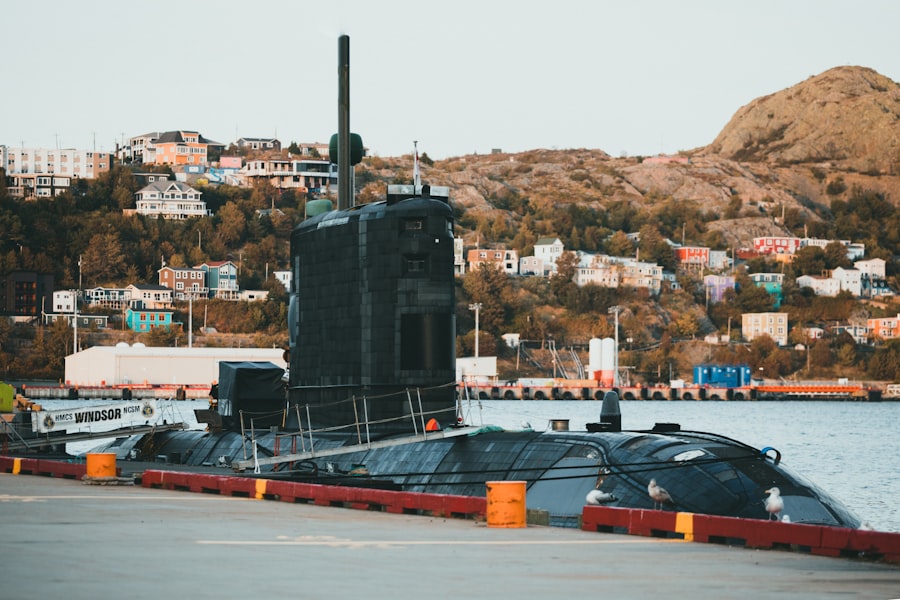
The strategic importance of tracking Soviet submarines cannot be overstated; it was a matter of national security that influenced military planning and diplomatic relations throughout the Cold War. The ability to monitor Soviet submarine movements provided critical insights into their operational readiness and potential aggressiveness. This information was vital for U.S.
military leaders as they formulated responses to perceived threats and developed contingency plans for various scenarios. Moreover, tracking Soviet submarines had implications beyond immediate military concerns; it also shaped international diplomacy. Knowledge of Soviet capabilities allowed U.S.
leaders to engage in negotiations from a position of strength, influencing arms control discussions and other diplomatic efforts aimed at reducing tensions between the superpowers. The ability to demonstrate awareness of Soviet submarine activities served as a deterrent against aggressive actions, reinforcing the notion that any hostile moves would be met with a well-informed response.
The Impact of US Surveillance on Soviet Submarine Operations
U.S. surveillance efforts had a profound impact on Soviet submarine operations throughout the Cold War. As American intelligence capabilities improved, Soviet commanders had to adapt their strategies to mitigate the risks posed by U.S.
tracking systems. This often meant altering patrol routes, employing more sophisticated evasion tactics, or investing in counter-surveillance technologies designed to confuse or mislead U.
forces.
The constant pressure exerted by U.S. surveillance also influenced the morale and operational effectiveness of Soviet submarine crews. Knowing that they were being monitored added an element of psychological stress that could affect decision-making in high-stakes situations.
Additionally, the need for secrecy and stealth often led to operational constraints that limited the effectiveness of Soviet submarines in certain scenarios.
The Key Players in US Submarine Tracking Operations
Numerous key players contributed to U.S. submarine tracking operations during the Cold War, each playing a vital role in ensuring national security. Intelligence agencies such as the National Security Agency (NSA) and the Central Intelligence Agency (CIA) were instrumental in gathering and analyzing data related to Soviet submarine activities.
Their expertise in signals intelligence (SIGINT) and human intelligence (HUMINT) provided critical insights that informed military strategy. Within the military itself, various branches collaborated on submarine tracking efforts. The U.S.
Navy’s anti-submarine warfare units worked closely with intelligence analysts to develop comprehensive assessments of Soviet capabilities and movements. Additionally, specialized training programs were established to prepare personnel for the unique challenges associated with submarine tracking, ensuring that those involved were equipped with the necessary skills and knowledge to succeed in this complex arena.
The Legacy of US Surveillance Secrets in Submarine Tracking
The legacy of U.S. surveillance secrets related to submarine tracking continues to resonate today, shaping both military strategy and international relations long after the Cold War ended. Many techniques developed during this period laid the groundwork for modern surveillance practices used by militaries around the world.
The emphasis on technological innovation and intelligence gathering remains relevant as nations navigate increasingly complex geopolitical landscapes. Moreover, revelations about past surveillance operations have sparked debates about transparency and accountability within intelligence agencies. As historical documents are declassified, insights into Cold War-era strategies provide valuable lessons for contemporary policymakers grappling with similar challenges in monitoring adversarial activities without escalating tensions.
The Challenges and Risks of Tracking Soviet Subs
Despite advancements in technology and intelligence capabilities, tracking Soviet submarines presented numerous challenges and risks throughout the Cold War era. The vastness of the oceans created significant obstacles for detection efforts; even with sophisticated sonar systems and satellite surveillance, locating a submerged submarine remained an arduous task fraught with uncertainty. Additionally, there were inherent risks associated with surveillance operations themselves.
Engaging in close monitoring of enemy vessels often required U.S. forces to operate within contested waters, exposing them to potential confrontation or miscalculation that could escalate into conflict. Balancing the need for vigilance with the imperative to avoid provocation was a constant challenge for military planners during this tense period.
The Continued Relevance of Submarine Tracking in Modern Geopolitics
In today’s geopolitical landscape, the relevance of submarine tracking remains pronounced as nations continue to invest in advanced naval capabilities. While the Cold War has ended, tensions between major powers persist, making effective monitoring of submarine activities crucial for national security. Modern submarines are equipped with cutting-edge technologies that enhance their stealth and strike capabilities, necessitating ongoing vigilance from rival nations.
Furthermore, as new players enter the global stage with emerging naval capabilities, traditional powers must adapt their surveillance strategies accordingly. The lessons learned from Cold War-era submarine tracking continue to inform contemporary military practices as nations grapple with evolving threats beneath the waves—underscoring that while technology may change, the fundamental need for effective surveillance remains constant in safeguarding national interests on a global scale.
During the Cold War, the United States employed various sophisticated methods to track Soviet submarines, including the use of advanced sonar technology and intelligence gathering. For a deeper understanding of the strategies and technologies involved in this critical aspect of naval warfare, you can read more in the article available at this link. This resource provides insights into the challenges faced by the US Navy and the innovative solutions developed to maintain a strategic advantage over Soviet forces.
WATCH THIS 🛑 SHOCKING: The KGB Mole Who Made Every Soviet Submarine Visible
FAQs
How did the US track Soviet submarines during the Cold War?
The US primarily used a combination of underwater listening devices, such as the SOSUS (Sound Surveillance System) network of hydrophone arrays, along with maritime patrol aircraft, submarines, and satellites to monitor Soviet submarine movements.
What was the SOSUS system?
SOSUS, or Sound Surveillance System, was a network of underwater hydrophone arrays placed on the ocean floor. It was designed to detect and track the acoustic signatures of Soviet submarines across vast ocean areas.
Why was tracking Soviet submarines important to the US?
Tracking Soviet submarines was crucial for maintaining strategic military advantage and ensuring national security. It helped the US monitor potential threats, prevent surprise attacks, and maintain deterrence during the Cold War.
Did the US use satellites to track Soviet submarines?
Yes, the US employed reconnaissance satellites equipped with various sensors to gather intelligence on Soviet naval activities, including submarine deployments, although underwater tracking primarily relied on acoustic methods.
Were US submarines involved in tracking Soviet submarines?
Yes, US attack submarines played a key role in tracking Soviet submarines by covertly following them and gathering intelligence on their movements and capabilities.
How effective was the US tracking of Soviet submarines?
The US tracking efforts were highly effective, providing critical intelligence that helped maintain strategic balance. However, the Soviets also developed countermeasures, making submarine detection a continuous technological challenge.
Did technological advancements improve US submarine tracking?
Absolutely. Advances in sonar technology, signal processing, and underwater sensors significantly enhanced the US ability to detect and track Soviet submarines over time.
Is the SOSUS system still in use today?
While the original SOSUS system has been largely declassified and repurposed, its technology and infrastructure have evolved and continue to support modern undersea surveillance efforts.