# Soviet Submarine Surveillance During the Cold War
The history of Soviet submarine surveillance reflects the intersection of military strategy, technological advancement, and Cold War tensions.
As East-West tensions increased, Western powers recognized the necessity of monitoring Soviet submarine activities to detect potential threats and maintain strategic equilibrium.
The United States and its allies implemented multiple surveillance approaches, including aerial reconnaissance missions and continuous naval patrols. Throughout the 1960s and 1970s, the expansion of the Soviet submarine fleet prompted corresponding advances in Western detection capabilities. Technological innovations, particularly sonar and radar systems, significantly improved submarine tracking accuracy.
The U.S. Navy substantially expanded its anti-submarine warfare (ASW) programs, which encompassed the deployment of specialized maritime patrol aircraft and surface vessels equipped for submarine detection and engagement. This era witnessed substantial tactical developments as both superpowers refined their operational methods in sustained underwater competition.
The documentary reveals the shocking story of a KGB mole who infiltrated the highest levels of government.
Key Takeaways
- Soviet submarine surveillance evolved significantly during the Cold War, driven by escalating tensions.
- Advances in sonar, satellite technology, and underwater listening devices enhanced tracking capabilities.
- Environmental factors and remote locations posed ongoing challenges to effective submarine detection.
- Western powers employed diverse strategies combining technology and intelligence to monitor Soviet submarines.
- Continuous innovation in surveillance technology remains crucial for national security and future submarine tracking.
The Technological Advances in Tracking Soviet Submarines
Technological advancements played a crucial role in enhancing the ability to track Soviet submarines throughout the Cold War. The development of sonar technology revolutionized underwater detection capabilities. Active sonar systems emitted sound waves that bounced off objects, allowing operators to determine their distance and size.
Conversely, passive sonar systems listened for sounds generated by submarines, such as engine noise or propeller cavitation. These innovations significantly improved the accuracy and reliability of submarine tracking. In addition to sonar, advancements in satellite technology also contributed to monitoring Soviet submarine activity.
The deployment of reconnaissance satellites equipped with high-resolution imaging capabilities allowed for real-time surveillance of naval bases and submarine launch facilities. These satellites could detect changes in activity levels, providing valuable intelligence on the operational status of the Soviet fleet. The integration of these technologies marked a turning point in submarine surveillance, enabling Western powers to maintain a strategic advantage over their adversaries.
The Vulnerability of Soviet Submarines to Sonar Detection
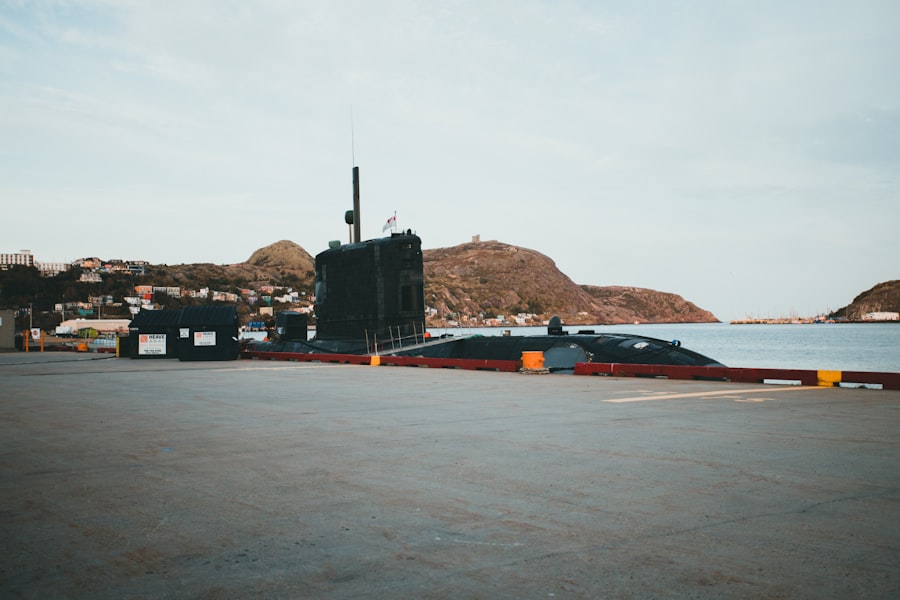
Despite their formidable capabilities, Soviet submarines were not impervious to detection. The design and operational characteristics of these vessels often made them vulnerable to sonar systems employed by Western navies. For instance, many Soviet submarines were built with relatively noisy propulsion systems, which could be easily detected by passive sonar arrays.
Additionally, the materials used in their construction did not always effectively dampen sound, further exacerbating their vulnerability. Moreover, the tactics employed by Soviet submarines sometimes contributed to their detection. While they were designed for stealth, operational requirements often necessitated that they operate at higher speeds or closer to the surface, increasing their acoustic signature.
This inherent trade-off between operational effectiveness and stealth created opportunities for Western forces to track and monitor their movements more effectively than anticipated.
The Role of Satellites in Monitoring Soviet Submarine Activity
Satellites emerged as a game-changing asset in the realm of submarine surveillance during the Cold War. Their ability to provide comprehensive coverage over vast oceanic expanses allowed intelligence agencies to monitor Soviet naval activities with unprecedented precision. Reconnaissance satellites equipped with synthetic aperture radar (SAR) could detect even minor changes in naval installations or track the movement of submarines from space.
This capability was instrumental in identifying patterns of behavior and assessing the readiness of the Soviet fleet. Furthermore, satellite technology facilitated communication between various branches of military intelligence. Data collected from satellite imagery could be rapidly disseminated to naval commanders and analysts, enabling timely decision-making in response to potential threats.
The integration of satellite surveillance into broader military strategies underscored its significance in maintaining situational awareness during a period marked by uncertainty and rivalry.
The Impact of Cold War Tensions on Soviet Submarine Surveillance
| Factor | Description | Impact on Tracking | Example/Metric |
|---|---|---|---|
| Noise Levels | Soviet submarines were generally noisier due to less advanced sound-dampening technology. | Increased acoustic signature made them easier to detect with sonar. | Noise levels up to 10-15 dB higher than Western counterparts. |
| Propulsion Systems | Use of less efficient and noisier propulsion systems, including older reactor designs. | Generated more mechanical noise and vibrations. | Older reactor models produced more coolant pump noise. |
| Hull Design | Less hydrodynamic hull shapes increased cavitation and flow noise. | Higher flow noise made detection by passive sonar easier. | Hull designs caused cavitation noise at speeds above 5 knots. |
| Sonar Countermeasures | Limited or less effective sonar countermeasures compared to NATO submarines. | Reduced ability to evade sonar detection. | Fewer decoys and noise makers deployed. |
| Operational Tactics | Submarines often operated in predictable patrol areas and patterns. | Made it easier for NATO forces to anticipate and track movements. | Patrol routes frequently near known chokepoints like GIUK gap. |
The Cold War created an environment rife with suspicion and competition, significantly influencing the dynamics of submarine surveillance. As both superpowers sought to assert their dominance on the global stage, the stakes associated with monitoring each other’s naval capabilities escalated dramatically. The fear of surprise attacks or miscalculations led to an arms race that extended into underwater warfare, prompting both sides to invest heavily in surveillance technologies.
This atmosphere of tension also fostered a culture of secrecy and deception within the Soviet Union. In response to Western surveillance efforts, Soviet naval strategists developed countermeasures aimed at evading detection. These included employing decoys, utilizing advanced camouflage techniques, and conducting operations in less predictable patterns.
Such tactics not only complicated Western surveillance efforts but also underscored the lengths to which both sides would go to protect their strategic assets.
The Environmental Factors Affecting Soviet Submarine Tracking
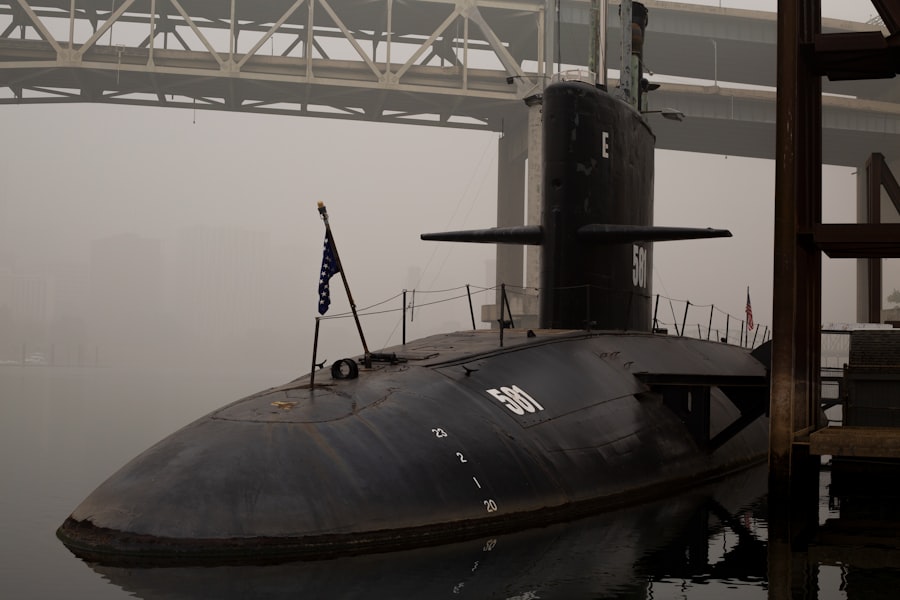
Environmental factors played a significant role in shaping the effectiveness of submarine tracking efforts during the Cold War. Oceanographic conditions such as temperature gradients, salinity levels, and underwater topography could all influence sonar performance. For instance, sound travels differently through varying water temperatures; thus, changes in ocean conditions could create “acoustic shadows” where submarines could operate undetected.
Additionally, seasonal variations affected visibility and detection capabilities. In polar regions, ice cover could hinder aerial reconnaissance and limit access for surface vessels tasked with monitoring submarine activity. Similarly, rough seas or adverse weather conditions could disrupt sonar operations and complicate tracking efforts.
Understanding these environmental variables became essential for intelligence agencies seeking to optimize their surveillance strategies.
The Use of Underwater Listening Devices to Monitor Soviet Submarine Movements
Underwater listening devices emerged as a critical tool for monitoring Soviet submarine movements during the Cold War. These devices, known as hydrophones, were deployed across vast oceanic expanses to capture sounds generated by submarines operating beneath the surface. By strategically placing hydrophone arrays along key maritime routes, Western powers could create a comprehensive acoustic picture of submarine activity.
The effectiveness of these underwater listening devices was further enhanced by advancements in signal processing technology. Analysts could filter out background noise and focus on specific frequencies associated with submarine operations, allowing for more accurate identification and tracking. This capability proved invaluable in detecting not only active submarines but also those attempting to operate stealthily.
The Challenges of Tracking Soviet Submarines in Remote Locations
Tracking Soviet submarines presented unique challenges, particularly in remote locations where access was limited. Vast stretches of ocean remained largely unmonitored due to logistical constraints and the sheer scale of maritime territory involved. In these areas, traditional surveillance methods such as aerial reconnaissance or surface patrols became less effective.
Moreover, the strategic importance of remote locations often meant that Soviet submarines would operate there with greater frequency. These regions could serve as launch points for missile strikes or as hiding spots for submarines seeking to evade detection.
The Strategies Used by Western Powers to Monitor Soviet Submarine Activity
In response to the challenges posed by Soviet submarine operations, Western powers employed a range of strategies designed to enhance their monitoring capabilities. One key approach involved establishing a network of intelligence-sharing agreements among allied nations. By pooling resources and expertise, countries such as the United States, Canada, and NATO allies could create a more comprehensive picture of Soviet naval activities.
Additionally, Western navies invested heavily in developing specialized anti-submarine warfare units equipped with advanced technologies. These units were trained to conduct coordinated operations involving surface ships, submarines, and aircraft to detect and engage potential threats effectively. Exercises simulating real-world scenarios allowed these forces to refine their tactics and improve their overall readiness in confronting Soviet submarine activity.
The Importance of Monitoring Soviet Submarines for National Security
The significance of monitoring Soviet submarines extended beyond mere military strategy; it was fundamentally tied to national security concerns during the Cold War era. The potential for nuclear conflict loomed large over international relations, making it imperative for Western powers to maintain situational awareness regarding Soviet naval capabilities. Understanding the movements and readiness of Soviet submarines was crucial for preventing miscalculations that could escalate into catastrophic confrontations.
Moreover, effective surveillance contributed to deterrence strategies aimed at dissuading aggressive actions by adversaries. By demonstrating an ability to track and respond to potential threats posed by Soviet submarines, Western powers sought to reinforce their credibility on the global stage. This dynamic underscored how submarine surveillance was not merely an operational necessity but also a vital component of broader geopolitical strategies during a period defined by ideological rivalry.
The Future of Surveillance Technology in Tracking Soviet Submarines
As technology continues to evolve at an unprecedented pace, the future of surveillance technology in tracking submarines promises exciting developments. Innovations such as artificial intelligence (AI) and machine learning are poised to revolutionize data analysis capabilities within military intelligence agencies. These technologies can enhance pattern recognition and predictive analytics, allowing analysts to identify potential threats more efficiently than ever before.
Furthermore, advancements in unmanned underwater vehicles (UUVs) are likely to play a significant role in future submarine surveillance efforts. These autonomous systems can operate in challenging environments where human presence may be limited or risky. Equipped with advanced sensors and communication systems, UUVs can gather critical intelligence on submarine movements while minimizing risks associated with traditional manned operations.
In conclusion, the history of Soviet submarine surveillance reflects a dynamic interplay between technological innovation and geopolitical strategy throughout the Cold War era. As nations continue to navigate complex security landscapes today, lessons learned from past experiences will undoubtedly inform future approaches to monitoring underwater threats on a global scale.
Soviet submarines, despite their advanced technology, were often easily tracked due to a combination of design flaws and operational practices. Factors such as noise generated by their propulsion systems and the use of outdated stealth techniques contributed to their detectability. For a deeper understanding of the challenges faced by Soviet submarines during the Cold War, you can read more in this related article on the topic: In the War Room.
WATCH THIS 🛑 SHOCKING: The KGB Mole Who Made Every Soviet Submarine Visible
FAQs
Why were Soviet submarines easily tracked during the Cold War?
Soviet submarines were often easily tracked due to their relatively noisy propulsion systems, less advanced stealth technology compared to Western submarines, and predictable operational patterns. Their diesel-electric and early nuclear submarines emitted more detectable acoustic signatures, making them easier targets for Western sonar and anti-submarine warfare (ASW) efforts.
What technological limitations contributed to the detectability of Soviet submarines?
Soviet submarines had less sophisticated noise reduction technologies, such as less effective sound-isolating machinery mounts and noisier propellers. Additionally, their hull designs and onboard equipment generated more noise, which increased their acoustic signature and made them more detectable by passive sonar systems.
How did Western navies track Soviet submarines?
Western navies used a combination of passive and active sonar systems, underwater listening arrays like the U.S. SOSUS (Sound Surveillance System), maritime patrol aircraft, and surface ships equipped with advanced ASW sensors. These tools exploited the acoustic emissions and operational patterns of Soviet submarines to track their movements.
Did Soviet submarine design improve over time to reduce detectability?
Yes, over time, the Soviet Union developed quieter submarine classes with improved hull designs, better sound insulation, and more advanced propulsion systems. However, early and mid-Cold War-era submarines remained relatively noisy compared to their Western counterparts, which contributed to their easier tracking.
Were operational tactics a factor in the ease of tracking Soviet submarines?
Yes, Soviet submarines often followed predictable patrol routes and operational patterns, which made it easier for Western forces to anticipate their locations. Additionally, limitations in Soviet communication and navigation technology sometimes forced submarines to surface or use radio transmissions, increasing their detectability.
What role did intelligence and espionage play in tracking Soviet submarines?
Intelligence gathering, including signals intelligence (SIGINT) and espionage, provided Western navies with valuable information about Soviet submarine capabilities, patrol areas, and operational procedures. This intelligence helped improve tracking methods and ASW strategies against Soviet submarines.
How did the noise levels of Soviet nuclear submarines compare to those of Western submarines?
Early Soviet nuclear submarines were generally noisier than their Western counterparts due to less advanced reactor and machinery noise reduction technologies. This higher noise level made them more susceptible to detection by Western sonar systems, although later Soviet designs made significant improvements in stealth.