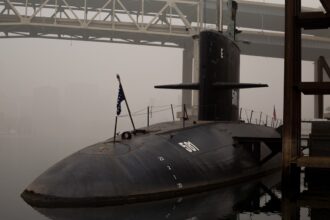
The United States, through a clandestine operation codenamed Project LARIAT, once undertook an audacious endeavor to tap into the Soviet Union’s most vital communication arteries. This was not a war fought with missiles and tanks, but a silent battle waged in the depths of the ocean, a digital duel where microphones became sabers and undersea cables, the vital veins of an enemy state. The success of this mission, shrouded in secrecy for decades, offers a fascinating glimpse into the intelligence-gathering capabilities of the Cold War era and the lengths to which nations would go to possess vital information.
The genesis of Project LARIAT can be traced back to the pervasive atmosphere of suspicion and the escalating technological arms race characteristic of the Cold War. Both the United States and the Soviet Union were acutely aware of the strategic importance of unhindered communication. For the Soviets, their vast territorial expanse necessitated a robust and centralized communication network, heavily reliant on undersea cables. These cables, like the nervous system of a colossal organism, transmitted everything from military directives to economic data. For the U.S. intelligence community, gaining access to this flow of information was akin to possessing a direct hotline to the enemy’s mind.
The Imperative for Intelligence
The need for real-time intelligence on Soviet intentions was paramount. The Cuban Missile Crisis had vividly demonstrated the potential for catastrophic miscalculation. Knowing what Moscow was saying to its allies and its own military installations could provide invaluable foresight and de-escalation opportunities. Furthermore, understanding Soviet economic planning and technological advancements offered a significant strategic advantage. The intelligence gathered was not merely for curiosity; it was a shield against potential aggression and a blueprint for strategic planning.
Early Technological Hurdles
The sheer technical complexity of intercepting undersea cables presented a formidable challenge. These cables lay at immense depths, often miles beneath the ocean’s surface, in environments characterized by crushing pressure and perpetual darkness. Traditional methods of interception were rendered useless. Developing technology capable of operating with precision in such harsh conditions was a monumental undertaking, requiring innovation at the very frontiers of engineering and material science.
In exploring the intricate world of espionage during the Cold War, the article “How the US Tapped Soviet Cables” provides a fascinating insight into the technological advancements and covert operations that shaped intelligence gathering. For a deeper understanding of the broader implications of such tactics, you can read a related article that delves into the evolution of surveillance techniques and their impact on international relations at In the War Room. This resource offers valuable context and analysis that complements the discussion on the US’s strategic maneuvers against the Soviet Union.
The Ingenuity of the ‘Monster’: Designing the Tap
The core of Project LARIAT was the development of a sophisticated interception device, affectionately nicknamed “the monster” by its creators. This device was not a mere listening post; it was a marvel of engineering designed to attach to an active Soviet undersea cable, siphon off its data, and transmit it back to waiting U.S. listening stations without physically severing the connection or triggering alarms.
The Submersible ‘Monster’
This “monster” was a large, intricate piece of machinery, a complex assemblage of electronic components encased in a robust, pressure-resistant shell. The challenge was to create a device that could be deployed from a submarine, maneuvered with extreme precision, and then clamped onto a cable moving at considerable speed. The design had to account for ocean currents, the unpredictable nature of the seabed, and the need for silent, unobtrusive operation.
The Art of Passive Interception
The key to the operation’s success lay in the “passive interception” approach. Instead of physically cutting into the cable, which would have been easily detectable, the engineers devised a method to induce a small electromagnetic field around the cable. This field could then be “read” by specialized sensors within the tap, allowing the detection and transcription of the electrical signals carrying the data. This was akin to picking a lock by sensing the tumblers’ clicks, rather than breaking the door down. Imagine a skilled eavesdropper not bursting into a room, but listening intently through a thin wall.
The Silent Deployment: A Dance with the Depths
The deployment of the “monster” was as critical as its design. This phase of Project LARIAT was a ballet performed in the unforgiving arena of the deep ocean, a choreography of submarines, specialized equipment, and unparalleled navigation. The target cables were often located in international waters, but close enough to Soviet shores to be considered within their sphere of influence.
Submarine as a Stealthy Mother Ship
The primary platform for deployment was a highly modified U.S. submarine. These vessels were equipped with advanced sonar systems to navigate the treacherous depths and locate the target cables. They also carried the “monster” device, along with robotic arms and other specialized tools necessary for its attachment. The submarine’s ability to remain submerged for extended periods and operate with minimal acoustic signature was crucial to avoiding detection by Soviet naval forces.
Precision Engineering in Action
Once a target cable was located, the submarine would maneuver into position. The “monster” would then be carefully lowered into the water, guided by the submarine’s systems and often by remote-controlled vehicles. The process of attaching the device to the moving cable required immense skill and precision, akin to threading a needle in a hurricane. Any miscalculation could result in the loss of the entire device or, worse, detection and the immediate termination of the operation.
The Prize and the Perils: What Was Gained and What Was Risked
The successful attachment of the “monster” opened a direct channel to vital Soviet communications. The data siphoned off offered a treasure trove of intelligence, but the operation itself was fraught with extreme risk. The stakes were astronomically high, with the potential for international incident and dire consequences should the operation be compromised.
Unveiling Soviet Secrets
The intelligence gleaned from Project LARIAT was multifaceted. It provided unprecedented insight into Soviet military planning, including troop movements, weapons development, and strategic intentions. Economic data revealed the strengths and weaknesses of the Soviet economy, influencing U.S. trade policies and economic warfare strategies. Diplomatic communications offered a clearer understanding of Soviet foreign policy objectives and their relationships with other nations. This information was a powerful weapon in the Cold War arsenal, allowing the U.S. to anticipate and counter Soviet actions.
The Ever-Present Threat of Discovery
The primary peril was discovery. If the Soviets detected the tap, they could trace it back to the U.S. submarine and the broader operation. This would have been a major international incident, potentially escalating tensions to a dangerous level. The Soviets also possessed advanced anti-submarine warfare capabilities, and the presence of a U.S. submarine in close proximity to their vital communication infrastructure could have been interpreted as an act of aggression. The operators of the “monster” were constantly aware of this threat, pushing the boundaries of stealth and technical ingenuity.
The Moral Compass of Espionage
Beyond the immediate physical and political risks, the operation also raised ethical questions inherent in espionage. The act of clandestine interception, while arguably justified by the perceived threat, remains a morally ambiguous domain. The decision to undertake such an operation involves weighing national security interests against principles of sovereignty and privacy, even when applied to an adversary.
In exploring the intricate methods employed by the US to tap into Soviet cables, one can gain further insights by reading a related article that delves into the broader implications of espionage during the Cold War. This piece not only highlights the technological advancements used in surveillance but also examines the geopolitical ramifications of such actions. For a deeper understanding of these historical events, you can check out this informative article here.
The Legacy of the ‘Monster’: A Silent Victory
| Metric | Details |
|---|---|
| Operation Name | Operation Ivy Bells |
| Time Period | 1970s to early 1980s |
| Location | Bering Strait, Soviet Union |
| Target | Undersea Soviet military communication cables |
| Method | Underwater tapping device installed on cables |
| US Agency Involved | National Security Agency (NSA) |
| Duration of Tap | Several years before discovery |
| Discovery | Compromised by a Soviet mole in the US Navy |
| Impact | Provided valuable intelligence on Soviet military communications |
Project LARIAT, despite its secrecy, represents a significant achievement in intelligence gathering. Its success, revealed only years later through declassified documents, underscores the innovative spirit and technical prowess of the U.S. intelligence community during the Cold War. The “monster” and the operation it enabled served as a crucial intelligence asset, contributing to the strategic equilibrium and ultimately, some argue, to the eventual unraveling of the Soviet Union.
A Foundation for Future Operations
The technologies and methodologies developed for Project LARIAT laid the groundwork for subsequent generations of undersea surveillance. The lessons learned about operating in extreme environments and intercepting complex digital signals informed the design of future intelligence-gathering platforms and techniques. The “monster” was not just a tool for its time; it was an evolutionary leap.
The Hidden Cost of National Security
The story of Project LARIAT serves as a potent reminder of the hidden costs associated with national security. While the public often sees the overt manifestations of conflict, there exists a shadowy world of clandestine operations, where individuals and technologies operate on the fringes of possibility. The success of such operations often comes at the expense of immense personal risk for those involved and raises important questions about the ethical boundaries of intelligence gathering.
The Ever-Evolving Landscape of Espionage
In today’s hyper-connected world, the nature of espionage continues to evolve. While the challenges of accessing physical infrastructure like undersea cables still exist, the digital realm offers new frontiers for information gathering. Nevertheless, the ingenuity displayed in operations like Project LARIAT serves as a testament to the enduring human drive to seek knowledge and the lengths to which nations will go to protect their interests in a complex and often dangerous global landscape. The echoes of the “monster” from the ocean depths continue to whisper through the annals of intelligence history.
FAQs
What was the purpose of the US tapping Soviet cables?
The US tapped Soviet cables to gather intelligence during the Cold War, aiming to monitor Soviet communications and gain strategic advantages.
How did the US physically tap into Soviet communication cables?
The US used underwater tapping devices, often installed on undersea communication cables, to intercept and record Soviet transmissions without detection.
When did the US conduct these cable tapping operations?
These operations primarily took place during the Cold War era, particularly from the 1950s through the 1980s.
What kind of information did the US obtain from tapping Soviet cables?
The US obtained military, political, and diplomatic communications, which helped in understanding Soviet intentions, capabilities, and strategies.
Were these cable tapping activities publicly known at the time?
No, these activities were highly classified and remained secret for many years, only becoming publicly known through declassified documents and investigative reports decades later.