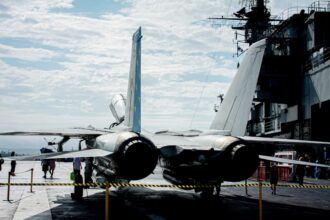
The United States Navy, once the undisputed colossus of global maritime power, finds itself in an era of reevaluation. While its sheer size and technological sophistication remain impressive, persistent questions are being raised about its true effectiveness and sustainability on the contemporary world stage. The narrative of an invincible naval force is increasingly being challenged by both external adversaries and internal assessments, painting a complex picture of strengths, weaknesses, and evolving threats that demand a sober and critical examination.
The perception of American naval supremacy, a cornerstone of its post-World War II foreign policy, is no longer as unassailable as it once appeared. While the US Navy boasts the largest operational fleet by tonnage and the most technologically advanced vessels, the global landscape has dramatically transformed. Nations, particularly China, have invested heavily in their own naval capabilities, developing sophisticated anti-access/area denial (A2/AD) strategies designed to counter American advantages.
The Rise of Peer Competitors: Not Just a ‘Third World Navy’ Anymore
For decades, the US Navy operated with a qualitative and quantitative edge that few, if any, rivals could approach. This allowed it to project power unilaterally and with relative impunity. However, the rapid modernization of the People’s Liberation Army Navy (PLAN) has fundamentally altered this equation. China’s investment in aircraft carriers, advanced submarines, guided-missile destroyers, and a burgeoning domestic shipbuilding industry has created a credible peer competitor. This isn’t a scenario of deterring smaller, less capable navies; it’s a confrontation with a power that can, in certain operational contexts, challenge American naval operations. The implications for freedom of navigation, power projection, and the overall balance of power are profound.
The ‘Fleet in Being’ Paradox: More Ships, Less Ready?
While the US Navy’s official ship count remains substantial, concerns are mounting about the readiness and operational availability of its fleet. Aging vessels, protracted maintenance cycles, and budget constraints have led to a situation where a significant portion of the fleet may not be combat-ready at any given time. This “fleet in being” paradox, where a large number of hulls exist but are not immediately deployable, can create a false sense of security and limit the Navy’s ability to respond swiftly to emerging crises. The focus on maintaining a high number of hulls can sometimes overshadow the critical need for well-maintained, properly crewed, and strategically positioned assets.
In exploring the notion of the US Navy as a “paper tiger,” it is essential to consider various perspectives on military readiness and capability. A related article that delves into this topic is available at In the War Room, where it discusses the implications of naval power in contemporary geopolitical conflicts and the challenges faced by the US Navy in maintaining its dominance on the high seas. This analysis provides valuable insights into the complexities of military strategy and the perception of strength in modern warfare.
The A2/AD Dilemma: Chinks in the Armored Hull
The most significant challenge to the US Navy’s global posture comes from the development and proliferation of A2/AD capabilities. These systems are specifically designed to make it difficult, if not impossible, for adversaries to operate within certain geographic areas. For an island-centric navy like the US, operating in contested waters, these anti-access systems represent a direct and existential threat.
The Tyranny of Distance and Precision: A New Kind of Warfare
Modern A2/AD environments are characterized by advanced surveillance, reconnaissance, and precision-guided munitions. Long-range ballistic and cruise missiles, coupled with sophisticated sensor networks, can hold American naval assets at risk from extended ranges. This forces the US Navy to operate at greater distances from its objectives, diminishing its ability to exert influence and potentially increasing the vulnerability of its support infrastructure. The traditional advantage of carrier strike groups operating within striking distance of a target may no longer be a safe proposition.
The Vulnerability of the Carrier Strike Group: A High-Value, High-Risk Target
The aircraft carrier, the symbol of American naval power, is also a colossal and expensive target. In an A2/AD environment, it becomes a prime objective for adversaries seeking to cripple American power projection capabilities. While carriers are defended by an array of escort ships, the sheer volume and sophistication of potential threats raise serious questions about their survivability. The concept of “carrier killer” missiles, once a theoretical concern, is now a tangible reality. The decision of where and how to employ these capital ships becomes a far more agonizing calculus.
The Submarine Advantage: A Fading Pearl?

Submarines have long been a critical component of the US Navy’s strategic deterrence and intelligence-gathering capabilities. The silent service, with its stealthy and potent attack submarines, has historically held a significant advantage over its adversaries. However, this advantage is also facing new pressures.
The Maturation of Sonar and Detection: No Longer Truly Invisible?
While submarines remain inherently difficult to detect, advancements in sonar technology, underwater surveillance systems, and even artificial intelligence are making it more challenging for them to operate with absolute impunity. Adversaries are investing in their own submarine fleets and developing more sophisticated methods for tracking and identifying underwater threats. The once-near-perfect invisibility of American submarines may be slowly eroding, particularly in strategically important regions.
The Cost and Complexity of Submarine Warfare: A Growing Burden
The construction, maintenance, and operational costs of modern nuclear-powered submarines are astronomical. This places a significant financial burden on the US Navy’s budget, potentially at the expense of other critical platforms and capabilities. Furthermore, the complexity of operating and maintaining these advanced vessels requires highly skilled personnel, creating another bottleneck in rapid fleet expansion or deployment.
The Human Element: Personnel Challenges and Deployments

Beyond the hardware, the efficacy of any military force is intrinsically linked to its human personnel. The US Navy, despite its technological edge, is grappling with significant challenges related to its workforce, leading to questions about its long-term operational capacity.
The Strain of Continuous Deployments: Burnout and Retention Issues
The global security environment necessitates a high tempo of operations for the US Navy. This often translates into extended and frequent deployments for sailors, leading to burnout, family strain, and potentially lower morale. The challenges of retaining experienced personnel in a competitive civilian job market are exacerbated by these demanding operational cycles. A highly skilled and motivated crew is as vital as any advanced weapon system.
The Growing Shadow of Sailors’ Mental Health: A Silent Crisis
The psychological toll of prolonged deployments, constant readiness, and the inherent stresses of naval service is a growing concern. Mental health challenges among naval personnel can impact overall readiness and effectiveness. Addressing these issues requires sustained investment in mental health resources and support systems, which may not always be prioritized within budget allocations.
In exploring the concept of the US Navy being perceived as a paper tiger, one can gain further insights from a related article that delves into the challenges and limitations faced by modern naval forces. This article highlights the evolving nature of maritime warfare and the implications for national security. For a deeper understanding of these dynamics, you can read more about it in this in-depth analysis.
The Procurement Puzzle: Antiquated Systems and Future Needs
| Reasons | Explanation |
|---|---|
| Lack of modernization | The US Navy has been slow to modernize its fleet, leading to outdated technology and capabilities. |
| Budget constraints | Budget limitations have hindered the Navy’s ability to maintain and upgrade its equipment and infrastructure. |
| Personnel shortages | The Navy has faced challenges in recruiting and retaining skilled personnel, impacting its operational effectiveness. |
| Maintenance issues | Insufficient maintenance has resulted in a decline in the overall readiness and reliability of the Navy’s assets. |
| Strategic missteps | The Navy’s strategic decisions and deployments have been criticized for being ineffective or misguided. |
The procurement processes for naval vessels are notoriously complex, time-consuming, and expensive. This has led to a situation where the US Navy often acquires new platforms years, even decades, after their initial concept emerged, and often with significant cost overruns. This can result in the fielding of advanced technologies on platforms that are already aging by the time they enter service.
The Pitfalls of Legacy Platforms: Modernizing the Outdated
The US Navy continues to rely on a significant number of legacy platforms, many of which were designed and built in the latter half of the 20th century. While some have undergone modernization, others are reaching the end of their operational lifespans. Replacing these aging vessels with entirely new, state-of-the-art platforms is an immense undertaking, both financially and logistically. This can create a persistent gap between current capabilities and future threats.
The ‘Death Spiral’ of Naval Shipbuilding: Cost Overruns and Delays
The shipbuilding industry, both domestically and internationally, has faced its own set of challenges, including cost overruns, labor shortages, and supply chain disruptions. This has contributed to the “death spiral” phenomenon where the cost of building fewer ships continues to escalate, making it increasingly difficult to maintain the desired fleet size and technological edge. The acquisition of new vessels becomes an economic juggernaut, often straining shipbuilding capacity and leading to further delays.
In conclusion, while the United States Navy remains a formidable military force with unparalleled global reach and technological prowess, the assertion that it is a “paper tiger” on the world stage, though hyperbolic, highlights genuine and complex challenges. The erosion of its unchallenged dominance, the rise of sophisticated peer competitors employing potent A2/AD strategies, the evolving nature of submarine warfare, persistent personnel challenges, and the intricate web of naval procurement all contribute to a narrative of adaptation and reevaluation. The Navy’s future effectiveness will hinge on its ability to navigate these complex realities, make difficult strategic choices, and adapt to a world where naval power is no longer a unilateral prerogative but a dynamic and contested domain. Ignoring these evolving threats and challenges would indeed relegate even the most powerful navy to mere paper strength, impressive in appearance but lacking the true teeth for sustained global influence.
FAQs
What is the US Navy’s current fleet size and capabilities?
The US Navy currently has a fleet size of over 300 ships, including aircraft carriers, submarines, destroyers, and other support vessels. It also has a significant number of aircraft and personnel, making it one of the most powerful naval forces in the world.
What are some criticisms of the US Navy’s effectiveness?
Some critics argue that the US Navy is a “paper tiger” due to its over-reliance on expensive and vulnerable aircraft carriers, as well as its lack of investment in smaller, more agile ships and anti-ship missile defense systems. Additionally, budget constraints and maintenance issues have raised concerns about the readiness of the fleet.
How does the US Navy compare to other naval forces around the world?
The US Navy is still considered the most powerful naval force in the world, with unmatched capabilities in terms of aircraft carriers, submarines, and overall firepower. However, other countries, such as China and Russia, have been investing heavily in their naval capabilities, leading to concerns about potential challenges to US naval dominance in the future.
What are some recent developments or incidents that have raised questions about the US Navy’s effectiveness?
Recent incidents, such as collisions involving US Navy ships in the Pacific, have raised questions about the readiness and training of the Navy’s personnel. Additionally, the increasing assertiveness of countries like China in the South China Sea has led to discussions about the US Navy’s ability to effectively counter such actions.
What is the US Navy doing to address these criticisms and challenges?
The US Navy has been working on modernizing its fleet, investing in new technologies such as unmanned systems and hypersonic weapons. It has also been conducting joint exercises with allies and partners to enhance interoperability and strengthen its presence in key strategic regions. Additionally, there have been efforts to improve training and maintenance practices to ensure the readiness of the fleet.