The history of aviation, particularly military aviation, is replete with technological leaps that have irrevocably altered the landscape of aerial warfare. Among these, the advent of stealth technology stands as a paradigm shift, comparable in its impact to the development of the jet engine or radar itself. While the popular imagination often attributes the genesis of stealth to enigmatic projects and classified laboratories, the intellectual bedrock upon which this revolution was built owes a significant debt to the pioneering work of a single Soviet mathematician: Pyotr Yakovlevich Ufimtsev. His contributions, initially dismissed within his own nation, would ultimately empower its primary geopolitical adversary, fundamentally reshaping aeronautical design and military strategy for decades to come.
Pyotr Ufimtsev’s journey to becoming an unwitting godfather of stealth began far from the hallowed halls of military industrial complexes. Born in 1931 in Orel, Russia, Ufimtsev evinced a prodigious talent for mathematics and physics from an early age. His academic trajectory led him to the Moscow Power Engineering Institute and later to the Central Radio Engineering Scientific Research Institute, where his focus coalesced around the study of electromagnetic wave diffraction. It was within this specialized, seemingly esoteric field that Ufimtsev would lay the groundwork for what would become one of the most transformative military technologies of the 20th century.
Early Gravitation Towards Diffraction Theory
Ufimtsev’s early research was characterized by a meticulous and innovative approach to understanding how electromagnetic waves interact with objects. His particular interest lay in the “physical theory of diffraction” (PTD), a theoretical framework that allowed for the prediction of radar cross-section (RCS) for complex shapes. Unlike traditional geometric optics, which struggled with the finer details of wave scattering around edges and smaller features, PTD offered a more nuanced and accurate method.
The Seminal Works and Their Implications
Between 1962 and 1971, Ufimtsev published a series of seminal papers that meticulously detailed his theoretical advancements. These works, including Methods of Edge Waves in the Physical Theory of Diffraction (1962) and Theoretical Fundamentals of the Physical Theory of Diffraction (1971), systematically elaborated on how to calculate the scattering of electromagnetic waves from objects with intricate geometric configurations. Crucially, Ufimtsev demonstrated that the strength of an object’s radar reflection was not solely dependent on its overall size, but also on the arrangement and orientation of its various surfaces and edges. This was a profound departure from conventional wisdom, which often treated an aircraft as a mere aggregate of reflective surfaces.
Pyotr Ufimtsev, a prominent Russian engineer, is widely recognized for his groundbreaking work in the development of stealth technology, which revolutionized modern military aviation. His pioneering research laid the foundation for the design of aircraft that could evade radar detection, significantly altering the landscape of aerial combat. For a deeper understanding of Ufimtsev’s contributions and the implications of his inventions, you can read a related article that explores the intricacies of stealth technology and its impact on warfare at this link.
The Chasm of Recognition: East vs. West
While Ufimtsev’s research was mathematically rigorous and conceptually groundbreaking, its immediate reception within the Soviet Union was largely lukewarm. The Soviet military and scientific establishment, accustomed to focusing on brute force solutions and large-scale, visible platforms, failed to fully grasp the profound implications of Ufimtsev’s theoretical work. His research was viewed as abstract, purely academic, and of little practical utility for military application.
The Soviet Oversight: A Missed Opportunity
One can speculate about the reasons for this oversight. Perhaps it was a cultural bias towards established engineering practices, a disconnect between theoretical physicists and practical aircraft designers, or simply an institutional inertia that prevented the imaginative leap required to connect abstract diffraction theory with revolutionary aircraft design. Whatever the reasons, Ufimtsev’s work was published openly, albeit in specialized journals and academic presses, largely unburdened by the secrecy that usually cloaked militarily sensitive research. This “open-source” dissemination would prove to be a crucial factor in its eventual global impact.
The American Discovery: A Fortuitous Translation
Across the Iron Curtain, in the mid-1970s, a different story unfolded. American scientists and intelligence analysts, ever vigilant for advancements among their Cold War adversaries, began to take notice of Ufimtsev’s publications. A serendipitous translation of his 1962 monograph, Methods of Edge Waves in the Physical Theory of Diffraction, by the U.S. Air Force Foreign Technology Division in 1971, proved to be a pivotal moment.
The Role of Denys Overholser
Among those who recognized the immense potential of Ufimtsev’s work was Denys Overholser, a radar cross-section specialist at Lockheed’s Skunk Works. Overholser, tasked with finding ways to reduce the radar signature of potential new aircraft, realized that Ufimtsev’s equations provided the missing mathematical framework that could accurately predict how radar waves would interact with faceted, non-smooth surfaces. This was the key, the Rosetta Stone that unlocked the path to truly low-observable aircraft.
From Theory to Reality: The Birth of Stealth Aircraft
With Ufimtsev’s equations as their guide, American engineers at Lockheed began to explore radical aircraft designs that minimized radar reflections. The traditional smooth, curved surfaces of aircraft, while aerodynamically efficient, acted as excellent radar reflectors. Ufimtsev’s work suggested that by carefully orienting flat, faceted surfaces at specific angles, radar waves could be deflected away from the source, rather than reflected directly back.
The Skunk Works and the “Hopeless Diamond”
The Lockheed Skunk Works, renowned for its innovative and often secretive projects, became the crucible for this new paradigm. Using Ufimtsev’s algorithms, they developed a computer program dubbed “ECHO 1” that could calculate the radar signature of proposed designs. This computational power allowed for rapid iteration and optimization, something that would have been impossible with traditional methods. The result was the P-117, affectionately (or perhaps despairingly) known as the “Hopeless Diamond” for its unconventional, angular appearance.
The F-117 Nighthawk: The First Operational Stealth Aircraft
The P-117 program eventually culminated in the F-117 Nighthawk, the world’s first operational stealth aircraft. Its distinctive, angular design, a direct application of Ufimtsev’s principles, effectively scattered radar waves, making it exceptionally difficult to detect. The F-117’s debut in Operation Just Cause in Panama in 1989 and its subsequent highly successful deployment during the Gulf War in 1991, where it famously flew through heavily defended airspace with near impunity, unequivocally demonstrated the transformative power of stealth technology.
Beyond the F-117: A Paradigm Shift
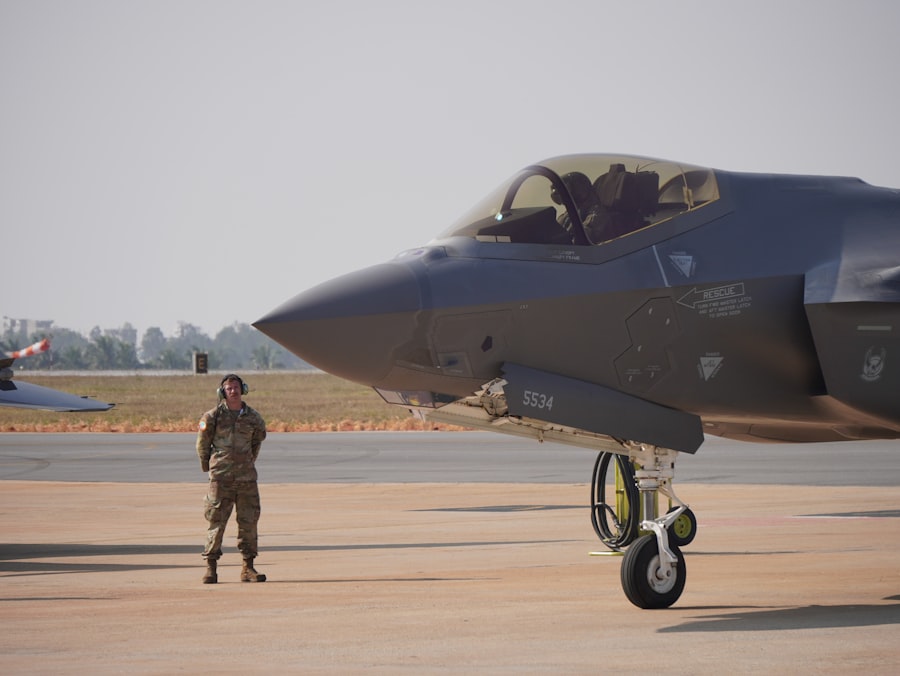
The F-117 was merely the vanguard. The principles derived from Ufimtsev’s work subsequently informed the design of a generation of stealth aircraft, including the B-2 Spirit bomber, the F-22 Raptor air superiority fighter, and the F-35 Lightning II multirole fighter. Each of these platforms, despite their diverse roles and varying degrees of stealth, owes its fundamental low-observable characteristics to the mathematical insights of Pyotr Ufimtsev.
The Enduring Legacy and Ethical Considerations

Pyotr Ufimtsev’s legacy is a rich tapestry woven with threads of intellectual prowess, geopolitical irony, and profound technological impact. He continued his research and teaching, eventually joining the University of California, Los Angeles, in 1990. Far from expressing bitterness at the unintended application of his work by the opposition, Ufimtsev often expressed a detached scientific interest in its practical realization.
A Scientific Contribution Beyond Borders
Ufimtsev’s story serves as a compelling illustration of how abstract scientific discovery, divorced from immediate military intent, can nonetheless profoundly shape the course of history. His work transcended national boundaries and ideological divides, becoming a universal language of electromagnetic physics that was intelligible to anyone with the mathematical acumen to understand it.
The Unintended Consequences of Open Science
The stealth revolution also presents a fascinating case study in the dynamics of open scientific publication versus national security. In the pursuit of academic freedom and the dissemination of knowledge, Ufimtsev’s foundational work was made publicly available. This transparency, while laudable from a purely scientific perspective, inadvertently provided a crucial advantage to a rival power. It forces one to ponder the delicate balance between the free flow of scientific information and the potential for its appropriation for strategic purposes.
The Modern Relevance of Ufimtsev’s Principles
Even today, as radar technology evolves and new counter-stealth measures are developed, the fundamental principles elucidated by Ufimtsev remain critically important. Aircraft designers continue to grapple with the challenge of minimizing radar cross-section, and Ufimtsev’s equations provide the foundational understanding necessary to tackle these complex problems. The battle between stealth and detection is an ongoing technological arms race, with Ufimtsev’s legacy serving as a perpetual intellectual armament in that struggle.
Pyotr Ufimtsev, a prominent figure in the development of stealth technology, significantly influenced modern military aviation with his groundbreaking research. His work laid the foundation for the design of aircraft that could evade radar detection, revolutionizing aerial combat. For a deeper understanding of Ufimtsev’s contributions and the evolution of stealth technology, you can explore a related article that delves into the intricacies of this fascinating subject. Discover more about this pivotal innovation in military strategy by visiting this article.
Conclusion: A Quiet Giant’s Enduring Impact
| Metric | Details |
|---|---|
| Full Name | Pyotr Yakovlevich Ufimtsev |
| Field | Physics, Applied Mathematics |
| Key Contribution | Development of the Physical Theory of Reflection of Electromagnetic Waves from Surfaces |
| Year of Key Publication | 1962 |
| Impact on Stealth Technology | Provided mathematical foundation for radar cross-section reduction |
| Notable Work | “Method of Edge Waves in the Physical Theory of Diffraction” |
| Recognition | Work utilized by Lockheed Skunk Works for F-117 Nighthawk development |
| Radar Cross Section (RCS) Reduction | Significant reduction enabled by Ufimtsev’s equations |
Pyotr Ufimtsev, a quiet mathematician whose name remains largely unknown outside specialized scientific and engineering circles, stands as a quiet giant in the history of military technology. His work, initially overlooked in his own country, became the bedrock upon which the stealth revolution was built – a revolution that profoundly altered the balance of power in the skies and forever changed the calculus of aerial warfare. His legacy is not merely a collection of mathematical formulae; it is a testament to the transformative power of theoretical physics and a poignant reminder that the most profound shifts in human endeavor can often originate from the most unexpected of sources. So, reader, as you gaze upon the sleek, angular form of a modern stealth aircraft, remember the unassuming Soviet mathematician whose equations helped sculpt its invisible silhouette.

SHOCKING: How Stealth Technology Bankrupted An Empire
FAQs
Who is Pyotr Ufimtsev?
Pyotr Ufimtsev was a Soviet physicist and mathematician known for his pioneering work in the field of electromagnetic wave propagation and radar technology.
What is Pyotr Ufimtsev’s contribution to stealth technology?
Ufimtsev developed the theoretical foundation for predicting how electromagnetic waves scatter off objects, which became crucial in designing aircraft with reduced radar visibility, leading to the invention of stealth technology.
How did Ufimtsev’s work influence the development of stealth aircraft?
His mathematical methods allowed engineers to calculate radar cross-sections of complex shapes, enabling the design of aircraft surfaces that minimize radar detection, directly influencing the creation of stealth aircraft like the F-117 Nighthawk.
Was Pyotr Ufimtsev directly involved in building stealth aircraft?
No, Ufimtsev himself did not build stealth aircraft; his role was primarily theoretical. His research was later utilized by engineers and defense contractors, particularly in the United States, to develop stealth technology.
Why is Pyotr Ufimtsev’s work considered important in military technology?
Ufimtsev’s work provided the scientific basis for reducing radar signatures, which revolutionized military aviation by allowing aircraft to evade radar detection, significantly enhancing their survivability and effectiveness in combat.