The Soviet submarine’s quiet revolution was not a thunderous declaration of new doctrine or a grand exposé of technological superiority. Instead, it was a gradual, persistent shift that fundamentally altered the landscape of underwater warfare and, by extension, the global balance of power. This revolution unfolded over decades, driven by a confluence of scientific ambition, strategic necessity, and an unwavering ideological commitment to parity with the West. It was a process akin to a glacier’s slow but inexorable movement, carving deep valleys into the military doctrines of its adversaries.
The post-World War II era saw the Soviet Union, despite its devastated infrastructure, rapidly assess the implications of atomic warfare and the critical role of naval power in a potential conflict. The United States, having demonstrated its newfound destructive capability, was rapidly building its own fleet, including a burgeoning submarine force. The Soviets recognized that to counter this, they needed not just submarines, but submarines that could pose a unique and potent threat.
The Early Days: Learning and Adapting
In the immediate aftermath of the war, Soviet submarine development was largely based on captured German designs and technologies. The Type XXI U-boat, while too late to significantly impact the war, was a harbinger of future possibilities, featuring improved underwater speed and maneuverability. The Soviets absorbed these lessons, initiating their own design programs.
The Shadow of the German U-boat Legacy
The influence of German engineering cannot be overstated. Engineers like those who worked on the Type XXI understood the limitations of diesel-electric propulsion at depth and began exploring ways to extend submerged endurance. This provided a crucial starting point for Soviet innovation.
The Strategic Imperative: Parity and Deterrence
The overarching Soviet strategic goal was to achieve a level of military capability that would deter Western aggression. This meant not simply matching existing Western forces, but actively seeking to develop asymmetric advantages. Submarines, with their inherent stealth, presented an ideal avenue for such an approach.
The Cold War Arms Race: A Driving Force
The escalating Cold War arms race provided both the motivation and the resources for this revolutionary development. The perceived threat from the West spurred Soviet engineers and planners to push the boundaries of what was possible in submarine design and operation.
The Nuclear Fuel for Innovation
The development of nuclear propulsion was a watershed moment. It unlocked the potential for submarines to remain submerged for unprecedented durations, effectively transforming them from surface vessels that could dive into true underwater warships. This was the foundational element of the Soviet submarine’s quiet revolution, allowing them to operate with a degree of freedom previously unimaginable.
The Constant Pursuit of Secrecy
The nature of submarine warfare demands secrecy. For the Soviets, this took on an almost religious fervor. Their submarine programs were cloaked in an impenetrable veil of classification, making it exceptionally difficult for Western intelligence to accurately assess their capabilities and advancements. This secrecy itself became a strategic weapon, fostering an atmosphere of uncertainty and fear.
The concept of the Soviet submarine quieting curve is crucial for understanding the advancements in submarine technology during the Cold War. For a deeper dive into this topic, you can explore the article that discusses the evolution of submarine stealth and its implications for naval warfare strategies. This article provides insights into how the quieting curve influenced submarine design and operational tactics. For more information, visit this link.
The Dawn of Nuclear Submarine Dominance
The true revolution began with the successful development and deployment of Soviet nuclear-powered submarines. This was not a singular event but a series of progressive breakthroughs that steadily increased their underwater capabilities across multiple domains.
The First Steps Underwater: Early Nuclear Designs
The initial Soviet nuclear submarines, while technically pioneering, were often characterized by a degree of brute force in their design. They were robust, heavily armed, and capable of sustained submerged operations, a significant departure from previous generations.
The Delta Class: The Silent Sentinels
Submarines of the Delta class, for example, represented a significant leap forward, particularly with their deployment of ballistic missiles. These vessels became the backbone of the Soviet strategic deterrent, capable of surviving a first strike and launching a devastating retaliatory response.
The Pursuit of Speed and Depth: Pushing the Envelope
Beyond endurance, the Soviets also focused on improving speed, maneuverability, and operational depth. This allowed their submarines to evade detection and engage targets with greater effectiveness.
The Alpha Class: The Deep Divers
The Alpha class submarines were a testament to this pursuit, renowned for their remarkable speed and their ability to operate at extreme depths. While posing significant engineering challenges, they demonstrated the Soviet capacity for ambitious and innovative underwater design.
The Strategic Implications: A Shadow in the Deep
The deployment of these advanced nuclear submarines had profound strategic implications. They provided the Soviet Union with a credible second-strike capability, a critical component of nuclear deterrence. They also represented a potent threat to Western naval operations, capable of disrupting supply lines and projecting power into distant oceans.
The Ballistic Missile Submarine (SSBN): The Ultimate Deterrent
The SSBNs were perhaps the most impactful manifestation of this revolution. They were mobile, survivable nuclear missile platforms that challenged the notion of guaranteed land-based deterrence. The “boomer” submarines, as they became known, instilled a fresh level of anxiety in Western military planners.
The Attack Submarine (SSN): The Hunter-Killer
Alongside the SSBNs, the Soviets also developed increasingly sophisticated attack submarines. These vessels were designed to hunt and destroy enemy submarines and surface ships, acting as the eyes and teeth of the underwater force.
The Game of Stealth: The Silent Running Revolution
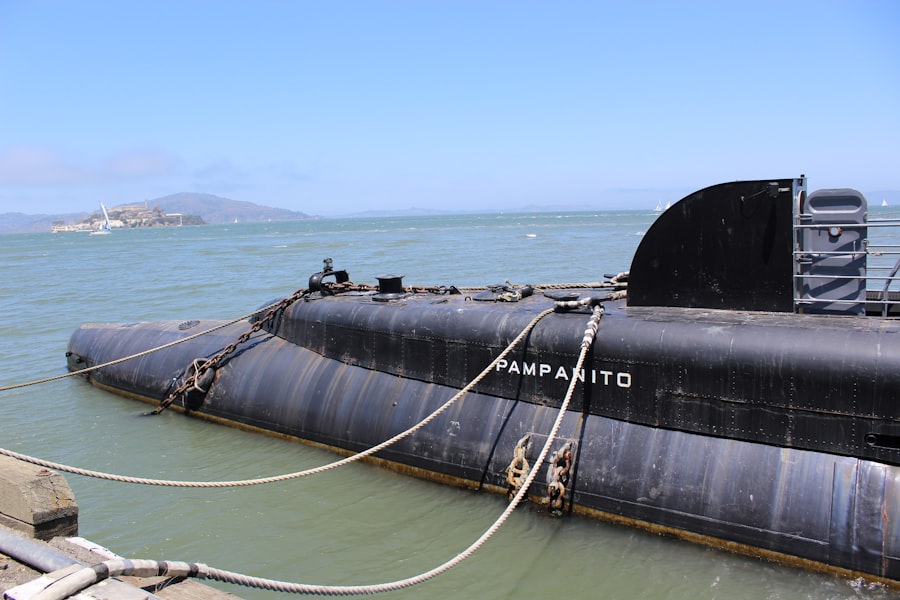
Perhaps the most significant aspect of the Soviet submarine’s quiet revolution was their relentless pursuit of stealth. While Western submarines often prioritized speed and armament, the Soviets increasingly focused on minimizing their acoustic signature, making them incredibly difficult to detect.
The Art of Silence: Acoustic Masking and Design
This involved a deep understanding of hydrodynamics, materials science, and acoustic engineering. The Soviets invested heavily in research and development to reduce the noise generated by their submarines, from propeller design to hull coatings.
The Quiet Propeller: A Whispered Secret
The development of advanced, low-noise propeller designs was a crucial element. By carefully shaping the blades and optimizing their rotation, Soviet engineers significantly reduced the cavitation – the formation of bubbles that creates noise – a major source of underwater detectability.
The Anechoic Coatings: A Cloak of Silence
The application of anechoic tiles, which absorb sonar pulses, was another vital innovation. These coatings effectively turned the submarine’s hull into a sound sponge, making it far harder for active sonar to get a clear return signal.
The Cat and Mouse Game: Evading Detection
The advancements in stealth meant that Soviet submarines could operate in proximity to Western naval forces for extended periods without detection. This created a constant, unnerving presence, a shadow in the ocean that kept Western navies perpetually on edge.
The Intelligence Void: The Western Dilemma
Western intelligence struggled to keep pace with these advancements. The Soviet dedication to secrecy meant that assessments of their stealth capabilities were often based on educated guesswork rather than concrete data, fueling a constant sense of vulnerability.
The Acoustic Fingerprint: The Elusive Target
The goal was to minimize the submarine’s “acoustic fingerprint,” the unique sound it generates. By making this fingerprint as faint and indistinct as possible, Soviet submarines became akin to ghosts in the water, challenging the very foundations of anti-submarine warfare.
Technological Prowess: Beyond Sound and Fury
The revolution was not solely about being quiet; it was also about advancing the technological sophistication of their underwater platforms. This included improvements in sonar, fire control systems, and even novel propulsion methods.
Advanced Sonar and Detection Capabilities
While focusing on stealth, the Soviets also invested in their own sonar systems, aiming to detect Western submarines and surface ships effectively.
Passive Sonar: Listening to the Ocean’s Secrets
They developed sophisticated passive sonar arrays, designed to listen to the faintest sounds in the ocean. This allowed them to identify targets without revealing their own presence.
Active Sonar: A Calculated Risk
While passive sonar was preferred for stealth, they also employed active sonar when necessary, albeit with a greater awareness of the risks involved.
Advanced Weapon Systems: The Sting in the Tail
The submarines were equipped with increasingly formidable weapon systems, capable of engaging a wide range of targets.
Torpedoes: The Silent Killers
Their torpedo technology evolved significantly, with advanced guidance systems and warheads designed to neutralize enemy vessels.
Missile Systems: The Long Reach
The integration of ballistic and cruise missiles transformed submarines into potent offensive platforms capable of striking land targets and naval forces at significant distances.
Innovative Propulsion and Power
Beyond nuclear power, the Soviets explored other avenues to enhance underwater performance.
The AIP Experiment: Extended Endurance Without Nuclear Power
While nuclear power was the main driver, research into Air-Independent Propulsion (AIP) systems, even if not widely deployed in their most advanced forms, indicated a broader commitment to increasing underwater operational capabilities.
The Reactor Technology: Powering the Silent Fleet
The development of compact and efficient nuclear reactors was fundamental. These power plants provided the sustained energy needed for extended submerged operations and the high speeds achieved by some classes.
The Soviet submarine quieting curve has been a critical aspect of naval warfare, influencing the design and operational strategies of submarines throughout the Cold War and beyond. For a deeper understanding of how these advancements in submarine technology have shaped modern naval tactics, you can explore a related article that delves into the evolution of underwater stealth and its implications for contemporary military operations. This insightful piece can be found here.
The Enduring Legacy: A Shift in the Global Balance
| Year | Submarine Class | Noise Level (dB re 1 μPa at 1 m) | Speed (knots) | Quieting Technology | Notes |
|---|---|---|---|---|---|
| 1950s | Whiskey-class | 120 | 15 | Basic hull design, limited sound insulation | Early Soviet diesel-electric subs, relatively noisy |
| 1960s | November-class (Project 627) | 110 | 20 | Improved hull shaping, machinery isolation | First Soviet nuclear subs, quieter than predecessors |
| 1970s | Victor I-class (Project 671) | 100 | 25 | Advanced sound dampening, improved propeller design | Significant noise reduction efforts |
| 1980s | Akula-class (Project 971) | 85 | 30 | Hydrodynamic hull, anechoic tiles, isolated machinery | Comparable to Western subs in quietness |
| 1990s | Severodvinsk-class (Project 885) | 80 | 35 | Advanced quieting tech, pump-jet propulsor | State-of-the-art Soviet/Russian submarine |
The Soviet submarine’s quiet revolution did not end with the collapse of the Soviet Union. Its legacy continues to shape naval strategy and technological development today. The lessons learned and the capabilities developed during this period remain profoundly influential.
A New Paradigm in Naval Warfare
The Soviet submarine’s quiet revolution fundamentally altered the paradigm of naval warfare. It demonstrated that a dominant underwater force, characterized by stealth and technological sophistication, could pose a significant threat to even the most powerful surface navies.
The Anti-Submarine Warfare Challenge
Western navies were forced to fundamentally re-evaluate their anti-submarine warfare (ASW) doctrines and technologies. The constant threat of unseen submarines necessitated a more defensive and evasive posture.
The Strategic Deterrent: A Constant Presence
The presence of Soviet SSBNs in the oceans served as a constant reminder of the destructive potential they held, contributing significantly to the complex dynamics of nuclear deterrence during the Cold War.
The Continued Evolution of Submarine Technology
The innovations introduced by the Soviet submarine programs continue to inform modern submarine design and doctrine. The emphasis on stealth, advanced sonar, and effective weapon systems remains paramount in underwater warfare.
The Stealth Imperative Today
The pursuit of stealth remains a central tenet of submarine development worldwide. The techniques and principles pioneered by the Soviets are still being refined and applied.
The Era of Information Warfare Under the Waves
The evolution of sonar, acoustic analysis, and electronic warfare capabilities continues to be a critical area of development, building upon the foundations laid by earlier revolutions.
A Global Impact: Influence Beyond Borders
The impact of the Soviet submarine’s quiet revolution extended far beyond the Cold War. It influenced the development of submarine forces in other nations and continues to shape the strategic calculations of global powers. The lessons learned from this period have become a permanent part of the global maritime security landscape. The silent revolution beneath the waves had a ripple effect that continues to be felt today.

WATCH NOW ▶️ WARNING: The $17M Deal That Blinded The US Navy
FAQs
What is the Soviet submarine quieting curve?
The Soviet submarine quieting curve is a graphical representation that shows the reduction in noise levels produced by Soviet submarines over time. It illustrates improvements in submarine stealth technology, particularly in minimizing acoustic signatures to evade detection.
Why was reducing noise important for Soviet submarines?
Reducing noise was crucial for Soviet submarines to avoid detection by enemy sonar systems. Quieter submarines could operate more stealthily, increasing their survivability and effectiveness in naval warfare during the Cold War.
How did the Soviet Union achieve quieter submarines?
The Soviet Union implemented various technological advancements such as improved hull designs, better propeller engineering, sound-isolating machinery mounts, and advanced noise-dampening materials. These innovations collectively contributed to lowering the acoustic signature of their submarines.
How does the Soviet quieting curve compare to that of other countries?
While the Soviet quieting curve shows significant progress in noise reduction, Western submarines, particularly those of the United States, often maintained a technological edge in acoustic stealth. However, the gap narrowed over time as both sides improved their submarine quieting technologies.
What impact did the quieting curve have on naval strategy?
The improvements reflected in the quieting curve influenced naval strategy by enabling Soviet submarines to operate more effectively in contested waters. Enhanced stealth capabilities allowed for more covert intelligence gathering, strategic deterrence, and increased threat to adversary naval forces.