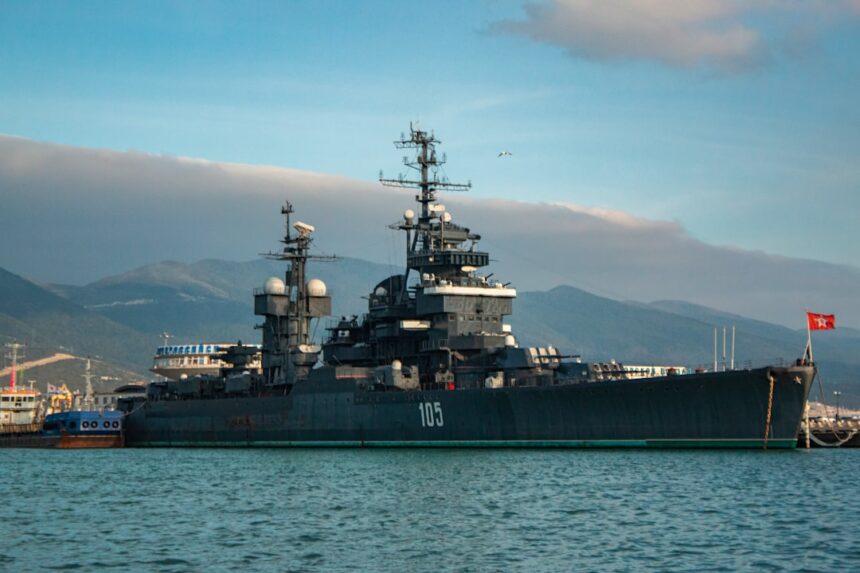
The Soviet Navy, a formidable blue-water force during the Cold War, was simultaneously a crucible of technological prowess and a clandestine battleground for espionage. The story of its “secret mole” represents a fascinating, and often chilling, chapter in this hidden conflict, highlighting the precarious balance of power and the lengths to which states would go to gain an advantage. This particular narrative delves into the penetrations effected by foreign intelligence agencies within the Soviet naval establishment, specifically focusing on instances of high-level intelligence extraction and the profound ramifications these operations had on global geopolitics.
The very nature of the Soviet Union, a closed and highly secretive society, presented formidable challenges to foreign intelligence services. The Soviet Navy, in particular, was a fortress within this fortress, guarded by layers of internal security and a pervasive culture of paranoia. Yet, like any structure, even the Iron Curtain had its vulnerabilities, and these cracks were meticulously exploited by skilled intelligence operatives.
The Lure of Ideology, Greed, and Dissatisfaction
The motivations behind an individual’s decision to betray their nation are complex and multifaceted. For some, ideological disillusionment with the Soviet system, particularly its repressive policies and economic inefficiencies, proved a powerful catalyst. They saw in the West not merely an enemy, but a beacon of freedom and opportunity. Others were swayed by the siren song of lucre, offering access to wealth and a standard of living unimaginable within the Soviet Union. Financial hardship, exacerbated by a system that often rewarded conformity over merit, could drive individuals to desperate measures. Finally, personal dissatisfaction, stemming from professional slights, lack of recognition, or internal political maneuvering, could fester into resentment, making an individual susceptible to overtures from foreign intelligence. These interwoven threads formed the tapestry of motivations that allowed Western agencies to weave their agents into the fabric of the Soviet Navy.
The Recruitment Network: A Web of Contacts
The process of recruiting a “mole” was rarely a spontaneous event. It involved years of meticulous groundwork, an intricate dance of cultivation and assessment. Western intelligence agencies, primarily the CIA and MI6, employed sophisticated methods to identify potential assets. These often began with identifying individuals who traveled abroad, those with access to foreign diplomats, or even those who expressed subtle dissent in private conversations. The initial approach was delicate, often disguised as academic interest or simple camaraderie. Over time, trust was built, vulnerabilities were identified, and then the true nature of the proposition would be revealed. The recruitment network was a vast, unseen spiderweb, with its threads extending into every corner of Soviet society, patiently awaiting the right moment to ensnare its target.
In exploring the intriguing history of espionage within the Soviet Navy, one can gain further insights by reading the article on the secret mole that infiltrated their ranks. This article delves into the tactics employed by intelligence agencies and the impact of such betrayals on naval operations. For a deeper understanding of this fascinating topic, you can check out the related article at In the War Room.
Unveiling Naval Secrets: The Flow of Intelligence
Once a mole was embedded, the flow of intelligence could be a veritable torrent, providing invaluable insights into Soviet naval capabilities, strategies, and technological advancements. This information allowed Western powers to refine their own defenses, adjust their strategic postures, and even gain a psychological edge in the high-stakes game of Cold War brinkmanship.
Submarine Technology: The Silent Hunters Revealed
One of the most prized categories of intelligence concerned Soviet submarine technology. The Soviet Union invested heavily in its submarine fleet, recognizing its potential as a strategic deterrent and an offensive weapon. Information regarding hull designs, propulsion systems (particularly nuclear reactors), acoustic signatures, and deployment patterns was of paramount importance. A single blueprint, a stolen maintenance manual, or even a detailed verbally relayed description could provide Western navies with a comprehensive understanding of their adversaries’ silent hunters, enabling them to develop countermeasures and improve their own anti-submarine warfare capabilities. The difference between a detectable submarine and an undetectable one could mean the difference between victory and catastrophe in a naval engagement.
Operational Plans and Deployment Strategies
Beyond hardware, the operational plans and deployment strategies of the Soviet Navy were critical intelligence. Knowledge of planned exercises, patrol routes, and the intended use of specific naval assets allowed Western intelligence to anticipate Soviet moves and adjust their own forces accordingly. Imagine, if you will, a chess game where one player possesses the ability to see several moves ahead for their opponent. This was the advantage conferred by a well-placed mole providing insights into Soviet naval strategy. This included understanding the doctrine guiding their fleet movements, the intended targets in a hypothetical conflict, and the command and control structures that would govern their operations.
Weapon Systems and Countermeasures
Details about new weapon systems, including missile technology, torpedoes, and naval artillery, were invaluable. Equally important was information regarding Soviet countermeasures against Western technologies. This allowed for a constant cycle of development and adaptation on both sides. If the Soviets were developing a new anti-ship missile, knowing its specifications allowed Western engineers to design defenses capable of intercepting it. Conversely, if Western navies developed an improved sonar system, understanding its limitations from the Soviet perspective could provide valuable feedback for further refinement. The intelligence derived from moles acted as a critical feedback loop, shaping the arms race and influencing defense spending on both sides.
The Human Cost: Betrayal, Exposure, and Consequences
The life of a mole was one of constant peril, a tightrope walk over an abyss of discovery and severe retribution. The consequences of exposure, for both the individual and the intelligence network, were devastating.
The Psychological Burden: A Life of Secrecy
The psychological toll on a mole was immense. Living a double life, constantly aware of the potential for exposure, bred a unique form of paranoia and stress. Every interaction, every decision, was viewed through the lens of their clandestine identity. The isolation inherent in keeping such a monumental secret could be crushing, leading to mental anguish and moral conflict. They were simultaneously heroes to one side and traitors to the other, a duality that few could navigate without significant psychological scars. The constant fear of being watched, of a misspoken word, or an unexplained absence, formed a suffocating blanket over their existence.
The Mechanisms of Exposure: Counter-Espionage and Betrayal
Soviet counter-intelligence, particularly the KGB, was a formidable adversary. Their methods ranged from sophisticated surveillance and analysis of communications to widespread informant networks and brutal interrogations. A slight deviation from routine, an unexplained source of wealth, or even a single slip of the tongue could trigger an investigation. In some cases, moles were compromised by the defection or capture of other agents in the network, leading to a domino effect of revelations. The very act of betrayal could also be turned inward, with double agents feeding misinformation back to the West or revealing their contacts to Soviet authorities. The game was unforgiving, and the margin for error was razor-thin.
The Consequences: Imprisonment, Execution, and Strategic Setbacks
For those caught, the consequences were severe. Imprisonment in gulags, often for extended periods and under harsh conditions, was a common fate. For high-value moles, particularly those with access to sensitive military information, execution was a grim reality. Beyond the individual tragedy, the exposure of a mole could have broader strategic implications. It could compromise entire intelligence operations, reveal Western intelligence assets, and even lead to a loss of trust between allied nations. The impact rippled far beyond the fate of a single individual, echoing through the halls of intelligence agencies and shaping the future course of the Cold War.
Impact on Naval Strategy and Doctrine
The intelligence gleaned from these “secret moles” had a profound and undeniable impact on the naval strategies and doctrines of both blocs. It was a constant game of move and counter-move, driven by the revelations flowing through clandestine channels.
Western Countermeasures and Technological Development
Armed with detailed knowledge of Soviet naval capabilities, Western nations were able to develop highly effective countermeasures. This included advancements in anti-submarine warfare (ASW) technologies, such as improved sonar systems, acoustic stealth measures for their own submarines, and specialized maritime patrol aircraft. Knowing the vulnerabilities of Soviet vessels allowed Western designers to exploit those weaknesses, thus maintaining a tactical and technological edge. The information provided by moles served as a blueprint for Western defense spending and technological innovation, directing resources towards areas where they could have the most impact against Soviet naval power.
Reshaping Deployment and Strategic Planning
The intelligence also directly influenced the deployment of Western naval forces and their strategic planning. Knowledge of Soviet patrol routes, the locations of their submarine bases, and their contingency plans for various scenarios allowed NATO to position its fleets optimally. This meant being able to anticipate Soviet movements in crucial maritime chokepoints, such as the Greenland-Iceland-UK (GIUK) Gap, and to develop strategies for containing or countering their fleet in the event of conflict. The map of naval power was constantly being redrawn based on the latest intelligence, a living, breathing document that reflected the ebb and flow of this unseen conflict.
The intriguing story of a Soviet Navy secret mole has captivated many, shedding light on the complex espionage activities during the Cold War. This article delves into the life of the mole and the implications of their actions on international relations. For those interested in exploring this topic further, you can read more about it in this insightful piece found here. The revelations not only highlight the risks faced by intelligence operatives but also the intricate web of deception that characterized the era.
The Enduring Legacy of Naval Espionage
| Metric | Details |
|---|---|
| Code Name | Operation RYAN |
| Primary Target | US Navy and NATO Naval Operations |
| Years Active | 1970s – 1980s |
| Known Agents | Unknown (Classified) |
| Type of Intelligence Gathered | Naval movements, submarine deployments, communication intercepts |
| Impact on Cold War | Increased Soviet naval strategic capabilities and countermeasures |
| Counterintelligence Measures | Enhanced security protocols, double agent operations |
Even with the collapse of the Soviet Union, the legacy of Cold War naval espionage continues to resonate, offering valuable lessons about intelligence gathering, national security, and the human element in global power struggles.
The Perpetual Need for Human Intelligence
Despite the advent of sophisticated satellite reconnaissance, cyber espionage, and signals intelligence, the Cold War demonstrated the irreplaceable value of human intelligence (HUMINT). A single well-placed individual can provide context, nuance, and foresight that no amount of technological surveillance can replicate. The ability to discern motives, understand decision-making processes, and anticipate future actions remains the unique domain of human agents operating within the adversary’s inner sanctum. The need for this “boots on the ground” perspective, even in a technologically advanced age, remains a cornerstone of comprehensive intelligence gathering.
Lessons in Counter-Espionage and Security
The cat-and-mouse game between intelligence agencies and counter-intelligence services served as a harsh but effective training ground. Both sides learned invaluable lessons in detecting and neutralizing foreign agents, improving their security protocols, and understanding the psychological operations employed by their adversaries. These lessons continue to inform national security practices today, shaping everything from personnel vetting to network security and the protection of classified information. The Cold War, in this regard, was a brutal laboratory for the evolution of espionage and counter-espionage techniques.
The Unseen Heroes and Villains of History
The story of the Soviet Navy’s “secret mole” immortalizes individuals who, for their own complex reasons, chose to walk a path of profound danger and secrecy. They are the unseen heroes and villains of history, their actions often shaping the course of global events from the shadows. Their sacrifices, both willing and unwilling, serve as a stark reminder of the immense stakes involved in the Cold War and the enduring power of human agency, even within vast and seemingly impenetrable systems. The ripples of their decisions continue to be felt, a testament to the fact that even in an age of superpowers and technological marvels, the individual can still be the most potent weapon of all.
FAQs
What was the Soviet Navy secret mole?
The Soviet Navy secret mole was an undercover agent who infiltrated naval operations or intelligence to gather classified information for the Soviet Union during the Cold War.
Why was the Soviet Navy secret mole important?
The mole provided critical intelligence that helped the Soviet Navy understand and counter the strategies, technologies, and movements of rival navies, particularly those of NATO countries.
How were Soviet Navy moles typically recruited?
Moles were often recruited through ideological alignment, coercion, financial incentives, or exploitation of personal vulnerabilities, and were trained to operate covertly within naval or intelligence organizations.
What impact did the discovery of a Soviet Navy mole have?
The discovery often led to significant security overhauls, arrests, and diplomatic tensions, as well as a reassessment of intelligence protocols within affected countries.
Are there any famous cases of Soviet Navy moles?
Yes, several high-profile espionage cases involved Soviet Navy moles, such as those uncovered during the Cold War, which have been documented in declassified intelligence files and historical accounts.