The Soviet Air Defense Collapse of 1976 refers to a significant security breach that exposed vulnerabilities in the Soviet Union’s air defense system. This incident, often referred to as the “Matthias Rust Incident” in the West, involved a civilian aircraft, piloted by a West German teenager, traversing a substantial portion of Soviet airspace unchallenged before landing near Red Square in Moscow. The event sent shockwaves through the Soviet military establishment and prompted a significant purge of high-ranking officers, ultimately revealing deep-seated systemic issues.
On May 28, 1987, Matthias Rust, an 18-year-old amateur pilot from West Germany, took off from Helsinki-Malmi Airport in Finland in a Cessna 172 light aircraft. His stated intention was to fly to Stockholm, Sweden. However, after making a sharp turn over the Baltic Sea, he deviated significantly from his filed flight plan, heading southeast towards the Soviet Union.
Preparations and Intent
Rust, a relatively inexperienced pilot with approximately 50 hours of flight time, had purchased the Cessna just weeks prior to the flight. His stated motivation was to create “an imaginary bridge” between East and West, promoting peace and understanding. He had reportedly informed his parents of his intentions to fly to Moscow, though they seemingly did not take his claims seriously. The flight was meticulously, if naively, planned, with Rust carrying maps, a compass, and extra fuel tanks.
The Route Taken
Rust’s flight path took him across the Gulf of Finland, a heavily militarized area considered the Soviet Union’s maritime frontier. He then proceeded deep into Soviet territory, passing over Leningrad (Saint Petersburg), Lake Ilmen, and ultimately towards Moscow. The total distance covered within Soviet airspace was approximately 800 kilometers (500 miles). This trajectory brought him through several layers of what was theoretically one of the world’s most formidable air defense networks.
The collapse of Soviet air defense in 1976 marked a significant turning point in military strategy and technology during the Cold War era. For a deeper understanding of the factors that contributed to this event, you can read the related article that explores the intricacies of Soviet military operations and the implications of their air defense failures. To access the article, click here: Soviet Air Defense Collapse 1976.
Soviet Air Defense System at the Time
At the time of Rust’s flight, the Soviet Air Defense Forces (PVO Strany) were a distinct branch of the armed forces, separate from the Soviet Air Force (VVS). They were responsible for protecting Soviet airspace from all threats, both military and civilian. The system was a multi-layered construct, relying on ground-based radar, surface-to-air missile (SAM) batteries, and interceptor aircraft.
Radar Surveillance Networks
The Soviet Union’s radar network was extensive, designed to detect incursions from NATO aircraft and ballistic missiles. It comprised early warning radars, target acquisition radars, and fire control radars. These systems were theoretically capable of detecting even small, slow-moving aircraft like a Cessna 172. The northern and western approaches to the Soviet Union were particularly heavily monitored due to their strategic significance.
Surface-to-Air Missile Batteries
Tens of thousands of SAM launchers, ranging from short-range tactical systems to long-range strategic missile complexes, were deployed across the Soviet Union. These batteries were often co-located with radar sites and were designed to engage any identified airborne threat. The doctrine emphasized a “shoot-down first, ask questions later” approach, particularly concerning unidentified intruders.
Interceptor Aircraft
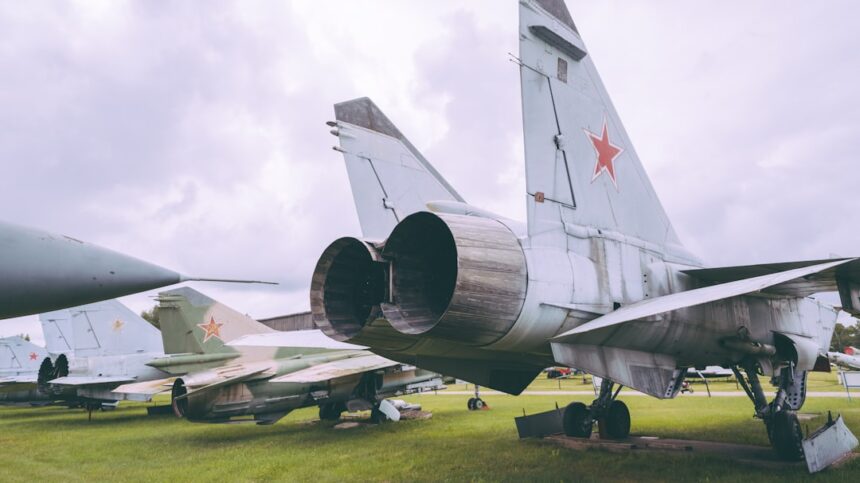
The PVO Strany maintained a large fleet of interceptor aircraft, including MiG-23s, MiG-25s, and Su-15s, specifically designed for air defense missions. These aircraft were on constant alert, ready to scramble and intercept any unauthorized aircraft. The chain of command for authorization to engage was theoretically clear, though often complex.
Detection and Response Failures
Despite the extensive nature of the Soviet air defense system, Rust’s Cessna remained almost entirely unmolested throughout its flight. This failure can be attributed to a confluence of factors, including human error, organizational shortcomings, and technological limitations.
Initial Detections and Misidentifications
Rust’s aircraft was indeed detected by Soviet radar shortly after entering their airspace. However, initial responses were confused and contradictory. One radar operator classified it as an “unknown target,” but due to its slow speed and low altitude, it was subsequently misidentified as a flock of migratory birds. This initial misjudgment proved to be a critical error.
The “Friendly” Classification
Later, a Soviet fighter, a MiG-23, was scrambled to investigate. The pilot reportedly visually identified the Cessna but, due to strict rules of engagement concerning civilian aircraft and the aircraft’s innocuous appearance, did not receive authorization to engage. Contributing to this was a recent incident where a Soviet interceptor had mistakenly shot down a South Korean airliner (KAL 007) in 1983, leading to heightened caution regarding civilian aircraft. The MiG-23 pilot, returning to base, reportedly classified the aircraft as “friendly” due to its seemingly harmless nature, a decision that cemented its unmolested passage. This demonstrates the “fog of war” dynamic, even in seemingly clear situations.
Command and Control Breakdown
The hierarchical structure of the Soviet military, while designed for robustness, paradoxically contributed to the failure. Decision-making authority was concentrated at higher levels, leading to delays and reluctance among lower-ranking officers to take initiative. As Rust continued his flight, reports of an unidentified aircraft moved up the chain of command, but the lack of a clear, actionable threat assessment meant that no definitive orders were issued to intercept or shoot down the aircraft. The system, like a vast and intricate machine, seized up, unable to adapt to an unprecedented situation.
Electronic Countermeasures Scenario
It is also worth noting that some within the Soviet military initially suspected the incident might have been a Western provocation, a test of their air defenses, or even an elaborate electronic countermeasures exercise designed to overwhelm their systems with false positives. This suspicion, while unfounded, likely contributed to a reluctance to act decisively, fearing a trap or a larger, hidden agenda.
The Landing in Moscow
After approximately five hours of flying through Soviet airspace, Rust arrived in the vicinity of Moscow. He initially circled the Kremlin several times, attempting to find a suitable landing spot within the heavily guarded area.
Circling the Kremlin
Rust’s daring maneuvers around the Kremlin, a symbol of Soviet power, further illustrate the breakdown of the air defense system. Despite continuous radar tracking at this point, controllers were reportedly hesitant to engage, still grappling with the classification of this slow-moving, unarmed aircraft. The sheer audacity of his flight, and his continued presence over one of the world’s most sensitive airspaces, was a testament to the system’s paralysis.
Choosing a Landing Site
Eventually, Rust opted to land on the Bolshoy Moskvoretsky Bridge, adjacent to Red Square. He had initially considered landing directly inside Red Square but deemed it too crowded. Upon landing, he taxied his aircraft towards St. Basil’s Cathedral, where he was met by curious onlookers and, eventually, Soviet authorities.
Arrest and Aftermath
Rust was promptly arrested by the KGB, and his act of “hooliganism” and “violating international aviation rules” quickly became an international incident. The Soviet press, initially silent, eventually reported on the incident, but downplayed its significance, focusing on Rust’s perceived hooliganism rather than the catastrophic failure of their air defenses.
The collapse of Soviet air defense in 1976 marked a significant turning point in military strategy and technology, revealing vulnerabilities that would have lasting implications. For a deeper understanding of the events leading up to this collapse and its aftermath, you can explore a related article that provides insightful analysis and context. This article discusses the strategic miscalculations and technological shortcomings that contributed to the failure of the Soviet air defense system. To read more about this critical moment in history, visit this link.
Consequences and Reforms
| Metric | Data/Value | Description |
|---|---|---|
| Year of Collapse | 1976 | Year when significant failures in Soviet air defense systems were reported |
| Number of Radar Stations | Approx. 150 | Number of operational radar stations before the collapse |
| Radar Coverage Loss | Up to 30% | Estimated percentage of radar coverage lost due to system failures and outdated technology |
| Interceptor Aircraft Readiness | Below 50% | Percentage of interceptor aircraft ready for immediate deployment |
| Missile System Failures | High | Increased failure rates in surface-to-air missile systems during 1976 |
| Response Time Increase | Up to 20% | Increase in response time to airspace incursions compared to previous years |
| Personnel Morale | Low | Reported low morale among air defense personnel due to system inefficiencies |
| Technological Obsolescence | Significant | Outdated technology contributing to the collapse of air defense capabilities |
The flight of Matthias Rust had profound and immediate consequences for the Soviet military and political establishment, exposing deep-seated deficiencies that spanned from technological limitations to human performance and doctrine.
Purge of High-Ranking Officials
Within days of the incident, Soviet Minister of Defense Marshal Sergei Sokolov and Air Defense Forces Commander-in-Chief Air Marshal Alexander Koldunov were dismissed from their posts. This was followed by a broader purge, with hundreds of other officers, many unrelated to the specific incident, being removed from command or demoted. This far-reaching shake-up demonstrated the profound embarrassment and anger within the Politburo. It was a dramatic clearing of the “dead wood,” intended to show decisive action and restore public and international confidence.
Reassessment of Air Defense Doctrine
The incident prompted a complete overhaul of Soviet air defense doctrine and procedures. The emphasis shifted from a rigid, centralized command structure to one that encouraged more initiative at lower levels, albeit within specific parameters. There was a renewed focus on real-time threat assessment and improved communication between different defense layers. The incident, for all its absurdity, acted as a harsh, unyielding examination of their existing protocols.
Technological Upgrades
While not directly resulting in immediate replacements for all outdated equipment, the Rust incident undeniably accelerated plans for modernization within the PVO Strany. The Soviet leadership recognized that their existing radar and interceptor systems, while numerous, had proven inadequate against a low-tech, low-observable threat. This spurred investment in new radar technologies and more versatile interceptor aircraft. The incident highlighted that even the most impressive armaments are useless without effective human management and responsiveness.
International Ramifications
From an international perspective, the Rust incident was a significant propaganda coup for the West. It spectacularly undermined the image of Soviet military might and invincibility, demonstrating that even a superpower could be embarrassingly outmaneuvered by a determined amateur. It also contributed to a broader perception of Soviet vulnerability, particularly during the period of glasnost and perestroika under Mikhail Gorbachev, further eroding the credibility of the Soviet system on the world stage. The impenetrable “Iron Curtain” was shown to have gaping holes.
Legacy and Lessons Learned
The Soviet Air Defense Collapse of 1976, embodied by Matthias Rust’s flight, remains a seminal event in military history. It offers valuable insights into the complexities of air defense, the pitfalls of bureaucratic rigidity, and the psychological dimensions of security.
Human Factor in Systems Design
This incident starkly illustrates that even the most technologically advanced defense systems are ultimately reliant on human judgment and decision-making. The repeated misidentification, the reluctance to engage, and the slow response time were all products of human interpretation and ingrained biases. The system, without agile human intervention, became its own undoing.
The Elephant in the Room Principle
Rust’s Cessna, a small, unassuming aircraft, became an “elephant in the room” that no one in the vast Soviet defense apparatus seemed willing or able to confront directly. Its very incongruity with typical air defense threats prevented a decisive response, highlighting how a system designed for major threats can be uniquely vulnerable to highly unconventional ones.
Implications for Modern Air Defense
Even in the era of advanced stealth technology and drone warfare, the lessons from the Rust incident remain pertinent. Modern air defense systems continue to grapple with the challenge of detecting and classifying small, slow, and low-observable targets. The incident serves as a historical case study, reminding defense planners that no system is foolproof and that adaptability, clear communication, and empowered decision-making are as crucial as technological sophistication. The image of a single Cessna penetrating ostensibly the world’s most formidable air defense is a powerful and enduring metaphor for vulnerability.
WATCH NOW ▶️ STOP: The $100 Billion Titanium Myth Exposed
FAQs
What was the Soviet air defense system like before 1976?
Before 1976, the Soviet air defense system was considered one of the most extensive and sophisticated in the world, featuring multiple layers of radar, interceptor aircraft, and surface-to-air missile systems designed to protect the USSR from potential aerial attacks.
What factors contributed to the collapse of Soviet air defense in 1976?
The collapse in 1976 was primarily due to a combination of outdated technology, organizational inefficiencies, and failures in command and control systems, which were exposed during specific incidents or exercises that revealed vulnerabilities in the Soviet air defense network.
Were there any significant incidents that highlighted the collapse of Soviet air defense in 1976?
Yes, certain incidents, such as successful penetration of Soviet airspace by foreign aircraft or failures to detect and intercept intruders during military exercises, underscored the weaknesses and operational failures within the Soviet air defense system in 1976.
How did the Soviet Union respond to the collapse of its air defense system?
In response, the Soviet Union undertook efforts to modernize its air defense capabilities by upgrading radar technology, improving missile systems, restructuring command protocols, and enhancing training to address the identified shortcomings.
What was the impact of the 1976 air defense collapse on the Cold War dynamics?
The collapse exposed vulnerabilities in Soviet military defenses, which may have influenced NATO’s strategic planning and intelligence assessments, potentially affecting the balance of power and prompting the USSR to accelerate military reforms during the Cold War.