The Soviet Union, a nation forged in revolution and perpetually locked in a geopolitical tango with the West, harbored a hidden ambition: to master the silent depths of the ocean. While the world’s attention often focused on the thunderous roar of missile tests and the gleaming polished steel of surface fleets, a more enigmatic evolution was occurring beneath the waves. This was the story of Soviet submarines, a gradual, often understated, transformation that saw them shed their noisy hulls and become remarkably stealthy hunters of the sea. It was not a sudden, dramatic unveiling, but a “silent evolution,” a meticulously crafted process driven by necessity, ingenuity, and a deep understanding of acoustic physics.
In the early decades of the Cold War, the Soviet submarine force was largely a blunt instrument. Its primary role was deterrence, projecting power and threatening Western sea lanes. The designs, while potent, were often characterized by a certain brute force approach, prioritizing speed and missile capacity over subtlety.
The Akula Class: A Necessary Evolution
The Akula-class submarines, for instance, represented a significant step forward. While not inherently stealthy by later Western standards, they incorporated lessons learned from captured or observed German WWII U-boat designs and early American nuclear submarine blueprints. The designers focused on hull integrity and the integration of more advanced sonar systems. However, the propulsion systems of this era, often relying on noisy gears and less refined reactors, meant these vessels, while capable, still announced their presence with a considerable acoustic signature.
Acoustic Signatures: The Unseen Hand
The concept of an “acoustic signature” is crucial here. Imagine a ship as a being that sings a song. The louder and more predictable the song, the easier it is for others to hear and identify it. Early Soviet submarines, with their large, powerful, but also mechanically noisy machinery, were like opera singers with a booming voice, easily detectable across vast distances. The challenge for Soviet engineers was to teach these leviathans to whisper, or even better, to sing a song that was indistinguishable from the ambient noise of the ocean.
The evolution of Soviet submarines into silent hunters is a fascinating topic that highlights advancements in naval technology and tactics during the Cold War. For a deeper understanding of this transformation, you can read the article that explores the innovations in submarine design and the strategic implications of stealth in underwater warfare. To learn more, visit the article here: Soviet Submarines: The Silent Hunters.
The Sound of Silence: Advanced Acoustic Reduction
The quest for stealth in submarine design is fundamentally a battle against sound. Every moving part, every flow of water over the hull, creates a unique acoustic fingerprint. The Soviet Union, despite often facing resource constraints and technological lags in some areas, poured significant effort into understanding and mitigating these underwater sounds.
Hull Design and Materials: The Cloak of Non-Reflection
A key area of focus was the development of specialized hull coatings and materials. The goal was twofold: to absorb sound that impinged on the hull and to reduce the internal machinery noises that radiated outwards.
Anechoic Tiles: The Ocean’s Echolocation Mask
Imagine a submarine’s hull as a drum. Normally, when struck, it resonates and produces sound. Soviet engineers began experimenting with applying layers of specialized, rubber-like tiles to the exterior of their submarines. These anechoic tiles, meticulously designed, acted like sponges for sound waves. Instead of reflecting the sonar pings of an approaching enemy, these tiles would absorb a significant portion of the acoustic energy, scattering it ineffectively or converting it into heat. This was akin to wrapping the drum in a thick blanket, muffling its sound.
Internal Damping: Silencing the Machinery’s Song
Beyond external treatments, internal damping was equally critical. Machinery, from the whirring gears of a turbine to the vibrating pumps of a cooling system, generated its own inherent noise. Soviet engineers developed sophisticated methods to isolate these noisy components from the submarine’s structure. This involved mounting machinery on shock-absorbing rafts and using flexible couplings to disconnect vibrating parts from the hull. It was like giving each noisy instrument in an orchestra its own soundproof booth, preventing its vibrations from bleeding into the rest of the ensemble.
Propeller Design: The Whisper of the Wake
The propeller, the very engine driving a submarine through the water, is a significant source of acoustic noise. The cavitation – the formation and collapse of tiny bubbles in the water – generated by rotating blades creates a distinctive “pinging” sound.
Seven-Bladed Wonders: A Quieter Rotation
Soviet designers ingeniously experimented with propeller configurations. While many Western submarines of the era favored four or five blades, Soviet engineers began developing seven-bladed propellers for their later classes. This increased number of blades, combined with carefully sculpted blade shapes and optimized rotational speeds, significantly reduced cavitation and the associated acoustic signature. It was like trading a few loud, clumsy steps for many quieter, more deliberate ones, minimizing the disturbance in the water.
Pump-Jet Propulsion: The Ultimate Stealth Engine
The pinnacle of propeller-based stealth was the development and integration of pump-jet propulsors. In this system, the propeller is enclosed within a duct or nozzle. This not only improves hydrodynamic efficiency but also significantly reduces the noise associated with blade tips and cavitation. For submarines equipped with pump-jets, their acoustic signature was dramatically altered, becoming much more difficult to discern from the background ocean noise. This was akin to replacing an open fan with a whisper-quiet, ducted ventilation system.
Beyond Acoustics: The Art of Operational Stealth
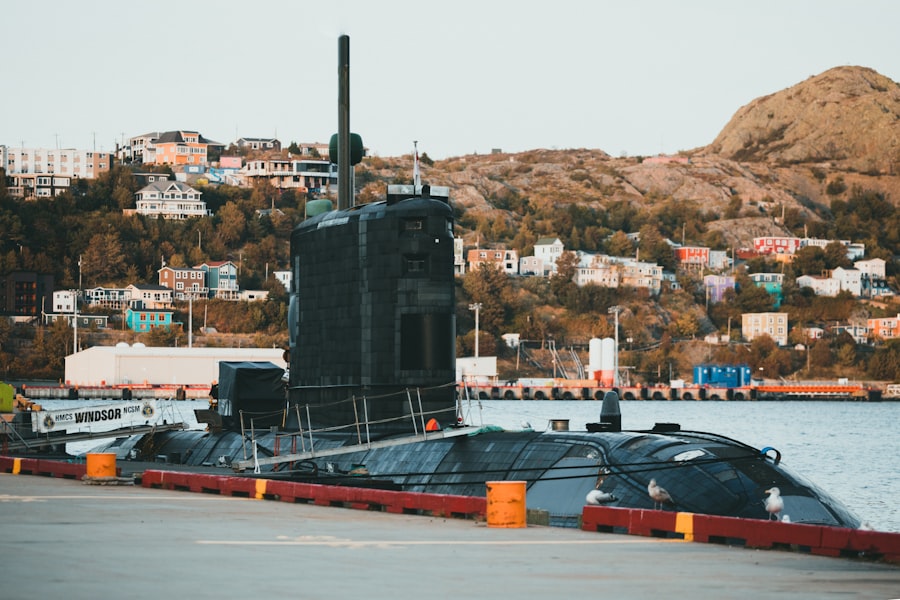
Stealth is not solely about reducing the sounds a submarine makes; it is also about minimizing the chances of being detected through other means. The Soviet Union, in its pursuit of underwater dominance, also honed its operational tactics to enhance its stealth capabilities.
Sonar Countermeasures: The Evasion of the Ears
Even the quietest submarine can be detected if it ventures into a known sonar patrol area. Soviet submariners were trained in sophisticated techniques to evade enemy sonar.
Passive Sonar Employment: Listening in the Darkness
While active sonar, which emits a sound pulse to detect objects, is a powerful tool, it also betrays the presence of the user. Soviet submarines increasingly relied on passive sonar – simply listening to the sounds of the ocean and any potential threats. This allowed them to gather intelligence and track targets without revealing their own position. It was like being a skilled hunter, using all of one’s senses to track prey while remaining hidden in the shadows.
Deception and Evasion Tactics: The Art of Disappearing
Submarine commanders were schooled in a variety of deceptive tactics designed to confuse and evade sonar. This included maneuvering in areas with strong ocean currents, which could distort sonar signals, or using decoys to draw attention away from the true submarine. They learned to exploit the complex underwater environment, using thermal layers and underwater topography to their advantage. It was about becoming a ghost, capable of dissolving into the fabric of the ocean itself.
Operational Deployment: Strategic Silence
The very act of deploying submarines played a crucial role in their stealth. Soviet submarine patrols were often conducted in remote and less trafficked areas of the ocean, minimizing the likelihood of accidental encounters.
Deep Water Hunting Grounds: The Invisibility of the Abyss
The vastness of the deep ocean acted as a natural cloak for Soviet submarines. Operating at extreme depths where sound propagates differently and surfaces are less frequently patrolled, provided a significant advantage in remaining undetected. This was akin to a hunter choosing an unfamiliar and vast forest to stalk its prey, making it harder for trackers to pick up a scent.
Diversionary Patrols and False Trails: The Misdirection of the Enemy
Soviet naval strategists understood the importance of misdirection. Submarine deployments were often designed to create diversions, drawing Western naval assets away from key areas. By leaving false trails or conducting patrols in seemingly unexpected locations, they could sow confusion and create opportunities for other submarines to operate more effectively. This was a calculated chess game, where the movement of one piece could open up a critical advantage elsewhere on the board.
The SSBNs: Nuclear Deterrence in the Silent Depths
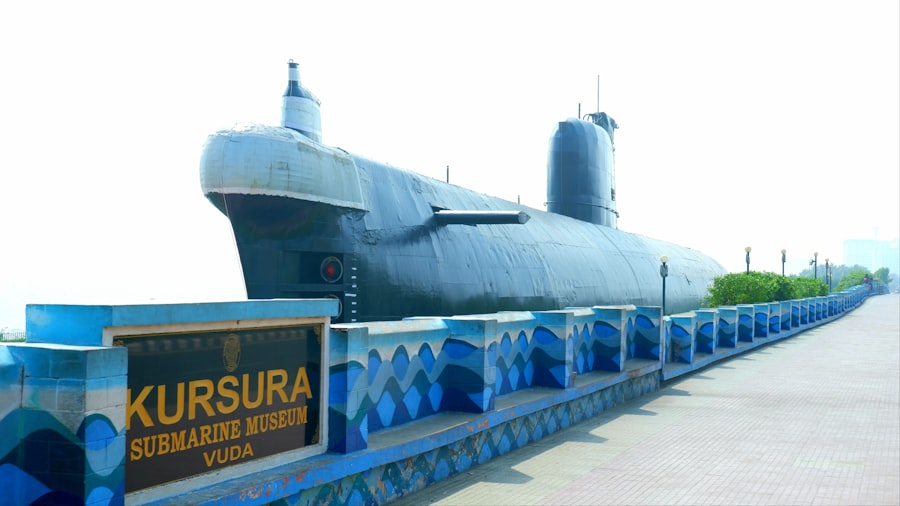
The most significant application of Soviet stealth technology was in their Ballistic Missile Submarines (SSBNs). These vessels, carrying nuclear weapons, were designed to act as a survivable second-strike deterrent, a hardened guarantee of retaliation. Their stealth was paramount to ensuring their survival and thus the credibility of the Soviet nuclear threat.
The Typhoon Class: A Mobile Fortress of Silence
The Typhoon-class submarines, famously massive, were a testament to the Soviet Union’s commitment to SSBN stealth. Despite their colossal size, engineering efforts were dedicated to minimizing their acoustic signature.
Advanced Hull Construction: Spreading the Sound
The sheer size of the Typhoon class presented a unique challenge. However, their double-hulled construction, with an inner pressure hull and an outer hull designed to break up water flow, helped to reduce noise. The space between the hulls also acted as a buffer, absorbing and diffusing sound. It was like building a castle with thick walls and a moat, designed to withstand any assault and absorb its shockwaves.
Reactor Insulation: Quieting the Nuclear Heart
The nuclear reactors powering these behemoths were inherently noisy. Significant engineering effort went into insulating the reactor compartments and damping the vibrations of associated machinery. This allowed the Typhoons, despite their immense power, to move with a deceptive quietude. It was about taming the roar of the beast, so it could move among the sheep unnoticed.
The Delta Classes: Steady Advancements in Stealth
The Delta-class submarines, which preceded the Typhoons, also benefited from ongoing improvements in acoustic reduction. Each iteration saw further refinements in hull coatings, propeller design, and machinery isolation.
Gradual Refinement: Incremental Improvements
The Soviet approach was often one of gradual, incremental improvement. Instead of radical leaps, there was a steady accumulation of knowledge and technological refinement. This allowed them to learn from mistakes, adapt to new challenges, and continuously push the boundaries of submarine stealth. It was a marathon, not a sprint, with consistent progress towards a defined goal.
The Importance of Survivability: The Ultimate Deterrent
The primary mission of the SSBNs was to survive an initial nuclear attack and deliver a retaliatory strike. Therefore, their ability to remain undetected by enemy ASW (Anti-Submarine Warfare) forces was not merely a tactical advantage, but a strategic imperative. Their stealth was the guardian of peace, albeit a peace maintained through the terrifying threat of mutual destruction.
The evolution of Soviet submarines into silent predators of the deep is a fascinating topic that highlights the advancements in underwater technology during the Cold War. As these submarines became increasingly sophisticated, their ability to evade detection transformed naval warfare. For a deeper understanding of this subject, you can explore a related article that delves into the engineering innovations that contributed to their stealth capabilities. This insightful piece can be found here.
The Legacy of Silent Evolution: Lessons for the Modern Navy
| Metric | Description | Impact on Silence | Time Period |
|---|---|---|---|
| Hull Design | Streamlined hull shapes to reduce hydrodynamic noise | Significantly reduced flow noise and cavitation | 1960s-1980s |
| Propeller Technology | Introduction of skewed and seven-blade propellers | Minimized cavitation and propeller noise | 1970s-1980s |
| Sound-Absorbing Coatings | Application of anechoic tiles on hull surfaces | Reduced sonar detection by absorbing sound waves | Late 1970s onwards |
| Machinery Isolation | Mounting engines and pumps on vibration-damping platforms | Lowered internal noise transmission to hull | 1960s-1980s |
| Quieting of Auxiliary Systems | Use of quieter pumps, fans, and electrical systems | Decreased overall acoustic signature | 1970s-1990s |
| Operational Procedures | Silent running tactics and speed restrictions | Minimized noise generation during missions | Throughout Cold War |
The “silent evolution” of Soviet submarines was not merely a Cold War footnote; it laid the groundwork for many of the stealth technologies and operational doctrines employed by navies worldwide today. The emphasis on acoustic quieting, advanced hull materials, and sophisticated operational tactics remains at the forefront of submarine design.
The Continuing Arms Race Beneath the Waves
The pursuit of stealth in submarines is an ongoing arms race. As detection technologies improve, so too must the capabilities of submarines to evade them. The lessons learned from the Soviet experience continue to inform this development.
Espionage and Knowledge Transfer: The Unseen Channels
While overt technological exchange was limited during the Cold War, the constant competition and the occasional capture or transfer of technology meant that knowledge and innovations did not exist in a vacuum. The operational successes and the perceived advancements of Soviet submarines spurred significant counter-efforts and independent research in Western navies, ultimately benefiting all parties in the long run through the collective advancement of the science.
The Future of Submarine Warfare: Ever Quieter Depths
The future of submarine warfare undoubtedly lies in further advancements in stealth. Future submarines will likely be even quieter, equipped with more sophisticated sensors and capable of operating in increasingly challenging environments. The legacy of the Soviet Union’s “silent evolution” is a testament to the enduring importance of this unseen, underwater war of attrition. The echoes of their quiet pursuit of silence continue to reverberate in the depths of our oceans, shaping the way navies think about the profound and enduring power of the unseen.
FAQs
1. What were the main challenges in making Soviet submarines silent?
The main challenges included reducing engine noise, minimizing vibrations, and improving hull design to decrease sonar detectability. Soviet engineers had to develop advanced soundproofing materials and quieter propulsion systems to achieve stealth.
2. How did Soviet submarine design evolve to reduce noise?
Soviet submarine design evolved by incorporating anechoic tiles on the hull, isolating noisy machinery with shock absorbers, and using quieter propellers. These innovations helped absorb sonar waves and reduce mechanical noise transmission into the water.
3. What role did technology play in the silence of Soviet submarines?
Technology played a crucial role through the development of advanced propulsion systems like pump-jet propulsors, improved sound-dampening materials, and sophisticated noise reduction engineering. These technological advancements significantly lowered the acoustic signature of Soviet submarines.
4. How did Soviet silent submarine capabilities compare to those of other countries?
By the late Cold War, Soviet silent submarine capabilities had improved substantially, narrowing the gap with Western navies. While Western submarines often led in quieting technology, Soviet innovations allowed their submarines to operate more stealthily and evade detection more effectively.
5. Why was making submarines silent important for the Soviet Navy?
Making submarines silent was vital for the Soviet Navy to enhance their strategic deterrence and combat effectiveness. Silent submarines could operate undetected in enemy waters, gather intelligence, and launch surprise attacks, thereby increasing their survivability and mission success.