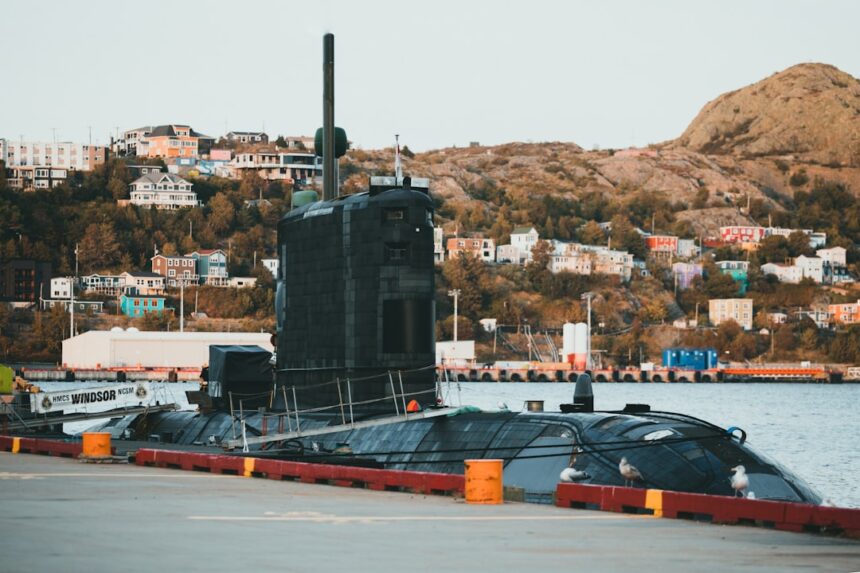
The world of U.S. submarines represents a silent, unseen dimension of American military power. These vessels, often referred to as “boomers” or “boats,” operate in the profound depths of the oceans, a realm largely inaccessible and unknown to the general public. Their missions are diverse, ranging from intelligence gathering and special operations to strategic deterrence, all conducted with an extraordinary degree of secrecy. To understand this clandestine capability is to peer into a facet of national security that is as vital as it is shrouded in mystery.
The Backbone of Nuclear Deterrence
The most prominent and perhaps most crucial role of the U.S. submarine fleet lies in its contribution to strategic nuclear deterrence. Ballistic missile submarines (SSBNs) are the silent sentinels of America’s nuclear triad, a fundamental component of its defense strategy. These submarines carry intercontinental ballistic missiles (ICBMs) equipped with nuclear warheads, providing a second-strike capability even in the face of a crippling first strike. Their ability to remain undetected beneath the waves for extended periods makes them the most survivable leg of the triad. Imagine a predator that can vanish into the dark abyssal plains, emerging only when its teeth are bared. This is the essence of the SSBN’s deterrent power. The sheer psychological weight of knowing that an unseen force can retaliate with devastating power ensures that potential adversaries are hesitant to initiate an attack that would trigger such a response. The submarines are not just weapons platforms; they are embodied threats, their silent presence a constant, chilling reminder of the consequences of aggression.
The Dover Patrol: Continuous Patrols and Readiness
U.S. SSBNs conduct continuous patrols, a commitment that underscores their unwavering readiness. These patrols can last for months, during which the submarines operate in a state of heightened alert. The crews are highly trained, capable of responding to any emergent threat with speed and precision. The logistics of maintaining these patrols are immense, involving complex resupply operations and crew rotations that are themselves conducted with considerable discretion. The rhythm of patrol life is dictated by the ocean’s vastness and the ever-present need for vigilance. For the men and women aboard, the submarine is their world, a self-contained bubble of steel and ingenuity where every action is scrutinized and every system is critical. This sustained presence in the deep is a testament to the dedication of those who serve in this specialized branch.
The Silent Service: Plausible Deniability and Strategic Ambiguity
The operational doctrine surrounding SSBNs emphasizes plausible deniability and strategic ambiguity. The exact location of these submarines is a closely guarded secret, a characteristic that enhances their deterrent effect. This lack of precise knowledge forces potential adversaries to consider a wider range of scenarios and potential responses, thereby increasing the uncertainty and risk associated with any hostile action. This uncertainty is not a bug in the system; it is a feature, a carefully engineered element of deterrence. It’s akin to a magician who never reveals their trick, leaving the audience to wonder and thus imbuing the unseen with immense power. The “Silent Service” moniker is not merely a nickname; it is a directive, a core tenet of their operational philosophy.
The secrets surrounding the U.S. submarine fleet have long been a topic of intrigue and speculation, particularly regarding their advanced technology and strategic capabilities. For those interested in exploring this subject further, a related article can be found at this link, which delves into the history and evolution of the U.S. Navy’s underwater fleet, highlighting key developments and the implications for national security.
The Cutting Edge of the Fleet: Attack Submarines (SSNs)
Projecting Power from the Depths
While SSBNs focus on strategic deterrence, attack submarines (SSNs) are the fleet’s workhorses, designed for a wide array of offensive and defensive missions. These vessels are the agile hunters of the underwater domain. Their primary role is to hunt and destroy enemy submarines and surface ships, but their capabilities extend far beyond mere combat. They are adept at intelligence, surveillance, and reconnaissance (ISR), gathering vital information about adversary movements and capabilities. Imagine a stealthy predator, able to move through murky waters unseen, observing its prey without revealing its own presence. This is the SSN in action.
Superior Stealth and Maneuverability
The hallmark of U.S. SSNs is their exceptional stealth, a result of advanced hull designs, noise reduction technologies, and highly trained crews who operate the boats with a profound understanding of acoustic signatures. They are engineered to be virtually undetectable, capable of operating in close proximity to enemy forces without raising an alarm. Their maneuverability allows them to navigate complex underwater environments and engage targets with precision. The ongoing development of quieter propulsion systems and advanced sensor technologies ensures that U.S. SSNs maintain their technological edge. This constant pursuit of quietness is a relentless arms race conducted in the realm of sound.
Diverse Missions: From Anti-Submarine Warfare to Special Operations
The missions undertaken by SSNs are remarkably diverse. They are vital in anti-submarine warfare (ASW), neutralizing threats to naval assets and shipping lanes. They can also conduct land-attack missions using cruise missiles, a capability that adds another layer of offensive power to the submarine force. Furthermore, SSNs are frequently employed in special operations, deploying SEAL teams and conducting covert reconnaissance. The ability to insert and extract special forces operating in hostile territory, all from the safety of the underwater realm, highlights the unique strategic value of these vessels. They are a discreet gateway to influence in areas where overt military presence is not desirable or feasible.
The Submarine Building Blocks: Technology and Innovation
Advanced Hull Designs and Materials
The construction of modern U.S. submarines involves sophisticated engineering and cutting-edge materials science. Hull designs are optimized for stealth, hydrodynamics, and survivability. Advanced composite materials are increasingly being incorporated to reduce acoustic signatures and enhance structural integrity. The relentless pursuit of lighter, stronger, and quieter materials is a constant endeavor, pushing the boundaries of what is possible in naval architecture. The hull is not merely a shell; it is a finely tuned instrument designed to blend with the ocean’s natural symphony, or rather, silence. Think of it as a meticulously crafted musical instrument designed to produce absolute silence where other instruments create noise.
Quieter Propulsion Systems: The Heart of Stealth
Propulsion systems are a critical area of innovation for submarines. While older diesel-electric submarines relied on noisy diesel engines for surface running and battery charging, modern nuclear-powered submarines offer virtually unlimited endurance and higher speeds. The development of advanced reactor designs and efficient power conversion systems contributes to the overall quietness of these vessels. Furthermore, ongoing research into alternative propulsion technologies, such as advanced battery systems and even non-nuclear options for specific roles, continues to shape the future of submarine design. The whisper of the reactor is a far cry from the roar of a surface ship’s engines, representing a fundamental shift in how naval power operates.
Sophisticated Sonar and Sensor Suites
The “eyes and ears” of a submarine are its sonar and sensor systems. These sophisticated arrays of acoustic sensors are crucial for detecting, identifying, and tracking other vessels, as well as for navigation and environmental awareness. Advances in digital signal processing, artificial intelligence, and miniaturization of sensor technology have dramatically improved the performance and capabilities of these systems. The ability to distill meaningful information from the cacophony of ocean noise is a testament to the computational power and algorithmic sophistication employed. It’s like trying to hear a single whisper in a raging thunderstorm, and U.S. submarine sensors are designed to do just that, and more.
The Men and Women in the Deep: Life Aboard a Submarine
Rigorous Training and Crew Selection
Serving aboard a U.S. submarine is not for the faint of heart. The rigorous training and selection process ensures that only the most dedicated and capable individuals join the “Silent Service.” Prospective submariners undergo extensive technical training, psychological evaluations, and specialized coursework to prepare them for the unique demands of underwater operations. The claustrophobic environment, the extended deployments, and the constant need for vigilance require a particular breed of individual. These are not just sailors; they are highly specialized technicians, engineers, and warfighters.
The Unique Environment: Life in a Steel Can
Life aboard a submarine is unlike any other military assignment. Crews live in close quarters for extended periods, with limited personal space and a highly regimented schedule. The absence of natural light, the constant hum of machinery, and the shared dependence on one another create a unique sense of camaraderie and shared purpose. The psychological challenges are significant, and the Navy invests heavily in crew support and mental health resources. Imagine living in a sophisticated, self-contained city that moves beneath the waves, where every inch of space is utilized and every crew member has a vital role to play. The submarine is a microcosm of society, compressed and tested by the extreme conditions of the deep.
The Importance of Proficiency and Teamwork
Proficiency and teamwork are paramount to the success and survival of a submarine. Every crew member, from the most junior sailor to the commanding officer, plays a critical role. Accidents can have catastrophic consequences, making a culture of constant vigilance, meticulous procedure, and unwavering trust essential. Regular drills, simulations, and inspections reinforce these principles. The submarine operates as a single, integrated organism, where the failure of one part can jeopardize the whole. This symbiotic relationship is forged through shared hardship and the absolute necessity of relying on one another.
Recent discussions surrounding the US submarine fleet have highlighted the importance of maintaining operational secrecy and advanced technology. For a deeper understanding of the strategic implications and the challenges faced by the Navy, you can explore a related article that delves into these topics in detail. This piece provides insights into the evolving landscape of underwater warfare and the critical role submarines play in national defense. To read more about these fascinating developments, visit this article.
The Future of Submarine Warfare: Emerging Technologies and Challenges
| Metric | Details |
|---|---|
| Number of Active Submarines | Approximately 70 |
| Types of Submarines | Ballistic Missile Submarines (SSBN), Attack Submarines (SSN), Guided Missile Submarines (SSGN) |
| Primary Missions | Strategic Deterrence, Intelligence Gathering, Special Operations Support, Anti-Submarine Warfare |
| Stealth Technology | Advanced anechoic coatings, pump-jet propulsors, sound isolation systems |
| Maximum Operating Depth | Classified, estimated over 800 feet |
| Endurance | Several months underwater without surfacing |
| Communication Systems | Very Low Frequency (VLF), Extremely Low Frequency (ELF), satellite communication |
| Notable Submarine Class | Virginia-class, Ohio-class, Seawolf-class |
Unmanned Undersea Vehicles (UUVs)
The integration of Unmanned Undersea Vehicles (UUVs) represents a significant development in submarine warfare. These autonomous or remotely operated vehicles can extend the reach and capabilities of submarines, performing tasks such as mine detection, intelligence gathering, and reconnaissance in areas too dangerous for manned vessels. The development of advanced UUVs capable of operating independently for extended periods is a key focus for future naval strategies. Imagine smaller, specialized drones that can venture into the dark corners of the ocean, gathering information too risky for the larger, manned boats.
Hypersonic Weapons and Future Threats
The advent of hypersonic weapons poses a new challenge to submarine defense and offense. The speed and maneuverability of these weapons demand faster reaction times and more advanced defensive systems. Submarines, with their inherent stealth, may also play a role in deploying future hypersonic capabilities, offering a survivable platform for these advanced weapons. The arms race is not confined to the surface; it extends to the depths, with nations constantly seeking an advantage in the underwater domain. The challenge is to develop systems that can detect and counter these high-speed threats before they become insurmountable.
The Evolving Geopolitical Landscape
The U.S. submarine fleet operates within an evolving geopolitical landscape, characterized by rising global tensions and the increasing assertiveness of potential adversaries. Maintaining a technological and operational edge is crucial for deterring aggression and protecting U.S. interests worldwide. The silent patrols continue, a discreet but powerful statement of intent and capability in an increasingly complex world. The strategic value of these unseen guardians remains undiminished, their presence a constant reminder of America’s formidable, and often unseen, power.
FAQs
What types of submarines are included in the US submarine fleet?
The US submarine fleet primarily consists of nuclear-powered submarines, including ballistic missile submarines (SSBNs), attack submarines (SSNs), and guided missile submarines (SSGNs). These vessels serve various strategic and tactical roles.
How does the US maintain the secrecy of its submarine operations?
The US Navy employs strict operational security measures, including classified communication protocols, restricted access to sensitive information, and advanced stealth technology to minimize detection. Crew members undergo rigorous training on confidentiality and security procedures.
What is the strategic importance of the US submarine fleet?
The US submarine fleet plays a critical role in national defense by providing stealthy surveillance, intelligence gathering, and the capability to launch nuclear and conventional strikes. Ballistic missile submarines serve as a key component of the nuclear triad, ensuring second-strike capability.
How are US submarines equipped to avoid detection?
US submarines use advanced stealth technologies such as anechoic coatings, quiet propulsion systems, and sound-dampening designs. They also employ sophisticated sonar and electronic warfare systems to detect threats while remaining undetected themselves.
What role do US submarines play in international security and alliances?
US submarines support global security by participating in joint exercises with allied navies, conducting intelligence missions, and deterring potential adversaries. Their presence helps maintain freedom of navigation and supports US commitments to NATO and other international partnerships.