In March 1968, the Soviet submarine K-129 vanished without a trace in the vast expanse of the Pacific Ocean. This nuclear-powered vessel, part of the Soviet Navy’s fleet, was on a mission that remains shrouded in secrecy. The K-129 was equipped with ballistic missiles and was believed to be involved in intelligence-gathering operations during a time of heightened tensions between the United States and the Soviet Union.
Its disappearance raised numerous questions, not only about the fate of the submarine and its crew but also about the geopolitical implications of such an event. The mystery surrounding K-129 deepened as the Soviet Union launched an extensive search operation, scouring the ocean for any sign of the lost submarine. Despite their efforts, no trace was found, leading to speculation about what might have happened.
Some theorized that mechanical failure or an accident could have led to its sinking, while others suggested more sinister possibilities, including enemy action or espionage gone awry. The lack of concrete information only fueled the intrigue, making K-129 a focal point of Cold War paranoia and conspiracy theories.
Key Takeaways
- Soviet submarine K-129 mysteriously disappeared, sparking intense Cold War intrigue.
- The CIA launched a covert operation to locate and recover the sunken submarine.
- Salvaging K-129 involved overcoming significant technological and oceanographic challenges.
- The recovery mission revealed critical information about Soviet nuclear capabilities and influenced Cold War dynamics.
- Despite the recovery, many questions about K-129’s sinking remain unresolved, leaving a lasting legacy.
The CIA’s Top-Secret Operation to Recover K-129
In response to the disappearance of K-129, the Central Intelligence Agency (CIA) initiated a covert operation known as Project Azorian. This ambitious endeavor aimed to locate and recover the submarine, along with its potentially valuable cargo of nuclear missiles and classified materials. The operation was shrouded in secrecy, with only a select group of individuals aware of its true purpose.
The CIA recognized that retrieving K-129 could provide critical intelligence about Soviet naval capabilities and technology. To execute this complex mission, the CIA enlisted the help of Howard Hughes, a reclusive billionaire and aviation magnate. Hughes provided funding and resources for the construction of a specialized ship named the Glomar Explorer, designed specifically for deep-sea recovery operations.
The ship was equipped with advanced technology that would allow it to reach depths previously thought unreachable. The collaboration between the CIA and Hughes marked a significant moment in Cold War history, as it demonstrated the lengths to which both parties would go to gain an advantage over their adversaries.
The Hunt for the Wreckage of K-129
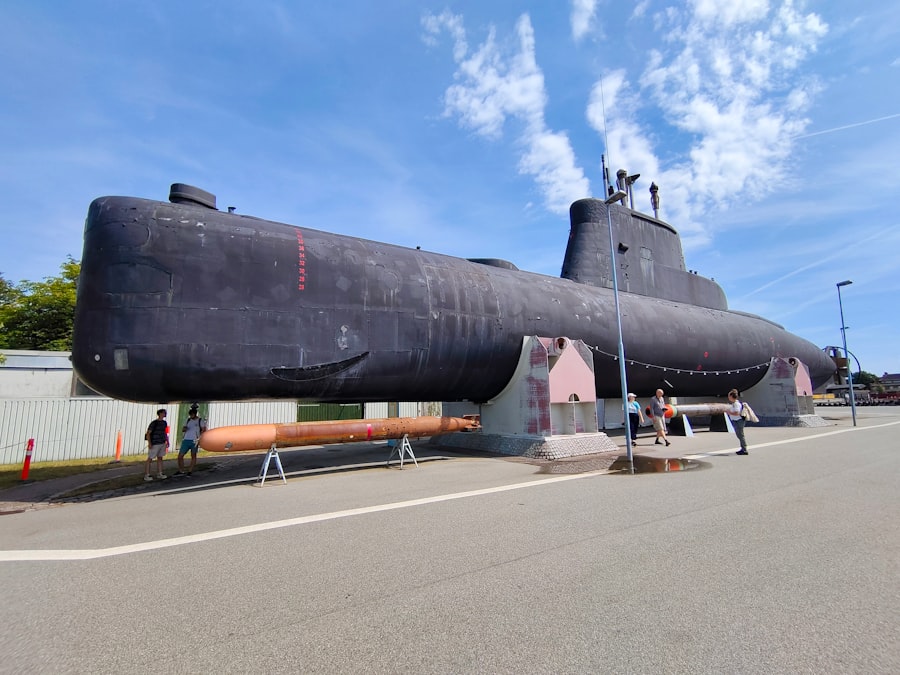
The search for K-129’s wreckage began in earnest in 1974 when the Glomar Explorer set sail into the depths of the Pacific Ocean. The operation was fraught with challenges, as the location of the submarine was uncertain, and the ocean floor presented a treacherous environment. Utilizing sonar technology and other advanced equipment, the crew embarked on a meticulous search for any signs of the lost vessel.
Days turned into weeks as they scoured vast stretches of ocean, driven by the hope of uncovering vital intelligence. After extensive searching, the Glomar Explorer finally located what appeared to be K-129’s wreckage on the ocean floor. The discovery was met with a mix of excitement and apprehension, as the team prepared for the next phase of their mission: recovery.
The wreckage was situated at a depth of over 16,000 feet, presenting significant logistical challenges. Nevertheless, the team remained determined to retrieve not only the submarine but also its contents, which could provide invaluable insights into Soviet military technology.
The Technological Challenges of Salvaging a Submarine from the Ocean Floor
| Challenge | Description | Impact on Salvage Operation | Technological Solutions | Estimated Difficulty Level (1-10) |
|---|---|---|---|---|
| Depth and Pressure | Extreme water pressure at deep ocean floors can crush equipment and complicate access. | Limits the type of equipment used and increases risk of failure. | Use of remotely operated vehicles (ROVs) and pressure-resistant materials. | 9 |
| Visibility | Low light and murky water reduce visibility for divers and cameras. | Hinders precise maneuvering and identification of submarine parts. | High-intensity underwater lighting and sonar imaging. | 7 |
| Corrosion and Structural Integrity | Saltwater causes corrosion, weakening the submarine’s structure over time. | Increases risk of collapse during salvage and complicates lifting operations. | Structural analysis and reinforcement using underwater welding and supports. | 8 |
| Environmental Conditions | Strong currents, tides, and weather can disrupt salvage efforts. | Delays operations and poses safety hazards. | Real-time environmental monitoring and adaptive scheduling. | 6 |
| Locating the Submarine | Finding the exact position on the ocean floor can be challenging. | Delays start of salvage and increases operational costs. | Use of sonar mapping, GPS, and underwater drones. | 7 |
| Weight and Buoyancy | Submarines are heavy and may be partially buried in sediment. | Complicates lifting and requires precise buoyancy control. | Use of lift bags, cranes, and sediment removal tools. | 8 |
| Safety Risks | Potential for hazardous materials, trapped air pockets, or unexploded ordnance. | Endangers personnel and requires careful handling. | Hazard detection sensors and remote operation to minimize human exposure. | 9 |
Salvaging a submarine from such extreme depths posed numerous technological challenges that tested the limits of engineering and innovation. The Glomar Explorer was equipped with a unique claw-like mechanism designed to grasp and lift heavy objects from the ocean floor. However, operating this equipment at such depths required precise calculations and coordination among crew members.
The pressure at these depths was immense, and any miscalculation could result in catastrophic failure. Moreover, the recovery operation had to contend with unpredictable ocean currents and environmental conditions that could hinder progress. The team had to develop specialized techniques for maneuvering in these challenging circumstances while ensuring that they did not damage the wreckage or its contents.
As they navigated these obstacles, they relied on their training and expertise to adapt to unforeseen challenges, demonstrating human ingenuity in the face of adversity.
The Joint US-Norwegian Effort to Retrieve K-129
The recovery mission for K-129 was not solely an American endeavor; it involved collaboration with Norwegian authorities who provided crucial support throughout the operation. Norway’s geographical proximity to the recovery site made it an ideal partner for logistical assistance and expertise in deep-sea operations. This joint effort underscored the importance of international cooperation during a time when tensions between superpowers were at an all-time high.
The partnership between the United States and Norway also highlighted a shared interest in understanding Soviet military capabilities. Both nations recognized that retrieving K-129 could yield insights into Soviet technology that would be invaluable for their own defense strategies. As they worked together on this high-stakes mission, they forged a bond that transcended political differences, united by a common goal: to uncover the secrets hidden within K-129’s wreckage.
The Discovery and Examination of K-129’s Nuclear Missiles
In August 1974, after months of painstaking effort, the Glomar Explorer successfully retrieved a portion of K-129 from the ocean floor. Among the recovered items were sections of the submarine itself and several nuclear missiles that had been onboard at the time of its sinking. This discovery sent shockwaves through intelligence communities around the world, as it provided tangible evidence of Soviet military capabilities during a critical period in history.
The examination of K-129’s nuclear missiles revealed important information about their design and functionality.
This intelligence not only informed U.S.
military strategy but also contributed to broader discussions about nuclear deterrence and arms control during a time when both superpowers were engaged in an arms race.
The Political Ramifications of the K-129 Recovery Mission
The recovery mission for K-129 had significant political ramifications that extended far beyond military intelligence. The operation was conducted under a veil of secrecy, and its success raised questions about government transparency and accountability. Critics argued that such covert operations could undermine public trust in government institutions, especially when conducted without oversight or public knowledge.
Furthermore, the discovery of K-129’s wreckage had implications for U.S.-Soviet relations during a time when diplomatic tensions were already high. While some viewed it as a triumph for American intelligence efforts, others feared it could escalate hostilities between the two superpowers. The operation served as a reminder that even in pursuit of knowledge and security, actions taken in secrecy could have far-reaching consequences on international relations.
The Impact of the K-129 Recovery on Cold War History
The recovery of K-129 marked a pivotal moment in Cold War history, illustrating both the lengths to which nations would go to gain an advantage over one another and the complexities inherent in espionage and military strategy.
Moreover, K-129’s recovery contributed to an evolving understanding of underwater warfare and naval capabilities during a time when submarines were becoming increasingly central to military strategy.
The insights gained from examining K-129’s technology influenced subsequent developments in submarine design and operations on both sides of the Iron Curtain. As such, this mission became emblematic of an era defined by competition, secrecy, and technological innovation.
The Legacy of the K-129 Recovery Mission
The legacy of the K-129 recovery mission endures in various ways, shaping both military strategy and public perception of covert operations. It serves as a case study in how intelligence agencies can leverage technology to achieve strategic objectives while navigating ethical dilemmas associated with secrecy and accountability. The operation also highlighted the importance of international collaboration in addressing shared security concerns.
In popular culture, K-129 has become synonymous with intrigue and mystery, inspiring books, documentaries, and films that explore its enigmatic story. This fascination reflects broader societal interests in espionage and military history during a time when such topics were often cloaked in secrecy. As new generations seek to understand this chapter in Cold War history, K-129 remains a compelling symbol of both human ambition and vulnerability.
The Lessons Learned from Salvaging K-129
The experience gained from salvaging K-129 provided valuable lessons for future deep-sea recovery operations and military endeavors alike. One key takeaway was the importance of thorough planning and preparation when undertaking complex missions in challenging environments. The operation underscored that success often hinges on meticulous attention to detail and adaptability in response to unforeseen circumstances.
Additionally, K-129’s recovery highlighted the need for collaboration among various stakeholders—government agencies, private industry, and international partners—to achieve common goals effectively. This lesson continues to resonate today as nations grapple with shared security challenges that require coordinated responses across borders.
The Unanswered Questions Surrounding the Sinking of K-129
Despite extensive efforts to recover K-129 and analyze its contents, many questions surrounding its sinking remain unanswered. What exactly caused this formidable submarine to disappear? Was it merely an accident or something more sinister?
Speculation continues to swirl around these mysteries, fueling ongoing interest in K-129’s story. As historians and researchers delve deeper into this enigmatic chapter of Cold War history, they confront not only technical challenges but also gaps in available information due to classified documents and government secrecy. These unanswered questions serve as a reminder that even in an age defined by information access, some stories remain shrouded in mystery—an enduring testament to human curiosity and our quest for understanding amidst uncertainty.
The recovery mission of the Soviet submarine K-129, which sank in 1968, remains one of the most intriguing operations in Cold War history. The complexities of this mission, including the technological innovations and geopolitical implications, are explored in detail in a related article. For more insights into this fascinating topic, you can read the article here: K-129 Recovery Mission.
WATCH THIS! The CIA’s Secret Mission to Recover a Nuclear Submarine: Project Azorian
FAQs
What was the Soviet submarine K-129?
The Soviet submarine K-129 was a Golf II-class ballistic missile submarine of the Soviet Navy that sank in the Pacific Ocean in March 1968 under mysterious circumstances.
When did the K-129 submarine sink?
K-129 sank in March 1968, with the exact date generally reported as March 8, 1968.
What was the purpose of the K-129 recovery mission?
The recovery mission aimed to locate and retrieve the sunken Soviet submarine K-129, along with any valuable intelligence materials such as cryptographic equipment, missile technology, and codebooks.
Who conducted the recovery mission for K-129?
The recovery mission was conducted by the United States Navy and the Central Intelligence Agency (CIA) under a secret operation known as Project Azorian.
What technology was used in the K-129 recovery mission?
The mission utilized the specially designed deep-sea recovery ship Glomar Explorer, equipped with a large mechanical claw to lift the submarine from the ocean floor.
Was the K-129 recovery mission successful?
The mission partially succeeded; the Glomar Explorer managed to recover a portion of the submarine, but the full recovery of the vessel was not achieved due to mechanical failure during the lift.
What was the depth at which K-129 was located?
K-129 was located at a depth of approximately 16,500 feet (about 5,000 meters) in the Pacific Ocean.
Why was the K-129 recovery mission kept secret?
The mission was highly classified due to its Cold War context, the sensitive nature of the intelligence sought, and the potential diplomatic repercussions with the Soviet Union.
What impact did the K-129 recovery mission have on Cold War intelligence?
The mission provided the United States with valuable intelligence on Soviet submarine technology and missile capabilities, although the full extent of the intelligence gained remains classified.
Is the K-129 recovery mission publicly known today?
Yes, details about the mission have been declassified and publicly discussed since the 1970s and 1990s, with some information still remaining classified.