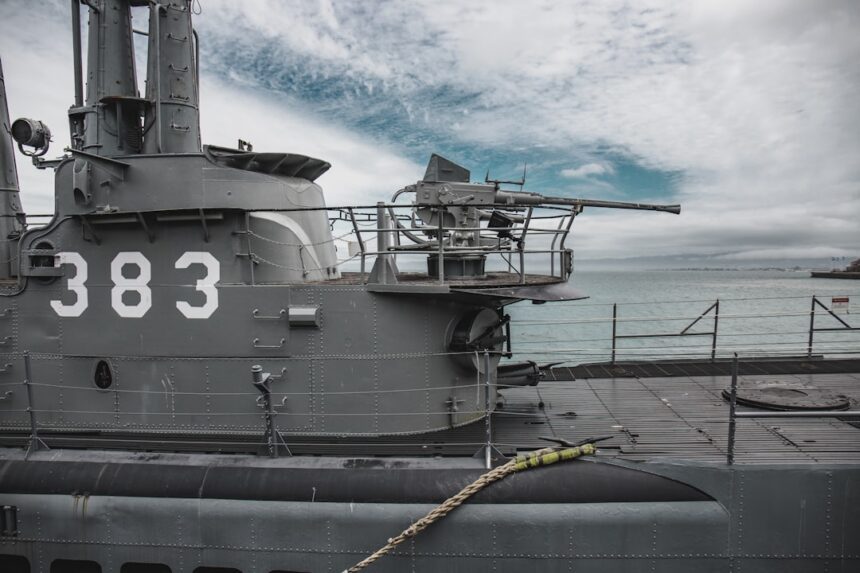
The B-59, a notable member of the Soviet Foxtrot class submarines, was constructed during a period marked by intense military competition and technological advancement. Launched in 1958, the submarine was designed to enhance the Soviet Navy’s capabilities in underwater warfare. The Foxtrot class was characterized by its diesel-electric propulsion system, which allowed for extended underwater operations while maintaining a relatively quiet profile.
This design was a response to the growing need for stealthy naval vessels capable of engaging in covert operations during the Cold War. The construction of B-59 took place at the prestigious Admiralty Shipyard in Leningrad, a hub for Soviet naval engineering. The submarine was built with a focus on durability and operational efficiency, featuring a robust hull designed to withstand the pressures of deep-sea environments.
The B-59 was equipped with advanced sonar systems and torpedo tubes, enabling it to engage enemy vessels effectively. As the Cold War escalated, the significance of such submarines became increasingly apparent, leading to a rapid expansion of the Soviet submarine fleet.
Key Takeaways
- Soviet submarine B-59 played a critical role during the Cuban Missile Crisis, nearly escalating Cold War tensions.
- The submarine’s mysterious disappearance added to Cold War naval uncertainties and intrigue.
- B-59’s advanced technical capabilities influenced submarine warfare tactics during the Cold War.
- The experiences of B-59’s crew highlight the intense pressures faced during covert operations.
- Declassified missions of B-59 have shed light on its significant impact on international relations and Soviet naval history.
The Role of B-59 in the Cuban Missile Crisis
B-59 played a pivotal role during the Cuban Missile Crisis in October 1962, a defining moment in Cold War history that brought the world to the brink of nuclear conflict. At that time, B-59 was stationed near Cuba as part of a larger Soviet naval presence intended to support the island nation against perceived threats from the United States. The submarine’s mission was shrouded in secrecy, but its presence underscored the Soviet commitment to defending its interests in the Western Hemisphere.
As tensions escalated between the United States and the Soviet Union, B-59 found itself in a precarious situation. The submarine was armed with nuclear torpedoes, and its crew faced immense pressure as they received conflicting orders from their superiors. During a critical moment, the submarine’s captain, Valentin Savitsky, believed that war had broken out and considered launching a nuclear torpedo against U.S.
naval forces. This decision could have triggered catastrophic consequences, highlighting the thin line between restraint and aggression during this tense period.
The Mysterious Disappearance of B-59
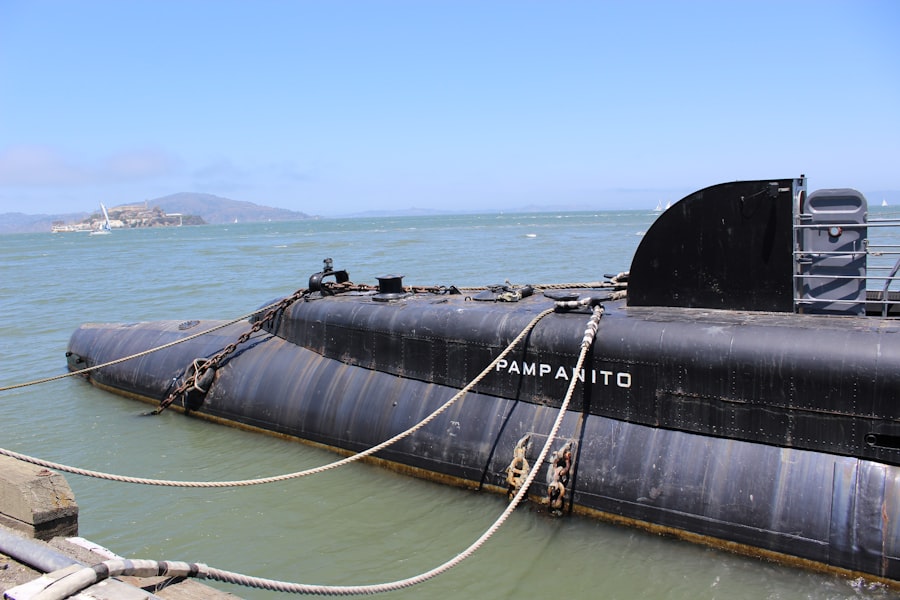
Following its involvement in the Cuban Missile Crisis, B-59 seemingly vanished from public consciousness for decades. The submarine’s fate became a subject of speculation and intrigue, as many wondered what had happened to this once-prominent vessel. While it was known that B-59 returned to Soviet waters after the crisis, details about its subsequent activities remained largely classified.
This air of mystery surrounding its later years contributed to its status as an enigmatic figure in naval history. In reality, B-59 continued to serve in various capacities within the Soviet Navy after the crisis.
The lack of information regarding B-59’s missions and eventual decommissioning only fueled public curiosity and speculation about its role in Cold War operations. As time passed, the submarine became a symbol of an era defined by secrecy and geopolitical tension.
The Submarine’s Involvement in Cold War Operations
Throughout its service life, B-59 participated in numerous Cold War operations that underscored its strategic importance to the Soviet Navy. The submarine was involved in intelligence-gathering missions, surveillance activities, and training exercises designed to enhance the capabilities of Soviet naval forces. Its ability to operate undetected made it an invaluable asset during a time when stealth and surprise were paramount in military strategy.
B-59’s operational history included deployments in various theaters, including the Mediterranean Sea and the North Atlantic. These missions often involved close encounters with NATO forces, where B-59’s crew had to navigate complex geopolitical landscapes while maintaining their vessel’s secrecy. The submarine’s involvement in these operations not only showcased its technical capabilities but also highlighted the broader tensions between East and West during this tumultuous period.
B-59’s Technical Specifications and Capabilities
| Metric | Details |
|---|---|
| Class | Foxtrot-class (Project 641) |
| Submarine Name | B-59 |
| Type | Diesel-electric attack submarine |
| Displacement | 1,950 tons surfaced, 2,475 tons submerged |
| Length | 91.3 meters (299.5 feet) |
| Beam | 7.5 meters (24.6 feet) |
| Draft | 5.1 meters (16.7 feet) |
| Propulsion | 3 diesel engines, 3 electric motors, 2 shafts |
| Speed | 16 knots surfaced, 15 knots submerged |
| Test Depth | 250 meters (820 feet) |
| Armament | 6 x 533 mm torpedo tubes, 1 x 45 mm deck gun (varied by configuration) |
| Crew | 77 officers and enlisted men |
| Notable Incident | Cuban Missile Crisis confrontation in October 1962 |
The technical specifications of B-59 reflect the innovative engineering that characterized the Foxtrot class submarines. With a length of approximately 90 meters and a displacement of around 2,400 tons when submerged, B-59 was designed for both endurance and agility. Its diesel-electric propulsion system allowed for submerged speeds of up to 16 knots, enabling it to evade detection while pursuing enemy vessels.
Equipped with four torpedo tubes capable of launching various types of torpedoes, including nuclear warheads, B-59 was a formidable adversary in underwater combat scenarios. The submarine also featured advanced sonar systems that enhanced its ability to detect enemy ships and submarines from considerable distances. These capabilities made B-59 an essential component of the Soviet Navy’s strategic arsenal during its operational years.
The Crew of B-59 and Their Experiences

The crew of B-59 comprised skilled sailors who underwent rigorous training to prepare for their roles aboard the submarine. Life on board was challenging; confined spaces and long deployments tested their physical and mental resilience. Crew members formed tight-knit bonds as they navigated the complexities of submarine life, often relying on each other for support during extended missions.
Many crew members later recounted their experiences during critical moments, such as the Cuban Missile Crisis. They described the tension that permeated their environment as they awaited orders from command while grappling with the potential consequences of their actions. These personal accounts provide valuable insights into the human element behind military operations, illustrating how individual decisions could have far-reaching implications during times of crisis.
The Legacy of B-59 in Soviet Naval History
B-59’s legacy within Soviet naval history is multifaceted, reflecting both its operational significance and its symbolic representation of Cold War tensions. As one of the earlier submarines designed for modern warfare, B-59 paved the way for subsequent generations of Soviet submarines that would incorporate advanced technologies and strategies. Its design principles influenced future naval engineering efforts, contributing to the evolution of submarine warfare.
Moreover, B-59 serves as a reminder of the precarious balance between military power and diplomacy during the Cold War era. The submarine’s involvement in high-stakes situations like the Cuban Missile Crisis underscores how close humanity came to nuclear conflict. As historians reflect on this period, B-59 stands out as a testament to both technological innovation and the potential consequences of geopolitical rivalry.
B-59’s Influence on Submarine Warfare Tactics
The operational history of B-59 has had a lasting impact on submarine warfare tactics employed by navies around the world. Its design and capabilities demonstrated the effectiveness of diesel-electric propulsion systems for stealthy underwater operations, influencing naval strategies that prioritize concealment and surprise attacks. The lessons learned from B-59’s missions have been integrated into modern submarine warfare doctrines.
Furthermore, B-59’s experiences during tense confrontations with NATO forces highlighted the importance of communication and decision-making under pressure. The potential for miscommunication or misinterpretation during critical moments has led to increased emphasis on training protocols for submarine crews worldwide. As navies continue to adapt to evolving threats, B-59’s legacy endures as a cautionary tale about the complexities of underwater warfare.
The Discovery and Salvage of B-59
In recent years, interest in B-59 has surged due to efforts to locate and salvage the submarine from its resting place on the ocean floor. In 2002, researchers discovered its wreckage off the coast of Cuba, reigniting public fascination with this historical vessel. The discovery prompted discussions about preserving maritime heritage and understanding the technological advancements that defined Cold War-era submarines.
Salvage operations aimed at recovering artifacts from B-59 have provided valuable insights into its construction and operational history. Items retrieved from the wreck site have been analyzed by historians and engineers alike, shedding light on the challenges faced by submariners during their missions.
B-59’s Impact on International Relations
The presence and actions of B-59 during critical moments in history have had significant implications for international relations between superpowers. Its role in the Cuban Missile Crisis exemplified how military assets could influence diplomatic negotiations and shape global perceptions of power dynamics. The submarine’s potential use of nuclear weapons underscored fears surrounding escalation and retaliation during tense standoffs.
As nations continue to navigate complex geopolitical landscapes today, lessons drawn from incidents involving vessels like B-59 remain relevant. The delicate balance between military readiness and diplomatic engagement continues to shape international relations, reminding leaders of the potential consequences that arise from miscalculations or misunderstandings.
The Declassification of B-59’s Secret Missions
In recent years, declassified documents have shed light on some of B-59’s previously secret missions, providing historians with new perspectives on its operational history. These revelations have allowed researchers to piece together a more comprehensive narrative about the submarine’s activities during pivotal moments in Cold War history. As more information becomes available, it becomes increasingly clear how integral B-59 was to Soviet naval strategy.
The declassification process has also sparked renewed interest in understanding how military operations were conducted during this era marked by secrecy and espionage. By examining B-59’s missions through newly available documents, scholars can better appreciate not only its technical capabilities but also its role within broader geopolitical contexts. This ongoing exploration ensures that B-59 remains an important subject for future generations studying naval history and international relations.
The Soviet submarine B-59, a Foxtrot-class vessel, played a significant role during the Cold War, particularly during the Cuban Missile Crisis. This submarine was involved in a tense standoff that could have escalated into a nuclear conflict. For more insights into the historical context and implications of such military engagements, you can read a related article on this topic at In The War Room.
WATCH THIS 🛑 The Submarine Captain Who Said NO to Nuclear War
FAQs
What is the Soviet submarine B-59?
The Soviet submarine B-59 was a Foxtrot-class diesel-electric submarine operated by the Soviet Navy during the Cold War. It is most famous for its involvement in the Cuban Missile Crisis in October 1962.
What class of submarine is B-59?
B-59 belonged to the Foxtrot class, a series of diesel-electric submarines built by the Soviet Union in the 1950s and 1960s. These submarines were designed for anti-surface and anti-submarine warfare.
What was the significance of B-59 during the Cuban Missile Crisis?
During the Cuban Missile Crisis, B-59 was deployed near Cuba and was detected by U.S. Navy forces. The submarine was subjected to depth charge signals intended to force it to surface. The crew, isolated and under extreme pressure, considered launching a nuclear torpedo, but the decision was ultimately vetoed by the submarine’s captain and political officer, preventing a potential nuclear conflict.
What armaments did the Foxtrot-class submarines like B-59 carry?
Foxtrot-class submarines were typically armed with torpedoes, including conventional and nuclear-capable torpedoes. B-59 was reportedly equipped with a nuclear torpedo, which was a key factor during the Cuban Missile Crisis incident.
What were the technical specifications of the Foxtrot-class submarines?
Foxtrot-class submarines were approximately 91 meters (300 feet) long, with a submerged displacement of around 2,500 tons. They had a maximum submerged speed of about 16 knots and were powered by diesel-electric engines. Their operational depth was roughly 250 meters.
What happened to the B-59 submarine after the Cuban Missile Crisis?
After the Cuban Missile Crisis, B-59 continued to serve in the Soviet Navy for several years. Like many Foxtrot-class submarines, it was eventually retired and decommissioned as newer submarine classes were introduced.
Why is the B-59 submarine historically important?
B-59 is historically important because it was involved in one of the most tense moments of the Cold War, where a nuclear war was narrowly avoided. The incident highlighted the risks of miscommunication and the importance of command decisions in nuclear deterrence.