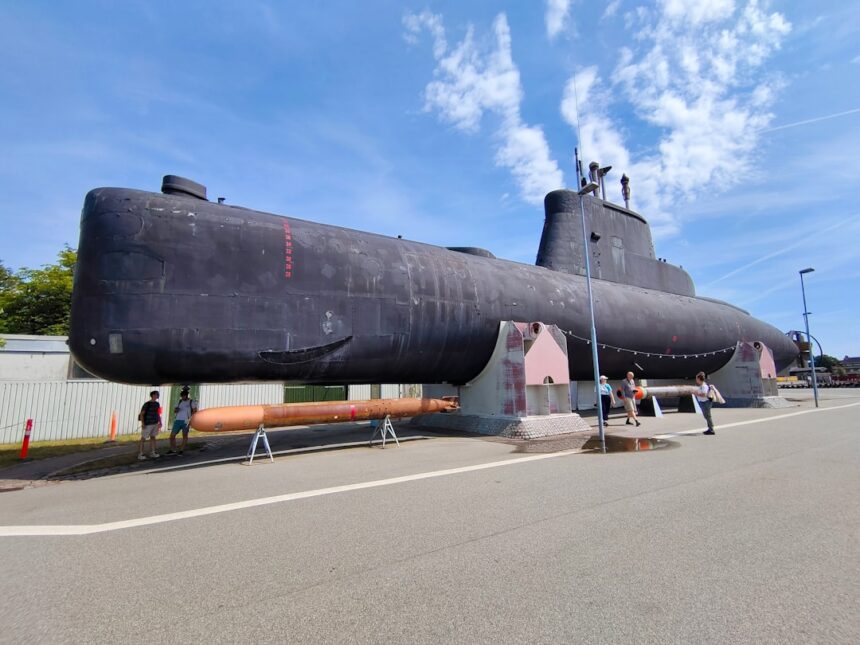
The Cold War, characterized by geopolitical tension between the United States and the Soviet Union, generated intense competition in military technology, particularly naval capabilities. Submarine development became central to this rivalry and a critical element of both superpowers’ strategic arsenals. The Soviet Union recognized that submarines could effectively deter Western naval forces, prompting an accelerated expansion of their underwater fleet.
This competition extended beyond numerical superiority to encompass technological advancement, stealth capabilities, and submarine-based nuclear weapons delivery systems. As Cold War tensions escalated, both superpowers increased their military investments. The United States and NATO allies developed advanced anti-submarine warfare capabilities, which prompted Soviet responses in submarine design and weapons systems.
The underwater domain became a sphere of technological competition where sonar systems, missile technology, and stealth innovations proved decisive. The Soviet Union developed a varied submarine fleet comprising ballistic missile submarines (SSBNs) for nuclear deterrence and attack submarines (SSNs) for tactical operations, reflecting the strategic importance of naval power in Cold War military doctrine.
Key Takeaways
- The Cold War spurred intense competition in submarine technology between the Soviet Union and the West.
- Soviet advancements in submarine design were driven by military needs and the arms race dynamics.
- Soviet submarines played a critical role during the Cuban Missile Crisis, highlighting their strategic importance.
- Economic and political challenges contributed to the decline of Soviet submarine technology before the Cold War ended.
- Post-Cold War, Russia has focused on modernizing its submarine fleet to maintain naval capabilities into the future.
The development of Soviet submarine technology
The development of Soviet submarine technology was marked by significant milestones that reflected both ambition and ingenuity. In the early years of the Cold War, the Soviet Union began to build submarines that could rival those of the United States. The introduction of nuclear-powered submarines in the 1950s represented a turning point, allowing for longer missions and greater operational range.
The first Soviet nuclear submarine, the K-3 Leninsky Komsomol, launched in 1958, showcased the USSR’s commitment to advancing its underwater capabilities. Throughout the 1960s and 1970s, Soviet engineers focused on enhancing stealth features and weaponry. The development of advanced sonar systems allowed submarines to detect enemy vessels from greater distances while remaining undetected themselves.
Additionally, the introduction of submarine-launched ballistic missiles (SLBMs) transformed the strategic landscape, enabling the Soviet Union to project nuclear power from beneath the ocean’s surface. This technological evolution not only bolstered the Soviet Navy’s capabilities but also instilled a sense of pride within the nation as it sought to assert itself as a superpower. The documentary reveals the shocking story of a KGB mole who infiltrated the highest levels of government.
The arms race and the impact on Soviet submarine technology

The arms race between the United States and the Soviet Union had profound implications for submarine technology on both sides. As each nation sought to outdo the other, investments in research and development surged. For the Soviets, this meant prioritizing advancements in submarine design that could withstand detection and countermeasures employed by Western forces.
The introduction of quieter propulsion systems and improved hull designs became essential as they aimed to create submarines that could operate undetected in hostile waters. Moreover, the arms race led to an escalation in the sophistication of weaponry carried by Soviet submarines. The integration of advanced torpedoes and cruise missiles allowed these vessels to engage targets with unprecedented precision.
The emphasis on multi-role capabilities meant that Soviet submarines could perform various missions, from strategic deterrence to anti-surface warfare. This adaptability not only enhanced their effectiveness but also reflected a broader strategy of maintaining a credible threat against NATO forces.
The rise of Soviet submarine dominance
By the late 1970s and early 1980s, the Soviet Union had established itself as a dominant force in submarine warfare. The introduction of classes such as the Typhoon and Delta submarines marked a significant leap in capability. The Typhoon-class submarines, with their massive size and ability to carry multiple SLBMs, became symbols of Soviet naval power.
These vessels were designed not only for survivability but also for striking fear into adversaries by showcasing an impressive arsenal capable of delivering nuclear payloads. The rise of Soviet submarine dominance was not merely a matter of technological superiority; it was also about strategic positioning. The USSR expanded its naval presence in key regions, including the Arctic and Mediterranean seas, allowing for greater operational flexibility.
This expansion was complemented by an extensive network of bases and support facilities that enabled sustained operations far from home waters. As a result, Soviet submarines became integral to the nation’s military strategy, serving as both a deterrent and a means of projecting power globally.
The Cuban Missile Crisis and the role of Soviet submarines
| Metric | Details |
|---|---|
| Documentary Title | The Silent Depths: Soviet Submarine Technology |
| Duration | 90 minutes |
| Release Year | 2023 |
| Focus Submarine Classes | Typhoon, Delta, Alfa, Kilo |
| Key Technologies Covered | Nuclear propulsion, stealth design, sonar systems, missile technology |
| Number of Expert Interviews | 12 |
| Archival Footage Included | Yes, from 1960s to 1990s |
| Production Country | Russia |
| Language | English (with Russian audio option) |
| Viewer Rating (out of 10) | 8.5 |
The Cuban Missile Crisis of 1962 stands as one of the most critical moments in Cold War history, highlighting the pivotal role that Soviet submarines played during this tense standoff. As tensions escalated between the United States and the Soviet Union over missile installations in Cuba, Soviet submarines were deployed to monitor U.S. naval movements and provide strategic options for Moscow.
These submarines operated under extreme secrecy, reflecting both their importance and vulnerability during this high-stakes confrontation. During the crisis, one particular incident involving a Soviet submarine nearly escalated into open conflict. A B-59 submarine, armed with nuclear torpedoes, found itself surrounded by U.S.
naval forces while attempting to evade detection. The captain faced immense pressure to respond to perceived threats from above, illustrating how close the world came to nuclear war due to miscommunication and misunderstanding. This episode underscored not only the strategic value of submarines but also their potential for catastrophic consequences if mismanaged during periods of heightened tension.
The fall of Soviet submarine technology

Despite its initial successes, the latter years of the Cold War saw a decline in Soviet submarine technology due to various factors. Economic stagnation plagued the USSR throughout the 1980s, leading to reduced funding for military projects, including submarine development. As resources dwindled, maintaining existing fleets became increasingly challenging, resulting in aging vessels that struggled to keep pace with advancements made by Western navies.
Additionally, political changes within the Soviet Union further complicated matters. The shift towards glasnost and perestroika under Mikhail Gorbachev led to a reevaluation of military priorities.
Consequently, many innovative projects were shelved or abandoned altogether, leaving the Soviet submarine fleet at risk of obsolescence as new technologies emerged globally.
The impact of economic and political factors on Soviet submarine technology
Economic constraints played a crucial role in shaping the trajectory of Soviet submarine technology during the final years of the Cold War. As the economy faltered, military spending faced scrutiny from policymakers who recognized that resources needed to be allocated more efficiently. This shift resulted in delays in new submarine programs and maintenance issues for existing vessels.
The once-mighty Soviet Navy found itself grappling with an aging fleet that struggled to compete with modern Western counterparts. Political factors also influenced decisions regarding submarine technology. The changing global landscape prompted discussions about arms reduction and disarmament, leading to treaties such as the Intermediate-Range Nuclear Forces Treaty (INF) signed in 1987.
These agreements necessitated cuts in nuclear arsenals and prompted a reevaluation of military strategies across both superpowers. For the Soviets, this meant reassessing their naval capabilities and focusing on maintaining a credible deterrent rather than pursuing aggressive expansion.
The end of the Cold War and its impact on Soviet submarine technology
The end of the Cold War marked a significant turning point for Soviet submarine technology as geopolitical dynamics shifted dramatically. With the dissolution of the Soviet Union in 1991, many military programs faced uncertainty amid budget cuts and restructuring efforts. The once-proud fleet was left vulnerable as maintenance became increasingly difficult due to financial constraints and political instability.
In this new era, many submarines were decommissioned or scrapped altogether as part of disarmament initiatives aimed at reducing tensions between former adversaries. However, some vessels were preserved or modernized for continued service under Russia’s new military framework. This transition period saw a focus on adapting existing technologies rather than pursuing ambitious new projects, reflecting both economic realities and changing strategic priorities.
The legacy of Soviet submarine technology
The legacy of Soviet submarine technology is multifaceted, encompassing both achievements and challenges that shaped naval warfare for decades to come. On one hand, innovations such as nuclear propulsion systems and advanced missile technologies set benchmarks for future developments worldwide. The ability to launch nuclear weapons from submarines fundamentally altered military strategy and deterrence theory during the Cold War era.
Conversely, the decline of Soviet submarine capabilities serves as a cautionary tale about overreliance on military might without adequate economic support or political stability. As Russia navigates its post-Soviet identity, lessons learned from past successes and failures continue to inform contemporary military strategies and technological advancements within its naval forces.
The modernization of Russian submarine technology
In recent years, Russia has embarked on an ambitious program to modernize its submarine fleet, seeking to reclaim its status as a formidable maritime power. This modernization effort includes developing new classes of submarines equipped with cutting-edge technologies designed for stealth and versatility. The Borei-class SSBNs represent a significant leap forward in capabilities, featuring advanced sonar systems and improved missile systems that enhance their deterrent role.
Additionally, Russia has invested in upgrading existing vessels through retrofitting programs aimed at extending their operational lifespan while incorporating modern technologies. These upgrades often focus on enhancing stealth features and integrating advanced weaponry capable of engaging targets at greater distances. As geopolitical tensions continue to shape global security dynamics, Russia’s commitment to modernizing its submarine fleet reflects an understanding of its strategic importance in contemporary military operations.
The future of Russian submarine technology
Looking ahead, Russian submarine technology is poised for further evolution as emerging threats necessitate ongoing innovation within its naval forces. With advancements in artificial intelligence (AI) and unmanned systems becoming increasingly prevalent across militaries worldwide, Russia is likely to explore integrating these technologies into its submarine operations. This could enhance situational awareness while reducing risks associated with manned missions.
Moreover, as climate change opens new maritime routes in polar regions, Russia’s focus on Arctic capabilities may drive future developments in submarine technology tailored for operations in extreme environments. The interplay between technological advancements and geopolitical considerations will undoubtedly shape Russia’s approach to underwater warfare in the coming years. In conclusion, while challenges remain regarding funding and international relations, Russia’s commitment to advancing its submarine technology reflects an understanding of its critical role within national defense strategies moving forward into an uncertain future.
For those interested in the intricate world of Soviet submarine technology, a fascinating documentary delves into the advancements and strategies that defined this era. To further explore the context and implications of these developments, you can read a related article on the subject at inthewarroom.
com/’>In The War Room. This resource provides additional insights and analyses that complement the documentary’s exploration of underwater warfare and technological innovation during the Cold War.
WATCH THIS 🛑 SHOCKING: The KGB Mole Who Made Every Soviet Submarine Visible
FAQs
What is the focus of the documentary on Soviet submarine technology?
The documentary explores the development, design, and operational history of Soviet submarine technology, highlighting key innovations and strategic roles during the Cold War era.
Which time period does the documentary cover?
The documentary primarily covers the Cold War period, from the late 1940s through the 1980s, when the Soviet Union heavily invested in submarine technology to compete with Western naval powers.
What types of Soviet submarines are featured in the documentary?
The documentary features various classes of Soviet submarines, including diesel-electric submarines, nuclear-powered attack submarines, ballistic missile submarines, and special-purpose submarines.
Does the documentary discuss the technological advancements made by the Soviet Union in submarine design?
Yes, it details advancements such as nuclear propulsion, sonar systems, missile technology, hull design, and stealth capabilities that were developed by Soviet engineers.
Are any specific Soviet submarine incidents or missions covered?
The documentary may cover notable incidents such as submarine accidents, espionage missions, and key naval engagements involving Soviet submarines, providing historical context and analysis.
Does the documentary include interviews with experts or former Soviet naval personnel?
Many documentaries on this topic include interviews with naval historians, military experts, and sometimes former Soviet submarine crew members to provide firsthand insights.
Is the documentary suitable for viewers without a technical background?
Most documentaries aim to balance technical details with accessible explanations, making the content understandable for general audiences interested in military history and technology.
Where can I watch the documentary on Soviet submarine technology?
Such documentaries are often available on streaming platforms, military history channels, educational websites, or through DVD releases from documentary producers.
Does the documentary compare Soviet submarine technology with that of other countries?
Some documentaries include comparative analysis between Soviet submarines and those of the United States and NATO allies to highlight differences in design philosophy and capabilities.
What is the significance of Soviet submarine technology in naval history?
Soviet submarine technology played a crucial role in Cold War naval strategy, contributing to nuclear deterrence, intelligence gathering, and maintaining a balance of power on the seas.