The Predictability of Centralized Military Control
Centralized military control, a system where strategic and operational decisions are vested in a single, overarching authority, possesses an inherent predictability. This predictability, however, is a double-edged sword. While it can foster discipline and facilitate rapid execution of directives, it also carries significant risks of ossification, strategic inflexibility, and a susceptibility to the biases and limitations of the central command.
Centralized military control rests upon several fundamental pillars that contribute to its predictable nature. Understanding these pillars is crucial to appreciating both its strengths and weaknesses.
Hierarchical Structure and Chain of Command
The bedrock of centralized control is the rigid hierarchical structure, replicating a top-down pyramid. Orders flow from the highest echelon – be it a supreme commander, a joint chiefs of staff, or a political leadership – down through increasingly subordinate levels. Each level has clearly defined responsibilities and reporting lines. This ensures that once a decision is made at the apex, its dissemination is orderly and, in theory, unambiguous. The predictable aspect here lies in the process of command and control: information is channeled, decisions are ratified, and directives are transmitted along established pathways. Deviations from this chain are discouraged, and often punished. This uniformity of communication and authority predictable flow of information simplifies coordination, especially in large-scale operations.
Doctrine and Standard Operating Procedures
Complementing the hierarchy is a robust body of military doctrine and a comprehensive set of Standard Operating Procedures (SOPs). Doctrine provides the theoretical framework for warfare, outlining accepted principles, strategies, and tactics. SOPs, on the other hand, offer step-by-step instructions for executing specific tasks and operations. The predictability of centralized control is amplified by the reliance on these established guidelines. When faced with a familiar scenario, subordinate units can anticipate the likely courses of action and the expected responses from higher command, as these are often dictated by pre-defined protocols. The predictability here is in the repetition of successful or conventionally accepted methods. This reduces cognitive burden on lower echelons, allowing them to focus on execution rather than on problem-solving novel strategic dilemmas.
Resource Allocation and Mobilization
Centralized authorities typically control the allocation of resources – personnel, materiel, intelligence, and logistics. This control allows for the predictable mobilization of forces and the channeling of support to designated objectives. When a strategic goal is set, the central command can identify the required resources and direct their deployment in a systematic manner. The predictability lies in the understanding that resources will be marshaled according to a plan conceived at the top. This can be highly efficient for large-scale, synchronized operations where precise timing and coordinated deployment are paramount. For instance, a large-scale invasion or a major defensive posture would rely on the predictable flow of troops, equipment, and supplies orchestrated by a central body.
The predictability of centralized military control has been a topic of significant discussion in recent years, particularly in light of evolving warfare dynamics. A related article that delves into this subject can be found at In the War Room, where experts analyze the implications of centralized decision-making in military operations and its impact on strategic outcomes. This exploration provides valuable insights into how centralized control can enhance or hinder military effectiveness in various scenarios.
PredictableStrengths of Centralized Control
The systematic nature of centralized military control yields several discernible strengths that contribute to its enduring appeal in military organization.
Cohesion and Unity of Purpose
One of the most significant predictable strengths is the fostering of cohesion and a unified sense of purpose. With a single command making all major decisions, there is a clear direction for the entire military apparatus. All units, regardless of their geographical location or specific role, are ostensibly working towards the same overarching strategic objectives. This minimizes internal conflict or competing agendas that might arise in decentralized command structures. The predictability here is in the singular focus of effort, channeling energy and resources towards a pre-defined goal in a manner that is expected and understood by all within the chain of command. This unity can be particularly potent during times of crisis or when facing a unified adversary.
Rapid Decision-Making and Execution (in certain contexts)
When conditions are optimal, centralized control can facilitate remarkably rapid decision-making and execution, especially in situations where information is clear and the options are relatively straightforward. A single authority, unburdened by the need to consult numerous subordinate commands, can issue directives swiftly. The predictability lies in the swiftness that can be achieved when the path forward is clear and uncontested. For example, in a well-rehearsed maneuver or a response to a known enemy tactic, a central command can authorize an action with minimal delay, and subordinate units, having been trained to expect and execute such orders, can implement them with speed and efficiency.
Strategic Concentration of Force
Centralized command allows for the predictable concentration of military force at decisive points. The central authority can divert resources and units from less critical sectors to support a primary offensive or defensive effort. This ability to mass overwhelming power where it is most needed is a significant advantage. The predictability stems from the understanding that the command will shift focus and resources to achieve maximum impact. Rather than having forces dispersed and unable to achieve local superiority, a centralized system can deliberately project power to achieve strategic objectives through calculated reinforcement.
Predictable Weaknesses and their Manifestations

Despite its perceived strengths, the predictability of centralized military control also breeds predictable weaknesses, often emerging when faced with complexity, uncertainty, or adaptation.
Inertia and Resistance to Change
The very structures that promote predictability in centralized systems can also lead to inertia and a resistance to change. Once doctrines and procedures become entrenched, they can be difficult to alter, even when the operational environment evolves and renders them obsolete. The predictable outcome is that a once effective doctrine might persist far past its utility, leading to strategic miscalculations. This can manifest in a reluctance to adopt new technologies or adapt to novel enemy tactics if they fall outside the established operational paradigms. The system becomes predictable in its adherence to the past, even at the expense of future success.
Information Bottlenecks and Distortion
Centralized control is inherently vulnerable to information bottlenecks. Information must flow from the periphery to the center, where decisions are made, and then back out again. This multi-stage process can lead to delays, inaccuracies, and distortion of critical intelligence. The predictability here is the potential for the message to be altered as it passes through each layer of command. What originates as clear, actionable intelligence at the tactical level might become diluted, misinterpreted, or incomplete by the time it reaches the strategic decision-makers. Conversely, directives from the center can also be misinterpreted or poorly understood by those at the sharp end, especially if they are not adequately communicated or if the tactical reality on the ground differs significantly from the assumptions at headquarters.
Susceptibility to Command Bias and Groupthink
Centralized decision-making concentrates the intellectual capital and potential biases of a limited group of individuals. This can lead to a phenomenon known as groupthink, where dissent is discouraged, and a consensus is reached without critical evaluation of alternatives. The predictability is the tendency of the leadership to fall into a shared perspective, reinforcing their initial assumptions and potentially overlooking crucial dissenting opinions. This can result in strategic blunders rooted in a failure to consider all viable options or to adequately challenge prevailing wisdom. The echo chamber effect becomes a predictable feature of the decision-making process.
Inflexibility in Dynamic Environments
The highly structured and procedural nature of centralized control can render it inflexible in highly dynamic and unpredictable operational environments. When faced with unforeseen circumstances or rapidly evolving battlefield conditions, subordinate units may be hesitant or unable to deviate from pre-approved plans without explicit authorization from higher command. The predictable outcome is a delayed or ineffective response to emergent threats. In situations requiring rapid improvisation and on-the-spot adaptation, a rigid chain of command can become a liability, as valuable time is lost waiting for directives that may be based on outdated information.
The Impact of Technology on Predictability
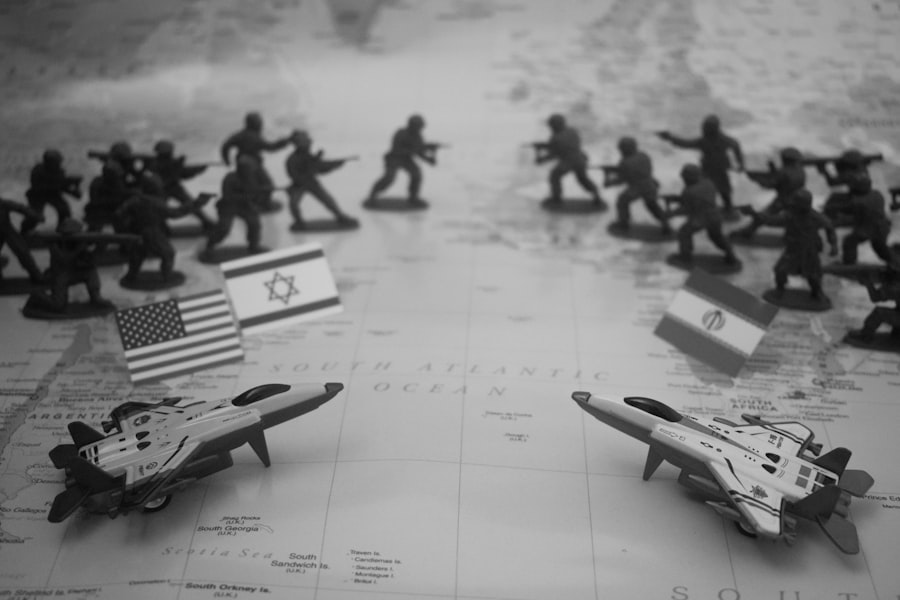
Technological advancements have had a profound and often paradoxical impact on the predictability of centralized military control, offering new avenues for both enhancement and complication.
Enhanced Command and Control Systems
Modern technology, particularly in the realm of communications and information systems, has the potential to significantly improve the speed and accuracy of information flow within a centralized structure. Real-time data feeds, secure communication networks, and sophisticated command and control platforms can theoretically mitigate some of the traditional bottlenecks. The predictability here is the enhanced capacity for instantaneous information transmission and the more accurate relay of directives. This can lead to more synchronized operations and a more responsive central command. For example, satellite imagery and drone surveillance can provide immediate situational awareness, allowing central command to make more informed decisions.
The Proliferation of Data and the Challenge of Synthesis
Conversely, the sheer volume of data generated by modern warfare can overwhelm even sophisticated systems. The ability to collect vast amounts of information does not automatically translate into effective decision-making. Synthesizing this data, discerning relevant patterns, and extracting actionable intelligence becomes a significant challenge. This can lead to information overload, where the very tools designed to enhance predictability inadvertently create an environment of chaos. The predictable outcome is a struggle to process and interpret the deluge of data, potentially leading to slower decision-making or decisions based on incomplete or misinterpreted information.
Autonomy and the Erosion of Centralized Control
The increasing sophistication of autonomous systems, artificial intelligence, and advanced weaponry presents a complex challenge to the traditional model of centralized control. If systems are designed to operate with a degree of autonomy, the direct, step-by-step predictability of human command is altered. While the overall strategic intent might still be centralized, the execution of specific actions might be delegated to intelligent agents. The predictability here shifts from the direct control of every action to the predictable behavior of the autonomous systems themselves, which must be meticulously programmed and validated. This raises profound questions about accountability and the nature of human oversight.
The concept of predictability in centralized military control has been a topic of considerable discussion among defense analysts. A recent article highlights how centralized decision-making can enhance operational effectiveness while also introducing potential vulnerabilities. For those interested in exploring this further, you can read the full analysis in this insightful piece on military strategy. The article emphasizes the balance between maintaining control and allowing for flexibility in dynamic combat environments, which is crucial for modern warfare. To delve deeper into this subject, check out the article [here](https://www.inthewarroom.com/).
Case Studies and Historical Perspectives
| Country | Year | Level of Centralized Military Control | Measure of Predictability |
|---|---|---|---|
| United States | 2020 | High | Low |
| Russia | 2020 | High | Medium |
| China | 2020 | Very High | High |
Examining historical instances and contemporary conflicts provides valuable insights into the predictable patterns of centralized military control, demonstrating both its successes and failures.
Historical Successes: The Napoleonic Wars and Blitzkrieg
Throughout history, centralized military control has been instrumental in achieving significant military victories. Napoleon Bonaparte, for instance, was a master of centralized command, meticulously planning his campaigns and directing his armies with an iron will and a clear strategic vision. His ability to concentrate forces at decisive points and to rapidly exploit opportunities, facilitated by a well-disciplined and hierarchical army, led to a series of astonishing successes. Similarly, the German “Blitzkrieg” doctrine of World War II relied heavily on a centralized command structure that enabled rapid, coordinated attacks leveraging air power, armored formations, and mechanized infantry. The predictability of these strategies lay in their clear objectives, meticulously planned execution, and the centralized authority’s ability to adapt and maintain momentum.
Historical Failures: The Stalemate of Static Warfare and Vietnam
Conversely, centralized control has also been a hallmark of strategic stagnation and failure. The trench warfare of World War I, characterized by rigid adherence to pre-war doctrines and a disconnect between high command and the realities of the battlefield, led to years of attrition and immense casualties. The predictable outcome was a brutal stalemate, where centralized directives failed to break the deadlock. In the Vietnam War, the US military’s reliance on a centralized command structure, focused on attrition and body counts, proved ill-suited to the realities of a guerrilla insurgency. The centralized command struggled to adapt to the decentralized nature of the enemy and often issued directives that were tactically unsound or irrelevant to the broader strategic context, leading to predictable cycles of frustration and limited success.
The Modern Context: Balancing Centrality and Decentralization
Contemporary military thought increasingly emphasizes a balance between centralized strategic direction and a degree of decentralized operational autonomy. The challenges of modern warfare, with its speed, complexity, and the potential for asymmetric threats, demand a system that is both cohesive and adaptable. The predictable lesson from recent conflicts is that an overly rigid centralized system can be brittle, while excessive decentralization can lead to a lack of coordination and strategic coherence. The ideal, therefore, often lies in finding the optimal point of control, where strategic intent is clearly defined and disseminated from the center, but where subordinate commanders are empowered to adapt and make decisions within that framework to effectively address rapidly evolving battlefield conditions.
Conclusion
The predictability of centralized military control is a foundational characteristic that shapes its strengths and weaknesses. Its inherent structure facilitates cohesion, unity of purpose, and the potential for rapid, decisive action, particularly in well-defined scenarios. However, this very predictability can breed inertia, information bottlenecks, and a susceptibility to command bias, rendering the system inflexible and vulnerable in dynamic and unpredictable environments. As military technology evolves and the nature of warfare transforms, the challenge for any military organization lies in harnessing the benefits of centralized oversight while mitigating its inherent risks. The predictable path forward involves a continuous evaluation and adaptation of command structures, striving for a dynamic equilibrium that allows for both strategic clarity and operational agility.
FAQs
What is centralized military control?
Centralized military control refers to the concentration of decision-making authority and command within a single entity or organization, typically at the national level. This can include the centralization of military planning, operations, and resource allocation.
What factors contribute to the predictability of centralized military control?
Several factors can contribute to the predictability of centralized military control, including the clarity of command structure, the effectiveness of communication and information sharing, the level of training and discipline within the military, and the stability of the political leadership.
How does the predictability of centralized military control impact military operations?
The predictability of centralized military control can impact military operations in various ways. A high level of predictability can lead to more efficient planning and execution of operations, better coordination among different units, and a clearer understanding of the chain of command. However, excessive predictability can also make military operations more vulnerable to enemy strategies and tactics.
What are the potential drawbacks of centralized military control?
While centralized military control can provide clear lines of authority and decision-making, it can also lead to bureaucratic inefficiencies, slower response times, and a lack of flexibility in adapting to rapidly changing situations. Additionally, centralized control can create vulnerabilities if the central command is compromised or incapacitated.
How do different countries approach centralized military control?
Different countries have varying approaches to centralized military control, depending on their historical, political, and strategic contexts. Some countries maintain highly centralized control, while others may decentralize certain aspects of military decision-making to regional or local authorities. The balance between centralized and decentralized control is often influenced by a country’s military doctrine, organizational structure, and historical experiences.