
This article explores the significant role of vacuum tube technology in the design and operation of the Mikoyan-Gurevich MiG-25, a high-altitude interceptor and reconnaissance aircraft developed by the Soviet Union. While often portrayed as a technological anachronism, the use of vacuum tubes in the MiG-25 reflects design philosophies, manufacturing capabilities, and strategic considerations of the era.
The MiG-25, NATO reporting name “Foxbat,” emerged from the Cold War arms race as a direct response to perceived threats posed by high-altitude, supersonic reconnaissance aircraft and bombers under development in the West, notably the B-70 Valkyrie and the SR-71 Blackbird. Its primary mission roles were to intercept these strategic assets and provide high-speed, high-altitude reconnaissance.
Development Context and Design Imperatives
Development of the MiG-25 began in the late 1950s, with initial flights occurring in 1964. The aircraft was designed for extreme speed and altitude, necessitating a robust airframe and electronic systems capable of operating under challenging environmental conditions. The Soviet design bureaux had to contend with material limitations and the evolving landscape of electronic component technology.
Performance Characteristics
The MiG-25 was renowned for its exceptional speed, achieving Mach 2.83 (and reportedly even Mach 3.2, though this was detrimental to engine life). This performance was crucial for its interceptor role, allowing it to close distances rapidly with adversary aircraft. Its operational ceiling was also remarkable, exceeding 20,000 meters. These extreme operating parameters presented unique challenges for avionics design.
The MIG-25, known for its impressive speed and altitude capabilities, utilized vacuum tube technology in its avionics systems, which played a crucial role in its performance during the Cold War. For a deeper understanding of how vacuum tubes were integrated into the design and functionality of the MIG-25, you can read a related article that explores the historical significance and technical aspects of this technology. For more information, visit this article.
Vacuum Tubes: A Deliberate Choice
The decision to primarily employ vacuum tube technology in the MiG-25’s radar and other avionics systems was not a mere oversight or a sign of technological backwardness. Instead, it was a calculated engineering choice influenced by several factors prevalent in the Soviet Union during the 1960s.
Radiation Hardening
One of the most critical advantages of vacuum tubes over early semiconductor devices was their inherent resistance to electromagnetic pulse (EMP) and radiation. In the context of potential nuclear conflict, this “radiation hardening” was a significant strategic asset. While early transistors were highly susceptible to damage from EMP, vacuum tubes, particularly those designed for military applications, could withstand significantly higher levels of radiation, ensuring continued operation in a post-nuclear exchange environment. This characteristic made them a robust choice for critical military hardware.
High Power Output
Radar systems, especially those designed for long-range target acquisition, require significant power output for effective signal transmission. Vacuum tubes, particularly magnetrons and klystrons, were (and for some applications, still are) superior to early solid-state devices in generating high-frequency, high-power radio waves. The MiG-25’s powerful “Foxfire” radar, capable of detecting targets at considerable distances, relied heavily on these vacuum tube-based transmitters. Solid-state technology of the era simply could not match the power density necessary for such performance.
Manufacturing Capabilities and Reliability
During the period of the MiG-25’s development, the Soviet Union had well-established infrastructure for manufacturing vacuum tubes. This included robust supply chains and proven production techniques for military-grade components. While semiconductor technology was advancing rapidly, particularly in the West, Soviet transistor manufacturing capabilities at the time were not as mature or as reliable for the demanding specifications of high-performance military aircraft. Vacuum tubes offered a known quantity, a technology whose failure modes were understood and could be engineered around. This provided a higher degree of certainty regarding the system’s operational readiness and longevity.
The RP-25 Smerch-A Radar System
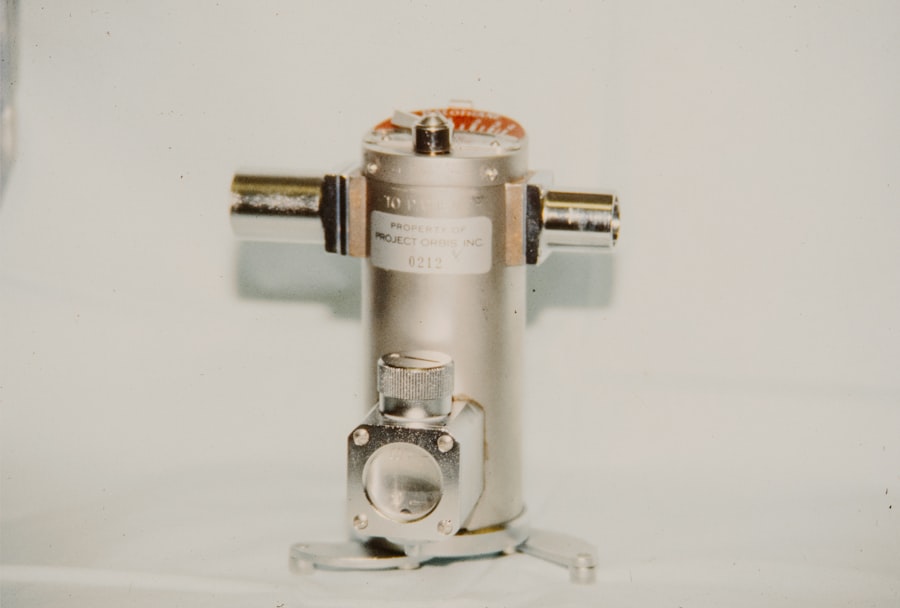
The heart of the MiG-25’s intercept capabilities was its RP-25 Smerch-A (NATO reporting name “Foxfire”) radar system. This system was a significant engineering achievement for its time, despite its reliance on vacuum tube technology.
Technical Specifications and Capabilities
The Smerch-A was a powerful pulse-Doppler radar system primarily designed for air-to-air target acquisition and tracking. It operated in the X-band and provided long-range detection capabilities, reportedly up to 100 kilometers for bomber-sized targets. Its ability to track multiple targets simultaneously was also a significant advancement. However, its effectiveness against low-flying targets was limited due to inherent design constraints and ground clutter.
Vacuum Tube Components within Smerch-A
The Smerch-A’s core components, including its transmitter and receiver front-end, were predominantly vacuum tube-based. The high-power output required for long-range detection was generated by magnetrons, while klystrons were utilized for amplification stages. The processing of radar signals, though often bulky, also employed arrays of smaller vacuum tubes. These components, while robust, also contributed to the system’s considerable weight and power consumption.
Maintenance and Operational Aspects
The reliance on vacuum tubes meant that the radar system had specific maintenance requirements. Tubes have a finite lifespan and are prone to degradation over time, necessitating regular replacement. This was a known operational characteristic, and maintenance procedures were established to address these demands. The sheer number of tubes also added to the complexity of fault finding when issues arose.
Disadvantages and Trade-offs

While vacuum tubes offered specific advantages, their implementation in the MiG-25 also brought inherent disadvantages that modern systems have largely overcome. These trade-offs were accepted as part of the overarching design philosophy.
Size, Weight, and Power Consumption (SWaP)
One of the most noticeable drawbacks of vacuum tube technology is its contribution to the Size, Weight, and Power (SWaP) footprint of avionics systems. Each tube is larger and heavier than its semiconductor equivalent, and they require significantly more power to operate, primarily due to heated cathodes. This translated into a radar system that was physically substantial, demanding considerable electrical power from the aircraft’s generators, and generating a significant amount of waste heat. This heat required extensive cooling systems to maintain optimal operating temperatures for the sensitive electronics.
Heat Generation
The operational principle of a vacuum tube involves heating a cathode to emit electrons. This process inherently generates a considerable amount of heat. In a complex system like a radar, with hundreds or thousands of tubes, cumulative heat generation becomes a major engineering challenge. This necessitated the implementation of intricate cooling systems, which added further to the aircraft’s weight and complexity, and consumed additional power.
Reliability and Lifespan
While Soviet vacuum tubes were noted for their robustness against EMP and radiation, their overall component reliability and lifespan, when compared to modern semiconductors, were generally lower. Tubes could fail due to filament burnout, degradation of the vacuum, or mechanical stress. This translated into a higher rate of component replacement and routine maintenance checks, potentially impacting aircraft availability.
The MIG-25, known for its impressive speed and altitude capabilities, utilized vacuum tube technology in its avionics systems, which played a crucial role in its performance during the Cold War. This technology, although considered outdated by modern standards, was pivotal in ensuring the aircraft’s reliability and functionality in various combat scenarios. For a deeper understanding of how vacuum tubes influenced military aviation, you can read more in this insightful article on vacuum tube technology.
The Legacy of Tube Technology in the MiG-25
| Metric | Value | Notes |
|---|---|---|
| Type of Vacuum Tubes Used | High-frequency triodes and tetrodes | Used in radar and avionics systems |
| Operating Frequency Range | Up to 3 GHz | Enables high-speed signal processing |
| Tube Count in Avionics | Approximately 100-150 tubes | Varies by specific system and production batch |
| Power Consumption | Higher than solid-state equivalents | Vacuum tubes require significant power and cooling |
| Reliability | Robust under high temperature and radiation | Preferred for high-speed, high-altitude flight conditions |
| Weight Impact | Increased avionics weight | Vacuum tubes are heavier than modern solid-state components |
| Service Life | Approximately 1000-2000 hours | Dependent on operating conditions and maintenance |
The MiG-25 served for decades, with some variants still operational in limited numbers. Its reliance on vacuum tube technology provides a fascinating case study in Cold War engineering and strategic decision-making.
Enduring Relevance in Specific Niches
While transistors and integrated circuits have largely supplanted vacuum tubes in most electronic applications, tubes retain niches where their specific characteristics remain advantageous. High-power RF amplification, certain audio applications, and indeed, radiation-hardened military systems continue to see limited use of tube technology. The MiG-25 stands as a large-scale example of military application where these specific advantages outweighed the disadvantages at the time.
A Period Specific Solution
The MiG-25’s avionics reflect a specific technological and strategic epoch. It was a solution crafted from the available tools and knowledge of its time, designed to meet a very particular set of threats. As semiconductor technology rapidly advanced throughout the 1970s and 1980s, subsequent aircraft designs progressively moved away from vacuum tubes. The Mig-31, a direct successor to the MiG-25, incorporated significantly more solid-state technology in its radar system, illustrating this evolutionary shift.
Lessons Learned
The MiG-25’s design demonstrates that technological choices are rarely made in a vacuum (no pun intended). They are deeply intertwined with geopolitical realities, industrial capabilities, and a careful assessment of trade-offs. The decision to employ vacuum tubes effectively solved immediate problems related to power output, radiation hardening, and manufacturing feasibility, even if it introduced challenges related to SWaP and maintenance. It is a powerful reminder that “best” technology is context-dependent, a dynamic target constantly shifting with new innovations and strategic imperatives.

WATCH NOW ▶️ STOP: The $100 Billion Titanium Myth Exposed
FAQs
What role did vacuum tube technology play in the MiG-25 aircraft?
Vacuum tube technology was used in the MiG-25’s avionics and radar systems, providing reliable high-frequency performance and resistance to electromagnetic pulses, which was crucial for the aircraft’s high-speed reconnaissance and interception missions.
Why was vacuum tube technology chosen over solid-state electronics in the MiG-25?
During the MiG-25’s development in the 1960s, vacuum tubes were preferred because they could withstand the extreme temperatures and electromagnetic interference encountered at Mach 3 speeds better than early solid-state components.
How did vacuum tubes affect the maintenance and reliability of the MiG-25?
Vacuum tubes required more frequent maintenance and were bulkier than solid-state electronics, but they offered greater durability under high-stress conditions, contributing to the MiG-25’s operational reliability despite its demanding performance requirements.
Are vacuum tubes still used in modern military aircraft like the MiG-25?
No, modern military aircraft have largely replaced vacuum tube technology with advanced solid-state electronics, which are smaller, more efficient, and more reliable, although vacuum tubes were essential in earlier high-speed aircraft like the MiG-25.
What advantages did vacuum tube technology provide in the MiG-25’s radar system?
Vacuum tubes enabled the MiG-25’s radar to operate effectively at high frequencies and resist electromagnetic pulses, allowing for long-range target detection and tracking at extreme speeds, which was a significant advantage during its service period.