The nuclear warhead launch sequence is a complex and highly sensitive process that combines military strategy, technology, and international relations. Understanding this sequence is essential as nations continue to manage nuclear armament challenges. The launch sequence extends beyond technical procedures to reflect geopolitical realities, where power dynamics can rapidly change based on momentary decisions.
Nuclear strikes carry enormous risks, including catastrophic casualties and permanent environmental damage. Nuclear deterrence remains fundamental to several countries’ national security frameworks. The protocols governing nuclear weapon launches incorporate multiple authorization, verification, and execution layers, carefully designed to prevent accidental deployment while maintaining operational readiness during crises.
Each step in the sequence requires meticulous attention to balance safety with military preparedness for what would be one of the most consequential military actions possible.
Key Takeaways
- Nuclear warhead launch involves a highly structured sequence from authorization to liftoff.
- Multiple security and authentication steps ensure only authorized personnel can initiate launch.
- Target selection and mission planning are critical for operational effectiveness and strategic goals.
- Pre-launch procedures include warhead arming, vehicle integration, and comprehensive system checks.
- The final launch command triggers ignition and liftoff, marking the culmination of the launch sequence.
Overview of Nuclear Warhead Launch Sequence Components
The nuclear warhead launch sequence comprises several critical components that work in concert to facilitate a successful launch. Each element is designed to ensure that the process is secure, reliable, and efficient. At its core, the sequence begins with authorization from the highest levels of government, typically involving the head of state or designated military officials.
This initial step is crucial, as it establishes the legitimacy of the launch order and sets in motion a series of actions that must be executed with precision. Following authorization, the next components involve authentication processes that verify the identity of those issuing commands. This is essential to prevent unauthorized access to nuclear capabilities.
Once authentication is confirmed, target selection and mission planning take place, where military strategists determine which targets will be engaged and the objectives of the strike. This phase is critical for ensuring that the use of nuclear weapons aligns with national defense strategies and international law. The subsequent steps involve pre-launch preparations, arming and fuzing of warheads, integration with launch vehicles, final systems checks, and ultimately, the launch command authorization.
Each component is interdependent, underscoring the complexity and seriousness of launching a nuclear weapon.
Step 1: Authorization and Authentication Process
The authorization and authentication process serves as the bedrock of the nuclear launch sequence. It begins with a clear directive from the nation’s leadership, often referred to as “the football” in U.S. military parlance—a briefcase containing communication tools and codes necessary for launching nuclear weapons.
This briefcase is always in proximity to the president or designated authority, ensuring immediate access in times of crisis. The decision to launch is not taken lightly; it requires careful consideration of geopolitical ramifications and potential consequences. Once authorization is given, authentication follows to confirm that the order is legitimate.
This process typically involves a series of codes or passwords that must be verified through secure communication channels. The use of dual-key systems—where two individuals must simultaneously authorize a launch—adds an additional layer of security. This method mitigates risks associated with unilateral decision-making and ensures that multiple parties are involved in what is arguably one of the most consequential decisions a leader can make.
The rigorous nature of this process reflects an understanding that once initiated, there is no turning back.
Step 2: Target Selection and Mission Planning
After authorization and authentication are secured, attention shifts to target selection and mission planning. This phase is critical as it determines which locations will be targeted and what objectives are intended to be achieved through the strike. Military strategists analyze various factors, including geopolitical significance, potential collateral damage, and the strategic value of each target.
The goal is to maximize effectiveness while minimizing unintended consequences. Mission planning also involves assessing the capabilities of enemy defenses and determining the most effective delivery methods for the warheads. This may include considerations for missile trajectories, timing, and coordination with other military assets.
The complexity of this step cannot be overstated; it requires a deep understanding of both military tactics and international relations. Decisions made during this phase can have far-reaching implications, influencing not only immediate military outcomes but also long-term diplomatic relations between nations.
Step 3: Pre-Launch Preparations
| Step | Description | Typical Duration | Responsible Entity | Security Measures |
|---|---|---|---|---|
| 1 | Detection of Threat | Seconds to Minutes | Early Warning Systems | Automated Surveillance, Redundancy |
| 2 | Verification of Threat | Minutes | Command and Control Centers | Multiple Intelligence Sources |
| 3 | Decision to Launch | Minutes | National Leadership (e.g., President) | Authentication Codes, Two-Person Rule |
| 4 | Authentication of Launch Order | Seconds | Launch Officers | Permissive Action Links (PALs) |
| 5 | Preparation of Warhead | Seconds to Minutes | Missile Crew / Submarine Crew | Physical Security, Tamper Detection |
| 6 | Launch Command Execution | Seconds | Launch Control Personnel | Dual-Key System |
| 7 | Missile Launch | Immediate | Automated Systems | Fail-Safe Mechanisms |
| 8 | Post-Launch Confirmation | Minutes | Command and Control Centers | Telemetry Monitoring |
Pre-launch preparations are essential for ensuring that all systems are ready for execution once a launch order has been confirmed. This stage involves a series of checks and balances designed to verify that all equipment is functioning correctly and that personnel are prepared for their roles in the launch sequence. Technicians conduct thorough inspections of missile systems, warheads, and launch platforms to ensure operational readiness.
Additionally, communication systems are tested to confirm that secure lines are functioning properly. This step is vital because any breakdown in communication could lead to catastrophic errors during the launch process. Personnel involved in pre-launch preparations undergo rigorous training to ensure they can respond effectively under pressure.
The meticulous nature of these preparations reflects an understanding that even minor oversights can have dire consequences in a nuclear context.
Step 4: Warhead Arming and Fuzing

Once pre-launch preparations are complete, attention turns to warhead arming and fuzing—an intricate process that ensures nuclear warheads are ready for deployment while maintaining safety protocols until the moment of launch. Arming involves activating the warhead’s internal systems, which may include initiating safety mechanisms designed to prevent accidental detonation. This step requires precision and adherence to strict protocols to mitigate risks associated with handling such powerful weapons.
This aspect is crucial for maximizing the effectiveness of a nuclear strike while minimizing collateral damage. The fuzing process must be carefully calibrated based on target characteristics and mission objectives.
The complexity involved in arming and fuzing underscores the need for highly trained personnel who can execute these tasks with precision under potentially stressful conditions.
Step 5: Launch Vehicle Integration
The integration of warheads with their respective launch vehicles represents another critical phase in the nuclear launch sequence. This step involves physically attaching the armed warheads to delivery systems—such as intercontinental ballistic missiles (ICBMs) or submarine-launched ballistic missiles (SLBMs)—ensuring that they are securely mounted and ready for launch. The integration process requires meticulous attention to detail, as any misalignment or error could jeopardize the entire operation.
During this phase, technicians conduct final inspections to confirm that all systems are functioning correctly and that safety protocols are adhered to throughout the integration process. Additionally, communication between various teams involved in this step is vital; coordination ensures that everyone understands their roles and responsibilities as they prepare for launch. The successful integration of warheads with launch vehicles is a testament to the extensive planning and preparation that precedes any potential nuclear strike.
Step 6: Final Systems Check and Countdown
As preparations near completion, final systems checks are conducted to ensure that all components are functioning optimally before proceeding with the countdown to launch. This stage involves comprehensive diagnostics on both warheads and delivery systems, verifying that all systems are operational and ready for execution. Technicians meticulously review data from various sensors and control systems to confirm that everything meets established safety standards.
The countdown itself serves as both a psychological preparation for personnel involved in the launch sequence and a practical measure to ensure all systems are aligned for execution. During this time, teams remain on high alert, ready to respond to any last-minute issues or changes in circumstances. The final systems check and countdown represent a culmination of extensive planning and preparation; they embody both the gravity of launching nuclear weapons and the commitment to ensuring that such actions are executed with precision.
Step 7: Launch Command Authorization
With all systems checked and ready for action, attention shifts to launch command authorization—the final step before actual execution occurs. This phase requires confirmation from designated authorities that all previous steps have been completed satisfactorily and that conditions remain appropriate for launching nuclear weapons. The decision-making process at this stage often involves consultation among military leaders and advisors who assess real-time intelligence data.
The gravity of this moment cannot be overstated; once authorization is granted, there is no turning back. The decision-makers must weigh potential consequences against strategic objectives while considering international ramifications. This step underscores the importance of having robust communication channels in place; any breakdown in communication could lead to misunderstandings or miscalculations during this critical juncture.
Step 8: Ignition and Liftoff
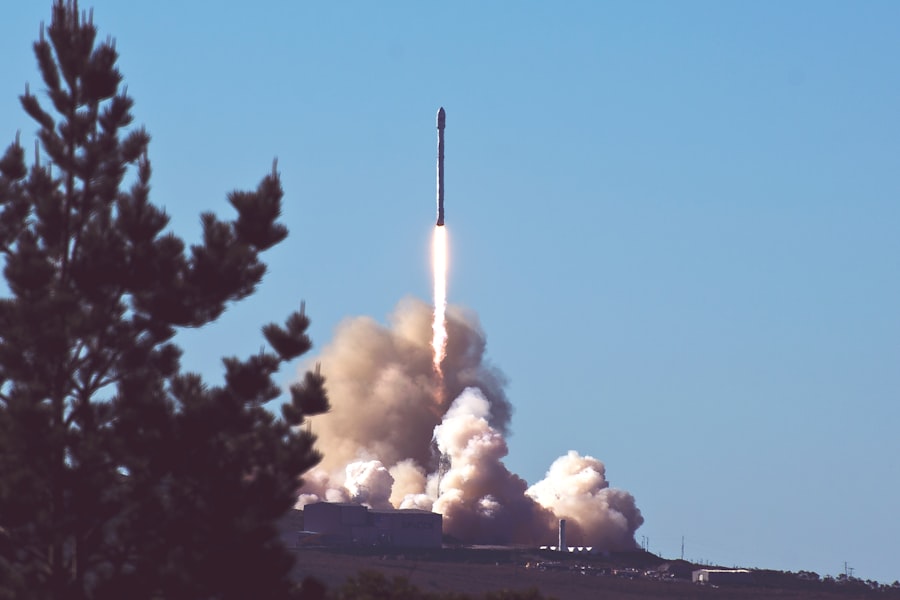
Upon receiving final authorization, ignition occurs—marking the moment when engines ignite, propelling the missile into its trajectory toward designated targets. This moment represents not only a technical achievement but also a profound shift in global dynamics; once launched, there is no way to recall or alter course.
As missiles ascend into the atmosphere, they enter a phase where they become increasingly difficult to intercept or neutralize by enemy defenses. The speed at which these missiles travel underscores their destructive potential; within minutes, they can reach targets thousands of miles away. Ignition and liftoff signify not just an operational success but also a stark reminder of humanity’s capacity for destruction—a reality that weighs heavily on global leaders as they navigate complex geopolitical landscapes.
Conclusion and Implications of Nuclear Warhead Launch Sequence
The nuclear warhead launch sequence encapsulates a delicate balance between military readiness and ethical responsibility. Each step within this intricate process reflects not only technical proficiency but also profound moral considerations regarding warfare’s consequences on humanity and global stability. As nations continue to possess nuclear arsenals, understanding these sequences becomes increasingly vital for fostering dialogue around disarmament and non-proliferation efforts.
The implications of launching nuclear weapons extend far beyond immediate military objectives; they resonate through generations as societies grapple with loss, trauma, and environmental devastation caused by such actions. As global tensions persist, it remains imperative for leaders worldwide to engage in meaningful discussions about arms control while prioritizing diplomatic solutions over military escalation. Ultimately, recognizing both the power inherent in nuclear capabilities and their potential consequences may pave pathways toward a more peaceful future—one where humanity learns from its past mistakes rather than repeating them through reckless actions driven by fear or misunderstanding.
In the context of understanding the complexities surrounding nuclear warhead launch sequences, it is essential to explore various perspectives and analyses. A related article that delves into the intricacies of military protocols and the implications of nuclear strategy can be found at this link. This resource provides valuable insights into the decision-making processes that govern nuclear arsenals and the potential consequences of their deployment.
WATCH THIS 🛑 The Submarine Captain Who Said NO to Nuclear War
FAQs
What is a nuclear warhead launch sequence?
A nuclear warhead launch sequence is a series of procedural steps and protocols followed to authorize, prepare, and execute the launch of a nuclear missile or warhead. It involves multiple layers of verification and command to ensure the launch is deliberate and authorized.
Who has the authority to initiate a nuclear warhead launch?
Typically, the authority to initiate a nuclear launch resides with the highest level of government leadership, such as the President or Prime Minister, depending on the country. This authority is strictly controlled and involves secure communication channels.
What are the key steps involved in a nuclear launch sequence?
Key steps generally include authentication of launch orders, verification of command codes, communication with missile launch facilities or submarines, and the physical activation of the missile launch system. Each step is designed to prevent unauthorized or accidental launches.
How is the launch order authenticated?
Launch orders are authenticated using secure codes and verification procedures, often involving a two-person rule or multiple independent confirmations. This ensures that the order is legitimate and comes from an authorized source.
Are there safeguards to prevent accidental nuclear launches?
Yes, multiple safeguards exist, including strict command and control protocols, fail-safe mechanisms, and continuous monitoring. These measures are designed to prevent accidental or unauthorized launches.
How long does a nuclear launch sequence take?
The duration of a launch sequence can vary depending on the system and situation but is generally designed to be executed rapidly, often within minutes, to maintain strategic deterrence and response capabilities.
Can a nuclear launch be aborted once initiated?
In some systems, there are procedures to abort a launch if it has not yet reached a certain stage. However, once the missile is launched, it cannot be recalled or stopped.
What role do missile launch crews play in the launch sequence?
Missile launch crews are responsible for maintaining the readiness of the missile systems and executing launch commands as authorized. They follow strict protocols and verification steps to ensure compliance with orders.
Is the nuclear launch sequence the same in all nuclear-armed countries?
No, while the general principles of command, control, and authentication are similar, specific procedures, technologies, and protocols vary between countries based on their military doctrines and technological capabilities.
Why is the nuclear warhead launch sequence kept secret?
Details of the launch sequence are classified to protect national security, prevent adversaries from exploiting vulnerabilities, and maintain the integrity of the command and control system.