The silent deep, a realm of crushing pressure and profound darkness, holds many secrets. Among its most enduring mysteries is the chilling tale of the Soviet submarine K-129, a vessel that vanished without a trace in the spring of 1968, taking its entire crew to a watery grave. This article delves into the facts surrounding the K-129’s disappearance, the subsequent efforts to locate and investigate its fate, and the enduring enigma that continues to shroud this tragic event.
The K-129 was a Project 629 diesel-electric submarine, a class of ballistic missile submarines operated by the Soviet Navy. Commissioned in 1960, she was a formidable weapon in the Soviet arsenal during the height of the Cold War, a metallic serpent designed to lurk beneath the waves and deliver a devastating nuclear punch.
A Class of Deterrence
The Project 629 submarines, NATO reporting name Golf-class, were a mid-generation diesel-electric submarine design. While not as technologically advanced as their later nuclear-powered counterparts, they represented a significant element of the Soviet Union’s deterrent strategy. Their primary role was to carry and launch ballistic missiles, offering a mobile and survivable platform for strategic nuclear weapons. The K-129, as a member of this class, was equipped with three SS-N-18 ballistic missiles, each capable of carrying a nuclear warhead.
The Heart of the Operation: A Crew of Sailors
A submarine’s operational success and its very survival depend on the skill, dedication, and cohesion of its crew. The K-129 carried approximately 98 officers and enlisted men. These were highly trained individuals, accustomed to the rigorous and confined existence of submarine life, operating deep beneath the ocean’s surface. Their expertise was crucial for navigating the treacherous waters, maintaining the complex machinery of the submarine, and preparing for any eventuality in the tense geopolitical climate of the Cold War. The loss of such a skilled cadre represented a significant blow to the Soviet Navy.
A Ghostly Mission
In early 1968, the K-129 departed from its base in Rybachiy Peninsula, on the coast of the Barents Sea. Her mission was far from routine. Intelligence suggests she was on a combat patrol in the Pacific Ocean, a strategic deployment designed to project Soviet power and to observe the activities of the United States Navy. The exact nature of her patrol remains a subject of speculation, but it is understood that she was operating in international waters, a common practice for both superpowers during this era of cat and mouse naval games.
The sinking of the Soviet Gulf III submarine K-129 remains one of the most intriguing maritime mysteries of the Cold War era. For a deeper exploration of this incident and its implications on naval warfare and espionage, you can read a related article that delves into the events surrounding the K-129’s tragic fate. This article provides insights into the geopolitical tensions of the time and the subsequent recovery efforts. For more information, visit this link.
The Vanishing Act: A Silent Departure
The K-129’s last known communication was on March 11, 1968. After that, she simply ceased to exist. The silence that followed was deafening, a chilling testament to the unforgiving nature of the sea and the ever-present dangers of naval operations during the Cold War.
The Last Whisper: Radio Silence Ensuing
On March 11, 1968, the K-129 sent its final radio transmission. What was contained within this last message is not publicly known, but its content and the subsequent silence have been the subject of intense scrutiny. Following this transmission, the submarine failed to make its scheduled reports, a dire signal in the world of naval communications. The absence of any distress calls only deepened the mystery, suggesting a swift and catastrophic event that left no room for communication. It was as if the ocean had simply swallowed her whole.
The Search Begins: A Growing Concern
As days turned into weeks, and the K-129 remained unaccountably absent, concern within the Soviet Navy escalated. Protocols dictate regular check-ins, and when a vessel of this magnitude falls silent, it is cause for alarm. A search operation was initiated, a vast undertaking across the immense expanse of the Pacific Ocean. However, the ocean is a vast and indifferent entity, and finding a lost submarine in its depths is akin to finding a needle in a haystack, especially without any precise location data. The Soviet Navy, with its own naval assets, began to scour the waters, but the K-129 seemed to have vanished into another dimension.
The Other Side of the Coin: American Awareness
Unbeknownst to the Soviets, the United States also became aware of the K-129’s disappearance. The U.S. Sixth Fleet was operating in the Pacific at the time, and its naval intelligence capabilities were formidable. American listening posts and surveillance aircraft would have been monitoring Soviet naval activity. The sudden silence of the K-129 would not have gone unnoticed. The Americans, motivated by both intelligence gathering and a sense of potential humanitarian concern for any survivors, also began their own secretive search efforts.
The Discovery: A Wreck Beneath the Waves
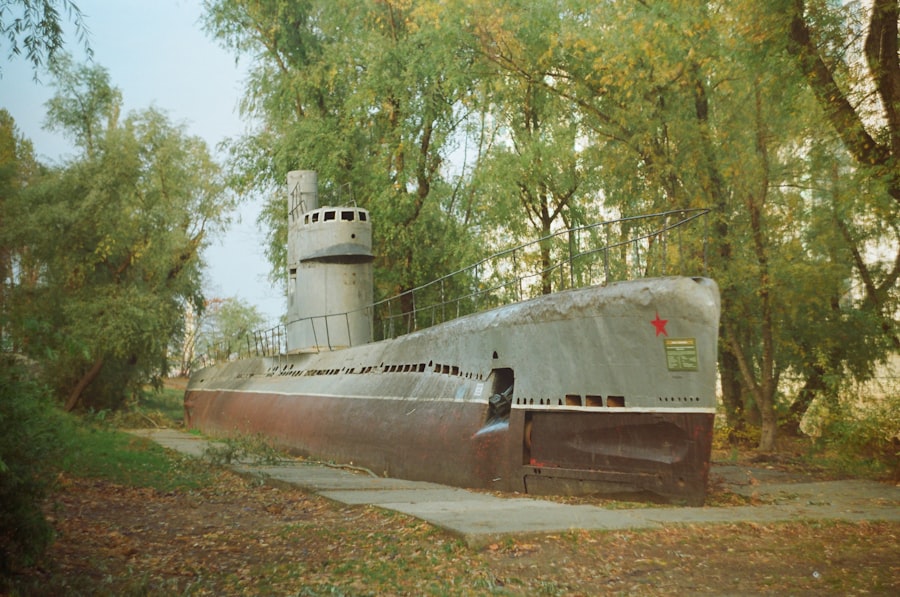
Years after its disappearance, the K-129 was finally located, resting on the seabed miles below the surface. The discovery was a watershed moment, offering the tantalizing prospect of finally unraveling the mystery, but also raising a host of new questions.
A Cryptic Signal: The Seabed Reveals its Secrets
It was not until the early 1970s that the fate of the K-129 began to crystallize. The U.S. intelligence community, through advanced sonar capabilities and aerial reconnaissance, pinpointed a likely crash site thousands of feet below the surface in the northeastern Pacific Ocean. The location was remote and challenging, a testament to the vastness of the ocean and the difficulty of deep-sea exploration. This discovery was a ghost whispered from the seabed, a grim indication of the submarine’s final resting place.
Project Azorian: The Audacious Plan
The U.S. government, recognizing the immense intelligence potential of recovering a Soviet ballistic missile submarine, launched a highly classified and ambitious operation codenamed “Project Azorian.” This was a monumental undertaking, involving the construction of a specialized vessel, the Glomar Explorer, designed to lift a significant portion of the submarine from its resting place. The project was an intricate dance of technology, espionage, and subterfuge, orchestrated by the CIA and the Howard Hughes Tool Company, which provided a public cover for the operation as a deep-sea mining venture.
The Lift: A Technological Marvel and a Tragic Reality
In 1974, the Glomar Explorer successfully lifted a significant portion of the K-129 from the seabed. The retrieved section was a harrowing sight, a mangled hull bearing witness to the immense forces involved in its demise. The primary objective was to examine the submarine’s contents, particularly its missile systems and any sensitive intelligence materials, but also to recover the remains of the crew. However, the recovery effort was not entirely successful. The immense pressure and the fragility of the wreckage meant that only a portion of the submarine could be brought to the surface.
The Theories: Unraveling the Cause of the Catastrophe
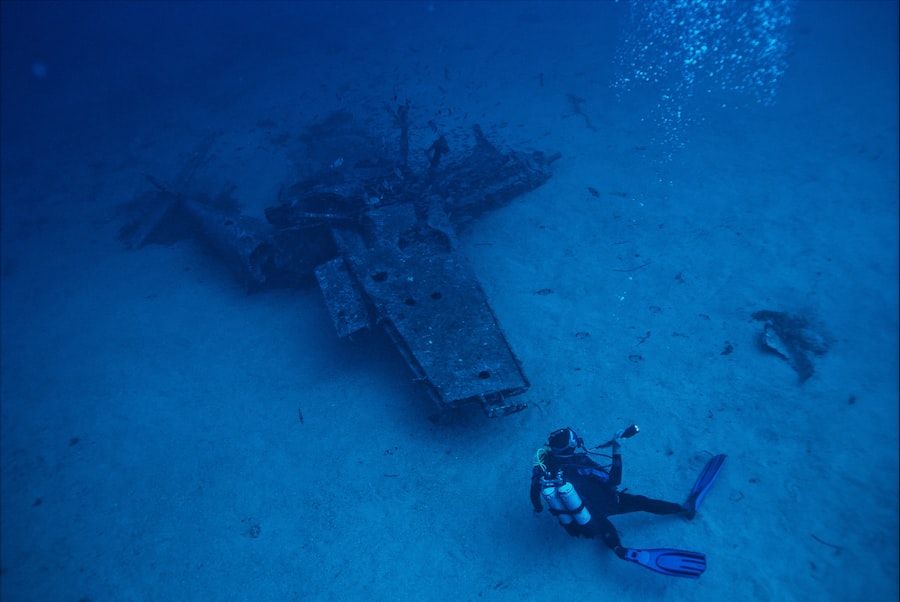
The exact cause of the K-129’s sinking remains one of the most debated aspects of its story. Several theories have emerged, each with its own proponents and detractors, painting a picture of potential malfunctions or unfortunate encounters.
Accidental Catastrophe: The Internal Meltdown Hypothesis
One of the most widely accepted theories points to an internal accident as the cause of the sinking. A catastrophic failure within the submarine, possibly a battery explosion or a missile malfunction, could have led to a rapid loss of control and subsequent sinking. The confined space of a submarine means that even minor issues can escalate quickly into life-threatening emergencies. The pressure of the deep, once breached, offers no second chances. Without any survivors or clear evidence of external damage, an internal event becomes a plausible, albeit tragic, explanation.
The Cold War Collision: An Unseen Adversary
Another prominent theory suggests a collision with another vessel. While the K-129 was operating in international waters, it was not uncommon for submarines from opposing navies to shadow each other. A miscalculation, a moment of poor visibility, or a deliberate aggressive maneuver could have led to a collision. The Soviet Navy maintained that the K-129 was not sunk by another vessel. However, the U.S. Navy has never officially confirmed or denied such an encounter. The deep ocean can be a stage for silent, unseen conflicts, where wreckage can be easily obscured.
The Missile Mishap: A Self-Destructive Event
A more specific internal malfunction theory relates to the K-129’s ballistic missiles. It is theorized that a missile stored within the submarine may have experienced a catastrophic failure, perhaps an accidental launch or an explosion of its warhead. Such an event would have been devastatingly swift, causing the submarine to disintegrate or sink rapidly. The potential for such a volatile payload to malfunction adds a chilling dimension to the theories surrounding its demise. The very weapons designed for destruction could have been the harbinger of its own.
The mysterious sinking of the Soviet Gulf III submarine K-129 in 1968 has long captivated historians and military enthusiasts alike, raising questions about Cold War naval operations and the secrets hidden beneath the Pacific Ocean. For those interested in exploring this intriguing event further, a related article provides an in-depth analysis of the incident and its implications on international relations during that era. You can read more about it in this fascinating piece on In The War Room, which delves into the complexities surrounding the submarine’s loss and the subsequent recovery efforts.
The Legacy: A Ghost in the Archives
| Metric | Details |
|---|---|
| Submarine Name | K-129 (Golf II class) |
| Type | Diesel-electric ballistic missile submarine |
| Country | Soviet Union |
| Date of Sinking | March 8, 1968 |
| Location of Sinking | North Pacific Ocean, approximately 1,560 nautical miles northwest of Hawaii |
| Depth at Wreck Site | Approximately 5,000 meters (16,400 feet) |
| Cause of Sinking | Unknown; suspected accidental sinking |
| Number of Crew | 98 (all presumed lost) |
| Notable Recovery Operation | Project Azorian (1974) by the United States to recover part of the submarine |
| Recovered Items | Partial section of the submarine including cryptographic materials and missile components |
The sinking of the K-129 and the subsequent recovery efforts have left an indelible mark on naval history and intelligence operations. The mystery, though partially illuminated, continues to captivate and inspire further speculation.
The Intelligence Coup: A Glimpse into Soviet Capabilities
For the United States, the recovery of a portion of the K-129 represented a significant intelligence coup. The ability to examine Soviet technology, particularly their missile systems, provided invaluable insights into their military capabilities and potential strategic intentions. The data gleaned from Project Azorian contributed to a deeper understanding of the Cold War landscape, shaping defense strategies and diplomatic negotiations. It was like unearthing a buried treasure of secrets, revealing the enemy’s hidden thoughts.
The Unanswered Questions: The Enduring Enigma
Despite the recovery efforts, many questions surrounding the K-129’s sinking remain unanswered. The exact cause of the disaster, the precise sequence of events, and the full extent of the recovered intelligence are still subjects of speculation and debate. The lack of definitive proof and the classified nature of the operation have allowed the mystery to persist, a haunting reminder of the risks inherent in undersea warfare and the vast unknowns that lie beneath the ocean’s surface. The K-129 remains a silent sentinel, its story a cautionary tale whispered by the waves.
A Memorial in the Deep: Honoring the Lost Crew
While the K-129’s fate remains shrouded in mystery, a solemn respect is often paid to the presumed lost crew. Though their bodies were not fully recovered, the recovered segments of the submarine were reportedly ceremonially reburied at sea by the U.S. Navy. This act, as much as any recovery, acknowledges the human cost of the disaster and offers a final resting place for those who perished in the silent depths. Their sacrifice, though in service of a now-defunct geopolitical rivalry, deserves remembrance.
FAQs
What was the Soviet Gulf III submarine K-129?
The Soviet submarine K-129 was a Golf-class ballistic missile submarine operated by the Soviet Navy during the Cold War. It was designed to carry and launch nuclear ballistic missiles.
When and how did the K-129 submarine sink?
The K-129 sank in March 1968 under mysterious circumstances in the Pacific Ocean. The exact cause of the sinking remains uncertain, with theories ranging from an internal explosion to a collision.
Where did the K-129 submarine sink?
The K-129 sank in the North Pacific Ocean, approximately 1,560 nautical miles northwest of Hawaii, at a depth of about 16,500 feet (5,000 meters).
What efforts were made to recover the K-129 submarine?
The United States launched a secretive and complex recovery operation called Project Azorian, using the specially designed ship Hughes Glomar Explorer to attempt to salvage parts of the submarine from the ocean floor in 1974.
What was the significance of the K-129 sinking during the Cold War?
The sinking of K-129 was significant because it involved the loss of nuclear weapons and sensitive technology. The U.S. interest in recovering the submarine was driven by intelligence gathering and the strategic implications of the incident during the Cold War.