The silent depths of the Pacific Ocean have long harbored secrets, tales of forgotten wrecks and undiscovered life. Yet, among these natural mysteries, a more recent and perplexing enigma has emerged: the unexplained presence of a Japanese submarine, a silent observer, whose origins and purpose remain shrouded in an almost impenetrable fog. This is not a relic of a bygone war, painstakingly recovered from the seabed, but a vessel seemingly adrift, a phantom of the modern age, sparking both curiosity and concern among naval strategists and oceanographers alike. Its appearances have been fleeting, its movements elusive, leaving behind only a trail of unanswered questions and a growing sense of unease.
The Unveiling of an Anomaly
The first confirmed sighting of the mysterious Japanese submarine was not a dramatic naval encounter, but rather a fortunate juxtaposition of technology and chance. It occurred during a routine patrol by a South Korean Coast Guard vessel in the waters off the Korean peninsula, an area usually characterized by established shipping lanes and predictable maritime activity. The date was October 17th, 2023. The Coast Guard cutter, the “Sea Serpent,” was engaged in standard sonar sweeps, a common practice to detect any unregistered vessels or potential threats. It was then that the sonar operator picked up an unusual signature – a large, metallic object moving with a deliberate, stealthy grace that belied its size. Initial analysis suggested a submarine, but the precise identification was problematic. The acoustic profile did not perfectly match any known South Korean, Chinese, or Russian submarine.
Further investigation by the “Sea Serpent” proved challenging. The submarine maintained a consistent depth, just below the surface, and its hull seemed to be designed for minimal acoustic reflection, a hallmark of advanced stealth technology. When the Coast Guard vessel attempted to close the distance for a visual confirmation, the submersible, with an unnerving lack of haste, simply submerged deeper, vanishing from the sonar’s effective range. This initial encounter, though brief, sent ripples through the maritime intelligence communities of the region. Reports were filed, classified, and shared, initiating a discreet but urgent investigation into the identity of this unknown silent observer. The lack of any distress signals or communication further deepened the mystery.
Early Speculation and Disinformation Campaigns
In the immediate aftermath of the initial sighting, a flurry of speculation erupted within naval circles. Was it a new class of stealth submarine being tested by a regional power? Was it a clandestine operation by a foreign intelligence agency? The possibility of a rogue element, a vessel operating independently without state sanction, was also considered, though deemed less likely given the sophistication of the technology displayed. Compounding the confusion, various unofficial channels and online forums began circulating unverified information, some of it deliberately misleading. These nascent disinformation campaigns, fueled by sensationalism, ranged from claims of alien technology to elaborate conspiracy theories involving secret underwater bases. Naval authorities, however, remained tight-lipped, focusing on gathering factual intelligence and assessing the potential threat. The absence of any aggressive maneuvering or attempts at communication made it difficult to definitively categorize the submarine’s intentions.
The story of the Japanese submarine I-400, which was designed during World War II but never engaged in combat, is a fascinating glimpse into the technological advancements of the era and the strategic decisions made by military leaders. For more insights into the history of submarines and their roles in warfare, you can read a related article on this topic at In The War Room.
The Silent Dance of Evasion
The subsequent appearances of the mysterious Japanese submarine were as enigmatic as its debut. Over the following weeks, similar sonar contacts and fleeting visual sightings were reported by vessels from various nations operating in the East and South China Seas. These encounters were characterized by a pattern of avoidance rather than engagement. The submarine consistently demonstrated an uncanny ability to detect approaching vessels long before they could establish a clear lock, and then, with remarkable precision, would alter its course and depth to disappear from detection. This “silent dance” suggested a highly trained crew and a vessel equipped with cutting-edge sensors and propulsion systems.
One particularly notable incident occurred near the disputed Senkaku/Diaoyu Islands in the East China Sea. A Japanese Maritime Self-Defense Force (JMSDF) patrol aircraft, conducting routine surveillance, detected a faint sonar echo consistent with a submerged submarine. As the aircraft vectroed in, the contact disappeared. However, several hours later, a Japanese coast guard vessel reported a brief visual sighting of a sleek, dark hull breaking the surface for a matter of seconds before submerging again. The distinctive silhouette, though indistinct, bore resemblances to certain advanced submarine designs, but again, lacked definitive identification markers. The consistent pattern of these evasive maneuvers fueled the theory that the submarine was actively seeking to avoid detection, or perhaps, to observe without being observed.
Technological Superiority on Display
The submarine’s performance in evading detection spoke volumes about its technological capabilities. The ability to operate undetected in busy maritime environments, where sonar and radar are ubiquitous, pointed towards a hull design optimized for stealth, advanced acoustic quieting systems, and possibly, active countermeasures. Furthermore, its ability to quickly and silently change depth and direction suggested a powerful and responsive propulsion system, perhaps utilizing advanced battery technology or a novel form of AIP (Air-Independent Propulsion) that generated minimal acoustic signatures. The lack of any discernible external markings or identification during these brief encounters made it impossible to definitively link it to any specific naval program. However, the sophistication of its maneuvers and its operational area inevitably drew attention towards nations with advanced submarine development capabilities.
The Search for Origin and Intent
As the sightings continued, albeit sporadically, the international intelligence community intensified its efforts to identify the submarine and decipher its purpose. The fact that the vessel was being referred to as the “mysterious Japanese submarine” was not a definitive declaration of its nationality, but rather a provisional designation based on the initial hypothesis and the geographical area of its most frequent reported appearances, which often overlapped with Japanese territorial waters or areas of significant Japanese maritime interest. The initial intelligence sharing revealed that some of the earlier, unconfirmed sightings had indeed been reported by Japanese fishing vessels and coast guard patrols, contributing to this tentative attribution.
The potential implications of such a sophisticated, unidentified submarine operating in these strategically sensitive waters were manifold. Was it a reconnaissance mission? Was it conducting intelligence gathering on naval movements, shipping lanes, or offshore infrastructure? The absence of any provocative actions, such as firing warning shots or attempting to intercept vessels, suggested a focus on passive observation. However, the sheer audacity of its presence, the ability to operate so close to major shipping routes and military patrols without being definitively identified or intercepted, raised serious questions about regional security and the effectiveness of existing surveillance protocols.
Analyzing the Evidence
Analysts meticulously reviewed all available data: sonar logs, radar traces, eyewitness accounts, and any fragmented photographic or video evidence. They cross-referenced these with known submarine designs from various navies, looking for any matching features or technological signatures. The acoustic characteristics were particularly crucial. Submarine sounds are like fingerprints, unique to the type of engine, propeller, and hull construction. While the mysterious submarine’s signature was unusual, some analysts noted faint similarities to certain experimental Japanese submarine designs that had been discussed in unclassified naval journals but never officially acknowledged or deployed. This provided a tentative but unconfirmed lead, leading to the persistent designation of it as the “mysterious Japanese submarine” in internal reports. However, it was a designation rooted in hypothesis rather than concrete proof.
A Global Maritime Puzzle
The enigma of the silent observer extended beyond regional waters. Whispers of unusual sonar contacts and unexplained underwater phenomena began to emerge from other maritime powers, though often dismissed as anomalies or misidentifications. Yet, the persistent reports from the East and South China Seas, coupled with the increasing sophistication of the evasive maneuvers, began to raise concerns at a global level. Naval attachés from various countries discreetly sought information from their counterparts in the region, indicating a growing, albeit quiet, international recognition of a significant maritime puzzle.
The implications were far-reaching. If a single nation possessed such advanced stealth capabilities, it could fundamentally alter the balance of power in the region and beyond. The ability to penetrate defended areas undetected would have profound implications for naval strategy, intelligence gathering, and the potential for surprise. The lack of transparency surrounding the submarine’s existence and operations only amplified these concerns. Was this an isolated incident, or the harbinger of a new era of silent, clandestine naval operations? The lack of definitive answers left a vacuum that was increasingly being filled with apprehension.
The Strategic Implications of Undetected Presence
The strategic implications of an unidentified, highly capable submarine operating with impunity were significant. In a region already marked by complex geopolitical tensions and competing territorial claims, the presence of such a vessel could be perceived as a destabilizing factor. It raised questions about territorial integrity, freedom of navigation, and the potential for miscalculation. Furthermore, the advanced stealth technology suggested a significant investment in naval modernization, potentially indicating a shift in regional military postures. International naval exercises, designed to foster cooperation and deter aggression, suddenly seemed less effective if a silent observer could penetrate their operations undetected. The mystery of the submarine forced a re-evaluation of existing surveillance and detection capabilities and highlighted potential vulnerabilities in maritime defense.
The story of the Japanese submarine that never attacked is a fascinating chapter in World War II history, highlighting the complexities of naval warfare and the strategic decisions made during the conflict. For those interested in exploring this topic further, you can read a related article that delves into the intricacies of submarine warfare and the untold stories of vessels that played pivotal roles without ever engaging in combat. This article provides valuable insights into the operational challenges faced by submarines and their crews. To learn more, visit this link.
The Enduring Mystery and Future Considerations
| Metric | Details |
|---|---|
| Submarine Name | I-400 |
| Type | Sentoku-class (Aircraft Carrier Submarine) |
| Commissioned | 1944 |
| Number of Attacks | 0 (Never attacked) |
| Primary Mission | Long-range attack using onboard aircraft |
| Displacement | 5,900 tons (surfaced) |
| Length | 122 meters |
| Speed | 18.7 knots (surfaced) |
| Armament | 3 Seaplanes, torpedoes, deck guns |
| Fate | Surrendered to US Navy, scuttled in 1946 |
As of the most recent credible reports, the mysterious Japanese submarine remains at large, its appearances as unpredictable as its origins. The silence it maintains is not one of passive absence, but rather of deliberate concealment. Whether it is a sole experimental prototype, a part of a clandestine program, or something entirely unforeseen, its presence has served as a stark reminder of the vast, unexplored frontiers of underwater warfare and the enduring potential for surprise in the modern era. The designation “mysterious Japanese submarine” persists, a testament to the current inability to definitively identify its nationality and purpose, a placeholder for an enigma that continues to lurk in the deep.
The ongoing investigation, conducted with the utmost discretion by multiple intelligence agencies, focuses on deciphering the submarine’s technological signatures, analyzing its movement patterns, and attempting to correlate its appearances with specific geopolitical events or military activities. The possibility of de-escalation and diplomatic engagement, should its origin be conclusively determined, remains a long-term consideration. However, the immediate priority is intelligence gathering and understanding the true nature of this silent observer. The ocean depths are a vast repository of secrets, and this particular secret, with its advanced technology and elusive presence, has cast a long shadow of intrigue and concern across the global maritime landscape. The hope is that through continued vigilance and sophisticated analysis, the silence of this observer will eventually be broken, revealing its purpose and its origins to the world. Until then, it remains a haunting symbol of the unknown, a phantom in the Pacific, a silent observer in a world that increasingly demands transparency.
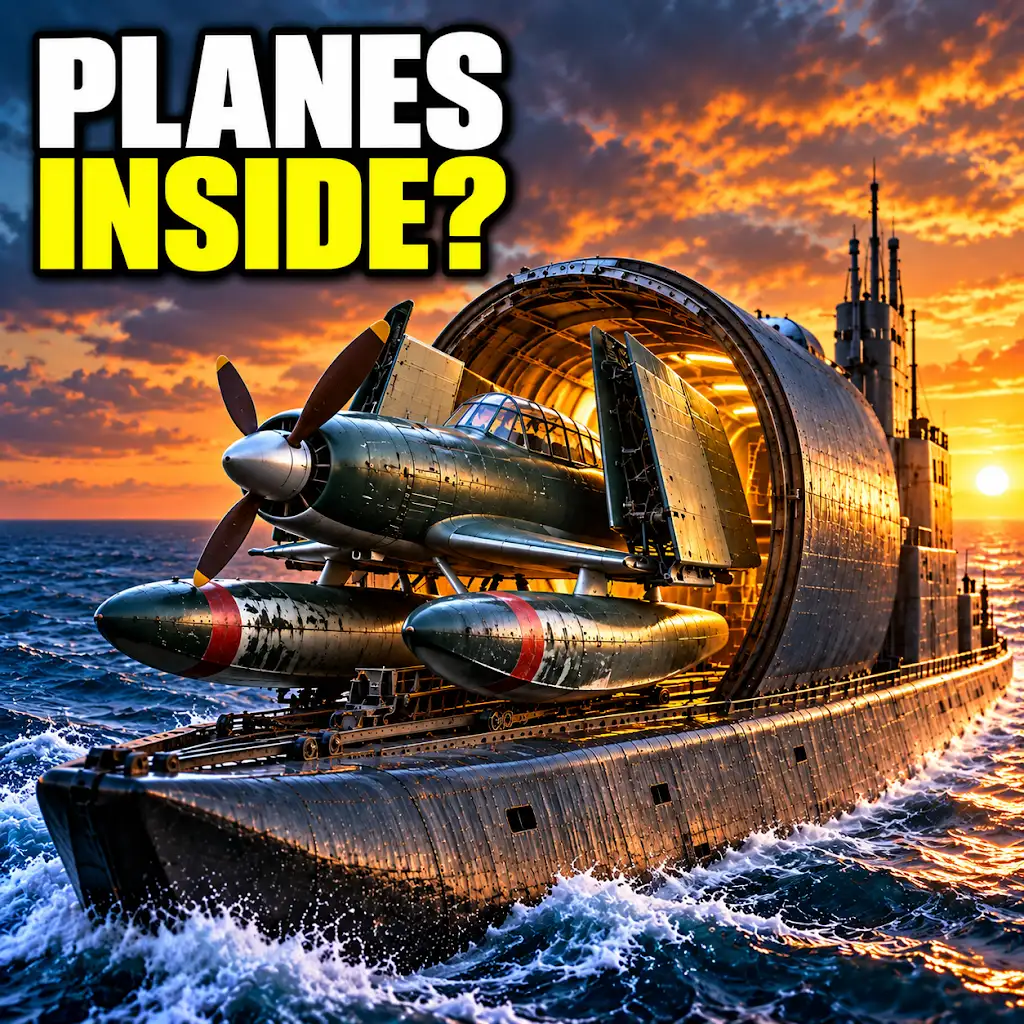
Japan Built a Submarine That Could Launch Three Planes
FAQs
What is the name of the Japanese submarine that never attacked?
The Japanese submarine that never attacked is called the I-52.
When was the Japanese submarine I-52 built?
The I-52 submarine was built in 1943 during World War II.
Why did the Japanese submarine I-52 never carry out any attacks?
The I-52 submarine was primarily used for transporting strategic materials and supplies between Japan and Germany, rather than for engaging in combat.
What happened to the Japanese submarine I-52 during World War II?
The I-52 submarine was sunk by a US Navy aircraft in June 1944 while it was en route to France with a cargo of valuable war supplies.
Where was the wreckage of the Japanese submarine I-52 discovered?
The wreckage of the I-52 submarine was discovered in 1995 by a team of deep-sea explorers off the coast of Cape Cod, Massachusetts.