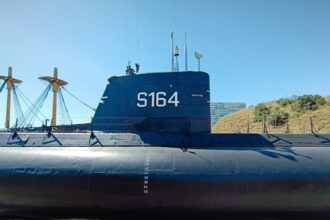
The Soviet submarine K-129, a Project 629 Golf-class vessel, was launched in 1959 and became a significant player in the naval operations of the Soviet Union during the Cold War. Designed for strategic deterrence, K-129 was equipped with ballistic missiles and played a crucial role in the Soviet Navy’s efforts to maintain a credible nuclear deterrent against the United States. The submarine was not just a technological marvel of its time; it also symbolized the intense military competition between the two superpowers.
With a length of over 100 meters and a displacement of around 2,500 tons, K-129 was a formidable presence beneath the waves, tasked with patrolling the vast expanses of the Pacific Ocean. However, K-129’s story is not merely one of military prowess; it is also a tale of mystery and intrigue. In March 1968, the submarine vanished without a trace during a routine patrol mission.
The disappearance of K-129 sent shockwaves through the Soviet military and raised alarms within the United States intelligence community. The loss of such a significant asset prompted extensive investigations and sparked a series of events that would unfold over the following years, intertwining espionage, technology, and international relations in ways that would leave a lasting impact on both nations.
Key Takeaways
- Soviet submarine K-129 disappeared during the Cold War, sparking an intense search effort.
- The CIA played a crucial role in locating and recovering parts of the submarine.
- The incident fueled numerous conspiracy theories and remained classified for years.
- Declassified documents later shed light on the operation and its geopolitical impact.
- The K-129 case influenced US-Soviet relations and provided important lessons for submarine operations.
The Cold War context
The Cold War was characterized by an atmosphere of tension and rivalry between the United States and the Soviet Union, marked by an arms race that saw both nations amassing vast arsenals of nuclear weapons. This period, which began after World War II and lasted until the early 1990s, was defined by ideological conflict, military posturing, and a series of proxy wars around the globe. The competition for supremacy extended into various domains, including space exploration, technological innovation, and naval power.
Submarines like K-129 were integral to this struggle, as they represented not only military capability but also national pride. During this era, the oceans became battlegrounds for intelligence gathering and strategic positioning. The Soviet Union sought to expand its influence in the Pacific region, countering U.S.
naval dominance. The development of advanced submarines was crucial for both sides, as they provided stealthy platforms for launching nuclear missiles and conducting surveillance missions. The stakes were high; any miscalculation could lead to catastrophic consequences.
In this charged environment, the disappearance of K-129 was not just a loss of a submarine; it was a potential threat to the balance of power in the Pacific.
The disappearance of K-129
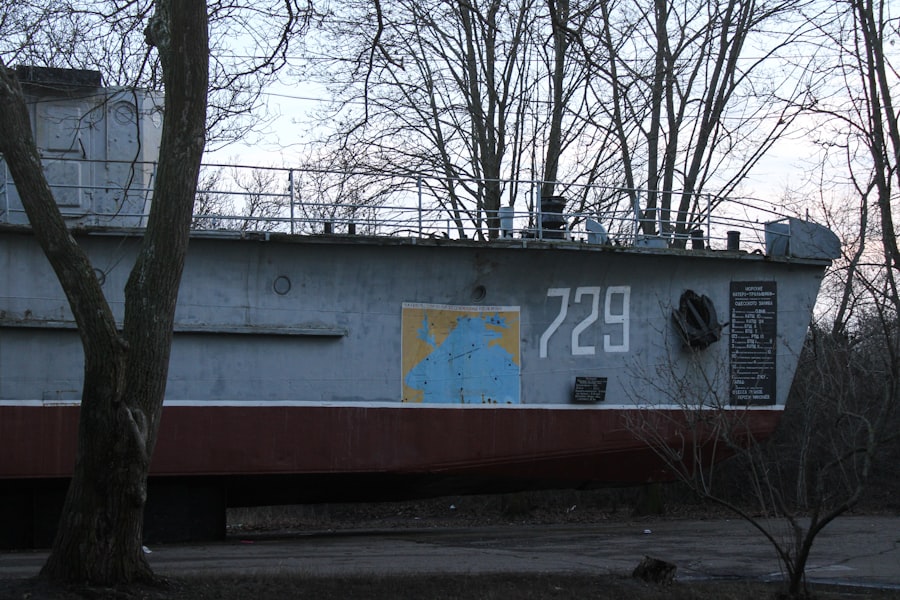
On March 8, 1968, K-129 embarked on what was supposed to be a routine patrol mission from its base in Vladivostok. However, it never returned. The Soviet Navy quickly initiated search operations but found no trace of the submarine.
The circumstances surrounding its disappearance were shrouded in mystery, leading to speculation about what might have happened. Some theorized that K-129 had suffered a catastrophic failure or been involved in an accident, while others suggested that it may have been attacked by U.S. forces.
The loss of K-129 was particularly alarming for Soviet leadership, as it represented not only the loss of personnel but also sensitive technology and nuclear capabilities. The submarine was armed with three ballistic missiles capable of striking targets across the Pacific, making its disappearance a matter of national security. As days turned into weeks without any sign of the vessel, anxiety grew within the Soviet military establishment.
The incident raised questions about the effectiveness of their naval operations and highlighted vulnerabilities in their submarine fleet.
The search for the submarine
In the wake of K-129’s disappearance, extensive search efforts were launched by the Soviet Navy. Utilizing surface ships and aircraft, they scoured vast areas of the Pacific Ocean where the submarine was believed to have been operating. Despite their best efforts, no signs of K-129 were found, leading to frustration and confusion among Soviet officials.
The search operations were hampered by the vastness of the ocean and the limitations of technology at that time. Simultaneously, U.S. intelligence agencies were closely monitoring the situation.
They recognized that K-129’s disappearance could have significant implications for national security and sought to gather as much information as possible about the incident.
S. Navy also conducted its own reconnaissance missions in the region, hoping to uncover any clues regarding the fate of the missing submarine.
As weeks passed without resolution, both nations were left grappling with uncertainty about what had happened beneath the waves.
The CIA’s involvement
| Metric | Details |
|---|---|
| Submarine Name | K-129 |
| Class | Golf II-class (Project 629) |
| Type | Diesel-electric ballistic missile submarine |
| Displacement | 5,000 tons (surfaced), 6,000 tons (submerged) |
| Length | 98 meters (approx.) |
| Beam | 10 meters (approx.) |
| Draft | 7.5 meters (approx.) |
| Speed | 15 knots (surfaced), 18 knots (submerged) |
| Armament | 3 x R-21 ballistic missiles, torpedo tubes |
| Commissioned | 1962 |
| Lost | March 8, 1968 |
| Cause of Loss | Unknown; presumed sinking in Pacific Ocean |
| Depth at Wreck Site | Approximately 5,000 meters |
| Notable Event | Project Azorian recovery attempt by the CIA in 1974 |
As news of K-129’s disappearance reached Washington, D.C., it piqued the interest of U.S. intelligence agencies, particularly the CIRecognizing that this incident could provide valuable insights into Soviet naval capabilities and technology, they began to formulate plans for an extensive operation to locate and recover the submarine. The CIA’s involvement marked a significant escalation in the stakes surrounding K-129’s fate.
In 1970, under the codename “Project Jennifer,” the CIA devised an ambitious plan to recover K-129 from its resting place on the ocean floor. This operation involved using a specially designed ship called Glomar Explorer, which was equipped with advanced technology for deep-sea recovery operations. The project aimed not only to retrieve K-129 but also to gather intelligence on its design and capabilities.
The CIA’s determination to recover the submarine underscored how critical it was for them to understand their adversary’s military assets during this tense period.
The recovery of K-129
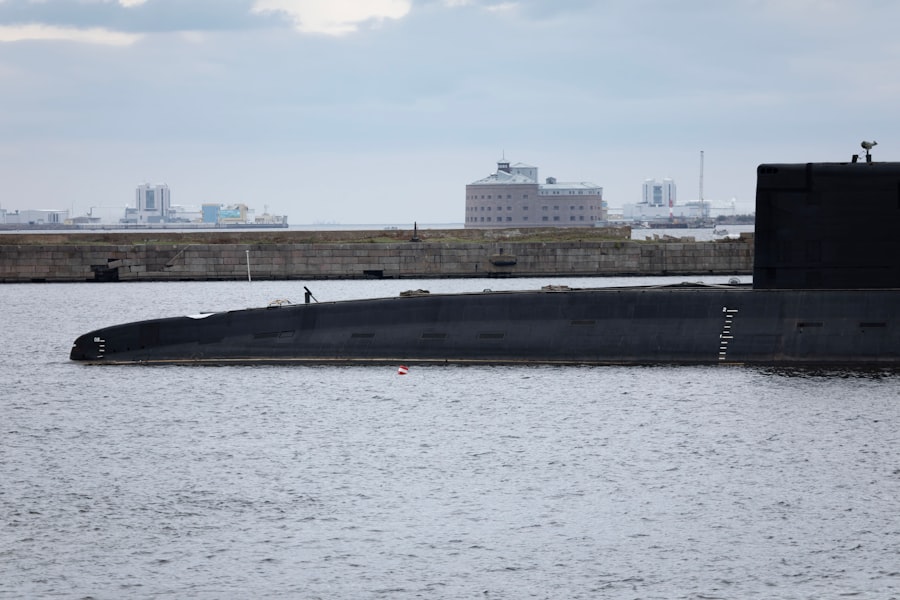
The recovery operation for K-129 commenced in 1974 when Glomar Explorer set sail into the depths of the Pacific Ocean. The mission was fraught with challenges; deep-sea recovery operations were still in their infancy, and there were numerous technical hurdles to overcome. After months of searching, Glomar Explorer finally located K-129 on August 3, 1974, at a depth of approximately 16,500 feet.
Once located, the operation shifted into high gear as crews worked tirelessly to recover parts of the submarine. Using a claw-like mechanism designed specifically for this purpose, they managed to retrieve a significant portion of K-129’s hull along with some missile components and personal effects belonging to crew members. However, despite their success in recovering parts of the submarine, they were unable to retrieve its nuclear missiles or any classified technology intact.
Nevertheless, this operation provided invaluable intelligence that would shape U.S. understanding of Soviet naval capabilities for years to come.
The conspiracy theories
The events surrounding K-129’s disappearance and subsequent recovery have given rise to numerous conspiracy theories over the years. Some theorists speculate that K-129 may have been involved in secret missions or espionage activities prior to its disappearance, suggesting that it could have been targeted by U.S. forces as part of covert operations aimed at undermining Soviet naval power.
Others propose that there may have been internal sabotage or even mutiny among crew members leading to its demise. Additionally, some conspiracy theories delve into more fantastical territory, suggesting that K-129 may have encountered extraterrestrial phenomena or been involved in secret government experiments related to underwater technology. While these theories often lack credible evidence, they reflect public fascination with Cold War-era espionage and military secrecy.
The enduring mystery surrounding K-129 continues to capture imaginations and fuel speculation about what truly happened beneath the waves.
The declassification of documents
As time passed and Cold War tensions began to ease, many documents related to K-129 were declassified by both U.
and Russian governments. These revelations provided new insights into the events surrounding its disappearance and recovery operations.
Declassified materials shed light on the extent of U.S. intelligence efforts during this period and revealed details about Project Jennifer that had previously remained hidden from public view. The release of these documents also allowed historians and researchers to piece together a more comprehensive narrative about K-129’s fate and its implications for U.S.-Soviet relations during the Cold War.
While some aspects remain shrouded in secrecy due to ongoing classified information, these declassified records have contributed significantly to understanding how both nations navigated this complex period in history.
The impact on US-Soviet relations
The incident involving K-129 had far-reaching implications for U.S.-Soviet relations during the Cold War era. While it initially heightened tensions between the two superpowers due to concerns over nuclear capabilities and military vulnerabilities, it also served as a catalyst for dialogue regarding arms control and naval strategy in subsequent years. The recovery operation demonstrated both nations’ commitment to maintaining their respective military advantages while simultaneously highlighting vulnerabilities that could be exploited.
In many ways, K-129 became emblematic of broader themes within U.S.-Soviet relations—issues related to trust, transparency, and mutual understanding were brought into sharp focus as both sides grappled with their respective military postures in an increasingly interconnected world. Ultimately, while tensions persisted throughout much of the Cold War period, incidents like K-129 underscored how critical it was for both nations to engage in dialogue aimed at reducing risks associated with nuclear confrontation.
Lessons learned from the K-129 incident
The saga surrounding K-129 offers several important lessons regarding military operations, intelligence gathering, and international relations during times of conflict. One key takeaway is that technological advancements can significantly alter strategic dynamics; both nations invested heavily in developing advanced submarines capable of operating undetected beneath ocean surfaces—a race that continues today with modern naval capabilities. Additionally, K-129 serves as a reminder about the importance of transparency and communication between nations during periods marked by tension or uncertainty; misunderstandings can lead to escalations that may have dire consequences if left unchecked.
Finally, this incident highlights how intelligence operations can shape perceptions about adversaries’ capabilities—understanding one’s opponent is crucial for effective decision-making in matters related to national security.
Conclusion and legacy
The story of Soviet submarine K-129 is one woven with intrigue, tragedy, and lessons learned from an era defined by rivalry between superpowers. Its disappearance sparked extensive search efforts that ultimately led to significant intelligence breakthroughs for U.S. agencies while simultaneously raising questions about military preparedness within Soviet ranks.
As time has passed since these events unfolded decades ago, they continue to resonate within discussions surrounding naval strategy and international relations today. K-129’s legacy endures not only through its impact on U.S.-Soviet relations but also as a symbol of how technological advancements can shape geopolitical landscapes—reminding future generations about both risks associated with military competition as well as opportunities for dialogue aimed at fostering understanding amidst uncertainty in an ever-evolving world order.
The Soviet submarine K-129, which sank in 1968 under mysterious circumstances, has been the subject of much intrigue and speculation over the years. For a deeper dive into the complexities surrounding this incident and its implications during the Cold War, you can read more in this related article on In The War Room.
FAQs
What was the Soviet submarine K-129?
The Soviet submarine K-129 was a Golf II-class ballistic missile submarine of the Soviet Navy, launched in the early 1960s. It was equipped with nuclear ballistic missiles and was part of the Soviet strategic nuclear forces during the Cold War.
When and where did the K-129 sink?
K-129 sank in March 1968 in the Pacific Ocean, northwest of Hawaii. The exact cause of the sinking remains uncertain, but it resulted in the loss of all 98 crew members aboard.
What was the significance of K-129 during the Cold War?
K-129 was significant as it carried nuclear ballistic missiles, representing a key component of the Soviet Union’s nuclear deterrent. Its sinking and the subsequent U.S. recovery efforts highlighted the intense espionage and intelligence competition between the U.S. and the Soviet Union during the Cold War.
What was Project Azorian?
Project Azorian was a secret U.S. Navy operation in the early 1970s aimed at recovering the sunken Soviet submarine K-129 from the ocean floor. The operation used the specially designed ship Hughes Glomar Explorer to attempt to raise parts of the submarine for intelligence purposes.
Was the recovery of K-129 successful?
The recovery operation partially succeeded in raising a section of the submarine, but much of the vessel was lost during the lift. The mission was kept highly classified for many years, and only limited information has been publicly released.
What caused the sinking of K-129?
The exact cause of K-129’s sinking remains unknown. Various theories include an internal explosion, collision with a U.S. submarine, or mechanical failure, but no definitive conclusion has been publicly confirmed.
How many crew members were lost with K-129?
All 98 crew members aboard the K-129 perished when the submarine sank in 1968.
Where can I learn more about the K-129 submarine?
Information about K-129 can be found in Cold War naval history books, declassified government documents, and documentaries focusing on submarine operations and espionage during the Cold War era.