The Mexican American War: A Military History Documentary
This documentary meticulously charts the course of the Mexican American War (1846-1848), a conflict that irrevocably altered the territorial landscape of North America and deeply scarred the relationship between the United States and Mexico. You, the viewer, are invited to embark on a detailed exploration of the military campaigns, strategic maneuvers, and the human cost of this pivotal chapter in history. The film eschews sensationalism, instead opting for a rigorous examination of the factors that led to the war, the battles themselves, and the lasting consequences. It is a journey through the dust and blood of a conflict that was, in many ways, a crucible for the young United States, forging its continental destiny at a profound price for its southern neighbor.
The documentary begins by examining the complex origins of the war, illustrating that it was not a sudden eruption but rather a slow burn of simmering tensions. The narrative skillfully unpacks the ideological currents driving American expansionism, most notably the doctrine of Manifest Destiny, and juxtaposes this with Mexico’s precarious political and economic situation in the aftermath of its independence.
Manifest Destiny and the American Appetite for Land
The film delves into the prevailing sentiment of American exceptionalism that characterized the mid-19th century. It explains how the idea of the United States being divinely ordained to expand its dominion and spread democracy across the continent became a powerful, almost religious, force in public discourse. You will explore how figures like John O’Sullivan, who coined the term “Manifest Destiny,” articulated a vision of American progress that inherently involved territorial acquisition. The documentary uses archival materials to show how this ideology permeated newspapers, political speeches, and popular culture, painting a picture of a nation possessed by an insatiable hunger for more land, a hunger that would soon turn its gaze southward.
Texas: The Tinderbox of Contention
Central to the documentary’s exposition of the war’s origins is the thorny issue of Texas. You are presented with a clear, chronological account of Texas’s secession from Mexico in 1836 and its subsequent struggle for recognition as an independent republic. The film’s historians explain how the United States’ initial hesitation to annex Texas, primarily due to the contentious issue of slavery, eventually gave way to political expediency. The annexation of Texas in 1845, a direct provocation to Mexico, is portrayed as a critical turning point, a spark dropped into the tinderbox of already strained relations. The documentary meticulously details the contested border claims, particularly along the Nueces River and the Rio Grande, which would soon become a flashpoint for military engagement.
Mexican Internal Strife and Vulnerability
Furthermore, the film highlights the internal political instability that plagued Mexico during this period. You will learn about the frequent changes in government, the ongoing struggles between federalists and centralists, and the economic weakness that made Mexico vulnerable to external pressures. This internal disarray, the documentary argues, weakened Mexico’s ability to present a united front against American ambitions, making it an easier target for territorial expansion. The documentary doesn’t shy away from the difficult truth that Mexico, though a sovereign nation, was in a state of flux, a situation that the United States consciously or unconsciously exploited.
For those interested in exploring the complexities of the Mexican-American War, a compelling resource is the documentary featured on In The War Room, which delves into the military strategies and political implications of this pivotal conflict. The documentary provides an in-depth analysis of the battles fought and the key figures involved, offering viewers a comprehensive understanding of how the war shaped the relationship between the United States and Mexico. To learn more about this fascinating chapter in military history, you can visit the article at In The War Room.
The Opening Salvos: From Diplomacy to Bloodshed
The documentary moves on to detail the immediate prelude to hostilities, illustrating the diplomatic failures and the calculated provocations that ultimately led to the declaration of war. The film argues that the war was not an accidental outcome but a deliberate pursuit by elements within the American government.
Diplomatic Dead Ends and Provocations
You will witness the narrative arc of failed diplomatic missions, most notably President Polk’s attempts to purchase California and New Mexico. The documentary explains how Mexico, understandably wary of further territorial concessions, rebuffed these overtures. The subsequent deployment of American troops under Zachary Taylor into the disputed territory between the Nueces and the Rio Grande is presented as a deliberate act of escalation, a move designed to elicit a response from Mexican forces. The film shows how this strategic positioning was a calculated gamble, a way to manufacture an incident that President Polk could then use to rally support for a declaration of war.
The Thornton Affair and the Declaration of War
The documentary vividly recreates the events of April 1846, focusing on the Thornton Affair. You are shown how a small contingent of American dragoons, operating in territory claimed by Mexico, clashed with Mexican forces. The film’s historical analysis emphasizes that while skirmishes had occurred previously, the Thornton Affair was presented by President Polk to Congress as an invasion of American soil, a clear casus belli. The documentary provides context for the congressional debates that followed, showcasing the arguments for and against war, and ultimately the declaration of war on May 13, 1846, a decision that set the continent ablaze.
The Northern Campaigns: Capturing New Mexico and California

The documentary dedicates significant segments to the early American victories that secured critical territories in the north. These campaigns, characterized by swift action and strategic brilliance, laid the groundwork for American control over vast swathes of land.
Doniphan’s Expedition: A March Through the Desert
You are introduced to Colonel Alexander Doniphan’s improbable expedition into New Mexico. The film highlights the logistical challenges of operating in arid, unforgiving terrain and the strategic objective of securing the Santa Fe Trail. The documentary details Doniphan’s encounters with Mexican forces and his successful imposition of American authority in the region. The narrative emphasizes the sheer audacity of this campaign, pushing deep into enemy territory with limited resources, a testament to the resourcefulness of the American military in this early phase of the war.
Kearny’s March to Santa Fe and Beyond
The documentary follows General Stephen Kearny’s more direct route to Santa Fe. You will learn about his relatively unopposed entry into the city and the subsequent establishment of American governance. The film then expands its scope to California, illustrating how American naval power and land forces, under figures like John C. Frémont, were already actively engaged in securing that territory even before the official declaration of war. The Bear Flag Revolt is presented as a precursor to more organized American military operations, showcasing the complex and sometimes unofficial nature of the early American seizures of territory.
The Major Theaters: Taylor in the North and Scott’s Amphibious Assault
The documentary then shifts its focus to the two primary theaters of operations: the northern front under Zachary Taylor and the strategic amphibious invasion led by Winfield Scott. These campaigns represent the bulk of the direct military confrontation and showcase diverse military challenges.
Zachary Taylor: Hero of Palo Alto and Monterrey
You are taken to the battlefields of northern Mexico, where General Zachary Taylor earned his reputation as “Old Rough and Ready.” The film meticulously analyzes the battles of Palo Alto and Resaca de la Palma, highlighting Taylor’s tactical acumen in employing artillery and cavalry to overcome numerically superior Mexican forces. The capture of Monterrey is depicted as a hard-fought victory, showcasing the determination of both armies. The documentary does not shy away from the brutality of these engagements, presenting them as costly triumphs. You will gain an understanding of Taylor’s less conventional command style, which, while sometimes criticized, proved effective in the field.
The Siege of Veracruz and the March to Mexico City
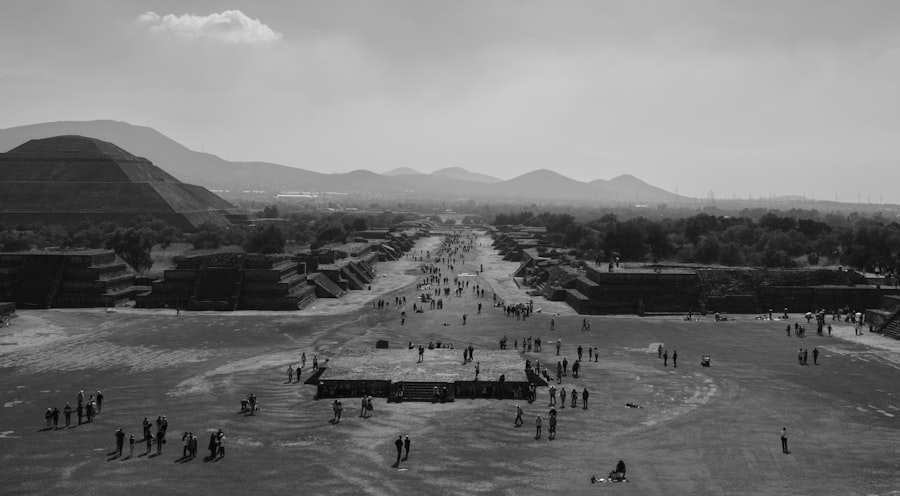
The documentary then dramatically pivots to General Winfield Scott’s daring amphibious landing at Veracruz, a feat of military engineering and logistical coordination that mirrored the Norman invasion in its audacity. You will witness the strategic brilliance of this maneuver, which bypassed heavily fortified Mexican defenses along the coast and opened a direct route inland. The film then chronicles Scott’s relentless march towards Mexico City, detailing the key engagements such as the battles of Cerro Gordo, Contreras, and Churubusco. The documentary emphasizes the superior American training, equipment, and logistical support that, coupled with effective leadership, allowed Scott’s army to overcome significant Mexican resistance.
The Battles for Mexico City: Chapultepec and Beyond
The climactic battles for Mexico City are rendered with detail and historical accuracy. You will be shown the fierce fighting for the strategically vital fortifications, particularly the Chapultepec Castle. The documentary accounts for the bravery and sacrifice of both American and Mexican soldiers during these intense urban battles. The fall of Mexico City is portrayed not as a simple victory but as the culmination of a brutal and costly campaign, a city brought to its knees by superior military force.
The Mexican-American War was a pivotal moment in U.S. military history, shaping the nation’s expansion and its relationship with Mexico. For those interested in exploring this conflict further, a compelling documentary can be found at this link, which delves into the strategies, battles, and key figures that defined the war. Understanding the complexities of this period offers valuable insights into the broader implications of American territorial ambitions.
The Aftermath and Legacy: A Nation Transformed, A Border Redrawn
| Metric | Details |
|---|---|
| War Duration | April 25, 1846 – February 2, 1848 |
| Major Battles Covered | Battle of Palo Alto, Battle of Monterrey, Battle of Buena Vista, Siege of Veracruz, Battle of Chapultepec |
| U.S. Military Leaders Featured | General Zachary Taylor, General Winfield Scott, Colonel Stephen Kearny |
| Mexican Military Leaders Featured | General Antonio López de Santa Anna, General Mariano Arista |
| Casualties Discussed | U.S.: Approx. 13,000 (including disease), Mexico: Approx. 25,000 |
| Documentary Length | 90 minutes |
| Primary Sources Used | Soldier diaries, official military reports, contemporary newspaper accounts |
| Focus Areas | Military strategies, political context, impact on U.S. expansion |
The documentary concludes by examining the immediate consequences of the war and its enduring legacy on both nations. The Treaty of Guadalupe Hidalgo, the territorial shifts, and the lasting impact on Mexican-American relations are central to this final section.
The Treaty of Guadalupe Hidalgo: A Sweeping Cession
You are presented with the terms of the Treaty of Guadalupe Hidalgo, signed in February 1848. The documentary clearly outlines the massive territorial cession by Mexico, including present-day California, Nevada, Utah, Arizona, and parts of Colorado, Wyoming, Kansas, and New Mexico. The payment of $15 million by the United States as compensation for these lands, a pittance for the vast territory acquired, is highlighted as a stark symbol of the power imbalance. The film’s analysis emphasizes that while the treaty officially ended the war, it sowed seeds of resentment and mistrust.
The Human Cost: Beyond the Battlefield
The documentary dedicates time to the often-overlooked human cost of the war, transcending the grand strategic narratives. You will hear about the suffering of the common soldiers on both sides, the diseases that ravaged military camps, and the psychological scars left by the conflict. The film also touches upon the impact on the civilian populations of both nations, particularly in the disputed territories, who found themselves caught in the crossfire. The documentary serves as a somber reminder that behind every military victory and territorial gain are individual lives irrevocably altered or extinguished.
A Contentious Legacy: Shaping North America
Finally, the documentary explores the profound and enduring legacy of the Mexican American War. You are shown how the war solidified the United States’ continental dominance, setting the stage for its rise as a global power. Conversely, the film discusses the deep wounds inflicted upon Mexico’s national psyche and its subsequent economic and political development. The redrawing of the border not only created a physical demarcation but also fostered a complex and often fraught relationship between the two nations that continues to shape the geopolitical landscape of North America. The documentary leaves you with a profound understanding of how this conflict, born of ambition and disagreement, fundamentally reshaped a continent and continues to resonate in the present day.
FAQs
What was the Mexican-American War?
The Mexican-American War was a conflict between the United States and Mexico that took place from 1846 to 1848. It was primarily fought over territorial disputes following the U.S. annexation of Texas and resulted in significant land gains for the United States.
What were the main causes of the Mexican-American War?
The main causes included the U.S. annexation of Texas, which Mexico still considered its territory, disputes over the Texas-Mexico border, and the U.S. desire to expand westward under the concept of Manifest Destiny.
What were some key battles during the Mexican-American War?
Important battles included the Battle of Palo Alto, the Battle of Monterrey, the Siege of Veracruz, and the Battle of Chapultepec. These battles were crucial in determining the outcome of the war.
What was the outcome of the Mexican-American War?
The war ended with the Treaty of Guadalupe Hidalgo in 1848, which resulted in Mexico ceding a large portion of its northern territories to the United States, including present-day California, Arizona, New Mexico, and other states.
Why is the Mexican-American War significant in U.S. military history?
The war marked the first major U.S. military conflict fought primarily on foreign soil and showcased the effectiveness of the U.S. Army and Navy. It also had lasting impacts on U.S. territorial expansion and military tactics.