The deep ocean, a vast and largely unexplored frontier, holds secrets that can reshape our understanding of history and our present anxieties. Among these submerged enigmas, the story of the Soviet submarine K-129 stands as a particularly chilling testament to the Cold War’s ever-present specter of nuclear annihilation. This lost vessel, and the nuclear warheads it carried, represent a ghost in the machine of global security, a phantom limb of a conflict that almost consumed the world.
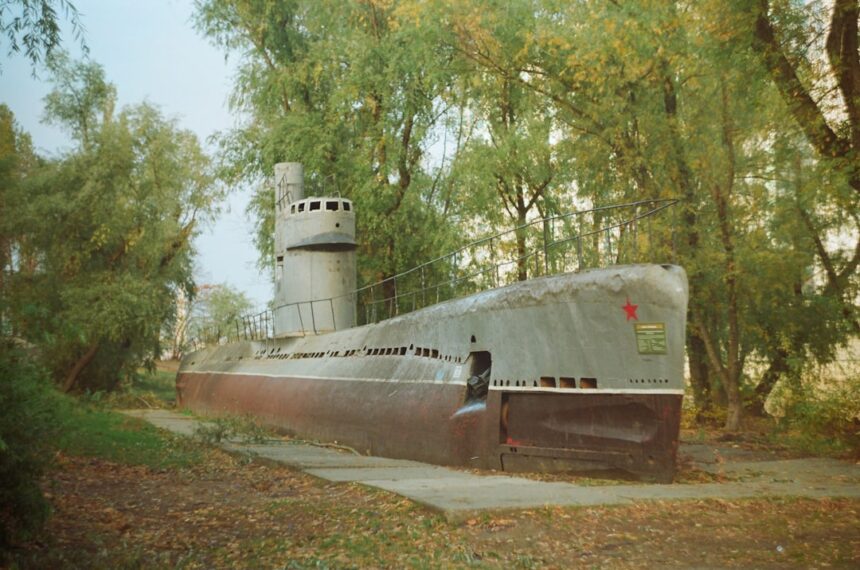
The Soviet submarine K-129, a diesel-electric powered Project 641 (Foxtrot-class) submarine, was a product of the Soviet Union’s ambitious submarine building program during the Cold War. Commissioned in 1960, it was designed for intelligence gathering and patrol missions. Its hull, a formidable structure built to withstand immense pressures, was a silent sentinel in the Pacific, patrolling the waters at a time when the ocean itself was a strategic battleground. The geopolitical climate of the 1960s was a precarious tightrope walk, with the United States and the Soviet Union perpetually engaged in a dangerous game of brinkmanship. Every naval deployment, every missile test, every intelligence operation was a ripple in this volatile pond. The K-129 was one such ripple, a piece of the massive Soviet military apparatus aimed at projecting power and deterring perceived aggression. Its missions, shrouded in secrecy, were part of this larger geopolitical chess match.
The Dawn of a Cold War Nightmare
The Cold War, a period of intense ideological and geopolitical rivalry between the West and the East, cast a long shadow over the latter half of the 20th century. Nuclear weapons, developed with terrifying efficiency by both superpowers, became the ultimate arbiters of this conflict. The fear of mutually assured destruction (MAD) hung heavy, a Sword of Damocles poised over humanity. Submarines, with their ability to operate unseen beneath the waves, became a crucial component of nuclear strategy for both sides. They offered a survivable second-strike capability, the knowledge that even after a devastating first strike, nuclear weapons could be launched from hidden submarines, ensuring retaliation. The K-129, with its complement of ballistic missiles, was a potent symbol of this strategic balance, or perhaps more accurately, the precarious imbalance that defined the era.
A Silent Mission, a Fateful Voyage
In early 1968, the K-129 departed from its base in the Soviet Far East on a mission that would tragically etch its name into history. The specifics of its exact patrol area and objectives remain largely classified, but it is understood to have been operating in the North Pacific Ocean, a region rich with strategic significance. Its crew, comprised of seasoned sailors and officers, would have been acutely aware of the inherent dangers of operating at sea, particularly on a military submarine tasked with sensitive duties. The vastness of the ocean can be both a shield and a tomb, and for the K-129, it would ultimately become both. The whispers of its voyage would soon transform into a deafening silence.
The Soviet submarine K-129, which sank in 1968, was carrying a significant payload of nuclear warheads, raising concerns about the potential consequences of its loss. For a deeper understanding of the implications surrounding K-129 and its nuclear arsenal, you can read a related article that explores the historical context and the strategic importance of such military assets during the Cold War. For more information, visit this article.
The Abyss Claims Its Own: The Loss of the K-129
The exact circumstances surrounding the sinking of the K-129 remain a subject of speculation and, to some extent, official silence. What is known is that on March 11, 1968, contact with the submarine was lost. The Soviet Union, initially, did not confirm the loss, and its fate remained an enigma for some time. The vastness of the ocean means that many vessels, both civilian and military, have been lost to its depths over the centuries, swallowed by storms, mechanical failures, or the sheer unforgiving nature of the sea. The K-129 was one such vessel, an unfortunate victim of the deep. However, the presence of nuclear warheads on board elevated this loss from a maritime tragedy to a global concern.
The Puzzle of the Disappearance
The initial Soviet search efforts were, by all accounts, limited. The sheer scale of the Pacific Ocean presented an enormous challenge. Without a precise location, finding a submerged submarine is akin to searching for a single grain of sand on an endless beach. The lack of immediate SOS signals, a common distress beacon for vessels in peril, only deepened the mystery. The Soviet Navy would have been acutely aware of the implications of losing such a valuable asset, not only in terms of hardware and personnel but also the sensitive technology it carried. The silence that followed the disappearance was a testament to the difficulty and the potential political fallout of such an incident.
Whispers and Speculation
In the years following its disappearance, various theories emerged regarding the fate of the K-129. Some suggested a catastrophic accident, perhaps a hull breach or a fire on board. Others speculated about a possible engagement with an enemy submarine, though evidence for such a direct confrontation is scarce. The most plausible explanations point towards a fatal accident, a cascade of mechanical failures, or a severe structural issue that overwhelmed the vessel’s integrity in the crushing depths. The truth, buried with the submarine, lies somewhere in the murky depths, a secret kept by the ocean’s embrace.
The Nuclear Inheritance: Weapons of Catastrophe
The most critical aspect of the K-129’s story, and the one that continues to resonate today, is the presence of its nuclear warheads. The submarine was armed with three R-21 (SS-N-5 Serb) ballistic missiles, each carrying a single nuclear warhead. These were not mere conventional explosives; they were instruments of unparalleled destructive power, capable of incinerating cities and altering landscapes. The thought of such potent weapons lying dormant on the ocean floor, a ticking time bomb in the deepest parts of the world, is a chilling prospect. The potential for accidental detonation, leakage of radioactive material, or even retrieval by hostile actors cast a long shadow over international security.
The Threat Beneath the Waves
The discovery that the K-129 carried nuclear weapons instantly transformed its loss from a maritime incident into a potential global catastrophe. The ocean floor is not a static environment. Tectonic shifts, unknown currents, and the slow degradation of materials over time could all contribute to the eventual release of radioactive contaminants. The fallout from such an event could spread across vast distances, impacting marine ecosystems and potentially reaching coastal populations. The specter of a nuclear incident, even one born of accidental loss rather than intentional use, was a profound concern for global powers. It underscored the inherent risks associated with the deployment of nuclear weapons, even in times of relative peace.
A Hidden Danger, a Silent Watch
The exact location of the K-129 remained unknown for years, fuelling quiet anxieties among intelligence agencies. The hope was that the vessel would remain undiscovered, its deadly cargo undisturbed. However, the ocean floor is not impenetrable, and the possibility of its eventual discovery, by chance or by design, was a constant, gnawing worry. The K-129 represented a forgotten danger, a silent watchman of a destructive past, slumbering in the abyss. The responsibility for its containment, or more accurately, the mitigation of its potential threat, was a complex and potentially perilous undertaking.
Operation Jennifer: A Daring Retrieval Mission
The United States, a keen observer of Soviet naval activities, became aware of the K-129’s disappearance. Through intelligence gathering, particularly signals intelligence and satellite imagery, American agencies were able to deduce the general area where the submarine was believed to have sunk. This knowledge sparked one of the most audacious and top-secret salvage operations in history: Operation Jennifer, a joint effort by the CIA and the US Navy. The goal was not simply to find the submarine, but to raise it from the crushing depths of the Pacific.
The Hunt for the Sunken Giant
The intelligence that led the US to the K-129’s presumed resting place was hard-won, a testament to the intricate and often dangerous world of espionage. The ability to track and locate a submerged submarine in the vastness of the ocean was a feat in itself. Once the general area was identified, a concentrated search effort was launched. This involved sophisticated sonar technology, deep-sea submersibles, and extensive oceanographic surveys. The challenge was immense, as the ocean floor is a landscape of canyons, mountains, and vast plains, making the search a needle-in-a-haystack scenario, but with the added difficulty of immense pressure and limited visibility.
The ingenious Design of the Glomar Explorer
The cornerstone of Operation Jennifer was the R/V Glomar Explorer, a specially constructed ship designed for deep-sea salvage. This vessel was a marvel of engineering, equipped with a colossal crane and a massive internal moon pool, allowing for the deployment of a specialized lifting system named “Huges.” This system, a gargantuan claw-like mechanism, was intended to encircle and lift the submarine from the seabed. The Glomar Explorer was initially disguised as a deep-sea mining vessel, a clever ruse to mask its true purpose and to avoid arousing Soviet suspicion. The ship itself became a floating secret, a guardian of a clandestine mission.
The Moment of Truth: A Partial Success, a Lingering Mystery
In 1974, after extensive preparation and years of planning, the Glomar Explorer located the K-129. The submarine lay at a depth of over 16,000 feet, resting on the seabed. The complex and perilous process of attempting to lift the submarine began. During the retrieval, a section of the submarine, including the missile compartment, broke off and sank back into the ocean. While the United States managed to recover a portion of the K-129, including some of its missile tubes and potentially classified equipment, the full extent of the recovered material remains a subject of debate. The broken-off section, containing the majority of the warheads, was lost to the abyss.
The mysterious fate of the Soviet submarine K-129, which sank in 1968, has long intrigued historians and military enthusiasts alike, particularly regarding its nuclear warheads. This incident not only highlighted the Cold War tensions but also raised questions about the potential consequences of lost nuclear arsenals. For a deeper exploration of the implications of this event and its impact on naval warfare, you can read a related article on the topic at In The War Room.
The Lingering Legacy: Nuclear Dangers and Geopolitical Echoes
| Metric | Details |
|---|---|
| Submarine Name | K-129 |
| Type | Golf II-class ballistic missile submarine |
| Country | Soviet Union |
| Number of Nuclear Warheads | 3 |
| Missile Type | R-21 (SS-N-5 Serb) |
| Warhead Yield | Approximately 1 megaton each |
| Launch Date | 1960s (commissioned in 1960) |
| Incident Date | March 8, 1968 (sank) |
| Depth at Sinking | Approximately 5,000 meters (16,400 feet) |
| Recovery Operation | Project Azorian (1974, partial recovery) |
The story of the K-129, even decades after its sinking and the attempted salvage, continues to cast a long shadow. The recovered materials provided invaluable intelligence to the United States about Soviet submarine technology and capabilities. However, the loss of the missile compartment and its nuclear warheads left a lingering unease. The ocean holds many secrets, and the K-129 is a stark reminder of the potential dangers that lie beneath the waves, remnants of a past conflict that could still have unforeseen consequences. The broken pieces of the K-129 serve as spectral sentinels, whispering tales of the Cold War’s perilous nuclear brink.
The Unresolved Nuclear Question
The fate of the nuclear warheads from the lost section of K-129 remains the most pressing concern. While the chances of them detonating are considered extremely low due to safety mechanisms designed into such weapons, the potential for radioactive leakage over vast timescales cannot be entirely discounted. The sheer depth at which they presumably rest offers a degree of containment, but the long-term environmental implications are a subject of ongoing scientific and geopolitical discussion. The ocean is a vast repository of both natural wonders and man-made remnants, and the K-129’s nuclear inheritance is a particularly somber addition to this collection.
A Cautionary Tale for the Modern Age
The K-129 incident serves as a potent cautionary tale. It highlights the immense risks associated with the development, deployment, and handling of nuclear weapons. Even in a world striving for de-escalation and disarmament, the legacy of the Cold War continues to manifest in unexpected ways. The story of the lost Soviet submarine and its nuclear warheads is a stark reminder that the consequences of past actions can ripple through time, demanding continued vigilance and international cooperation to ensure the safety and security of our planet. The ocean’s silence may mask a potent threat, a legacy of a time when humanity held its breath, poised on the edge of oblivion.
The Unseen Footprint of the Cold War
The K-129 is not just a lost submarine; it is a physical manifestation of the geopolitical anxieties and technological advancements of the Cold War. Its story is interwoven with themes of secrecy, espionage, technological competition, and the ever-present threat of nuclear war. The unresolved questions surrounding its sinking and the ultimate fate of its nuclear cargo underscore the enduring impact of this period on global security. The ocean floor, a silent witness to history, continues to bear the scars of this conflict, reminding us that the past is never truly buried, but merely submerged, waiting for its story to be told.
WARNING: The $800 Million Mechanical Failure That Almost Started WWIII
FAQs
What was the Soviet submarine K-129?
The Soviet submarine K-129 was a Golf II-class ballistic missile submarine of the Soviet Navy that sank in the Pacific Ocean in March 1968 under mysterious circumstances.
Did the K-129 carry nuclear warheads?
Yes, the K-129 was equipped with nuclear ballistic missiles, each armed with nuclear warheads, as part of the Soviet Union’s strategic nuclear forces during the Cold War.
How many nuclear warheads did the K-129 carry?
The K-129 typically carried three R-21 ballistic missiles, each capable of being armed with a nuclear warhead, although exact details about the number and yield of warheads are classified.
What happened to the nuclear warheads after the K-129 sank?
After the submarine sank, the United States conducted a secret recovery operation called Project Azorian to retrieve parts of the submarine and its contents, including nuclear materials, but the full extent of warhead recovery remains classified.
Why is the K-129 submarine significant in Cold War history?
The K-129’s sinking and the subsequent U.S. recovery efforts highlighted the intense undersea espionage and nuclear rivalry between the U.S. and the Soviet Union during the Cold War, making it a notable event in naval and intelligence history.