
The Liberation of Paris: Why the City Was Spared in 1944
The liberation of Paris in August 1944 was a pivotal moment in the Second World War, marking the return of a major European capital to Allied control and a significant blow to Nazi Germany. While often recounted as a triumphant advance, the events leading to the city’s liberation were complex and influenced by a confluence of strategic considerations, political maneuvering, and the very real threat of devastating urban warfare. The question of why Paris, a city of immense historical and cultural significance, was ultimately spared the widespread destruction that befell many other European cities during the conflict warrants careful examination.
By the summer of 1944, the Allied invasion of Normandy had successfully established a foothold in France, and the German forces were in a precarious position. The liberation of Paris was not an immediate or guaranteed outcome, however. The German military, though increasingly disorganized and facing overwhelming Allied pressure, still possessed the capacity for brutal and destructive resistance.
The Breakthrough at Saint-Lô
Following the D-Day landings, the Allied advance across Normandy was slower and more arduous than initially anticipated. The bocage country, with its dense hedgerows and sunken lanes, favored the defenders and allowed German units to inflict heavy casualties. However, the Allied breakout from the Normandy beachhead, particularly the success of Operation Cobra launched on July 25, 1944, dramatically altered the strategic situation.
The Impact of Operation Cobra
Operation Cobra, a massive armored thrust supported by intense aerial bombardment, aimed to punch through the German defenses west of Saint-Lô. The breakthrough achieved by this offensive was decisive, drawing German reserves into a desperate attempt to contain the Allied advance. This created a significant gap in the German lines, opening the path for rapid Allied movement towards Paris.
The Falaise Pocket
The rapid Allied advance following the Saint-Lô breakout led to the encirclement of a large German army group in the Falaise Pocket. The intense fighting to eliminate this pocket, which concluded in late August 1944, further degraded German military capabilities in France. The destruction of these substantial German forces created a vacuum that the Allies could exploit.
The Strategic Importance of Destroying German Forces
The primary objective of the Allied commanders was the defeat of the German army. While Paris was a significant target, the immediate military imperative was to neutralize enemy formations that could threaten the Allied advance or regroup for a counteroffensive. The elimination of the Falaise Pocket was a crucial step in achieving this objective, as it removed a formidable obstacle to further Allied progress.
In the summer of 1944, as Allied forces approached Paris, the city was on the brink of destruction, yet it remarkably remained intact. A fascinating exploration of this pivotal moment in history can be found in the article titled “Why Paris Was Not Burned in 1944,” which delves into the strategic decisions made by both the German occupiers and the French Resistance. For more insights into this topic, you can read the article here: Why Paris Was Not Burned in 1944.
Internal Pressures and the Parisian Resistance
The liberation of Paris was not solely an external military operation. The city itself harbored a potent and active resistance movement that played a crucial role in the events of August 1944, influencing both Allied and German decisions.
The Uprising of August 19, 1944
In the days leading up to the formal Allied entry, elements of the French Forces of the Interior (FFI), the unified resistance organization, launched an insurrection within Paris. This uprising, sparked by a desire to liberate their capital before the Allies arrived, aimed to seize key strategic points and demonstrate the strength of French resistance.
The Role of the FFI
The FFI, comprised of various resistance groups, had been organizing and arming itself throughout the German occupation. Their intelligence networks provided valuable information to the Allies, and their sabotage operations disrupted German supply lines and communications. The August uprising, though initially met with fierce German repression, demonstrated the deep-seated desire for liberation and forced the hands of both Allied and German commanders.
General de Gaulle’s Influence
General Charles de Gaulle, the leader of the Free French Forces, exerted significant political influence throughout the war. He was keenly aware of the symbolic importance of Paris and was eager for French troops to be at the forefront of its liberation. His diplomatic efforts and pronouncements often shaped Allied strategic thinking.
De Gaulle’s Pragmatism
While de Gaulle embodied French pride and the aspiration for national dignity, his approach to the liberation of Paris was also pragmatic. He understood that a protracted battle within the city would be devastating and sought to avoid such an outcome while still ensuring a significant French role. His advocacy for a swift liberation, without excessive destruction, resonated with Allied objectives.
Allied Decision-Making and Strategic Dilemmas
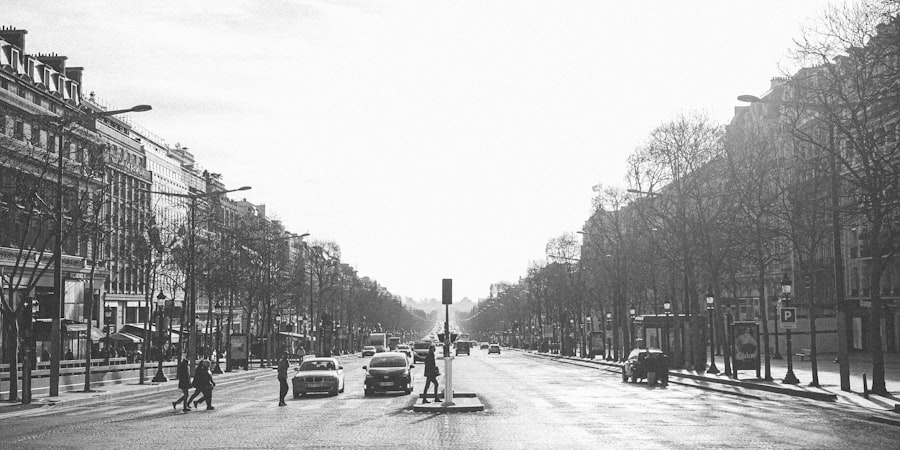
The decision to advance on Paris and the methods employed were the subject of considerable debate among Allied commanders, particularly between American and British leadership. Competing strategic priorities and differing assessments of the risks involved shaped the Allied approach.
General Eisenhower’s Dilemma
General Dwight D. Eisenhower, the Supreme Allied Commander, faced a complex strategic dilemma regarding Paris. On one hand, the liberation of so significant a city was a major propaganda and morale boost for the Allies and a severe blow to German prestige. On the other hand, a direct assault could lead to a bloody urban battle, resulting in immense casualties and destruction, and could distract from the broader strategic objective of destroying the German war machine.
The “Bulge” Versus the “Straight Push”
Eisenhower’s strategic thinking was often characterized by a desire to maintain momentum and exploit opportunities. However, the rapid advance towards Paris after the Normandy breakout created what became known as the “bulge” in Allied supply lines. Some strategists argued for a “straight push” to Germany, prioritizing the destruction of enemy forces over the liberation of specific cities. Paris presented a unique challenge to this calculus.
The American Perspective: Logistics and Priorities
The American military command, particularly General Omar Bradley, often emphasized logistical considerations and the overarching goal of defeating the German army. The liberation of Paris, while symbolically important, was not seen as the highest strategic priority if it jeopardized the main thrust into Germany and strained already stretched supply lines.
Resource Allocation and Objectives
The Allied war effort was a massive undertaking, requiring careful husbanding of resources. The diversion of significant forces and supplies to liberate Paris could have potentially hindered operations elsewhere, such as the push towards Germany or operations in the Mediterranean. Therefore, the decision involved a careful balancing of immediate gains against long-term strategic objectives.
The British Perspective: Prestige and Symbolism
The British, and General Bernard Montgomery in particular, were also concerned with the strategic situation but often placed a greater emphasis on the symbolic and political implications of military actions. The liberation of Paris held immense historical and cultural weight, and for Britain, which had fought Germany for so long, seeing this iconic city liberated was of considerable importance.
The Importance of French Partnership
The British, and de Gaulle, also understood the vital importance of maintaining French morale and fostering a strong post-war alliance. The liberation of Paris by Allied forces, with a significant French contribution, was seen as crucial for solidifying this partnership.
The “Miracle” of Paris: A Combination of Factors

The ultimate sparing of Paris from widespread destruction was not a single event or decision, but rather a fortunate convergence of several critical factors that mitigated the worst-case scenarios.
The German Withdrawal Due to Exhaustion and Disorganization
By August, the German military in France was significantly weakened. The relentless Allied pressure, coupled with internal disarray and a lack of clear orders from higher command, contributed to a general reluctance among many German units to engage in a protracted and costly defense of Paris.
Choltitz’s Reluctance to Obey Orders
A key figure in this regard was General Dietrich von Choltitz, the German military governor of Paris. Contrary to Hitler’s explicit orders to destroy the city, von Choltitz famously delayed or failed to implement many of these destructive commands. His motivations remain a subject of historical debate, but it is widely believed that he recognized the futility of such an action and the potential for immense human suffering without any strategic gain.
The Allied Decision to Advance, Not Siege
Crucially, the Allied high command ultimately decided to push towards Paris rather than encircling it and initiating a long siege. This decision, influenced by the internal uprising and de Gaulle’s advocacy, meant that the German garrison found itself increasingly isolated and under pressure from both external Allied forces and internal resistance.
The Pressure of the Rising Tide
The advancing Allied armies, particularly the French 2nd Armored Division under General Philippe Leclerc, provided a tangible and imminent threat. The FFI’s uprising within the city further complicated the situation for the German defenders, forcing them to divide their attention and resources.
The Role of the French 2nd Armored Division
The inclusion of French troops in the liberation of Paris was a deliberate choice that carried significant symbolic weight. The arrival of the French 2nd Armored Division, a well-equipped and experienced unit, demonstrated the commitment of the Allies to restoring French sovereignty and allowed for a significant French contribution to the liberation.
A Symbol of Resurgent France
The sight of French tanks and soldiers parading through the streets of Paris was a powerful image for the liberated population and the world. It signaled not only the end of German occupation but also the resurgence of France as a significant European power.
In the summer of 1944, as Allied forces advanced towards Paris, the question of whether the city would be set ablaze by retreating German troops loomed large. Fortunately, a combination of strategic decisions and the desire to preserve the city’s cultural heritage led to its liberation without significant destruction. For a deeper understanding of the complex dynamics at play during this pivotal moment, you can read more in this insightful article on the topic. The article explores the motivations behind the German command’s decision not to destroy Paris, shedding light on the intricate balance of military strategy and cultural preservation. To learn more, visit this article.
The Cost of Liberation: A Measured Approach
| Reason | Impact |
|---|---|
| Allied Negotiations | Prevented unnecessary destruction |
| Resistance Uprising | Forced German retreat |
| Strategic Importance | Preserved key infrastructure |
While Paris was spared the devastation of a scorched-earth policy, the liberation was not without its cost. The fighting that did occur, primarily in the final days of August, resulted in casualties and some damage, though significantly less than what could have transpired.
The Final Days of Fighting
As the Allied forces tightened their grip on the city, pockets of German resistance did emerge. Street fighting occurred in various districts, and the French 2nd Armored Division, alongside elements of the U.S. Army, engaged in combating these remaining German units. The objective was to secure the city in a timely manner, minimizing further casualties.
Securing Key Infrastructure
The priority was to secure vital infrastructure, such as bridges, communication centers, and government buildings, to prevent their destruction by retreating German forces and to facilitate the restoration of order and administration.
The Legacy of a Spared City
The fact that Paris, a city of such profound historical and cultural importance, emerged from the Second World War with its core fabric largely intact stands as a testament to a complex interplay of military necessity, political will, and fortunate circumstances.
A City Preserved for the Future
By avoiding a catastrophic battle within its confines, Paris was able to retain its architectural heritage and its status as a global center of culture and art. This preservation allowed for its continued role in shaping the post-war world and its enduring appeal. The liberation of Paris, therefore, represents not just a military victory but also a crucial moment of preservation whose significance continues to resonate.
FAQs
1. Why was Paris not burned in 1944?
During World War II, the German military governor of Paris, General Dietrich von Choltitz, disobeyed Adolf Hitler’s orders to destroy the city before it could be liberated by the Allies. Choltitz surrendered the city to the French Resistance and the Free French Forces, sparing Paris from destruction.
2. What were Adolf Hitler’s orders regarding Paris in 1944?
Hitler had ordered General von Choltitz to destroy Paris, including its landmarks and infrastructure, rather than let it fall into the hands of the Allies. This was part of the “scorched earth” policy intended to deny the advancing Allies access to resources and demoralize the French population.
3. How did General von Choltitz justify his decision to spare Paris?
Von Choltitz claimed that he spared Paris due to his admiration for the city’s cultural heritage and his desire to avoid being remembered as the “destroyer of Paris.” However, some historians argue that his decision may have been influenced by strategic considerations and the realization that the war was lost for Germany.
4. What was the significance of Paris not being burned in 1944?
The preservation of Paris allowed for a relatively smooth transition to post-war reconstruction and symbolized the resilience of the city and its people. It also prevented the loss of countless historical and cultural treasures, which would have had a devastating impact on France and the world.
5. How did the sparing of Paris impact the Allied advance in 1944?
The preservation of Paris boosted the morale of the French Resistance and the Free French Forces, and it provided a strategic base for the Allies as they continued their advance into Germany. Additionally, the liberation of Paris served as a powerful symbol of the impending defeat of Nazi Germany.